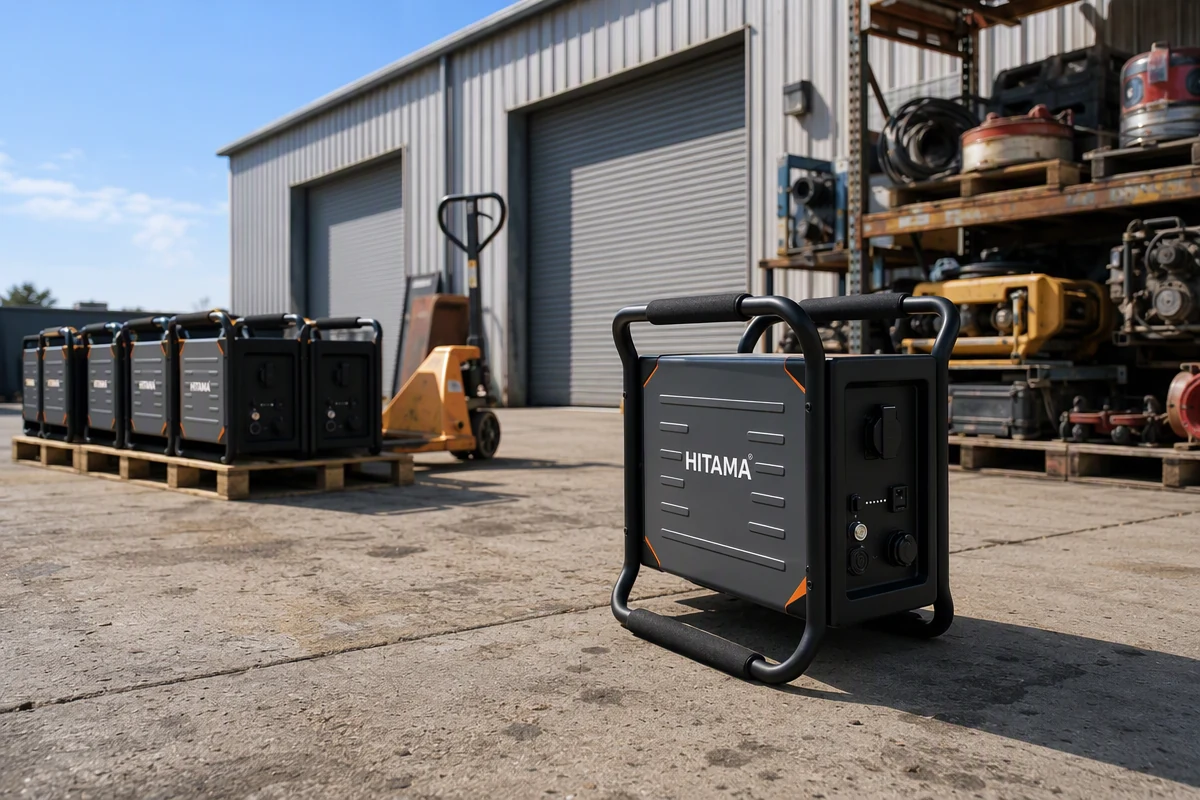
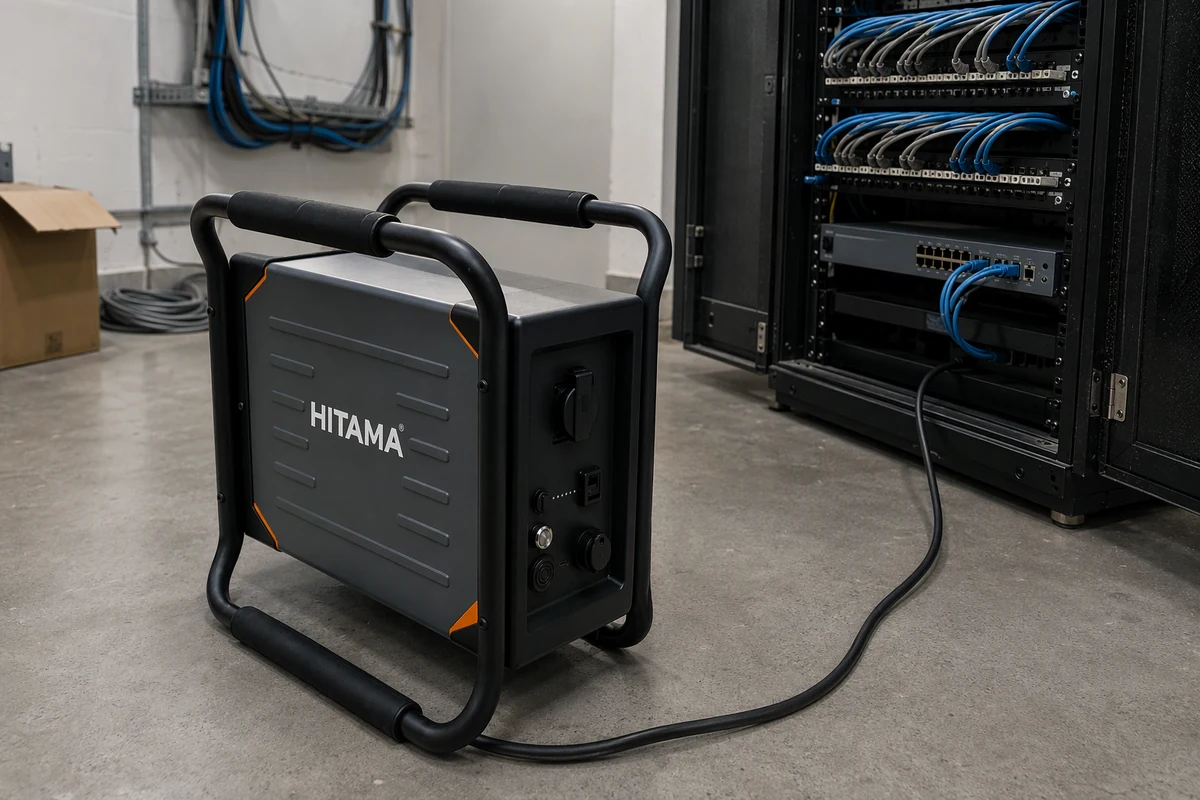
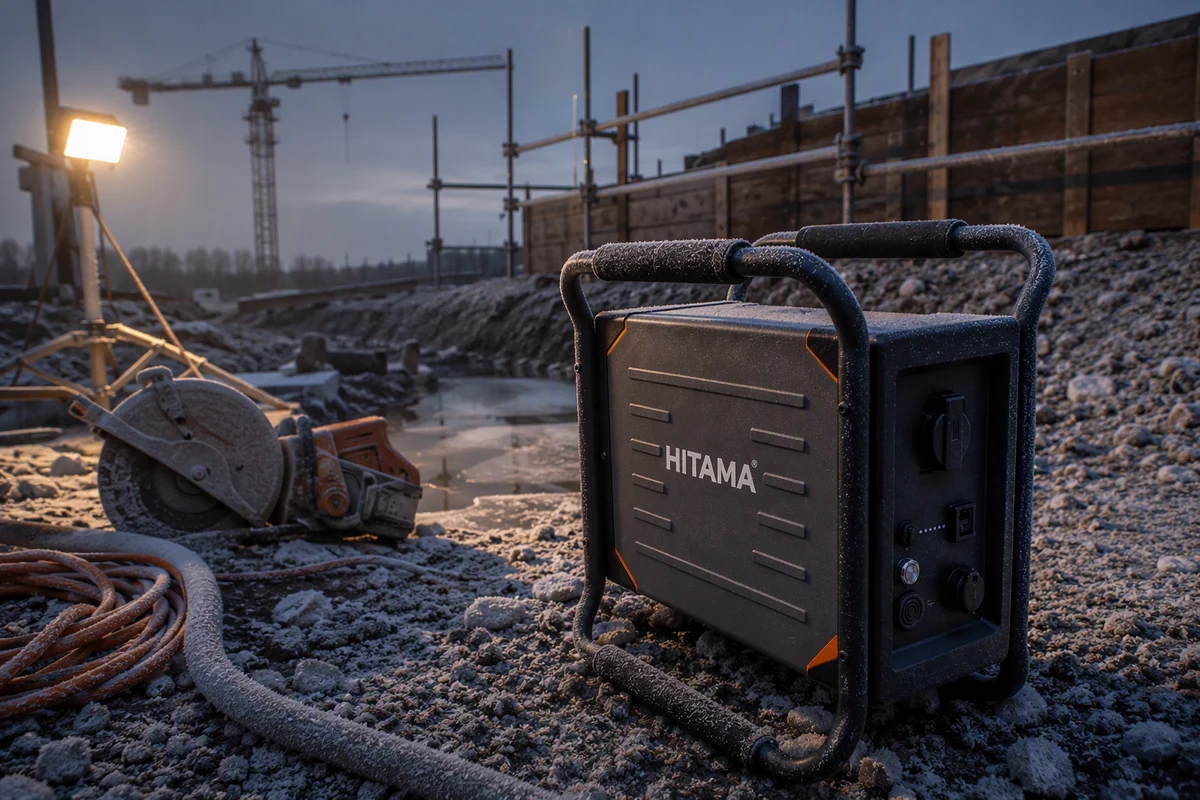
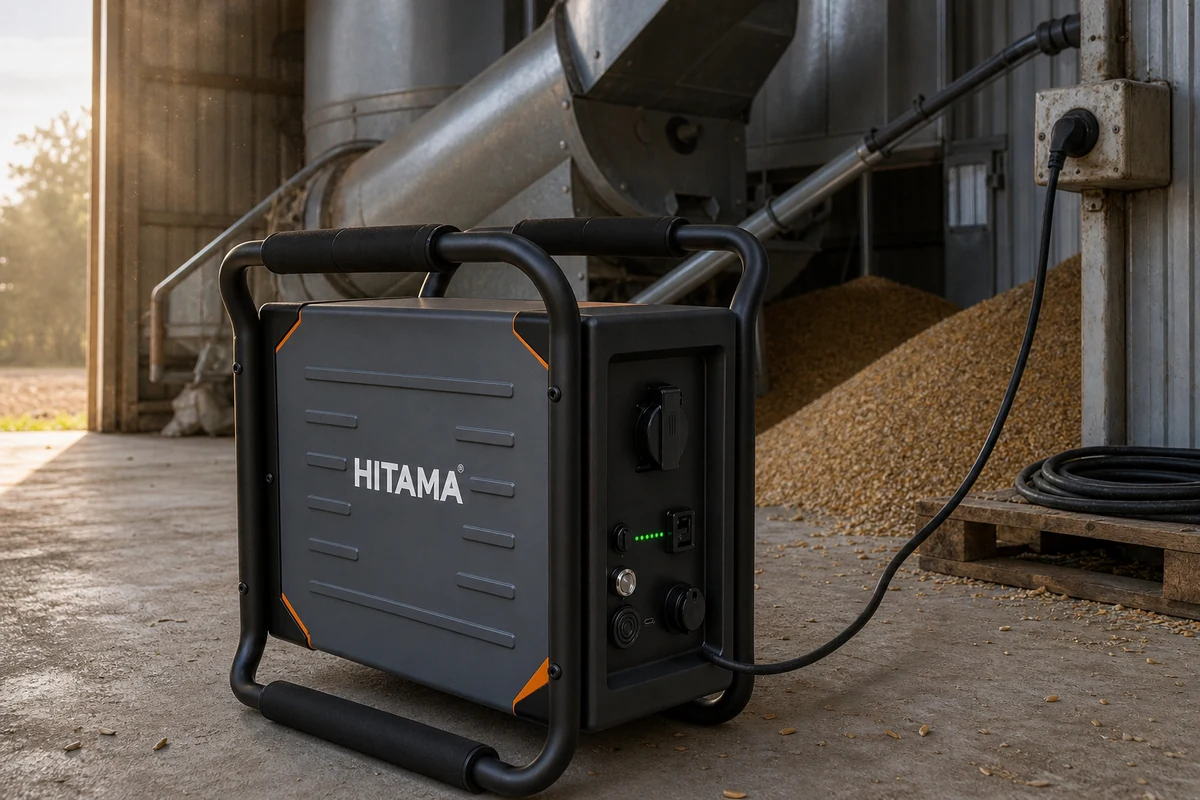
Latest from Hitama
Every entry belongs to an application: which tools our systems drive, where they replace a diesel generator, and how partners configure them. Filter by sector below.
Industry coverage
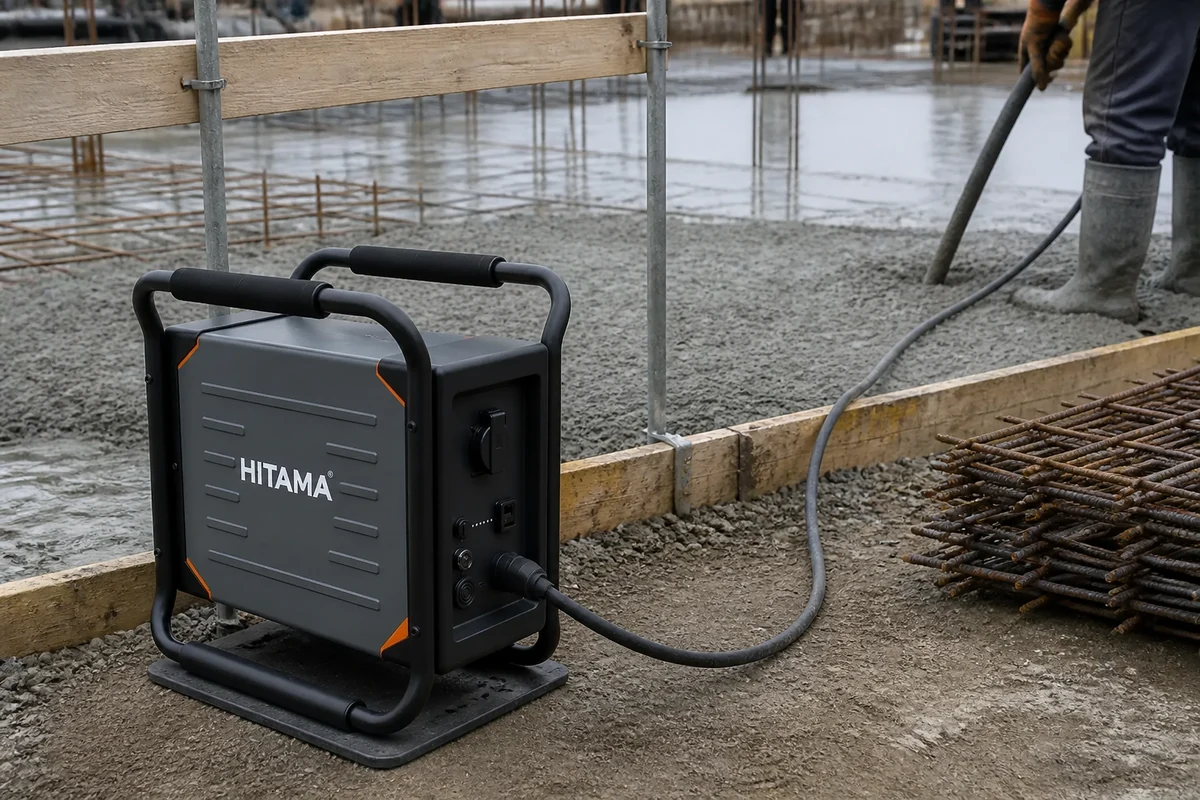
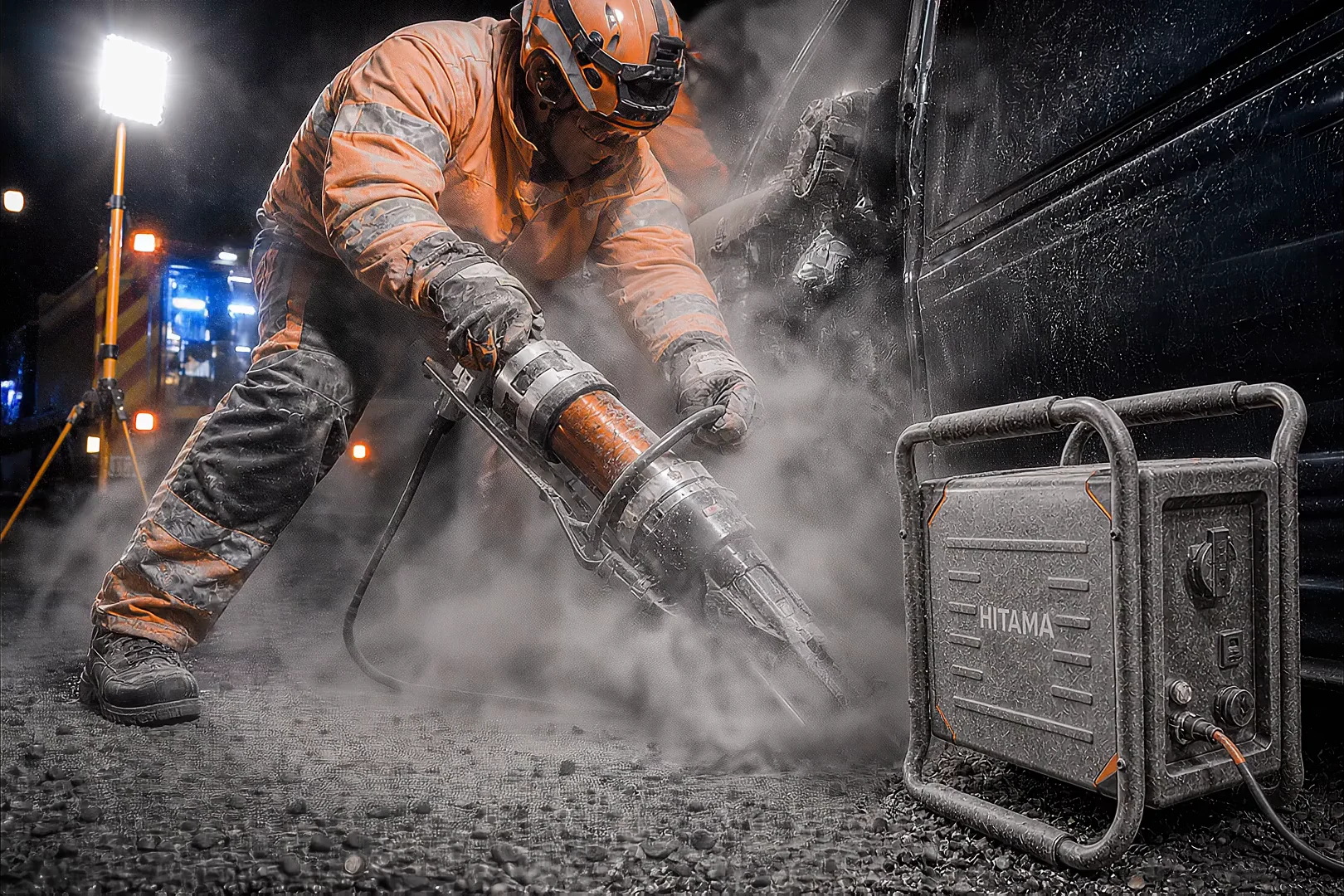
- Construction & civil worksP25 · P25-T
- Equipment rentalP25 · P36
- Emergency responseP25-D · P36
- Fire & technical rescueP25-D · P25-T
- Disaster relief & civil protectionP25-D · P36
- Defence & field operationsP36 · P25-D
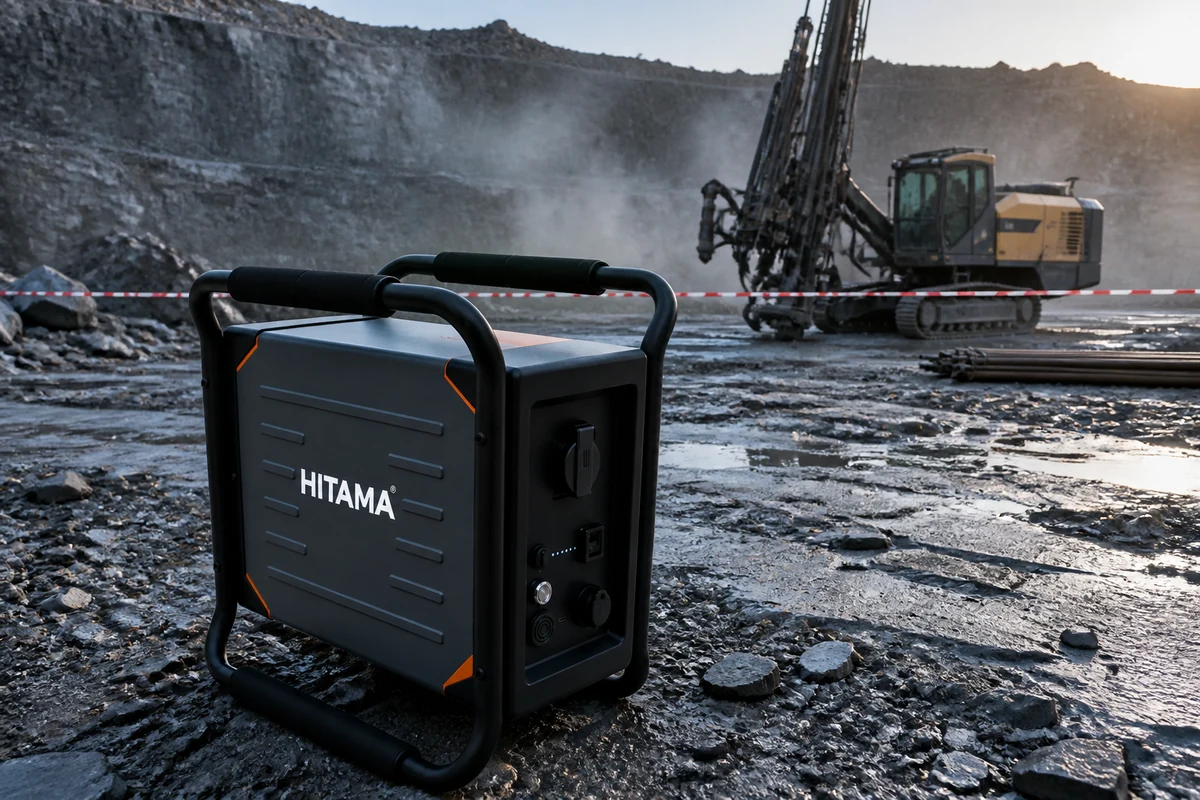
- Mining & quarryingP25-T · P36
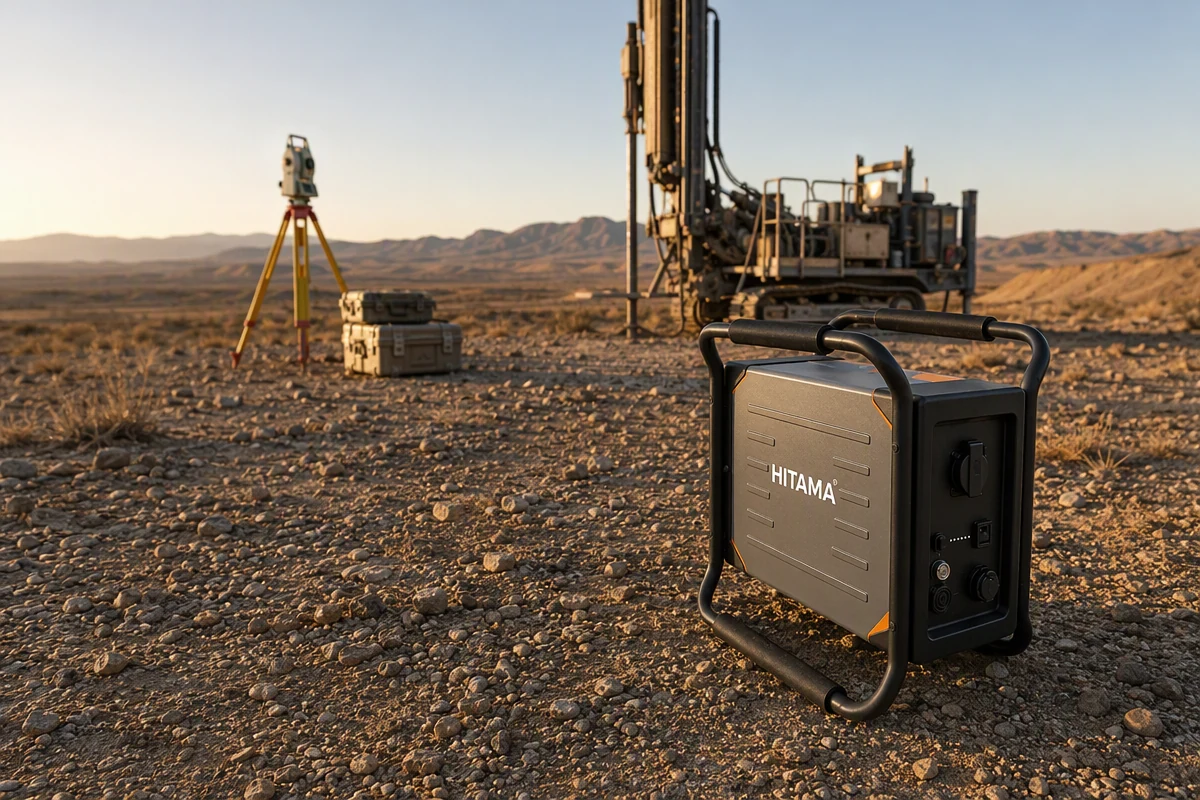
- Geological exploration & surveyC24 · P25
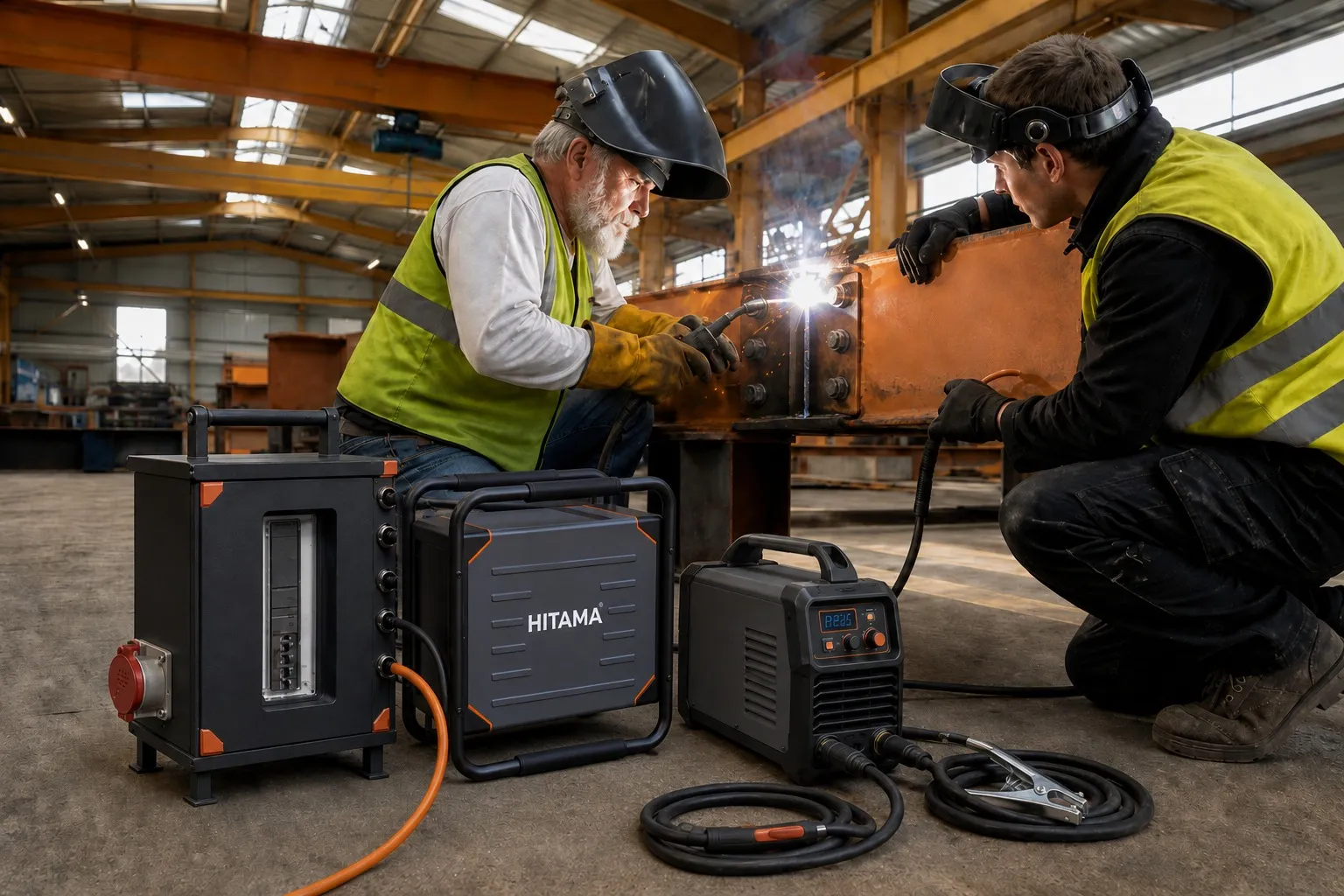
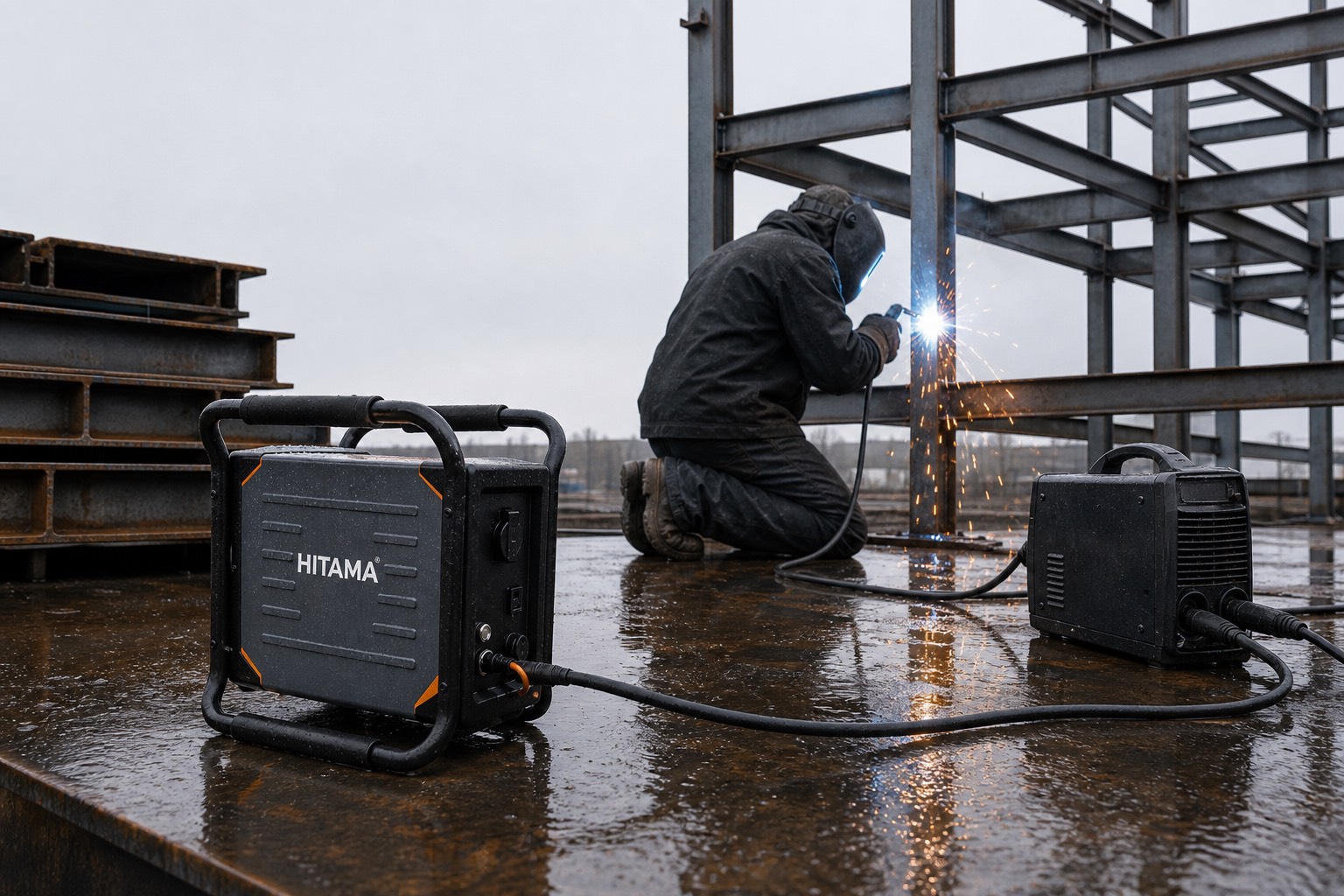
- Welding supplyP25-T (400 V)
- Telecommunications & utilitiesP25 · P36
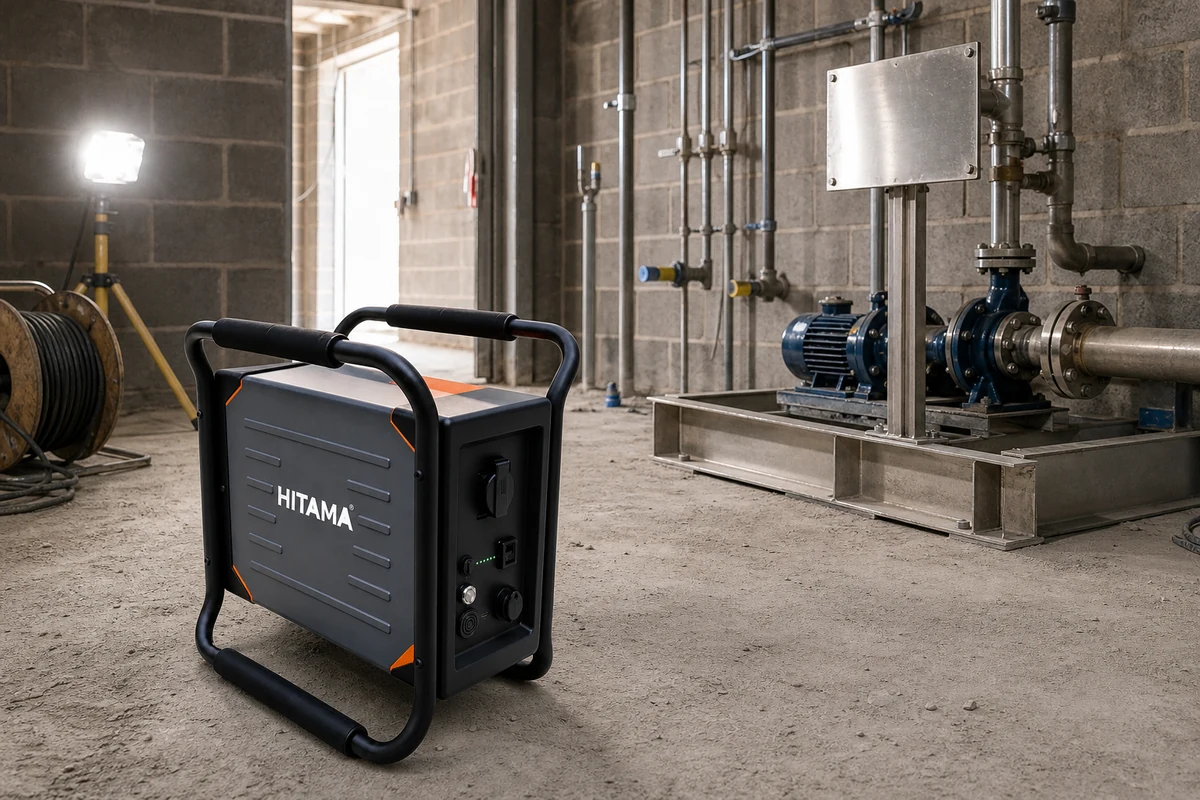
- Rail, tunnel & infrastructureP25-T · P25-D
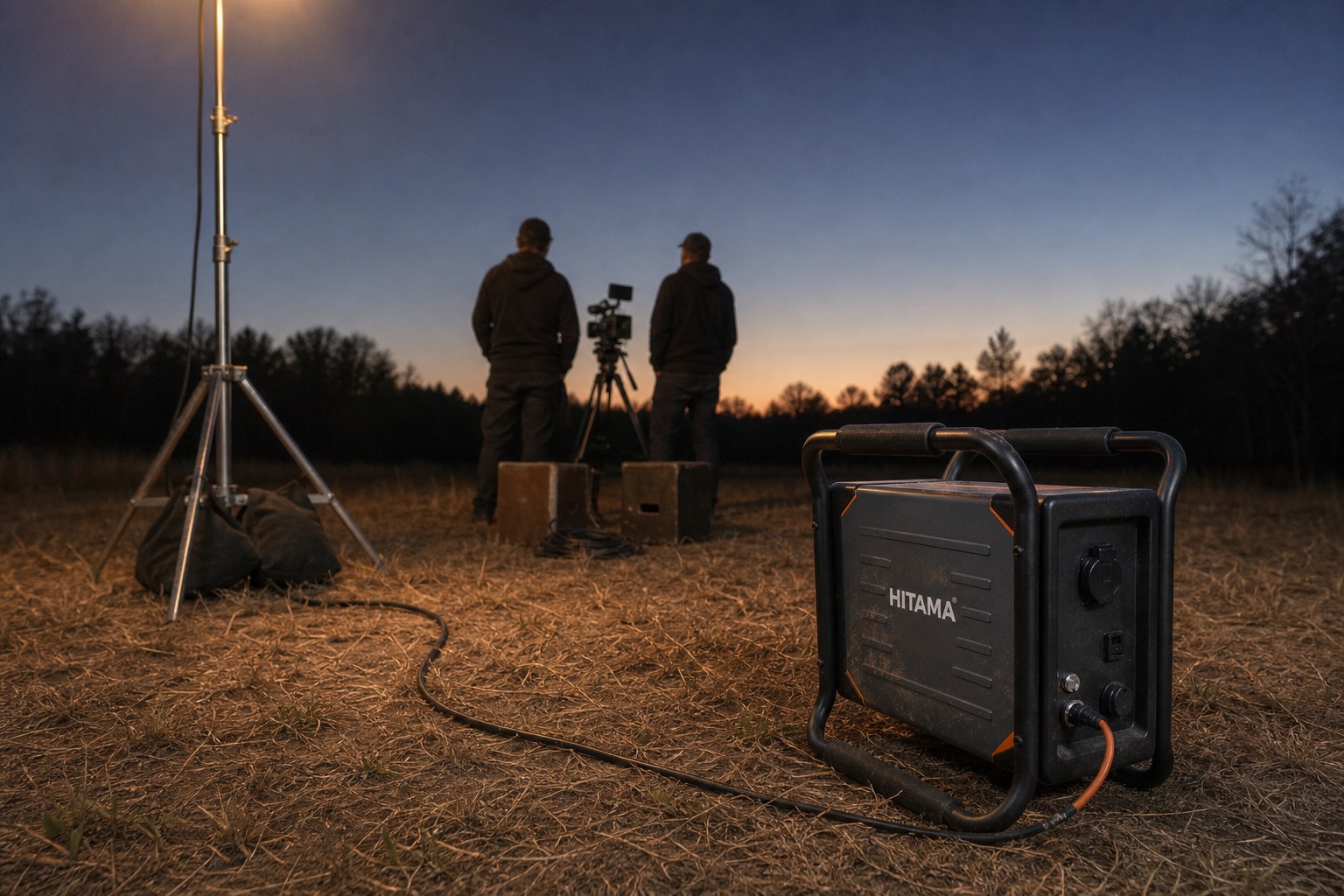
- Events, film & mediaC24 · P25
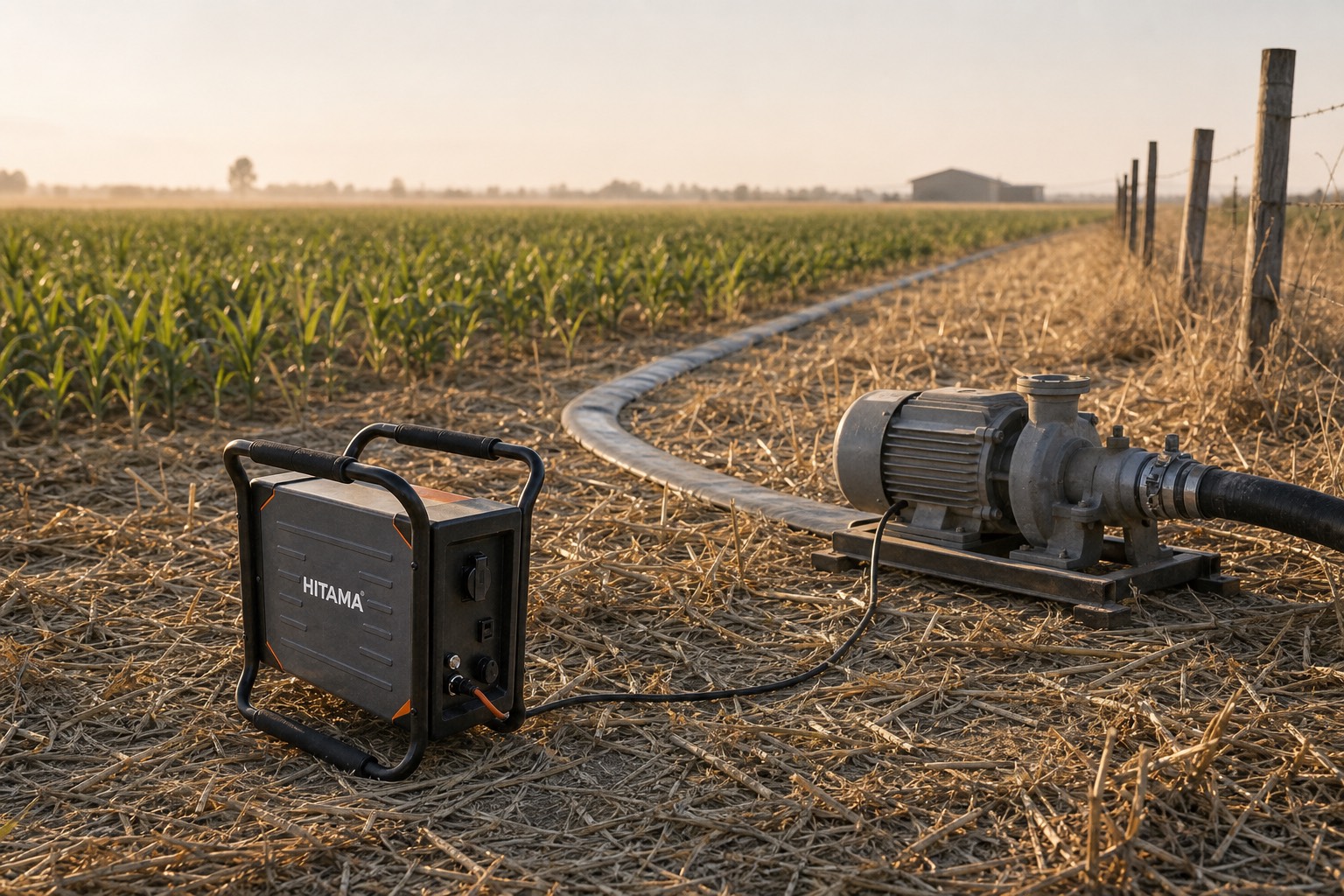
- Agriculture & outdoor workC24 · P25
At 45 degrees the rating is a wish
A nameplate rating is a measurement taken in a room, and no datasheet prints that room next to the number. At 45 °C on a bench the same unit delivers less than 2,500 W for the same reason a person does, so the shift is planned in hours at the load you measured rather than in watts at the load you hoped for.
- Mining & quarrying
An interrupted splice is not a splice
A conveyor belt splice is a flat load held for the length of a cure, and a cure that stops has no resume button. The sizing question is how many hours the supply holds without anyone watching, and how far the press sits from the parking point.
- Defence & field operations
The one item at a position that cannot be covered
Netting, tarpaulins and sandbag walls protect everything at a position, and every one of them turns a fanless power unit into a smaller one. The housing is the only heat path it has.
- Equipment rental
Why there is no price on our website — and what is there instead
Prices and minimum quantities are not on the wholesale page. Not from neglect: both depend on configuration, quantity and target market. What is public right away — and which four lines a quotation comparison should separate.
- Equipment rental
Three line items that make every site dearer in 2027 — none of them is the electricity price
German electricity levies rise by 22.9 percent in 2027, from 2.946 to 3.621 cents per kilowatt hour. What matters is not the percentage but what it attaches to: the kilowatt hour, not the connected load.
- Construction & civil works
The day is decided five minutes before the shift
A unit rarely runs out of energy at noon; it is emptied at seven, in the five minutes when nobody counts. State of charge at arrival, the load that ran all night, the one load without a duty cycle and the second wave of tools that appear at ten decide whether 2.7 kWh reaches the end of the shift.
- Construction & civil works
Commissioning is planned around a number nobody has yet
On a commissioning day the load is unknown until the first run, so the supply has to be changeable in the room rather than fixed in the quotation. A sealed module array lets the test sequence be corrected on site, with the recharge moved to the evening.
- Mining & quarrying
The socket leaves the bench before the shot
On a blasting day the constraint is not how much the bench draws but whether the power source can leave the radius and be back inside the re-entry window. A sealed 29 kg unit is carried out by two people, restarts where it stopped, and takes no fuel or air path onto the bench.
- Geological exploration & survey
The flight line ends when the packs run out
A UAV survey is planned in square kilometres and flown in sorties, but it is limited by pack charging: 2.7 kWh refills roughly four packs, which is about half a mapping day.
- Equipment rental
Three ways onto the shelf — only one of them is an order
A dealer asking a factory for the first time rarely gets a price, and usually gets three questions back. A unit price is not a property of the device, it is a property of the order — and the three routes into a range differ mainly in where the work sits.
The adapter is the weakest link
On almost every site the planned chain is machine, cable, tool — and the unplanned part is the short adapter that joins two of them. A 16 A plug on a 32 A outlet, or an IP44 coupling inside an IP54 run, moves the limit of the circuit to the one joint nobody sized. The machine is rarely the part that fails first.
- Mining & quarrying
What has to keep running after the wash plant stops
A wash plant loses its feed the second the drive drops out, but the water circuit behind it takes hours to recover. The loads worth carrying are the small ones nobody has written down.
- Equipment rental
For anyone running the numbers: 4.2 is not a law of nature — the assumptions behind diesel versus battery
0.82 € against 0.20 € per kWh, a factor of 4.2 — that is not physics, it is the result of six assumptions. What happens when load, price or hours differ, and when a battery stops paying for itself through running costs.
- Equipment rental
For dealers: from 2027 every unit above 2 kWh needs a battery passport
On 18 February 2027 the Article 77 battery passport becomes mandatory — including for 2.7 kWh units that look like portable batteries. Why 29 kg decides the category and who has to keep the record.
- Welding supply
The welder is not the only thing transmitting
The interference on a welding site is blamed on the arc and carried by the conductor the welder shares with everything else. Two switching sources in one cable bundle turn a thirty-metre run into an antenna, and a separate output separates what a filter can only mask.
- Construction & civil works
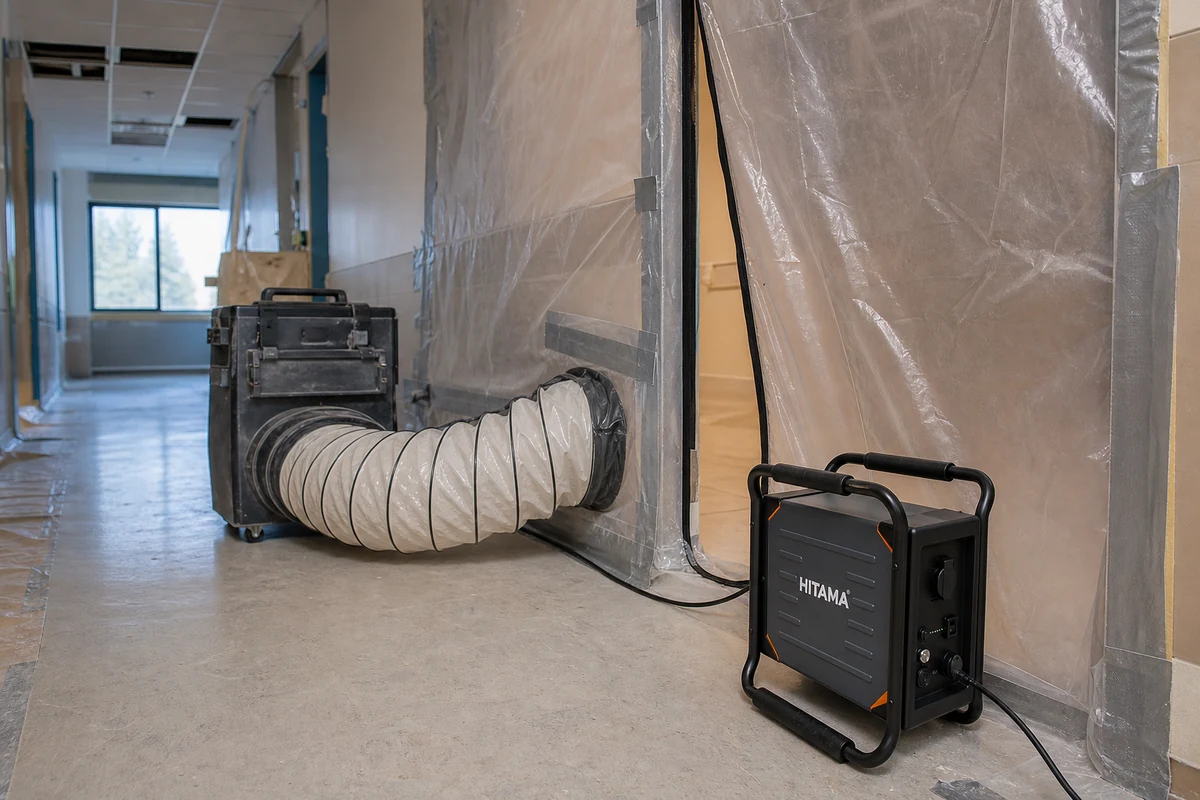
The sheet is not the barrier. The fan is.
A remediation containment is held by a continuously running air scrubber, not by the sheet and the tape. The power question is therefore a shift-length one: keep the sealed unit outside the envelope, size it against hours rather than peaks, and do not let the clearance run be pulled for the next job.
- Disaster relief & civil protection
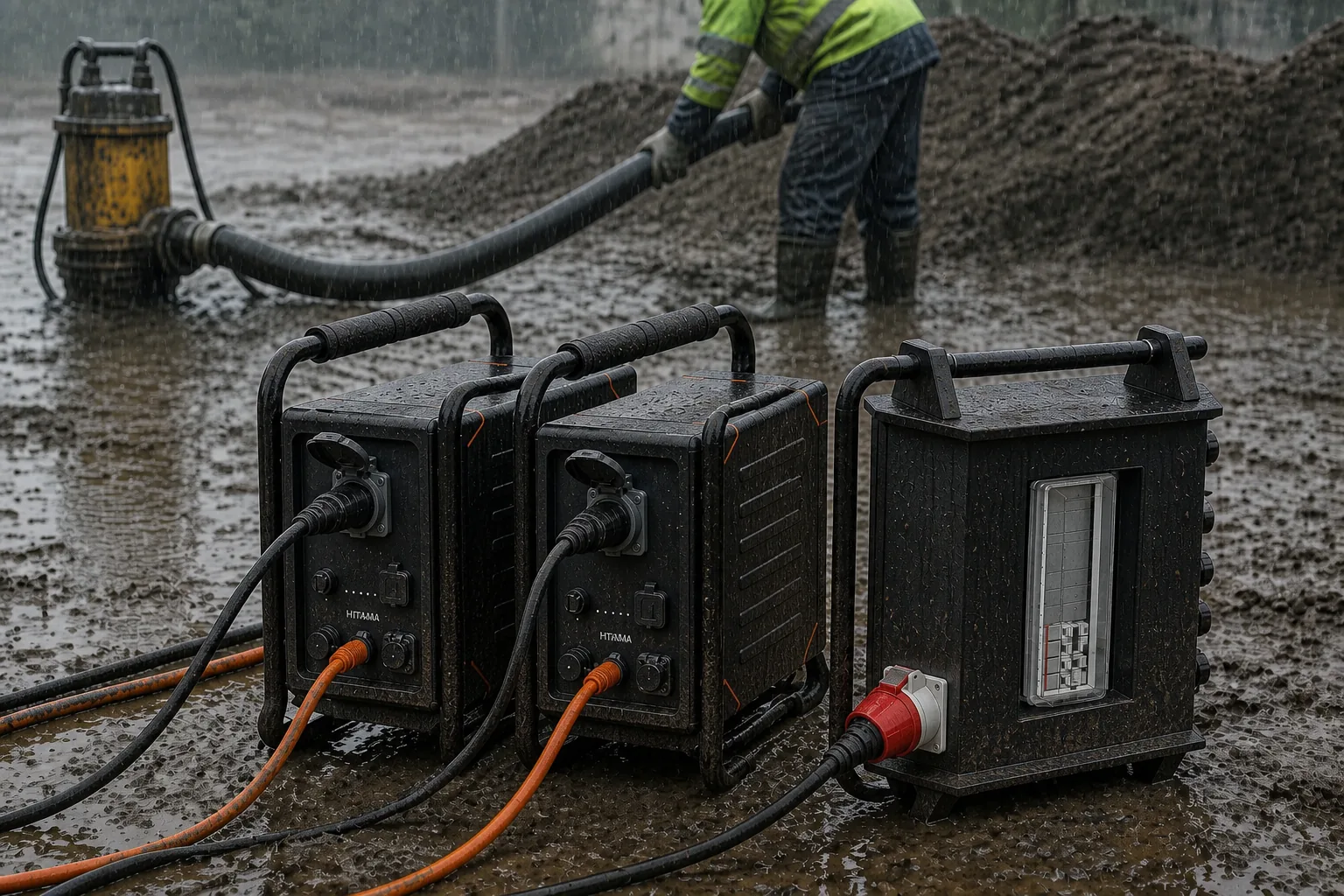
A flood pump starts more often than it runs
A flood pump does not fail a portable supply while it runs; it fails it at the moment it starts. On a float switch those starts answer to nobody's schedule, and 2.7 kWh is spent by the duty cycle rather than by the rating on the plate.
- Equipment rental
Private label means your name inherits the test record
Selling a power station under your own name means taking over an assurance, not just a print. What the test record contains, why it is a measurement and not a warranty — and where customisation ends.
What the RCD sees when the source changes
The residual current device in the container was chosen for a generator, and it does not know the source has changed. Once the supply is an inverter, what that device can detect depends on the device type, the earth reference at the output and the equipment on the far end — three things the test button never checks.
- Construction & civil works
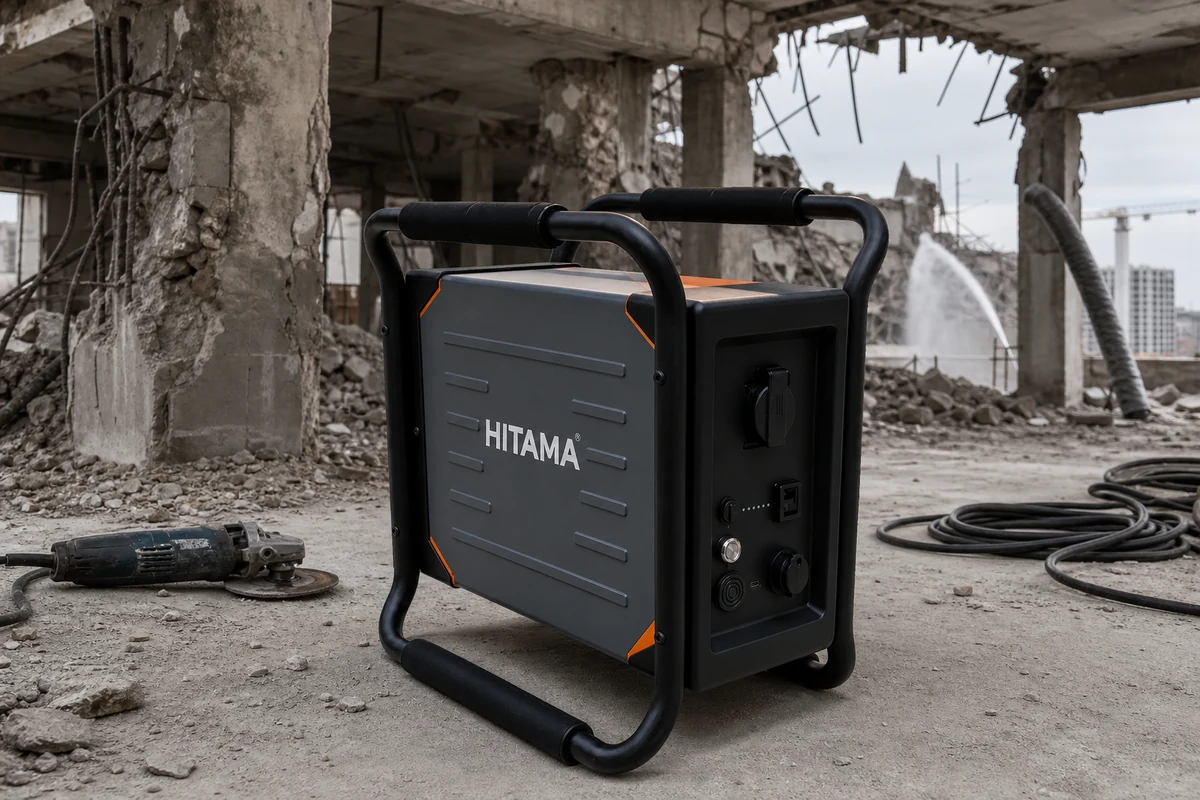
The meter leaves before the building does
On a demolition job the service is disconnected months before the walls come down, and the strip-out runs on carried power. Sizing follows the pump start, the floor count and the walk to the compound socket.
- Fire & technical rescue
Readiness is a charging schedule, not a battery rating
A 2.7 kWh unit that carried a fan and two floodlights comes back needing hours on a 230 V socket, and the next call can arrive inside the same shift. Readiness at a station is a charging schedule, not a capacity figure.
- Equipment rental
Order quantity is not a number, it is a tooling question
Forty units from a dealer is a price break; forty units from a factory is a question about tooling, batch size and lead time moving together. What a buyer needs to bring so the answer holds.
- Equipment rental
If the backup does not start, it was never backup
The TÜV Baurechtsreport 2026 finds significant defects in 35 % of backup power systems in special buildings. The three causes it names — starting, fuel, battery — appear while the system is idle, not while it runs. What that means for an inspection sheet.
Parallel is a firmware question before it is a cable question
A pair of power stations that will not parallel is almost never a pair of broken machines. The link is agreed by control electronics on the same firmware build, before any current flows, and a pair that disagrees there cannot be rescued by better cable. What copper decides afterwards is only the split, and unequal leads make one unit carry the other.
- Agriculture & outdoor work
A wool shed is a filter, not a load
A wool shed does not fail a power source on kilowatt-hours; it fails it on fibre and on one motor starting against a load. The sizing rule follows the press, the crew clock and the night charge, not the average.
- Construction & civil works
The crisis gets a date. The site is not on the list.
Germany's power security platform is meant to be operational from winter 2026/2027. Registration starts at 8 gigawatt-hours per withdrawal point – a construction site sits roughly three thousand times below that. If an outage is not something you can bill, the reserve has to be built beforehand.
- Agriculture & outdoor work
Three-phase work moves. The 400 V point does not.
On most farms the 400 V socket is fixed in one building while the machines that need it move. What a transportable 7,500 W three-phase supply changes, and the 8.1 kWh ceiling it cannot cross.
- Equipment rental
What a three-year-old fleet is worth
A three-year-old rental unit is priced on its case and valued on its cells, and only the case is in the advert. Two machines from the same invoice can leave the yard as different products, one still near its 2.7 kWh and one visibly short of it. The measurement that separates them takes a load, a clock and one lost hire day.
- Telecommunications & utilities
A clean sine is not a transfer time
A comms room refit is decided by the seconds of changeover, not by the distortion figure on the datasheet. What the rack actually asks for is a measured load, a window with an end, and an honest answer about what the unit cannot be.
- Welding supply
A clamp on painted steel routes 200 A through the frame
The return lead carries the same 200 A as the electrode holder. Where the clamp sits decides whether the weld, a bearing or a sling gets the current.
Below zero the battery is not weak, it is unavailable
At minus five the pack has lost no energy; it has stopped accepting it, and a unit that comes back at 40 percent stays at 40 percent until something warms it. On a 2.7 kWh P25 that is the difference between a full shift and half of one, and the fix is a room rather than a bigger battery.
- Agriculture & outdoor work
Only the fan is on the socket
A grain dryer's headline rating is mostly heat, and heat does not come out of a socket. The electrical load is the fan motor: its start, its running draw, and the cool-down hours after the burner stops.
- Equipment rental
A cross-hired battery arrives as a set, not a machine
A generator can be borrowed between depots and works the moment it is plugged in. A battery unit arrives as a set — configuration, accessories, charge state — and one missing part turns 7,500 W into three separate 2,500 W machines.
- Welding supply
The joint is hot before the first arc
On a coded weld the preheat pads draw before the arc does, and the interpass window keeps them running after it stops. The schedule, not the welding current, is what the unit has to cover.
- Construction & civil works
Power in a listed building is carried, not installed
In conservation work nothing may be fixed to the fabric, so the supply arrives with the tools and leaves with them. That turns sizing away from the project total and towards the heaviest task in one room.
The generator does not have to go; it has to get smaller
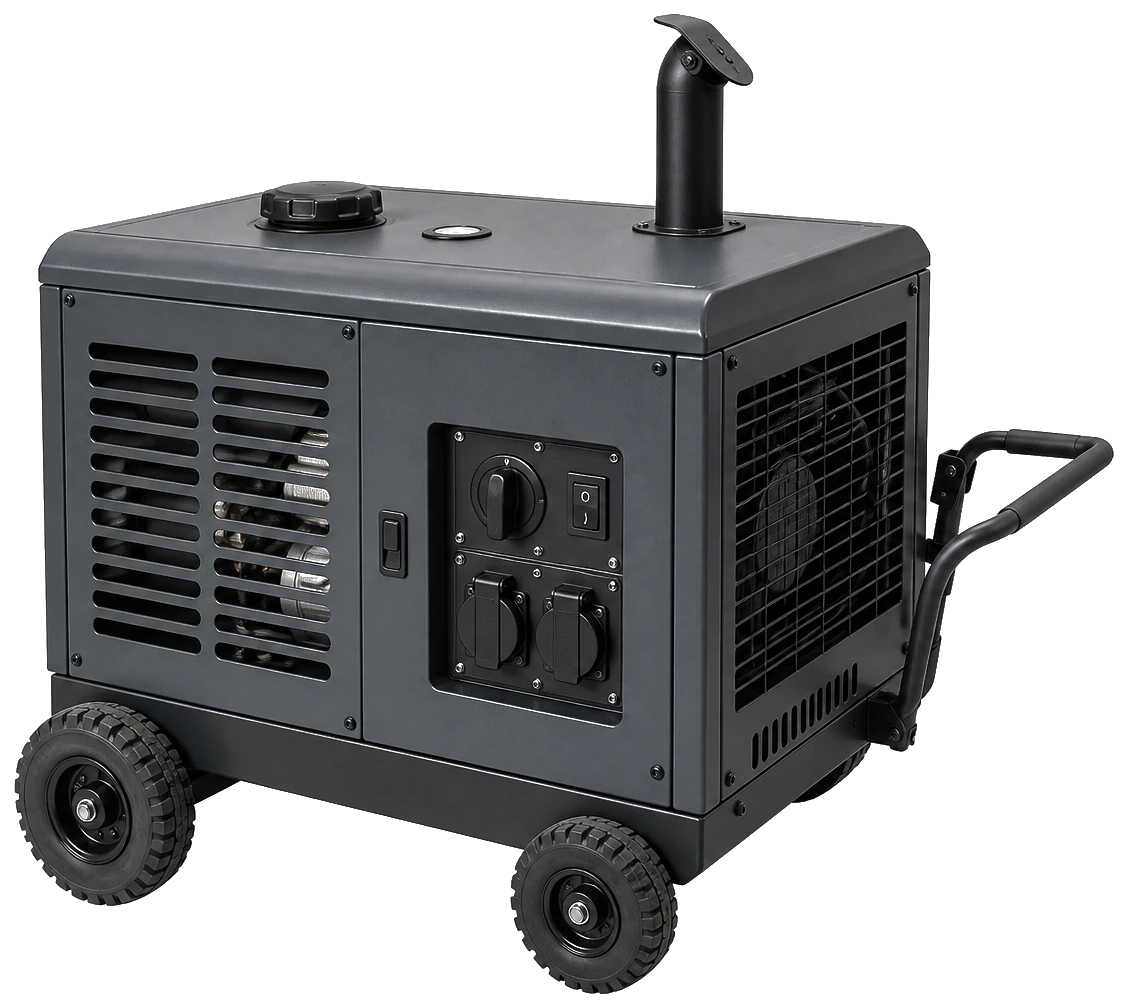
On most sites the generator is not expensive because it exists, but because it is sized for a ten-second peak that happens twice a shift. Split the two jobs and the engine shrinks by a class or two: 2.7 kWh across an eight-hour shift is an average of about 340 W, while a P25 covers the 5,000 W surge.
- Construction & civil works
For rental fleets: ten seconds of surge, then rated power decides
Every datasheet carries two power figures. Only one of them comes with a duration, and it sits in brackets: peak output 5,000 W (≤10 s). Reading past that bracket is how fleets end up with the wrong class of machine.
- Construction & civil works
The CO₂ price stands still. The engine doesn't.
In 2027 Germany's national CO₂ price stays at 55 to 65 euro per tonne. The price push everyone waited for is not coming — the decision still gets made, just elsewhere.
For rental fleets: one change, two signatures too many
A change request is rarely a technical problem. It is a question of distance: how many stations sit between your message and the person who owns the line.
- Equipment rental
The diesel's cheapest year is its first
A diesel generator is the cheaper machine in year one and the more expensive one in year four, and the crossover is decided by three curves that never appear on a quotation. Residual value, maintenance and the cost of the energy itself move in opposite directions from the invoice onwards, and four inputs settle where the lines cross.
- Agriculture & outdoor work
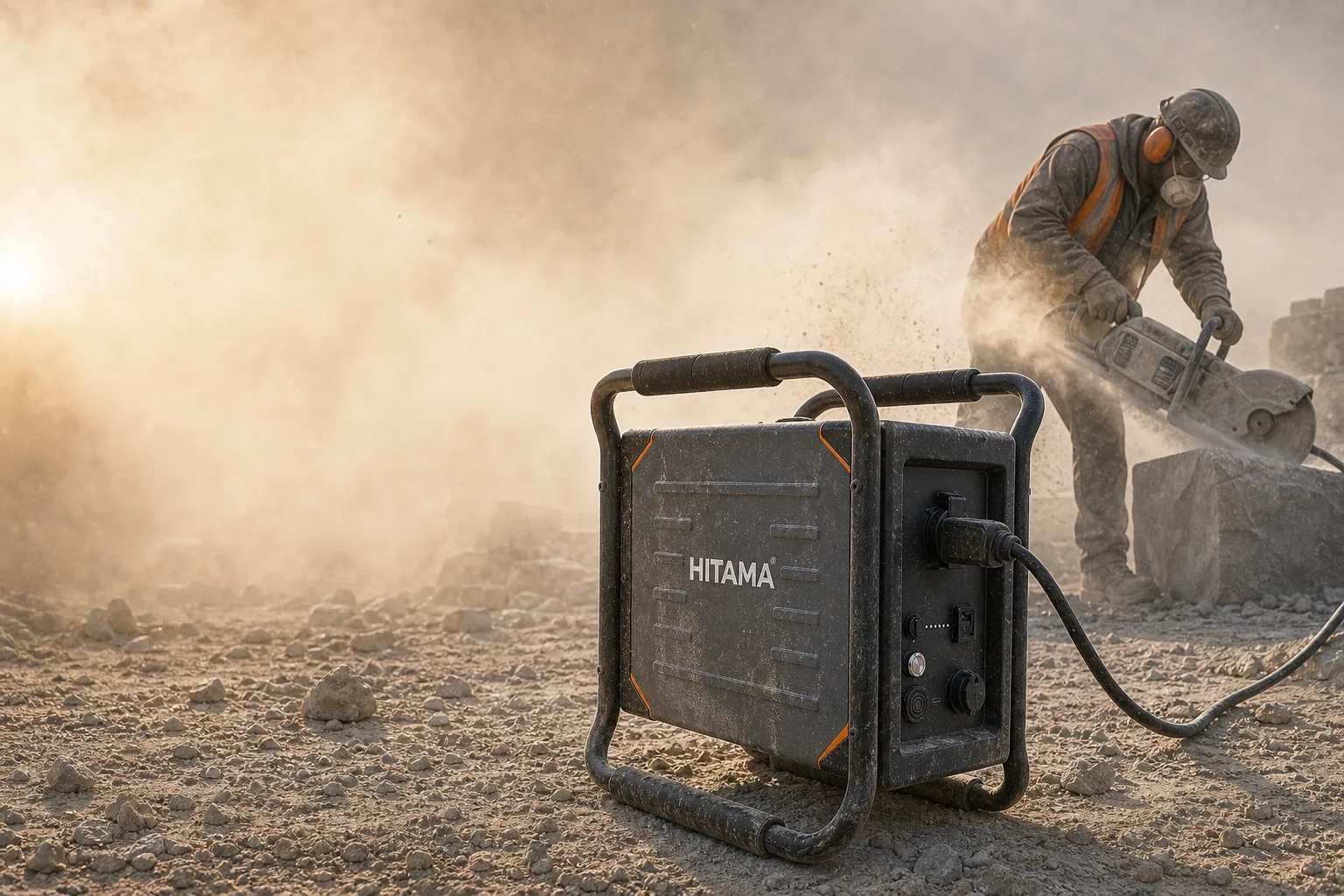
A dust zone does not ask how many watts
A classified dust area is settled by the site's zone drawing and permit, not by the load list. The documented marks — CE under the EMC Directive 2014/30/EU and UN 3480 class 9 packaging — describe something else, and the sealed, fanless case matters most just outside the line.
- Defence & field operations
Two power systems at one position: which one carries what
A field position has two batteries available — one in the vehicle, one on the ground — and the kit list only names the second. What decides the split is which loads may run with the engine off.
The diesel counts in litres. The workshop counts in tool hours.
A cost comparison between generator and battery rarely fails on price – it fails on units. Four lines are missing from the fuel receipt, and three values only the operation itself can supply.
Storage grows on the grid – the jobsite stays invisible
Commercial battery storage is growing in 2026 while solar declines. The survey covers 135 to 950 kilowatts – and leaves the jobsite out by design.
A tender that rules out batteries without saying so
Three sentences in a technical specification can delete every battery from a tender, and the person who wrote them usually meant something else. The clauses are written in the units of an engine - rated output without end, a connection into the building, a fuel area - while the requirement behind them is a load list at a work face.
- Construction & civil works
The switch-off is a sequence, not an event
A planned isolation is written as one line in a programme and executed as a dozen separate decisions. The unit is sized by each circuit's tolerance in minutes, not by the building's total kilowatts.
- Geological exploration & survey
Nobody is assigned to the battery on a survey crew
A survey crew's power cost is measured in operator hours, not kilowatt-hours: a 29 kg lift at each station, a recharge that draws 500–1,500 W, and nobody whose job it is.
Proof of origin is becoming a technical specification
An expert group advising the European Commission recommends restricting components and software from storage and PV suppliers with high cyber risk. For purchasing and rental fleets it moves the questions: away from the datasheet, towards firmware and origin.
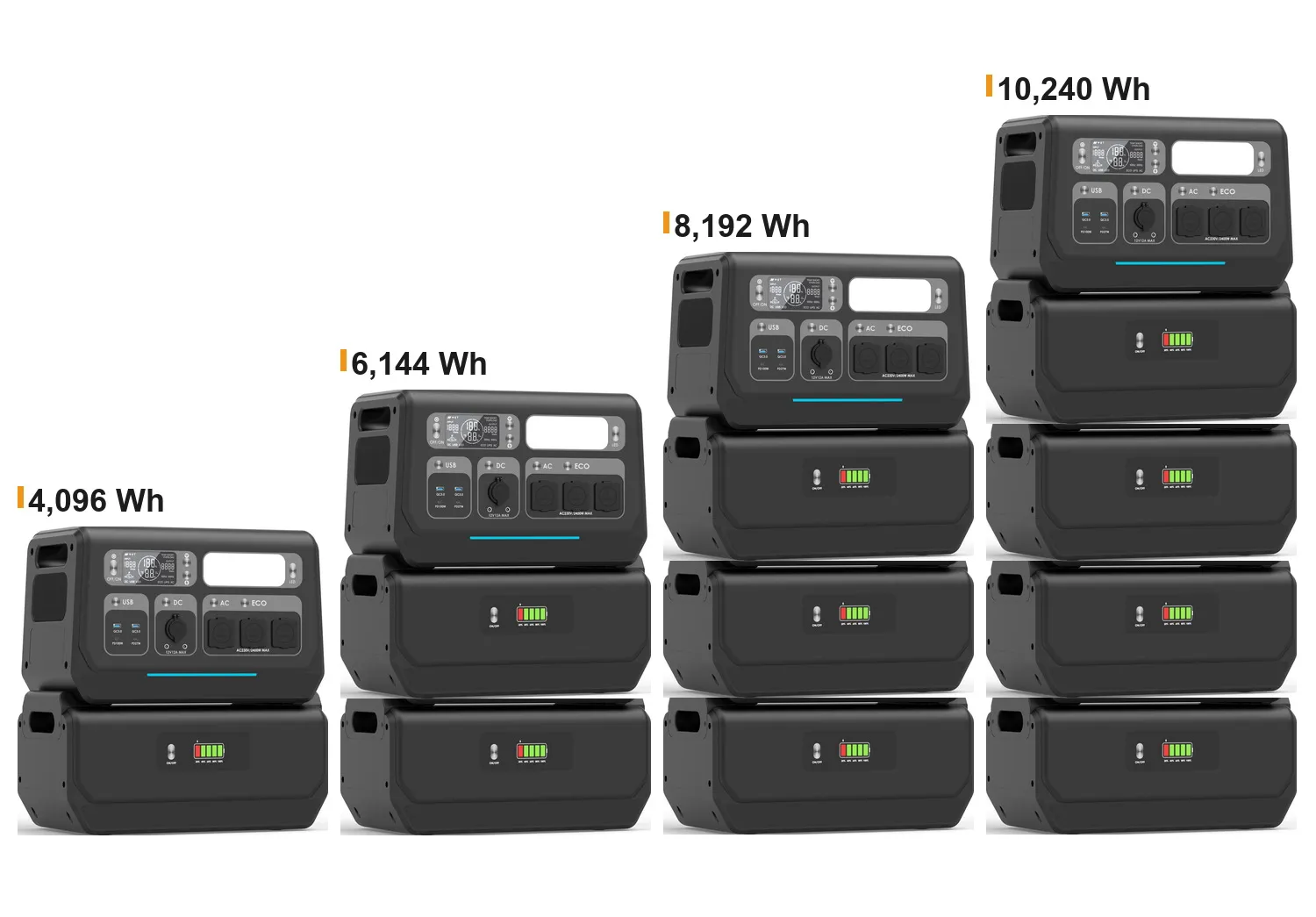
Two P25 make one P25-D: what stacks, and what does not
The catalogue shows three machines; the arithmetic shows one. P25-D and P25-T are exactly double and triple the P25 in every row. Only one property cannot be bought by stacking: the 400 V three-phase level.
The insurance file follows the fuel, not the machine
Replacing a diesel generator with a battery does not replace the risk file. The documents that price a site are written around a fuel, a refuelling point and a storage location, and a battery changes all three while the machine number on the asset list stays the same. What has to be re-declared is the charging point, the stored energy in kilowatt-hours and the place the unit stands overnight.
- Construction & civil works
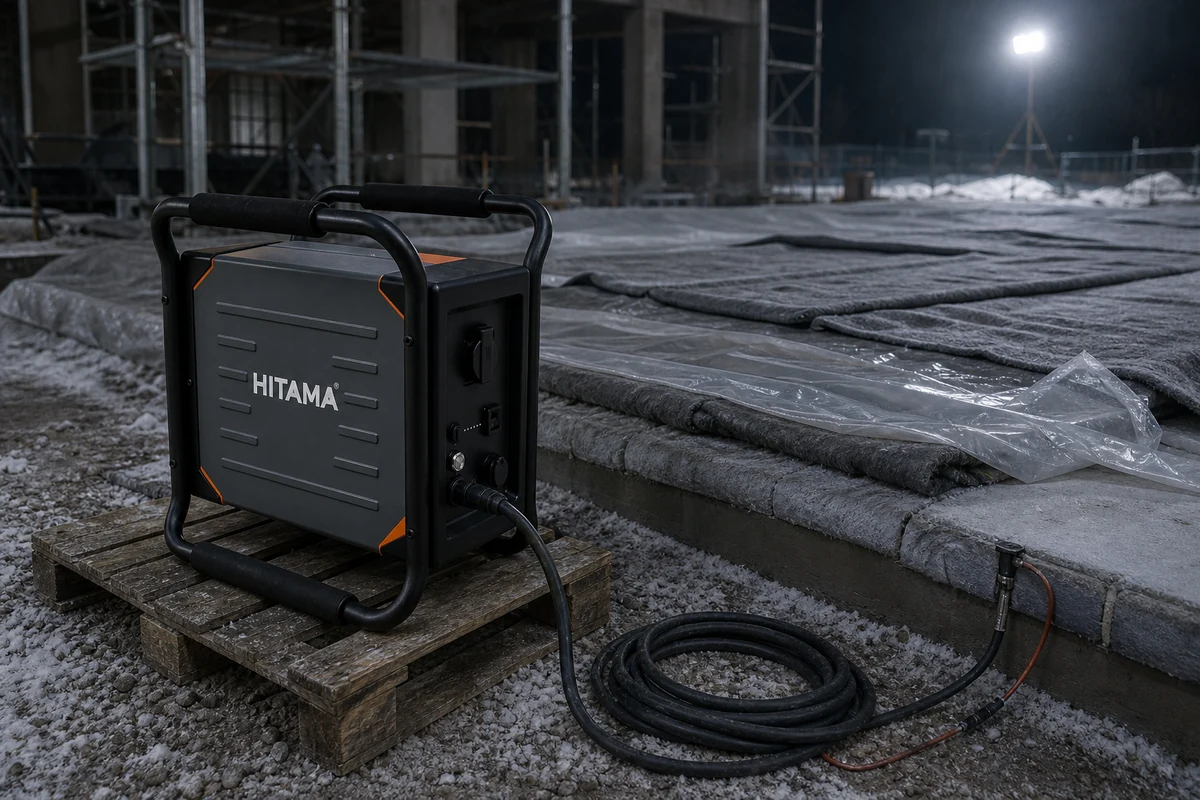
Frost protection is bought in nights, not in kilowatts
A frost-protection heater is switched by a thermostat, so the kilowatts on the plate are never what a night costs. The real numbers are the measured duty cycle and the interval between site visits.
- Mining & quarrying
A shutdown window is sized in tool-hours, not tonnes
A shutdown window is not sized by the tonnage the plant was built for but by the hours the tools run inside it: the isolation that makes the job safe takes every socket in the building with it.
- Construction & civil works
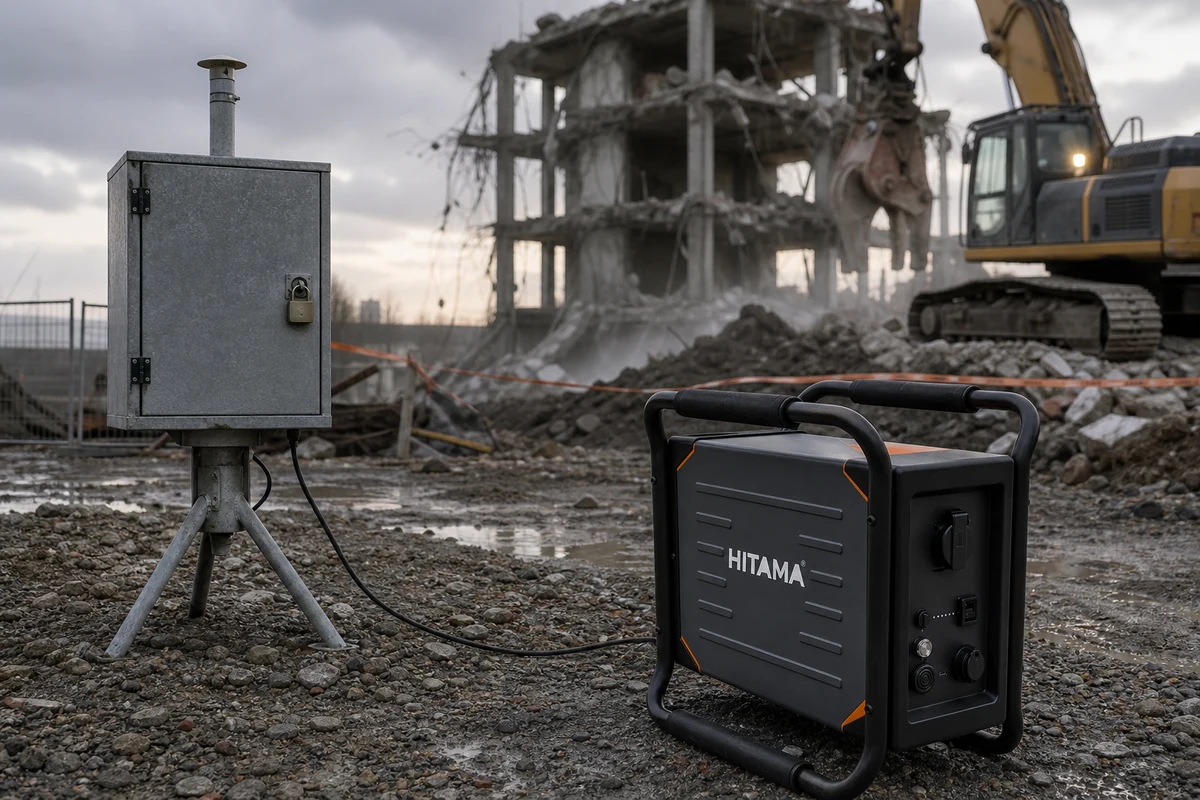
A gap in the record is the finding
A dust or noise monitor is the only load on a demolition site that fails without making a sound, and the missing data is what gets read later. The sizing month is January, the binding constraint is the heated inlet, and the real design work is the changeover round.
- Equipment rental
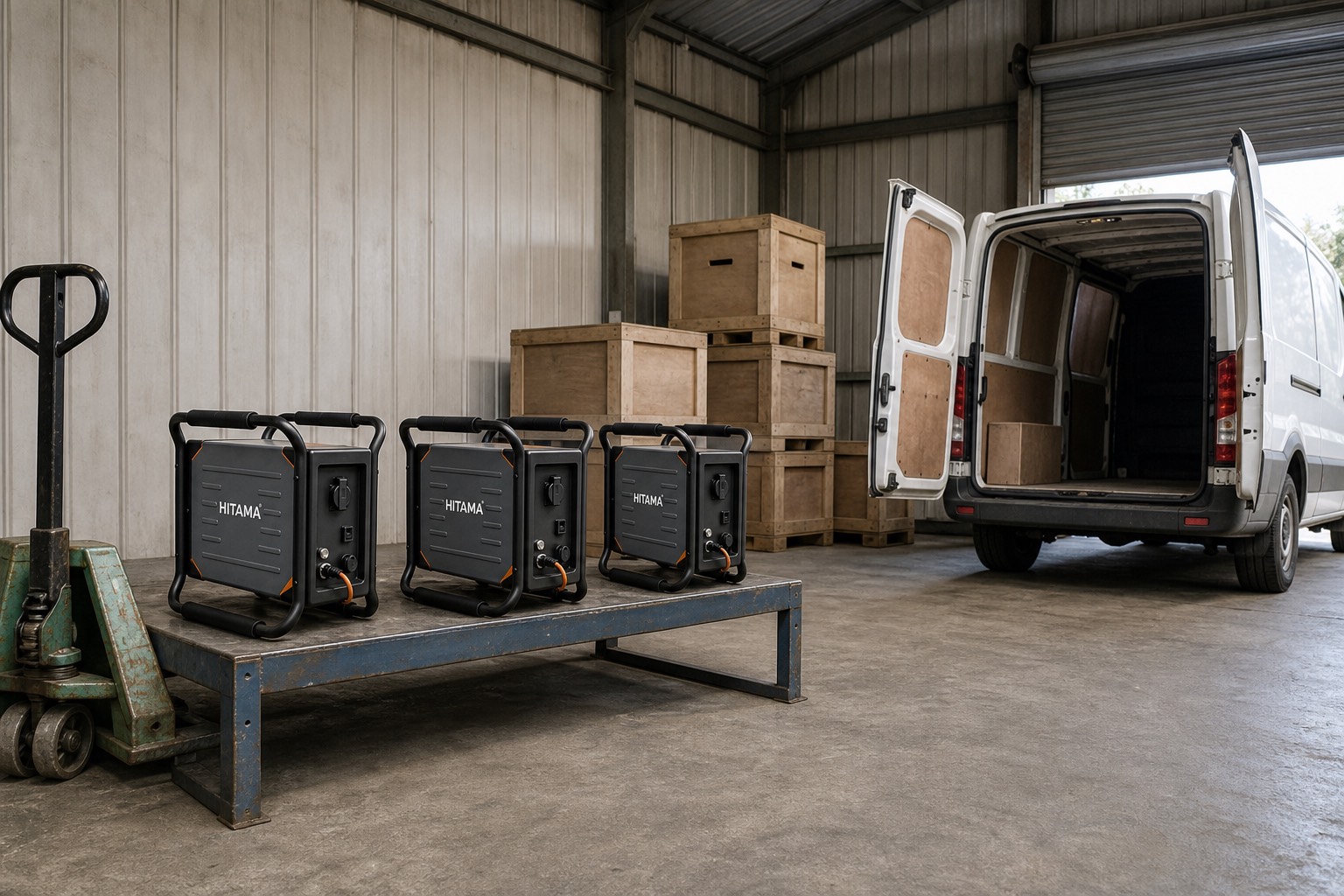
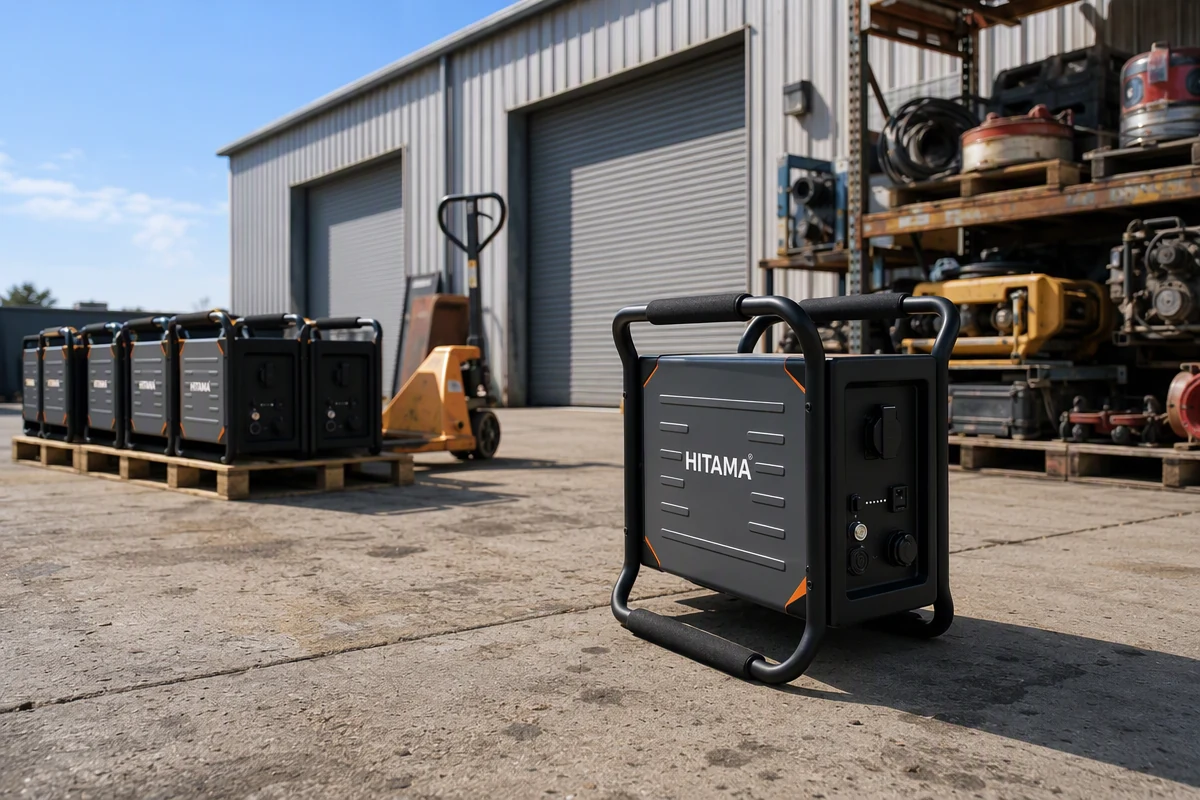
Six units, one socket: the charging bay decides the fleet
A rental fleet of battery units is capped neither by wattage nor by turnaround, but by how many independent charging circuits the yard has and how many hours the night actually contains. Six P25 units on one 230 V 16 A circuit need fifteen hours of charging — the fix belongs at the bay, not in the machine.
- Disaster relief & civil protection
The grid returns in instalments: power decisions before the units go home
Restoration after a flood or storm does not arrive as one switch-on. It comes back building by building, and the hardest power decision of a deployment sits in that window — the utility is there, and nobody yet dares to pull the battery.
The second order is where the price shows up
Minimum order quantity, lead time, volume price: three figures that appear in no datasheet. What rental companies and buyers should pin down before the first order — and why we do not print them on the site.
91 percent more storage — and no column for the jobsite
8.2 gigawatt-hours added in nine months, up 91 percent. What the new BSW figures say about jobsites — and what they do not say.
- Telecommunications & utilities
The mast is live. The socket is not yours.
A radio site can be healthy and still have nothing to plug into: the ways are assigned, the rectifier shelf belongs to the network, and the crew's tools need their own supply. The configuration follows from the plate watts of the tools, the weight that can be carried up the last stretch, and the temperature inside the shelter.
- Construction & civil works
Thirty metres of cable is a load, not a connection
A tool that starts on a five-metre lead trips on a thirty-metre one, and nothing about the tool has changed. On most sites the cable is the largest unplanned load in the circuit — which is why a portable unit belongs at the work face, not at the site entrance.
- Agriculture & outdoor work
The second milking is the deadline
On a dairy the binding constraint is not the milking load but the interval after it: the bulk tank compressor starts as the parlour empties, and the unit has to be full again before the next shift. A sealed, fanless 230 V unit is sized on two columns, the rated figure for the shift and the peak figure for the motor start, then checked against the recharge window.
- Fire & technical rescue
The fire is out and the supply is down: lighting the hours after the main switch
The main switch is isolated before crews enter, and that is the right call. It also takes out every light, every socket and the escape lighting — at exactly the moment overhaul, investigation and the fire watch begin.
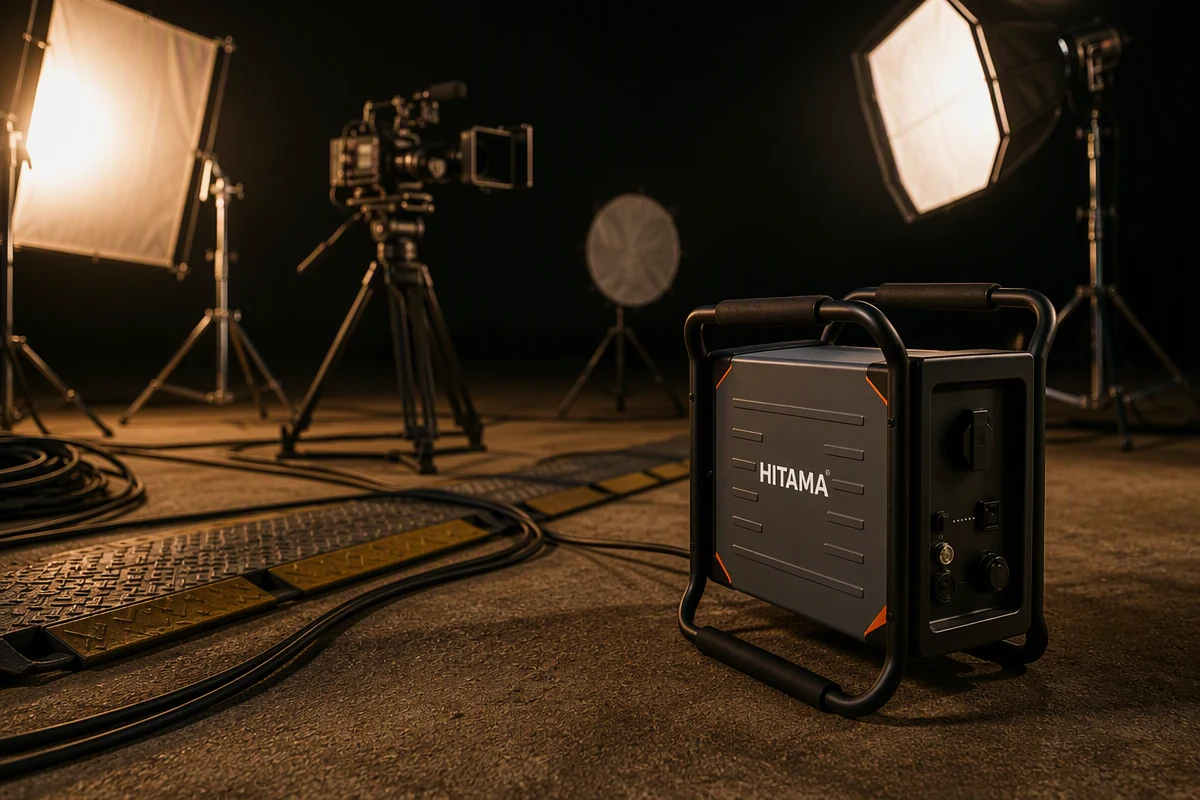
Sound decides, not light: power on a night shoot
On a night shoot the loudest problem is not the dark, it is the engine. What lighting, camera and sound actually draw, and where the limit sits.
Ten identical units are a system. Ten different ones are just stock
A rental fleet does not live on its strongest single machine but on whether the second unit can join it. What stays the same across the P series, why two to three units run in parallel, and what buying direct from the factory really changes here – without invented quantities, prices or lead times.
An order is not a site: what the 23 percent jump tells rental desks
Germany's Federal Statistical Office reports the sharpest seasonally adjusted monthly rise in main-construction order intake since the series began in 1991: plus 23.0 percent on July, driven by several large orders. Civil engineering is up 31.6 percent, building construction 12.4 percent. Why the headline is not a planning figure, and which one is.
- Mining & quarrying
The airway is the first load
Underground, the power question is an air question: every combustion unit in a heading is charged against the airflow the plan already has to move. A sealed unit with no intake and no exhaust stays out of that calculation, and the rest is sized from rating plates, hours and how the unit gets down the drift.
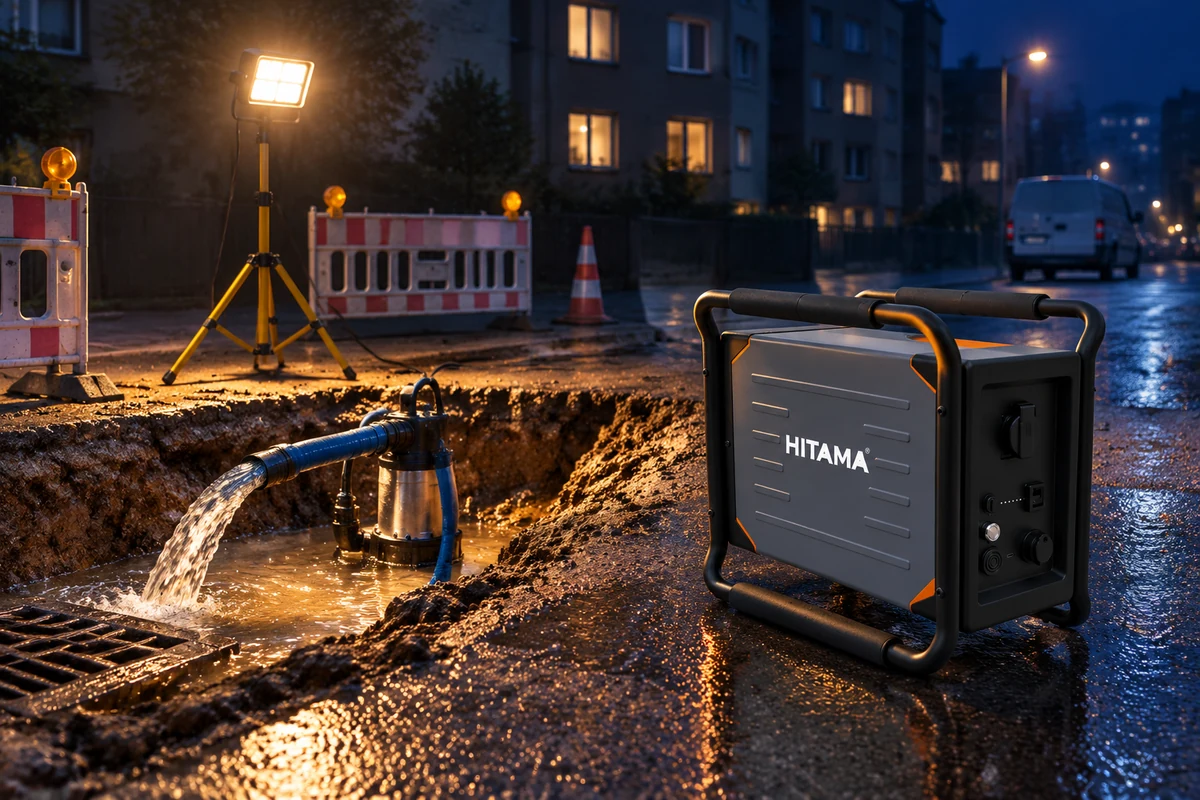
The trench fills up before the night is over
A street opening in a residential road, the shift running into the night, water standing at the bottom. What keeps the pit dry is not pump output — it is the discharge route and the way there.
The battery in your yard may now take grid power — the one on site may not
Germany's regulator decided MiSpeL on 1 October. For businesses running PV plus a battery, it changes when grid power in the battery costs you your feed-in privileges. For the portable unit on site, nothing changes.
- Emergency response
The drying starts while the consumer unit is still off
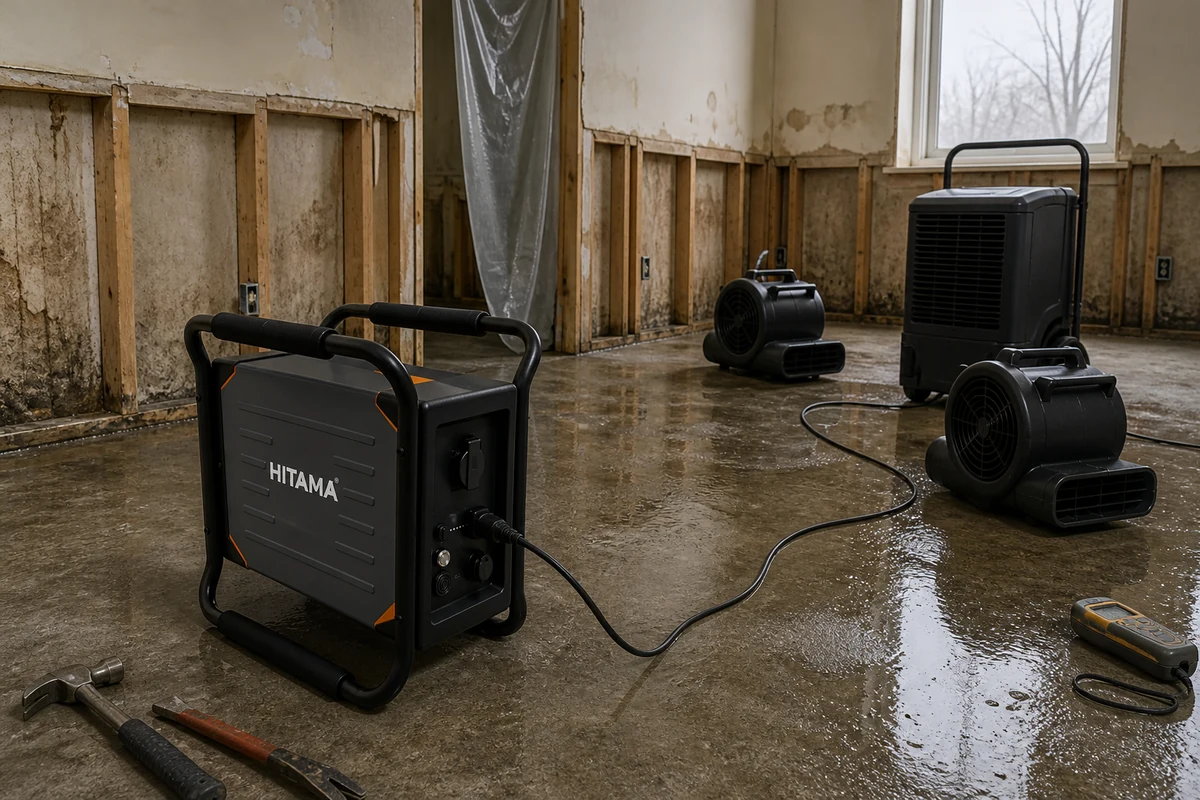
A flooded building is dried long before it is reconnected, and that gap is a power problem: a small load that has to run for days in an empty, sealed building. This is how to size for it from rating plates and hours, without guessing.
Three-phase is a question of phases, not of power
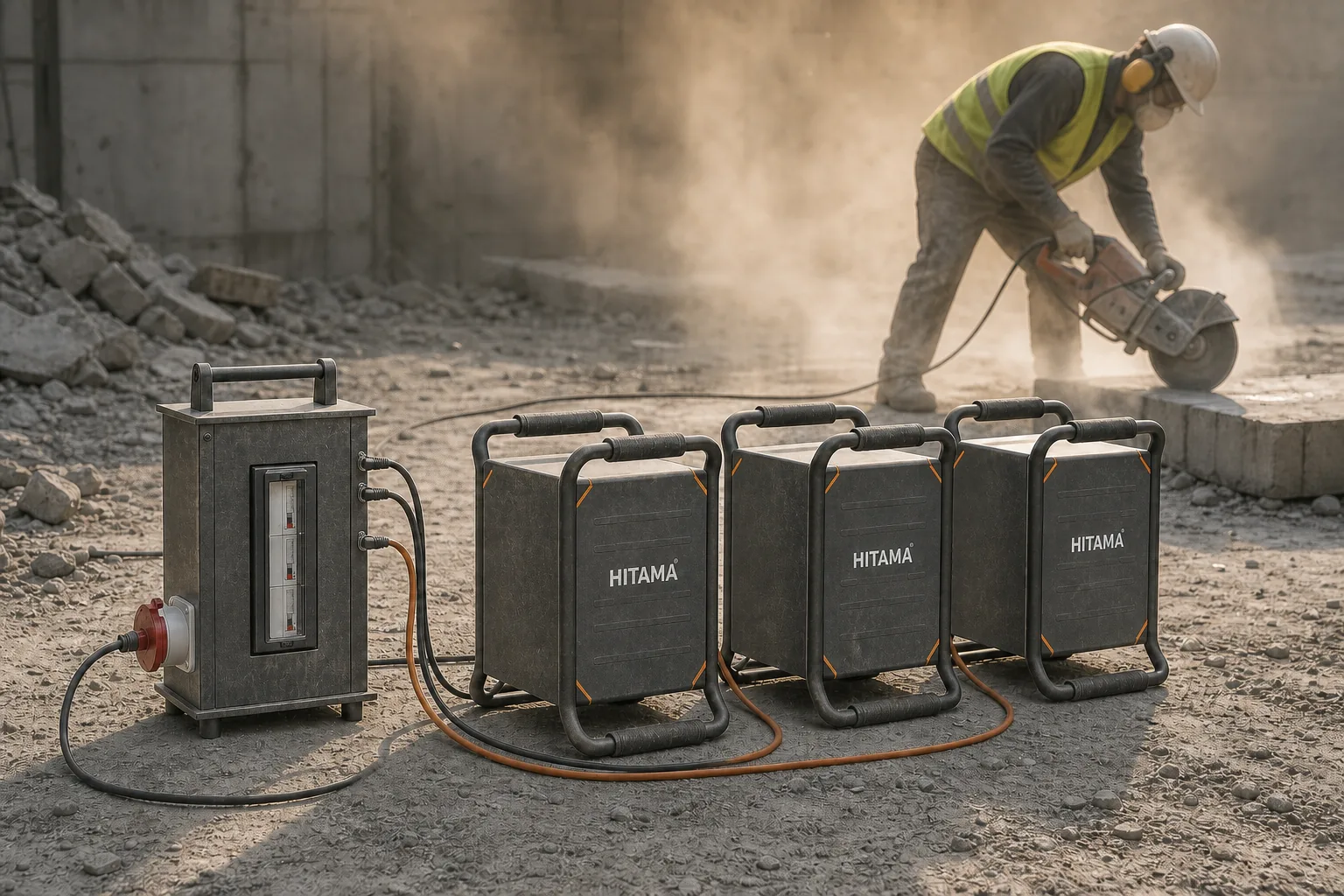
400 V from batteries is not created in one unit but from three P25 and the P25-T distribution unit. What 10 A per phase carries — and when the platform is too small.
Three UN numbers for one battery: what ADR 2027 changes in the rental yard
From 1 January 2027 ADR separates batteries by installation and chemistry: UN 3536 becomes 3536, 3563 and 3564. What this means for sales, rental and returns — and what is explicitly not affected.
- Construction & civil works
Winter breaks the air path before it breaks the battery
Frost rarely takes a battery out of service; it takes the air path around it. This is how a sealed, fanless unit behaves inside its published range, and what falls outside it.
OEM is printed on the box, not on the factory gate
OEM describes a distribution arrangement, not a quality level. What shifts for distributors when brand and production are two parties — and three questions worth asking before signing.
A quarter of your power bill is moving: what 1.9 percent means region by region
German grid fees rise by an average of 1.9 percent in 2027 — but by around 10 euros in the western states while falling in the eastern ones. Why the national average is the wrong number for rental fleets.
- Construction & civil works
Where the pour stops, the joint starts
A concrete placement is a continuity test, not a load test: the vibrators are light, but an interruption leaves a cold joint that stays for the life of the structure. This is how siting, peak output and the gap between trucks decide whether the pour finishes.
- Rail, tunnel & infrastructure
Who signs the unit into the section: the questions asked before the work starts
Powering a tunnel section is rarely decided by the load list. It is decided in the five minutes at the entrance, when someone has to say whether the unit is allowed in at all — and that decision is about consequences, not specifications.
Two digits, three misreadings: what IP54 promises a rental fleet — and what it doesn't
IP54 means dust-protected and splash-proof — not sealed. What the two digits promise under IEC 60529, where the limit sits for pressure washing and immersion, and why the test ignores ageing.
Three months to the deadline: what has to be in the machine file by 20 January 2027
From 20 January 2027 the EU Machinery Regulation applies in full. What hire companies and dealers need on file by then — and which question only the manufacturer can answer.
- Construction & civil works
After 22:00, the meter stands at the boundary
Night work is judged on what is audible at the boundary, not on what the tool is doing. What a battery unit removes is the engine note, the exhaust and the refuel — the parts of the night that have nothing to do with the job.
- Telecommunications & utilities
What goes down the ladder: power for work inside a street chamber
Street work happens on two levels in one shift. The moment the work face is under a lid, the load list stops being sorted by wattage and starts being sorted by what can be carried down a ladder.
Kilowatt-hours against litres: why two numbers only become comparable in hours
2.7 kWh against a 5-litre tank — two numbers that both stand for energy and still do not measure the same thing. How rental desks and site managers bring both sides onto one denominator: hours at the load that actually runs.
A corridor, not a price: what the 2026 CO₂ range means for rental fleets and site managers
In 2026 the CO₂ price is no longer fixed at 55 euros but moves between 55 and 65 euros per tonne. For rental companies that makes the fuel share of a quote a variable — and shifts the diesel comparison.
- Defence & field operations
The unit is idle most of the year: what decides readiness between deployments
Every radio on the table has a test routine and a logbook entry. The power unit beside it usually has a note with one number on it. The deployed hour gets specified; the months in between decide whether it happens at all.
- Construction & civil works
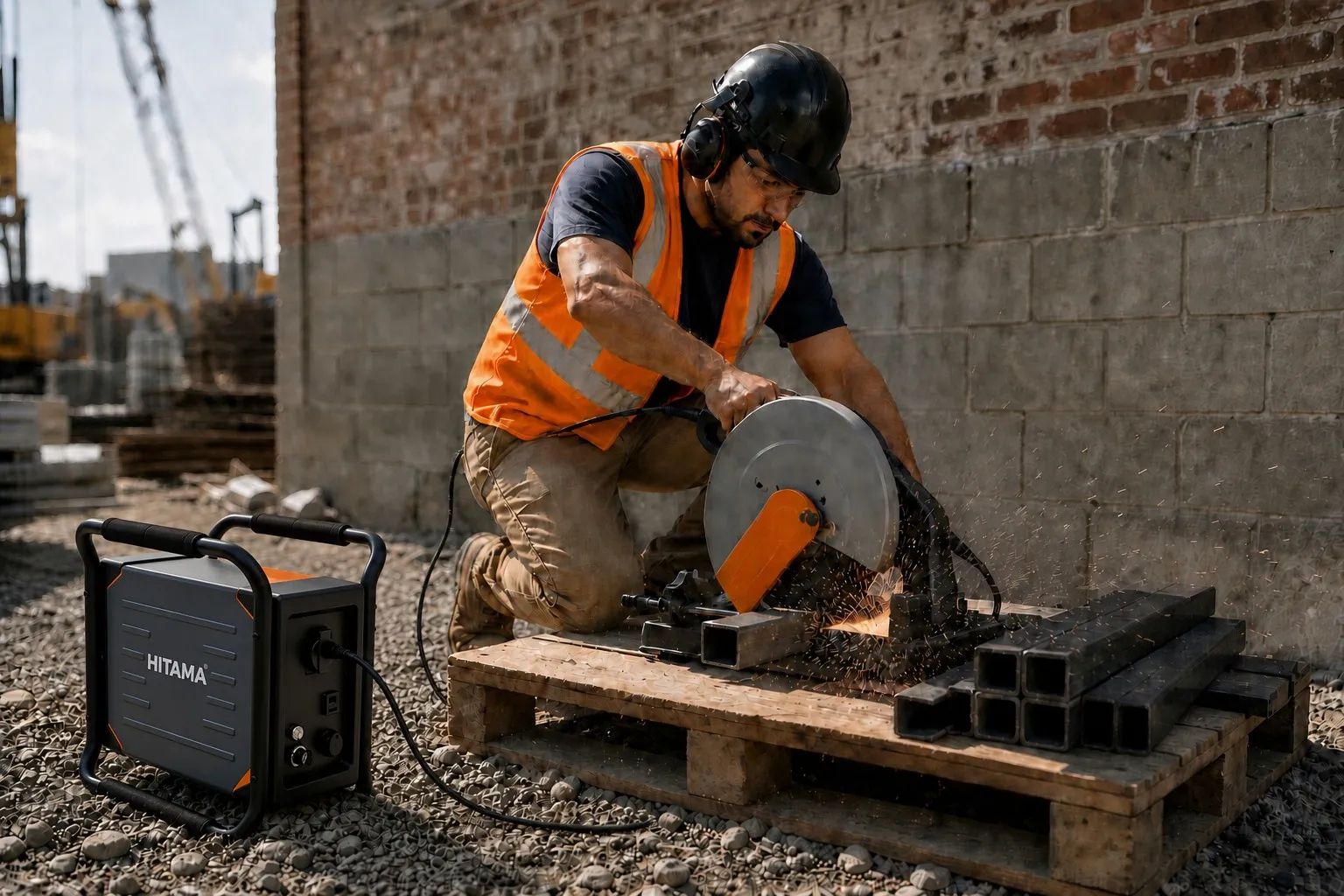
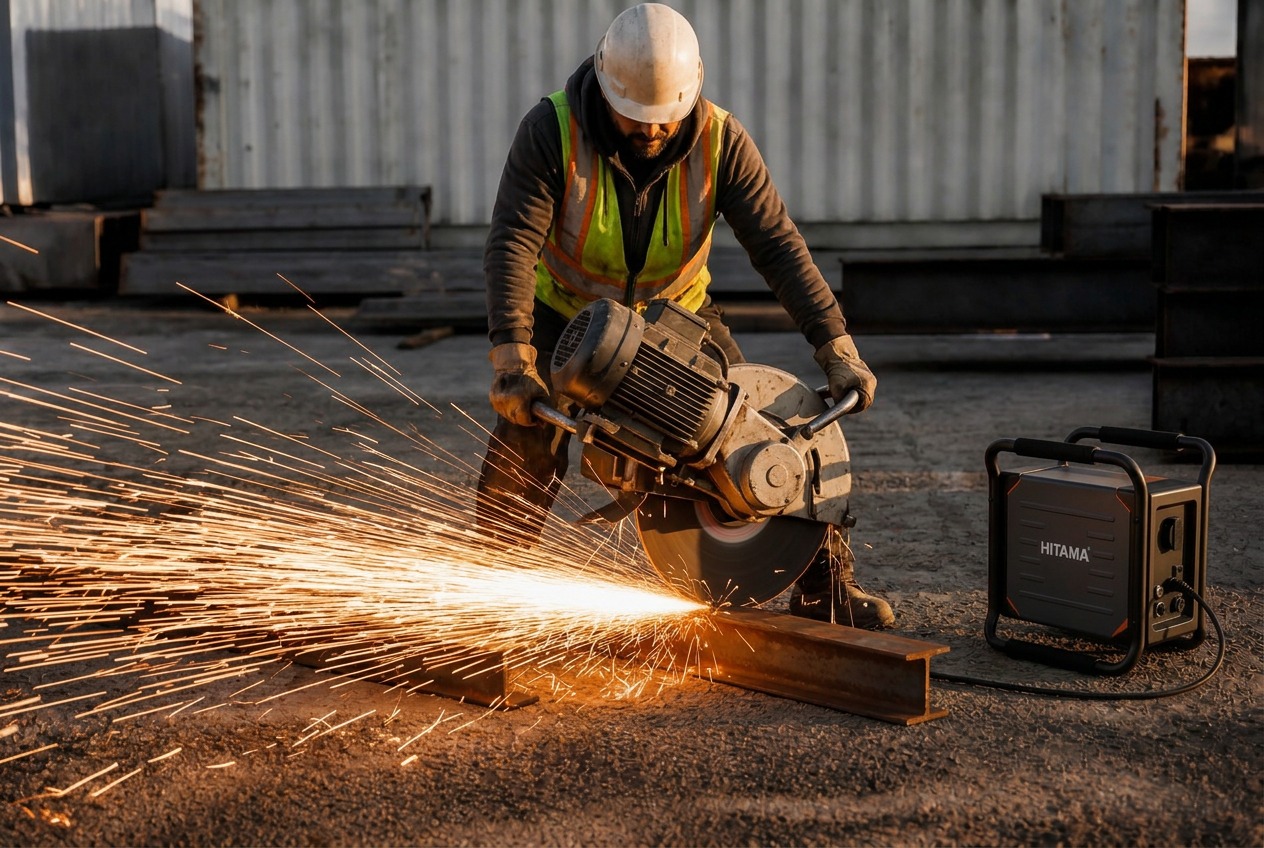
Cut-off saw on wet steel: why one unit often is not enough
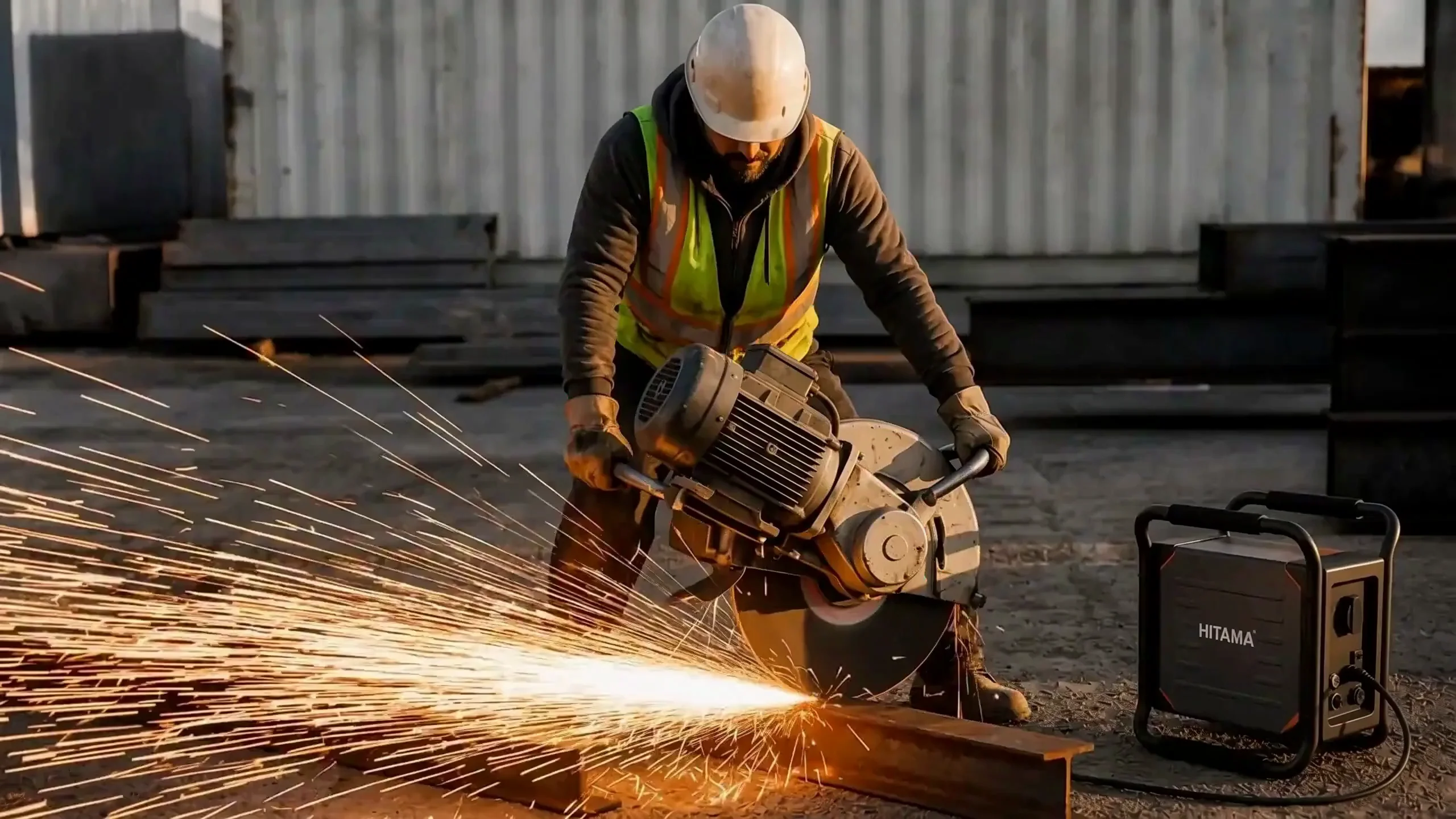
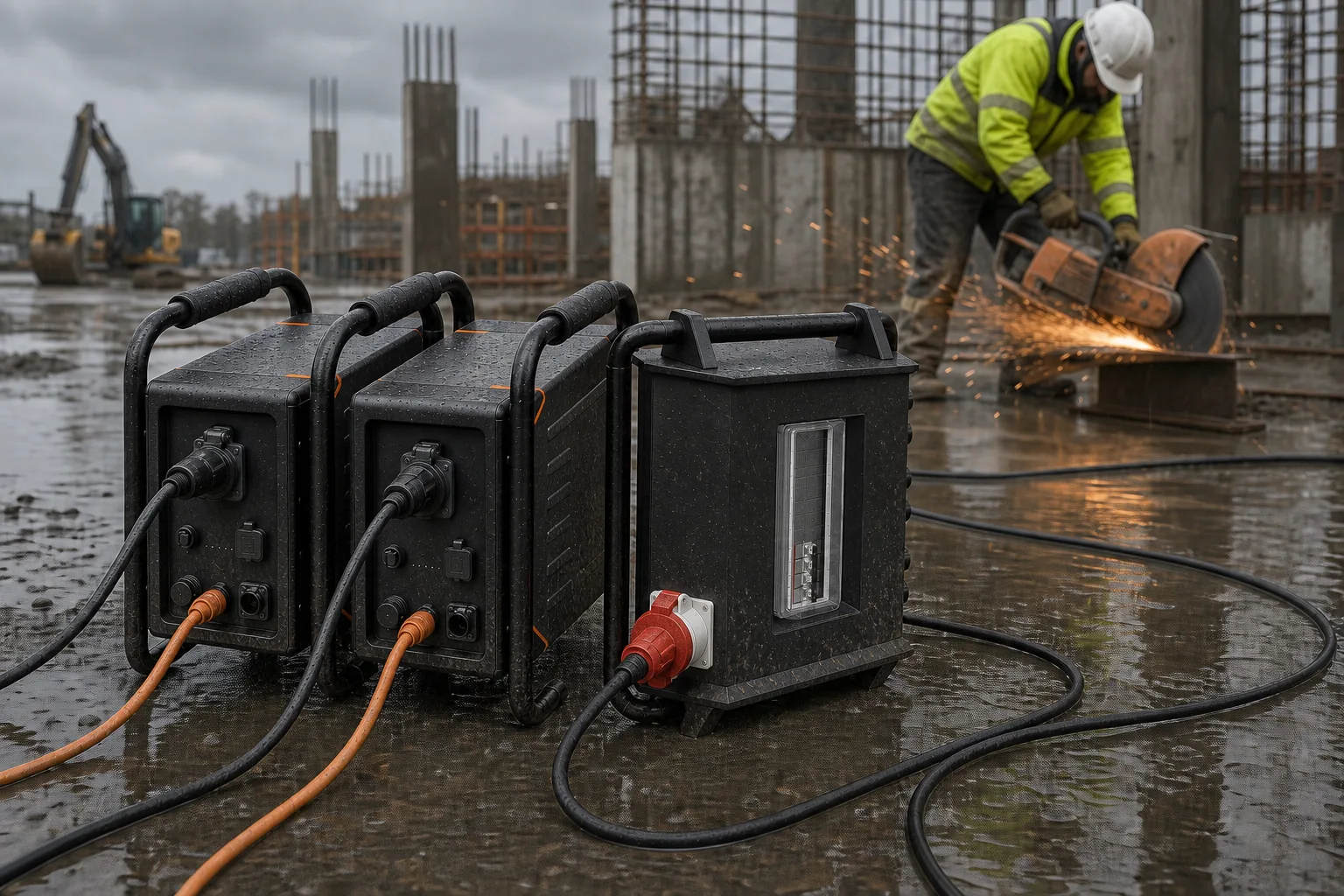
Inrush current decides, not rated power: when a single P25 carries a cut-off saw, when two units on the P25-D are needed — and why the load hangs on the left of the box, not the front.
- Equipment rental
The QR code decides: what rental and procurement must check before 18 February 2027
From 18 February 2027, industrial batteries above 2 kWh need a digital battery passport reachable via a QR code. For rental and procurement, that moves the burden of proof forward — to the supplier.
- Construction & civil works
Machine first, socket second: what the new excavator data means for rental yards
More than 570,000 excavators sold worldwide, one in two construction machines. The same report contains the line that matters for rental: electric excavators started to move in 2026 — and the power supply does not come with them.
- Equipment rental
Three faces, one rule: why no cable leaves the front of the distribution box
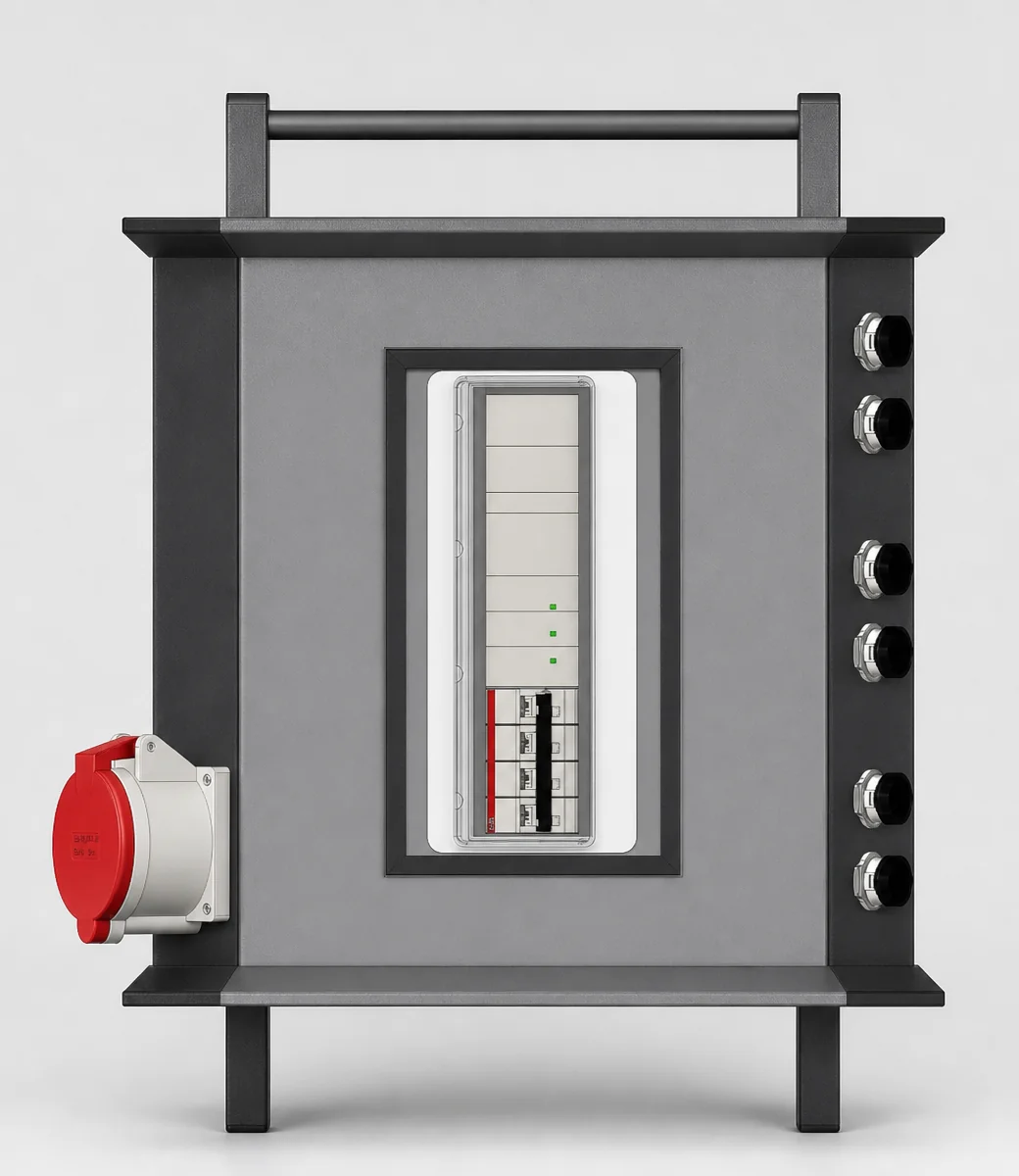
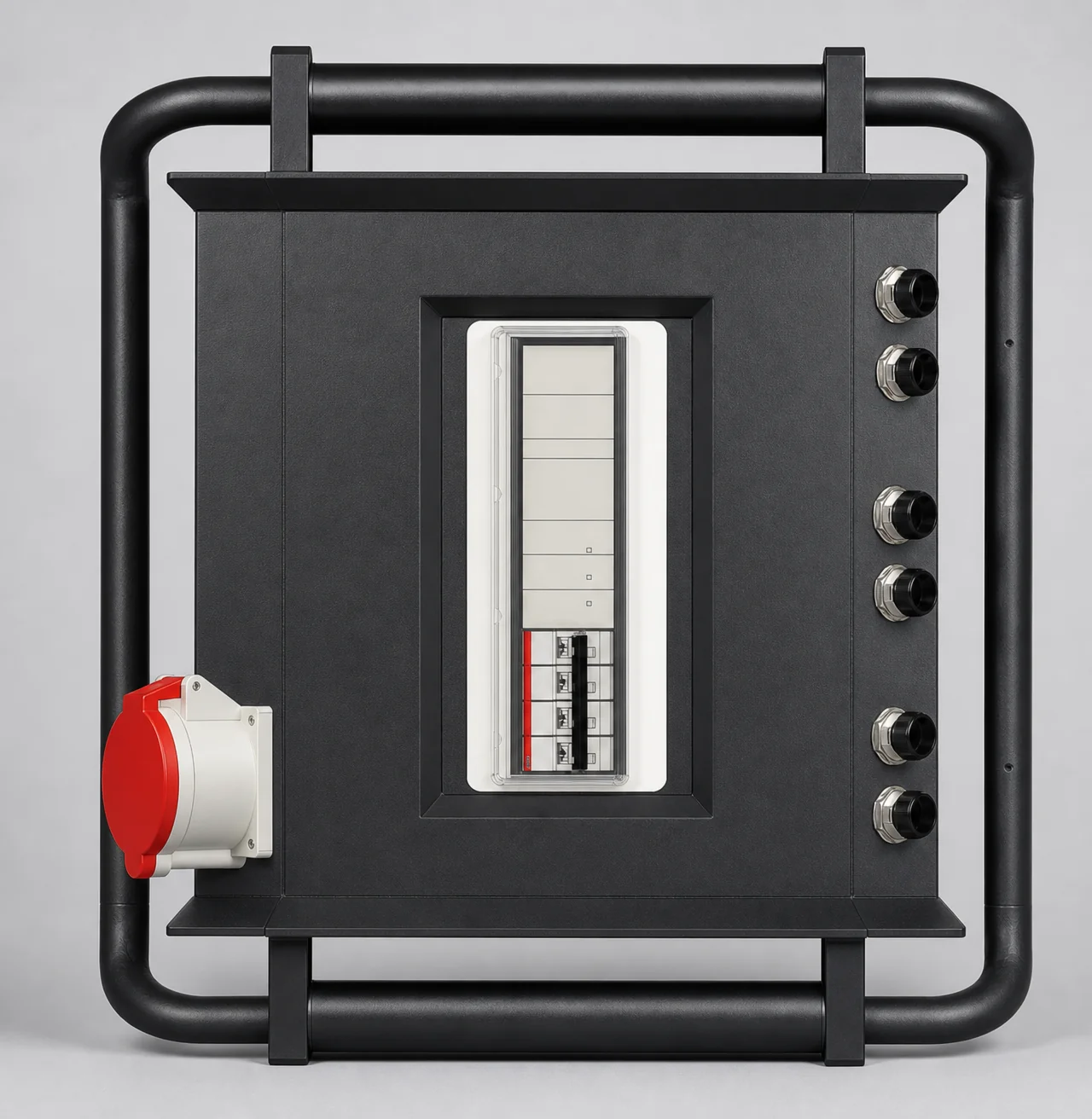
On the distribution box it is not the power rating that decides, but which face is allowed to do what. Three faces, three jobs — and three checks at every hand-over.
- Mining & quarrying
The machine stays where it stopped: power for field repairs at a quarry
Most repair hours in a quarry are spent at machines that cannot come in: a haul truck on the ramp, a loader at the stockpile, a rig stopped mid-hole. The work order that follows splits in two, and the line between the halves is electrical.
- Equipment rental
Proof, not posters: what the European Rental Week leaves behind on Monday
The European Rental Week 2026 ends on 18 October. The campaign asks for examples — but the real evidence is written down at hand-back, not on the poster.
- Disaster relief & civil protection
The camp is not the whole operation: power across the phases of a relief deployment
Civil protection deployments get planned around the camp, but an operation is a sequence of places: staging point, operational site, handover. The transitions decide the configuration, not the peak load.
- Equipment rental
Manufacturer or dealer? What procurement and rental should check on a factory visit — and what a visit does not prove
Two quotations can look identical: the same power rating, the same IP class, a similar price. Whether there is a works or a trading warehouse behind it comes down to three things only a works can show — and to one question no datasheet answers.
- Equipment rental
One percent growth, a third without a construction site: the ERA Market Report 2026 for rental operators
The European Rental Association published its 2026 Market Report on 13 October 2026. The publicly available figures: 1% growth in 2025, €35.5bn of expected rental turnover in 2026 across 17 countries, around a third of it off the construction site. With sources — and with what the summary does not say.
- Fire & technical rescue
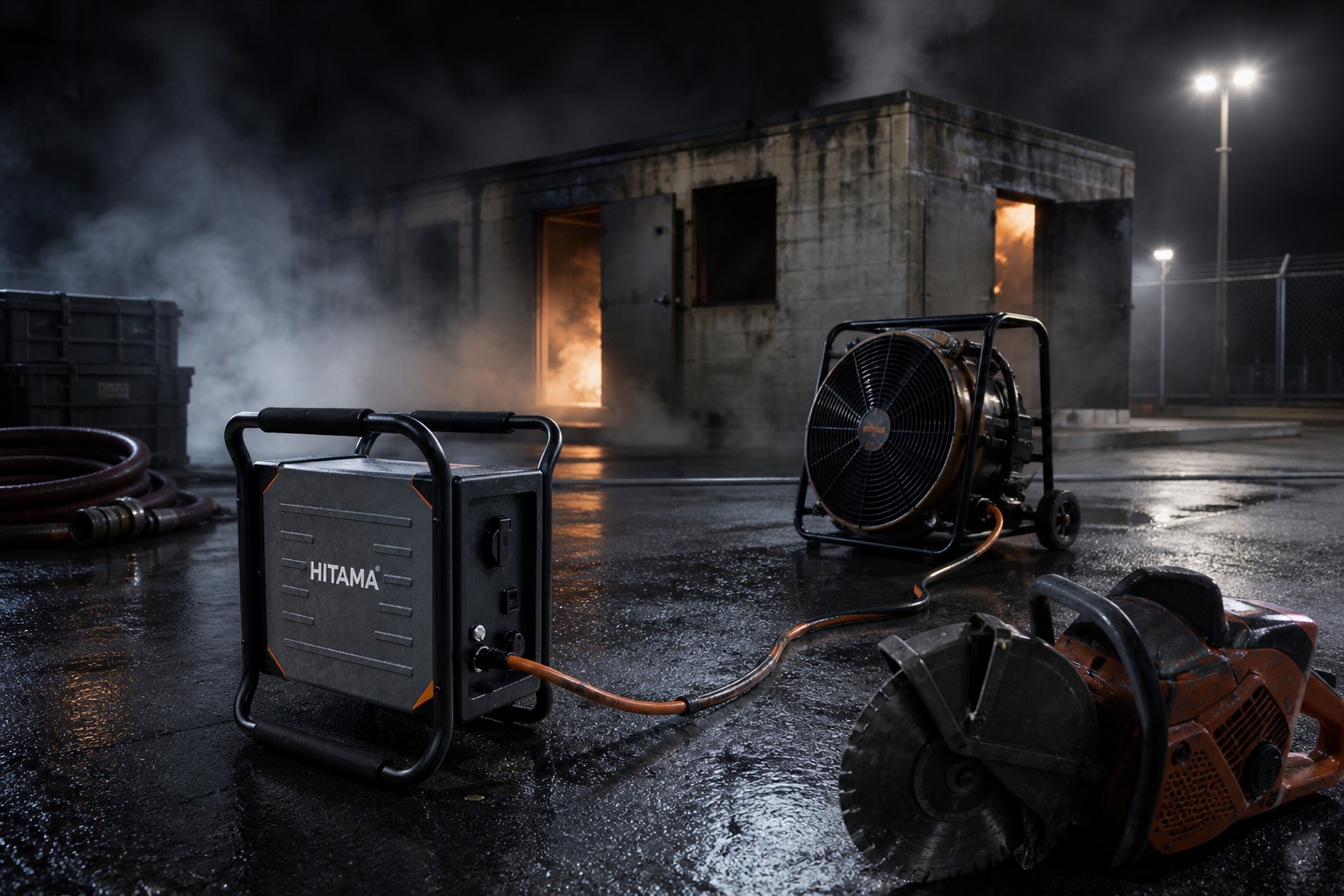
The drill, not the incident, sets the energy budget
Fire services work out their power requirement from the incident, but the incident lasts minutes and the training day lasts hours. The ventilation fan and the lighting are what actually spend the energy — and that is where the configuration gets decided.
- Construction & civil works
The 230/400 V switch: what procurement and rental decide before the order
A 230 V machine runs on almost any site. A three-phase load only runs when the output side matches. Three documented configurations with their output ratings — and the four questions to settle before the order.
- Construction & civil works
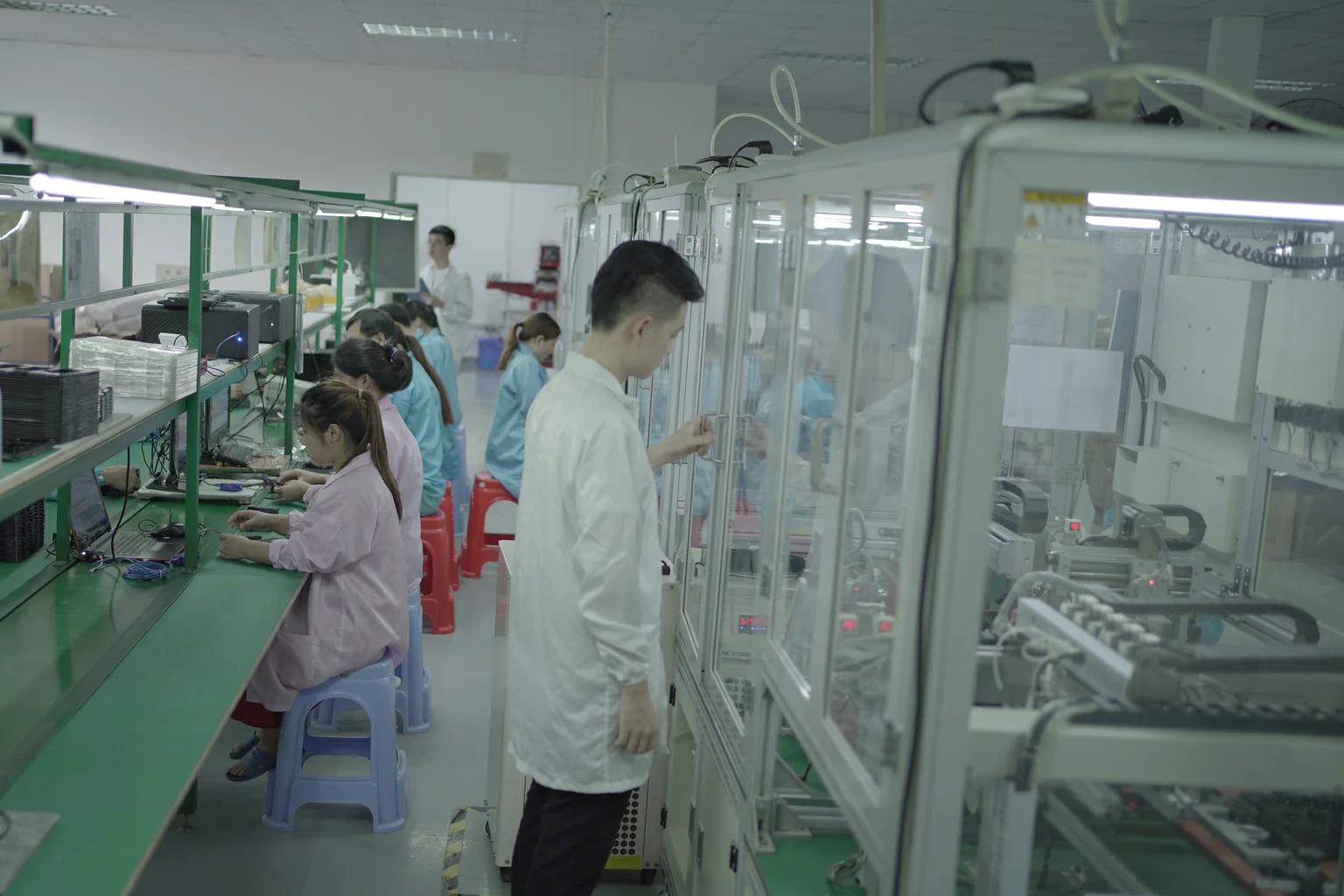
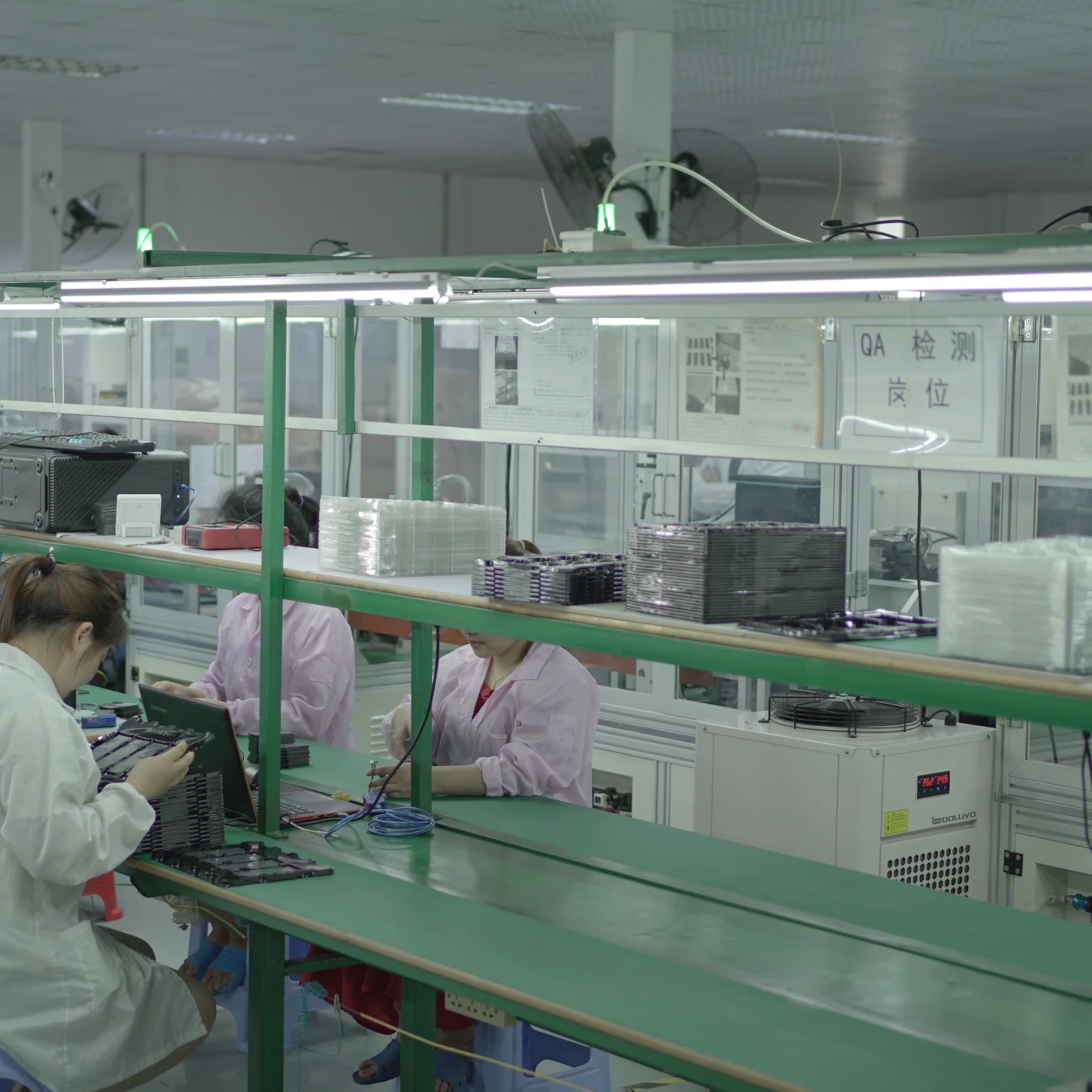
Three stations, ten checkpoints: what your unit goes through before it ships
Whether a unit survives a rental fleet is not decided in the datasheet. Every P25 and P36 unit passes through three stations and a ten-point protocol in our own plant. Every figure below comes from our own inspection sheet.
- Agriculture & outdoor work
After the last person leaves: power for the loads that run unattended
On a farm the hardest load is usually not the biggest one. It is the one that has to keep running at night with nobody on site — and the honest question is what you have planned for the hour the source runs out.
- Equipment rental
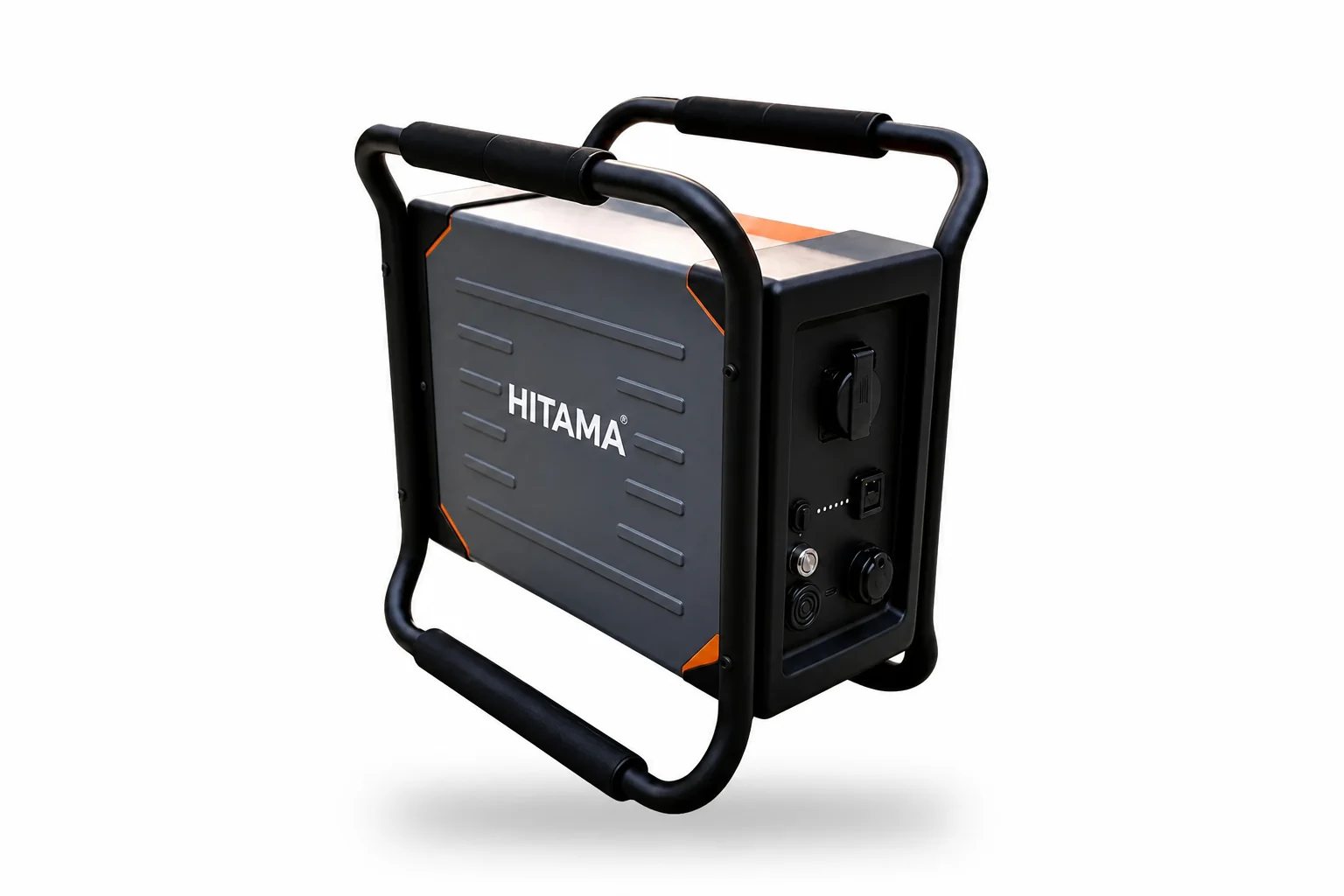
Eight positions, eight decisions: the P25 front face
The P25 front face is the entire interface. A walk-through of its eight positions — and the two mix-ups that come back most often after a handover.
- Welding supply
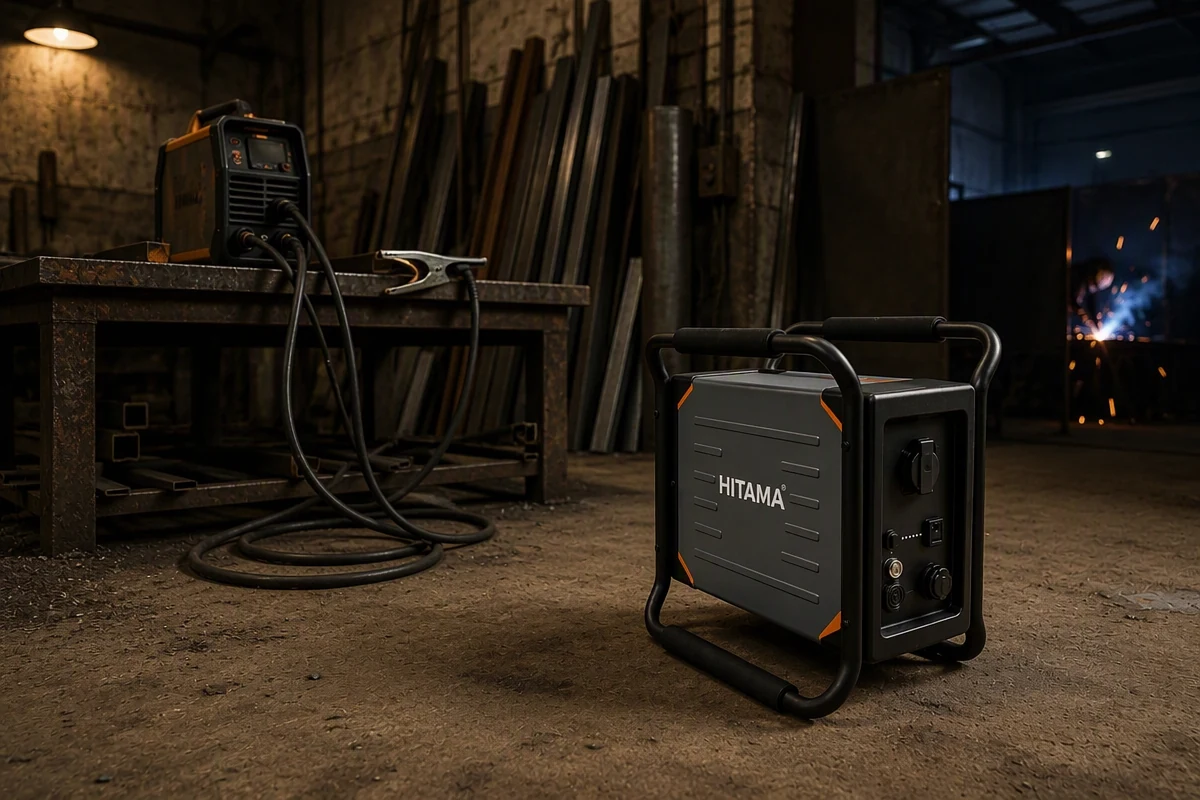
Welding in a building with no live supply: the decision is placement, not size
In fit-out and refurbishment work the building's own supply is usually switched off, and no engine can run in an occupied room. That turns the welding power question into a placement decision before it ever becomes a sizing one.
- Equipment rental
Before the battery goes out instead of a generator: four questions at the hire counter
Most customers never ask for a battery unit. They ask for a generator. Four questions settle which one actually leaves the yard — and the tool list is what settles them.
- Construction & civil works
Diesel generator or portable power station on site?
Diesel or battery is the wrong question — it mixes continuous load with working load. Four questions that settle it, plus the five figures to require in writing from any supplier.
- Construction & civil works
Why the cooling design decides service life
A fan needs an intake — and an intake is where dust and moisture get into the electronics. Why this design question matters more on dusty sites than the capacity figure.
- Construction & civil works
Load profile: what output does your work stage actually need?
Most sites are sized on the sum of all connections — and end up oversized. Four steps to a real load profile, with a worked example and the energy formula.
- Equipment rental
The question catalogue: what to obtain in writing from every supplier
Seven blocks, 21 questions — manufacturer-neutral. It normalises the basis of comparison: as long as two suppliers give different information, you are comparing answer formats, not products.
- Equipment rental
Transport & Packaging: documented figures for your shipment
For dangerous goods the document decides, not the product description. UN 3480, class 9, sea transport, II packaging, weights, the two customs document numbers — plus the CE scope we can document (EMC Directive) and the areas we explicitly cannot.
- Rail, tunnel & infrastructure
The walk decides the configuration: power logistics inside a tunnel
A possession window is measured in hours; the walk to the work face is measured in minutes. Those two numbers shape the power plan more than the tool list does.
- Fire & technical rescue
Power at the incident: what changes when the generator stays on the truck
Three things a combustion generator does at an incident have nothing to do with wattage: it buries radio traffic, it puts exhaust where crews work, and it stops when the fuel runs out.
- Disaster relief & civil protection
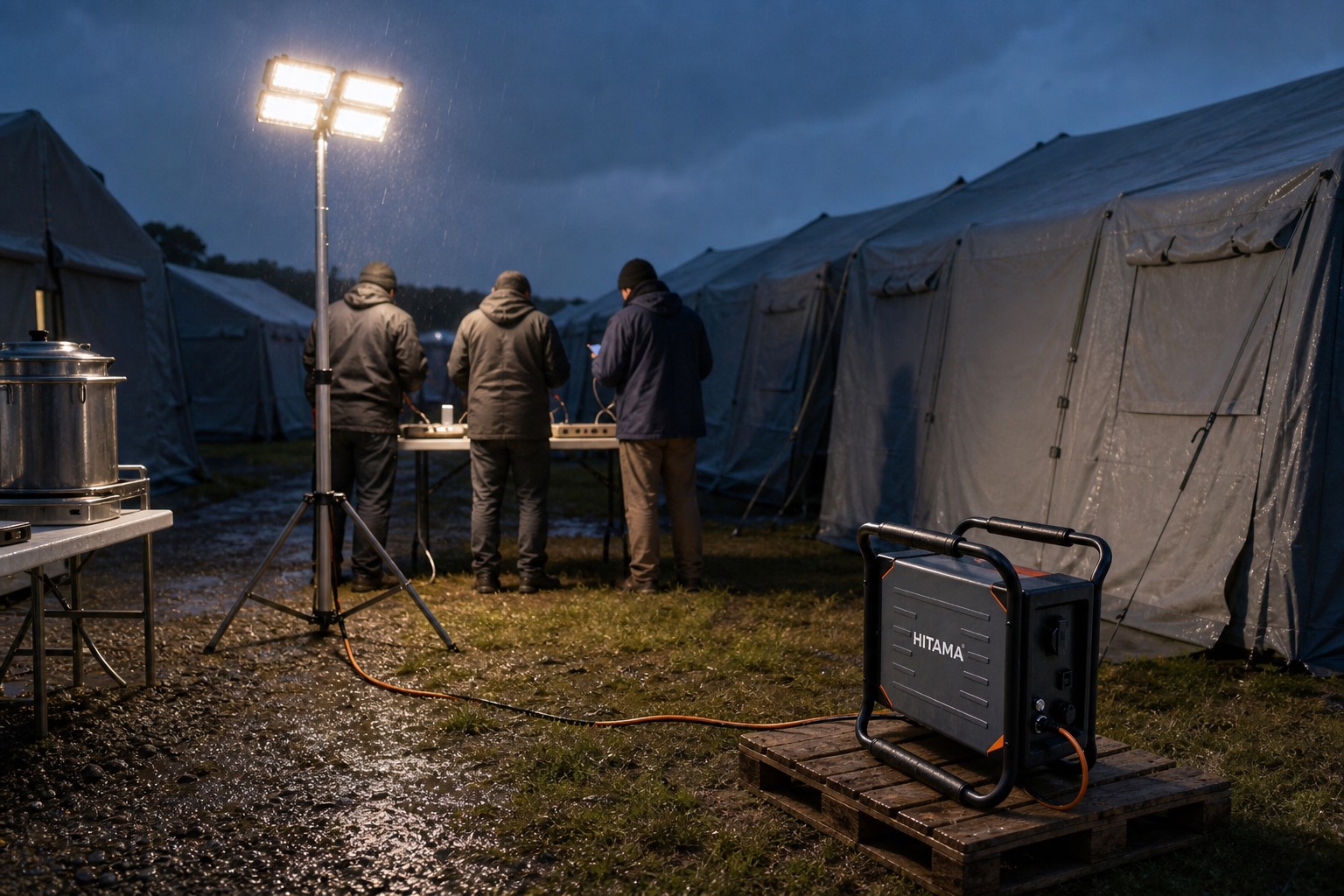
When the grid is the casualty: power for a relief camp
In a relief operation the grid is often the thing that failed. What remains is a list of jobs that all need electricity — and several hundred people who need to charge a phone.
- Mining & quarrying
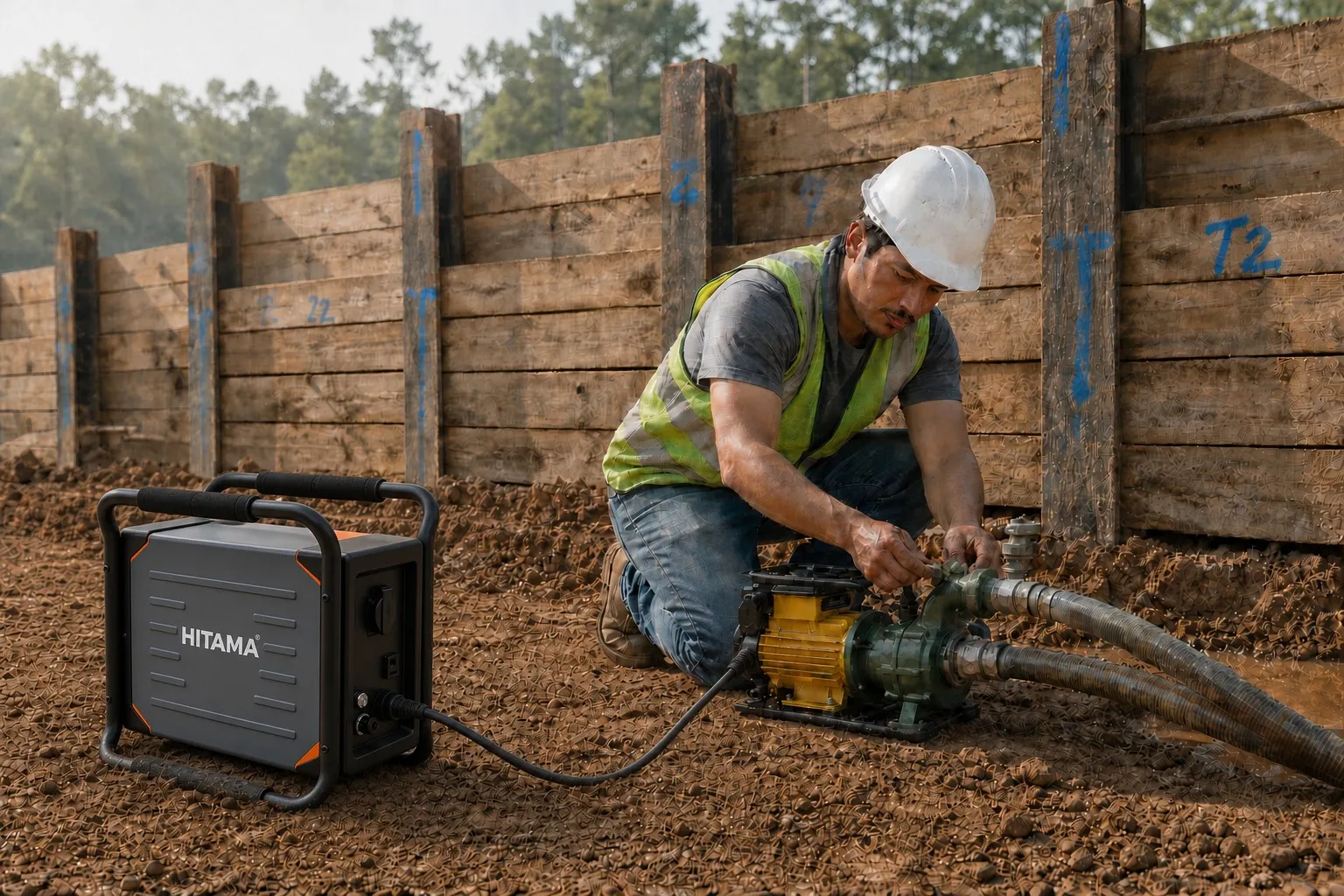
Dewatering and drilling at the face, without a generator on the bench
Dust, vibration, a slope nobody wants to carry a can up, and a rule against refuelling where the dust is explosive. The work moves with the face — the power has to move with it.
- Geological exploration & survey
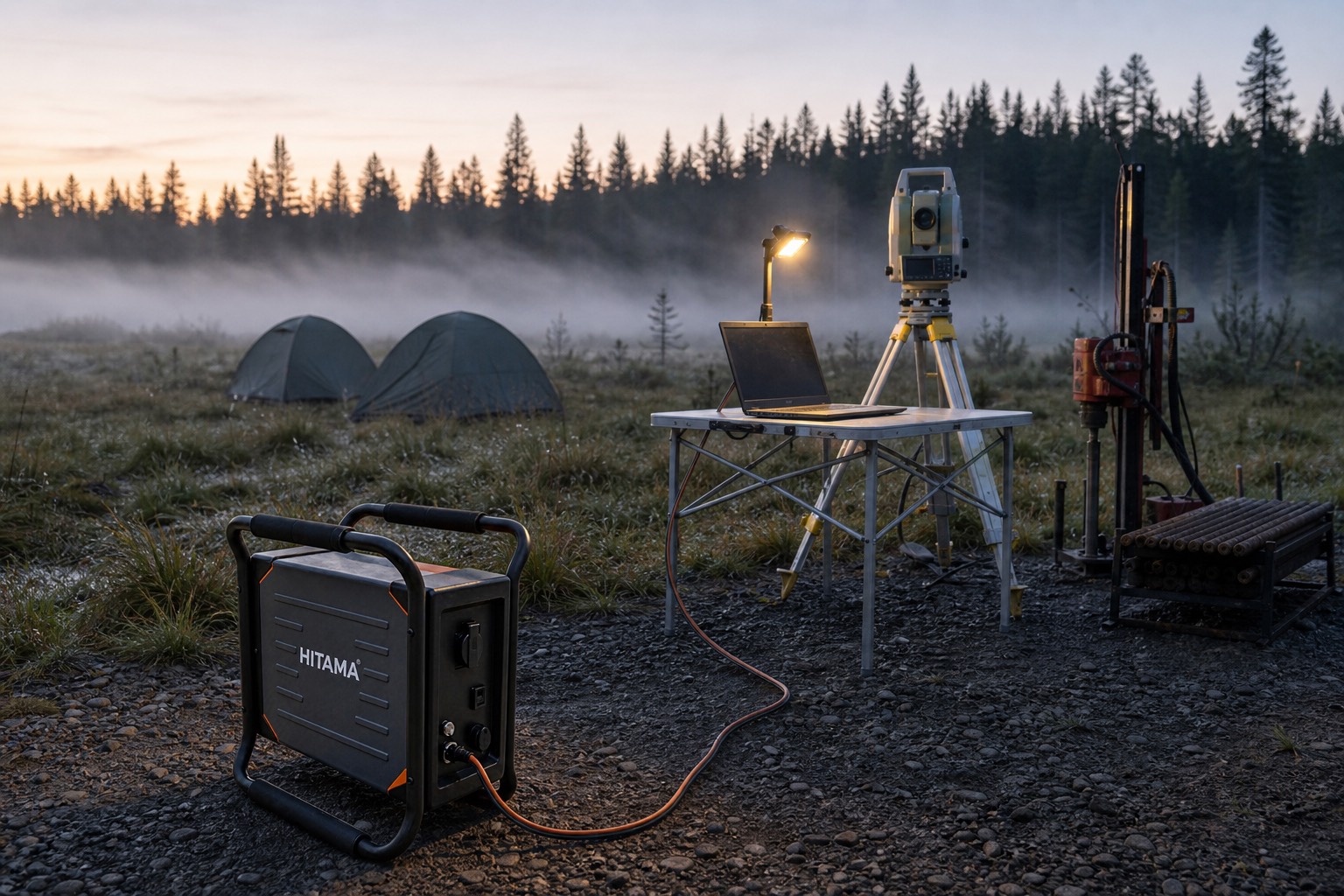
A camp that carries its own power: survey and exploration off-grid
A survey camp is a load list in the middle of nowhere: a core drill, an instrument that must not lose power mid-reading, a laptop, and batteries for everything else.
- Defence & field operations
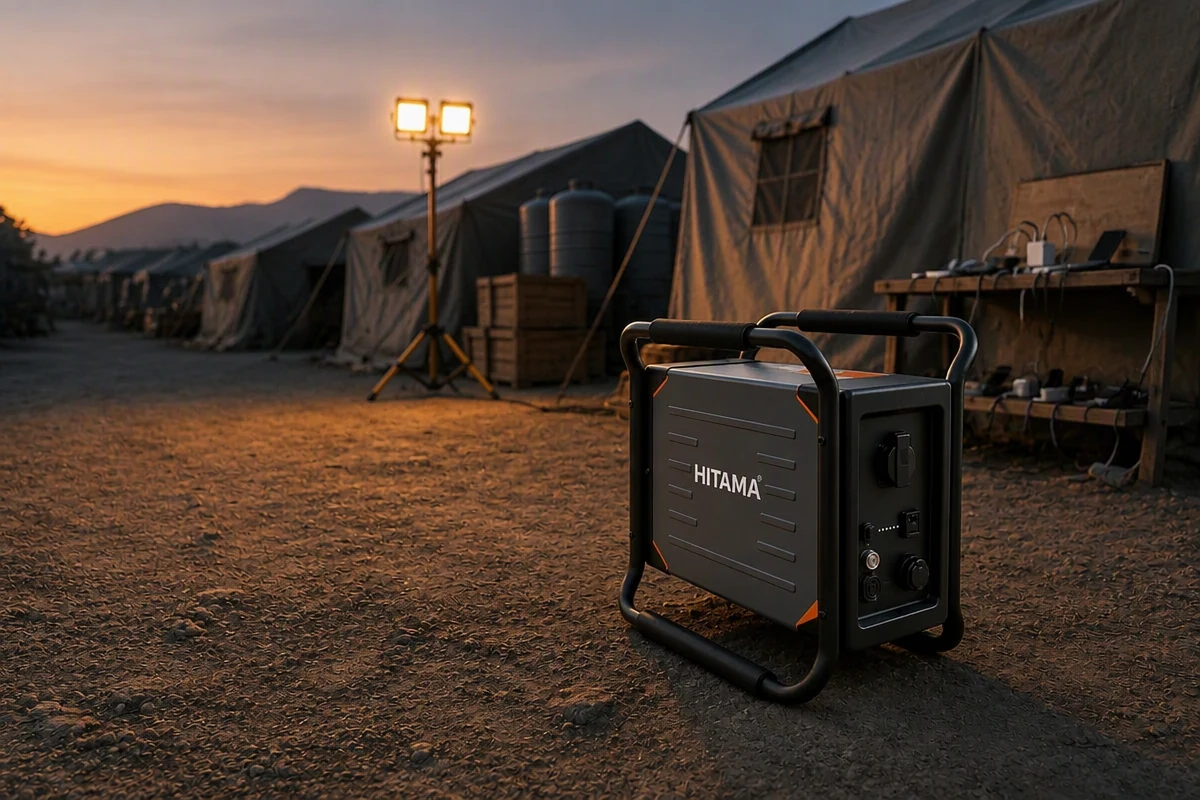
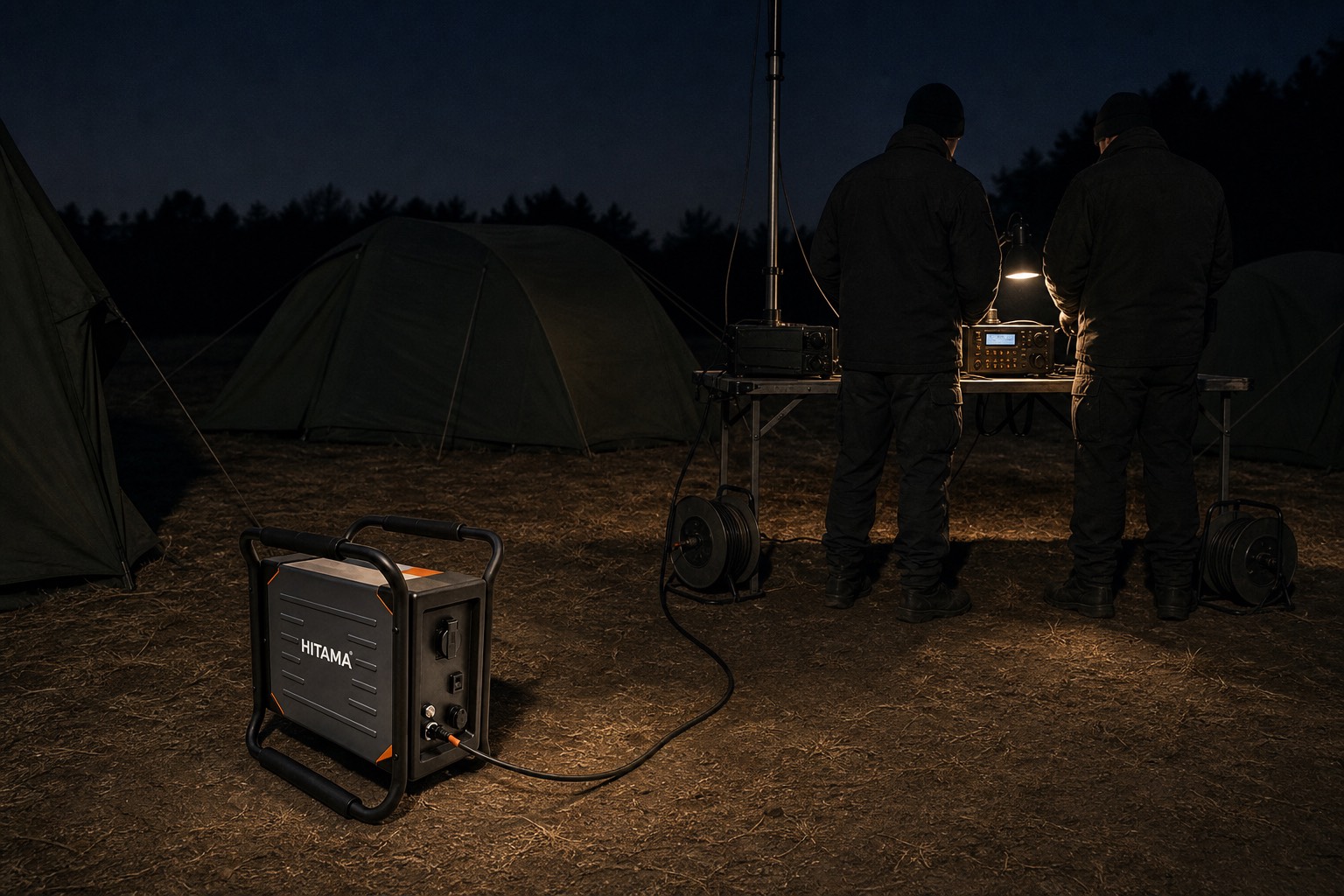
Silent power in the field: camps, communications and charging
What a field camp actually runs on: a radio set that must not drop, charging for a section all at once, and lighting. No engine to hear, no exhaust where you sleep, no fuel run.
- Telecommunications & utilities
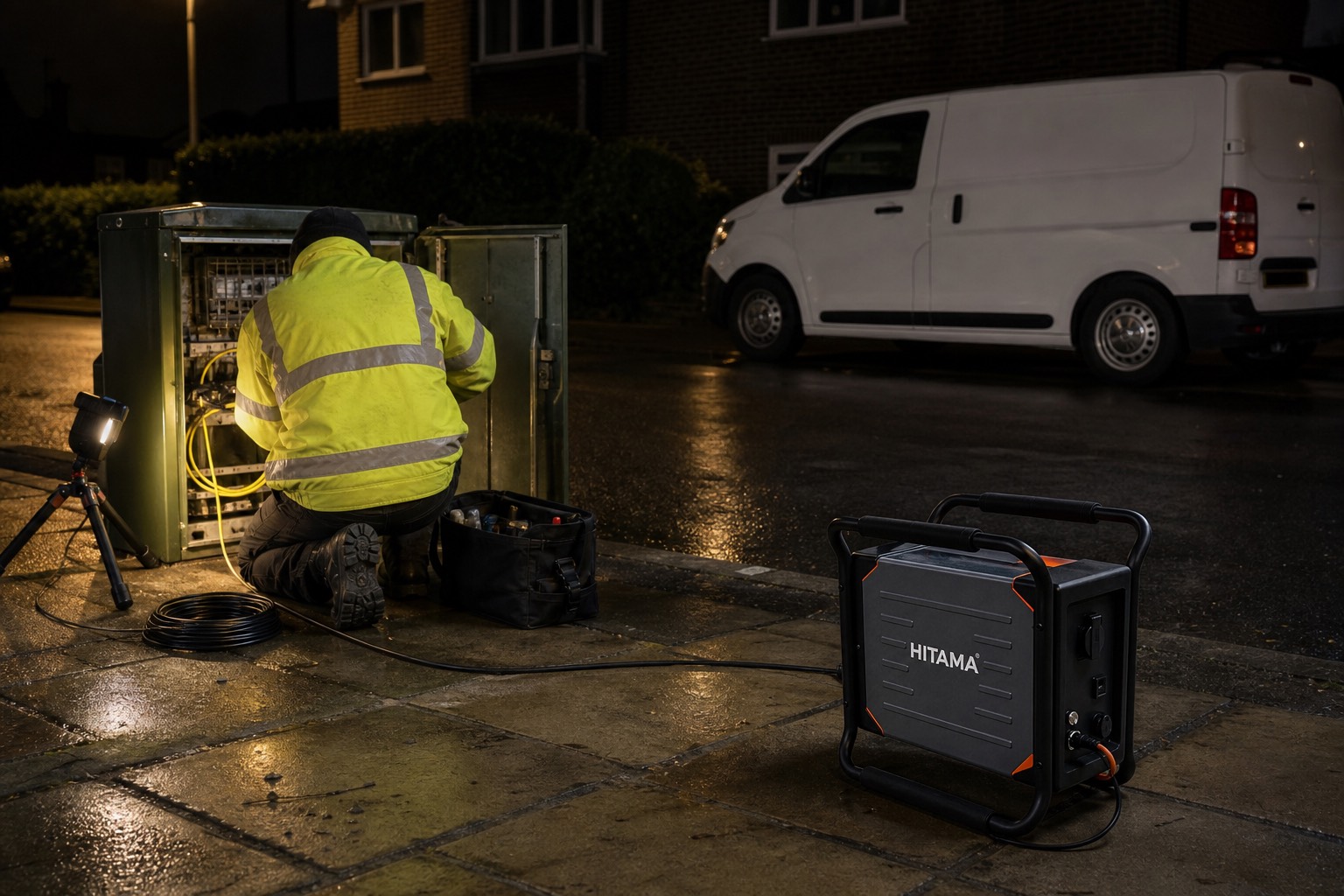
Cabinet work, fibre and cable faults: power at street level
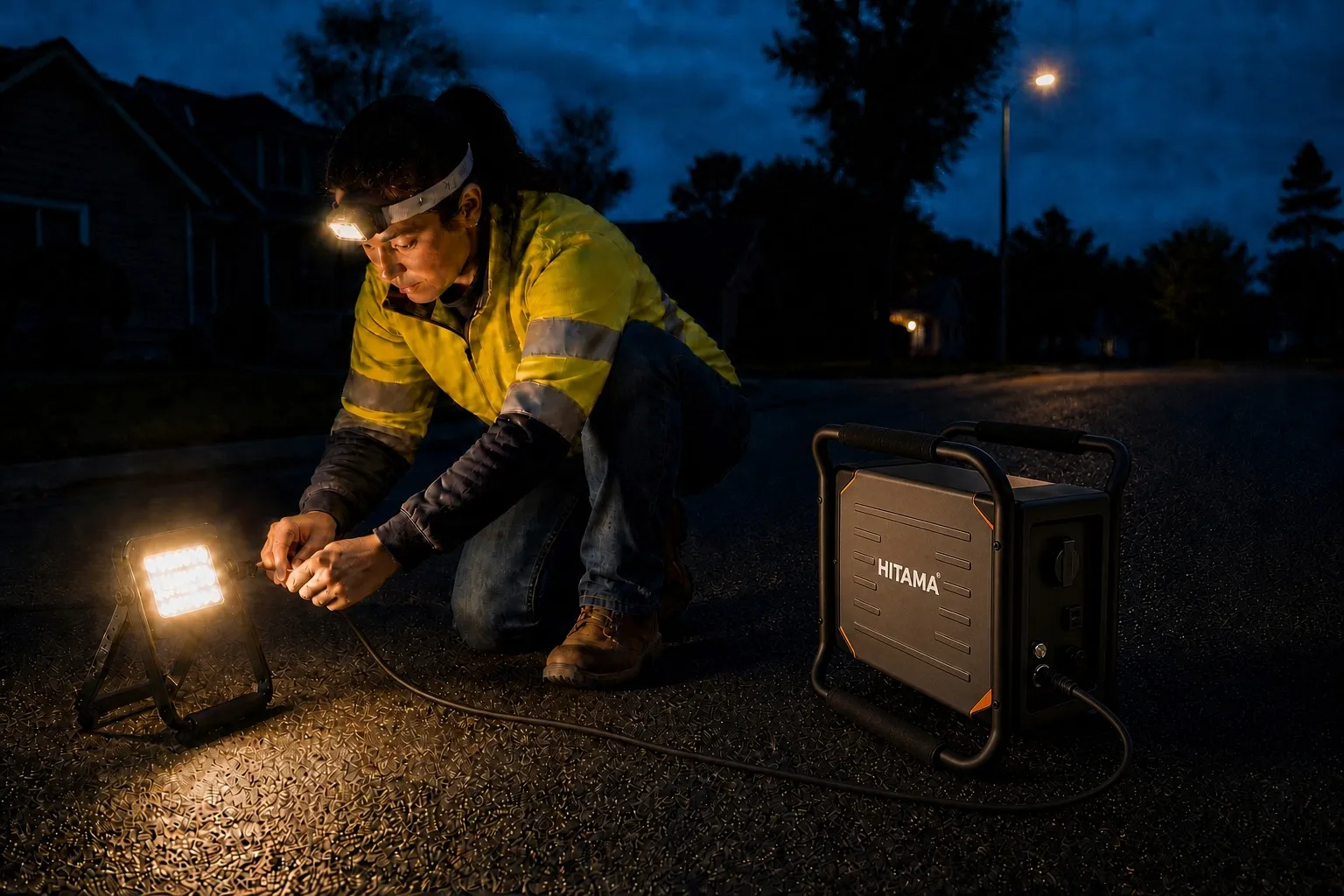
A utilities crew works from a van on a residential street, often at night. The generator has two problems there: it is loud enough for the street to hear, and it needs fuel at the end of the shift.
- Rail, tunnel & infrastructure
Night possessions: power for rail and tunnel work
A possession window is fixed and short. What eats into it is rarely the work itself: it is bringing a generator in, fuelling it, and dragging cables down a tunnel.
- Events, film & media
Silent power for stages and sets
On a set, noise is contractual. A generator on location means a cable run, a fuel run, and a sound department working around an engine all day.
- Equipment rental
What a rental fleet needs from a battery: turnover, not watts
A hire desk does not buy power, it buys turnover. The question is not what a unit can do but how quickly it goes out, comes back and goes out again.
- Welding supply
Three-phase welding without a generator
A 160–200 A inverter welder needs 400 V and a starting surge. That is a specification, not an obstacle — and peak output, not continuous output, is the number that decides it.
- Agriculture & outdoor work
Irrigation pumps and remote buildings: power with no connection
A pump is the clearest test of a battery system: it starts against a head of water, which means a surge far above its running draw — and then it runs for hours.