
Telecommunications & utilities
Cabinet work, fibre splicing, cable fault location.
Cabinet work, fibre splicing and cable fault location are precision work: the fusion splicer wants stable voltage, the test gear wants clean power, and a generator’s frequency wander shows up in your readings. One P25 at 2.5 kW serves one technician and one cabinet; P36 serves multi-point jobs. No engine in a closed duct room, no CO risk, no fuel running through a cabinet corridor. And within the working window, power does not consume extra hands.
Field notes in this sector
- Telecommunications & utilities
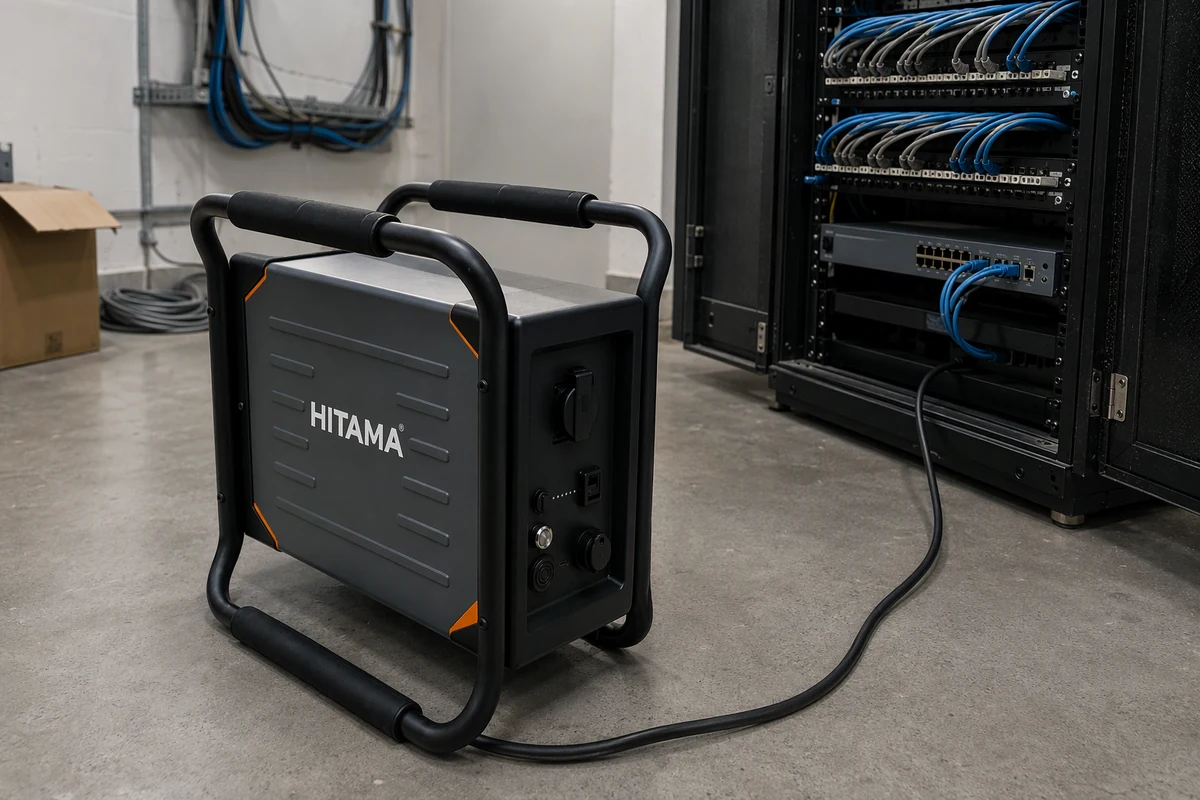
A clean sine is not a transfer time
A comms room refit is decided by the seconds of changeover, not by the distortion figure on the datasheet. What the rack actually asks for is a measured load, a window with an end, and an honest answer about what the unit cannot be.
- Telecommunications & utilities
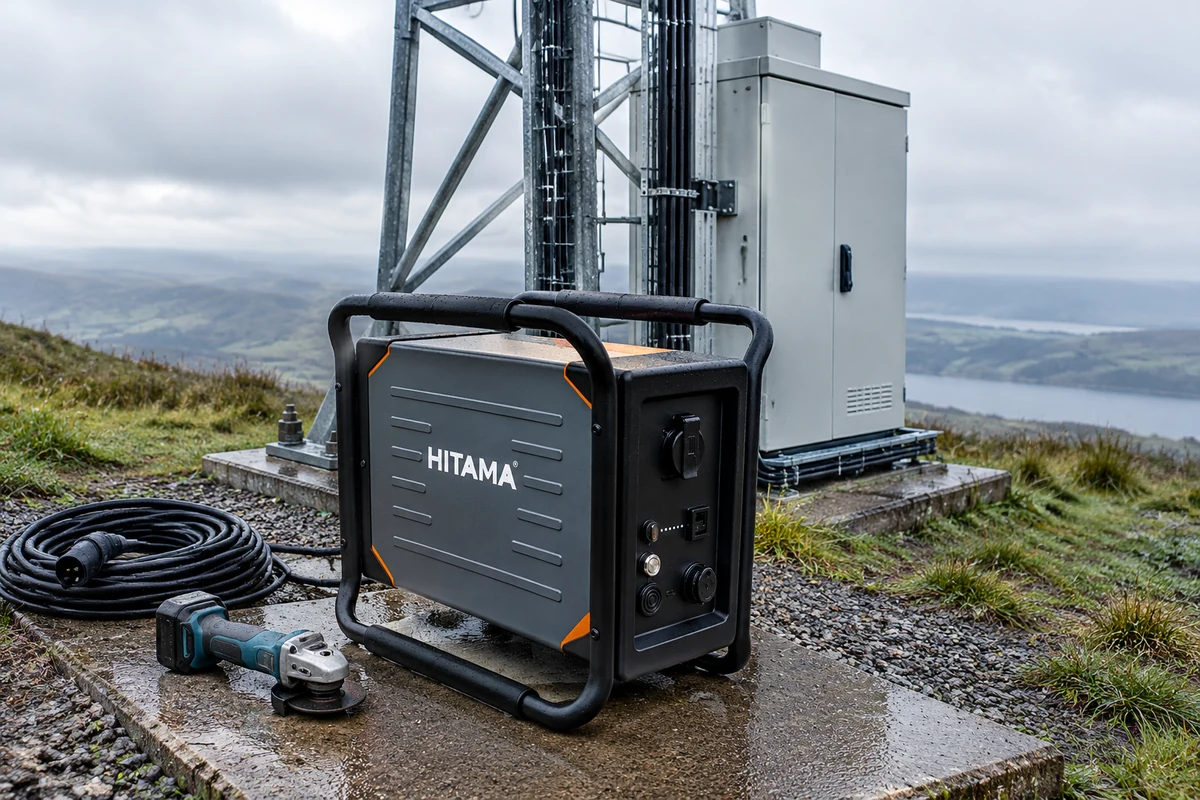
The mast is live. The socket is not yours.
A radio site can be healthy and still have nothing to plug into: the ways are assigned, the rectifier shelf belongs to the network, and the crew's tools need their own supply. The configuration follows from the plate watts of the tools, the weight that can be carried up the last stretch, and the temperature inside the shelter.
- Telecommunications & utilities
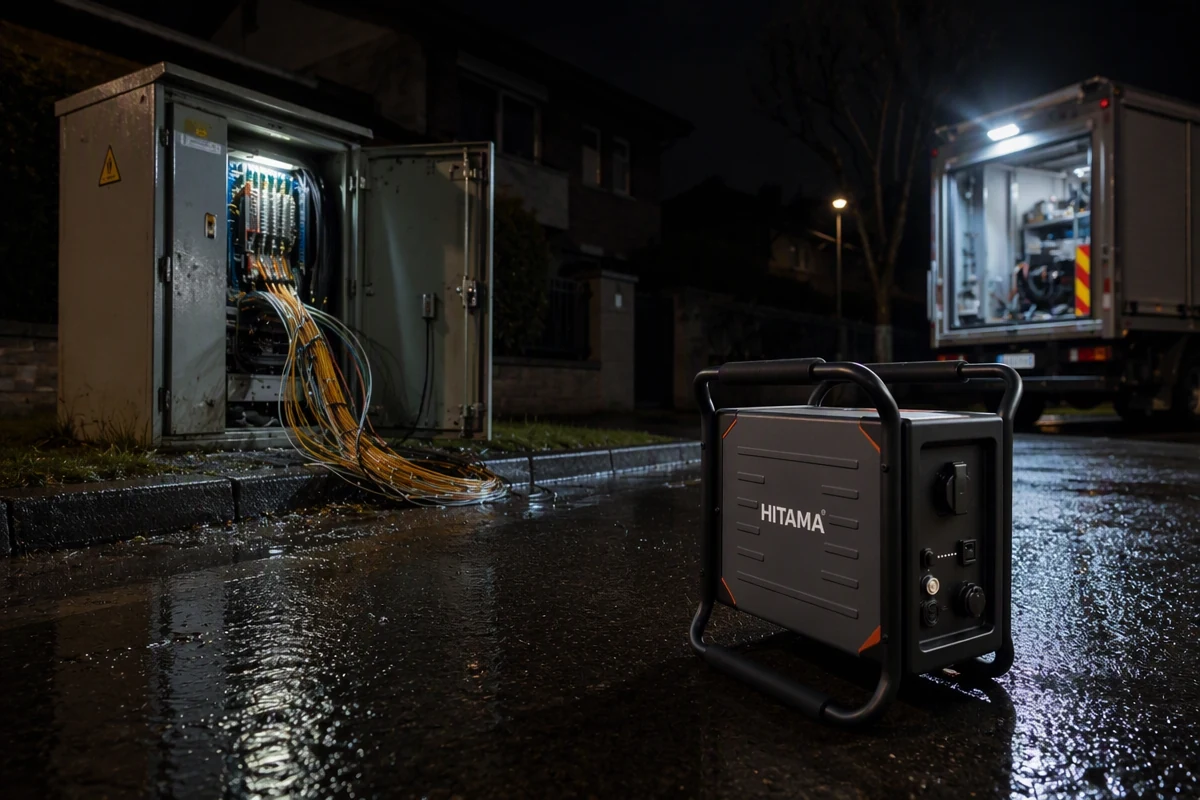
What goes down the ladder: power for work inside a street chamber
Street work happens on two levels in one shift. The moment the work face is under a lid, the load list stops being sorted by wattage and starts being sorted by what can be carried down a ladder.
- Telecommunications & utilities
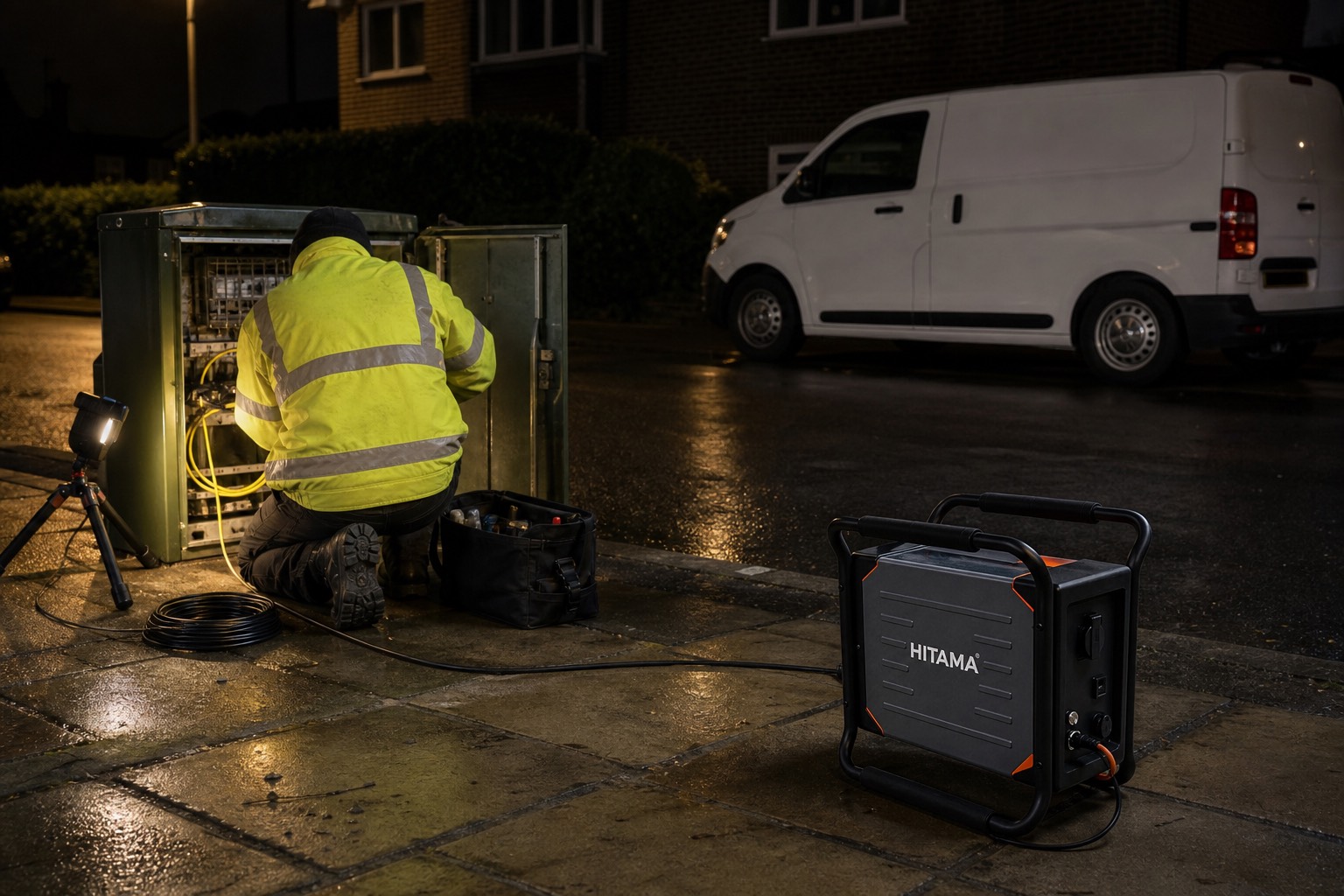
Cabinet work, fibre and cable faults: power at street level
A utilities crew works from a van on a residential street, often at night. The generator has two problems there: it is loud enough for the street to hear, and it needs fuel at the end of the shift.
All sectors
- Construction & civil works
- Equipment rental
- Emergency response
- Fire & technical rescue
- Disaster relief & civil protection
- Defence & field operations
- Mining & quarrying
- Geological exploration & survey
- Welding supply
- Telecommunications & utilities
- Rail, tunnel & infrastructure
- Events, film & media
- Agriculture & outdoor work