
The plug is the only part nobody specifies
The load list counts watts, the cable schedule counts metres, and nothing on either lists the plug. Between the machine and the tool sits a short adapter that somebody found in the van, and it is the only component in the circuit that no one sized. That is where the limit of the whole chain quietly ends up.
A connector is not a passive part; it is a rated component with its own current, its own protection grade and its own temperature. A blue CEE plug carries a number stamped on it, and in almost every case we see, that number is smaller than the number on the machine behind it. When the two disagree, the smaller one is the truth; the rest of the installation goes on working as designed — on paper.
Sixteen amps behind a thirty-two amp breaker
Put a 16 A adapter on a 32 A outlet and you have not extended the circuit, you have moved the protection. The breaker upstream still clears at 32 A, while the adapter, the coupling and the lead behind it are rated at 16 A. An overload the small parts cannot survive is not an overload as far as that breaker is concerned. Nothing trips, nothing is announced, and the joint gets warm.
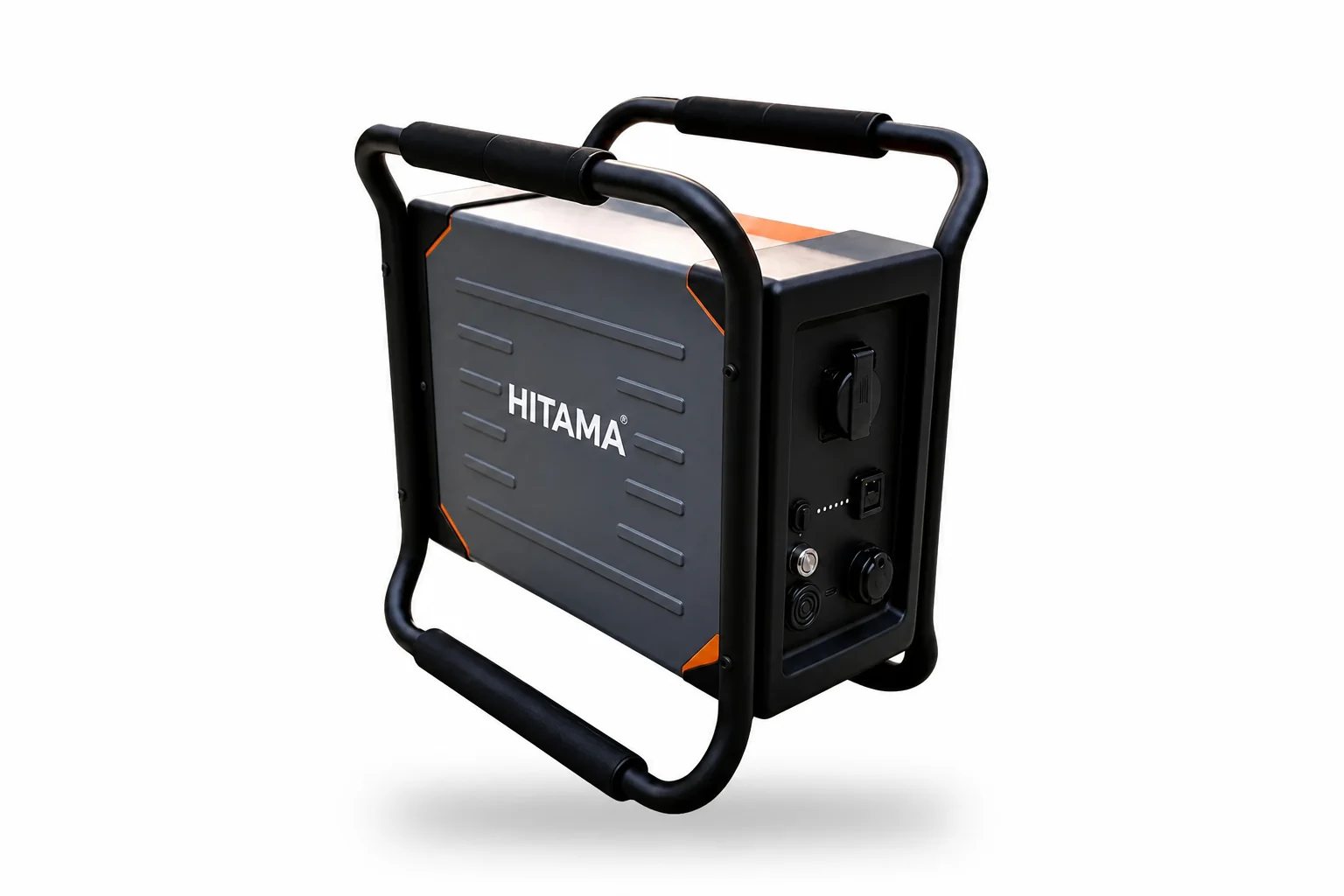
Our own units stop at 16 A single-phase, and we say so before the order. The P25 delivers 2,500 W continuous and 5,000 W peak for up to ten seconds from a 230 V 16 A outlet; the P25-D reaches 230 V 20 A once the parallel box is fitted; only the three-phase P25-T goes to 400 V, and there at 10 A per phase. None of them is a 32 A single-phase source. Where a site needs 32 A at one point, the adapter that pretends otherwise is the part that will fail.
A joint has two IP ratings, and the lower one wins
Water and dust do not negotiate at the interface. A housing rated IP54 stays IP54 only while everything attached to it is at least as well protected. The usual blue CEE plug and coupling are splash-protected when mated and open to the weather when separated — the state they are found in at lunchtime. The chain inherits the weakest link, always.
The second half of the mistake is reading the housing grade as a promise about the connection. IP54 is a protection grade for the enclosure, not a certification, and it says nothing about a joint that was made by hand in the rain. Two IP44 halves do not average out to IP54; they stay IP44 wherever they are plugged in. Anyone who has opened a coupling full of slurry after a wet night already knows this.
The heat is at the end of the run
A loose or oxidised contact is a resistor that grows with every mating cycle. It sits at the far end of the cable, often behind a stack of material, under a cap nobody opens. The symptom arrives late and disguised: a tool that trips on start, a charger that stops, a plug that is warm to the touch at the end of the shift. The machine gets blamed for a joint it never controlled.
The repair is not a longer cable and it is not a shorter one. The joint has to be the right joint, at the right rating, with the right protection grade — otherwise the rest of the calculation does not matter. That is a fifteen-minute check at handover and a much longer conversation at the end of the week.
What this is not
This is not an argument that adapters are unsafe, and it is not a claim that our units replace a site distribution board. A portable unit supplies its own outlets; it is not built to be connected into a building's fixed installation, and it is not a UPS — supply does not transfer instantly when the mains drops. IP54 on our housings is the enclosure grade, not an explosion protection rating, and it does not make anything submersible.
We also do not solve a 32 A requirement by relabelling it. Where a site genuinely needs 32 A single-phase at one point, the honest answer is a different source, not a better adapter. What we can do is tell you before delivery which tools will run on a 16 A outlet and which need something else entirely — and which plugs we would not hand out at all.
What we need before we size it
Send us the tool list with the plug type on each item, not just the wattage. Add the longest cable run you expect and where the joint sits: indoors, outdoors, under a cap, on wet ground. With those three things we can say which P25, P25-D or P25-T configuration actually covers the work, and which adapter should stay in the van. Write to us at https://www.hitama.net/en/contact and we will go through the list with you.