
A possession window is measured in hours. The walk to the work face is measured in minutes. Between those two numbers sits the whole power plan — and it is a logistics question before it is an electrical one.
The walk decides the configuration
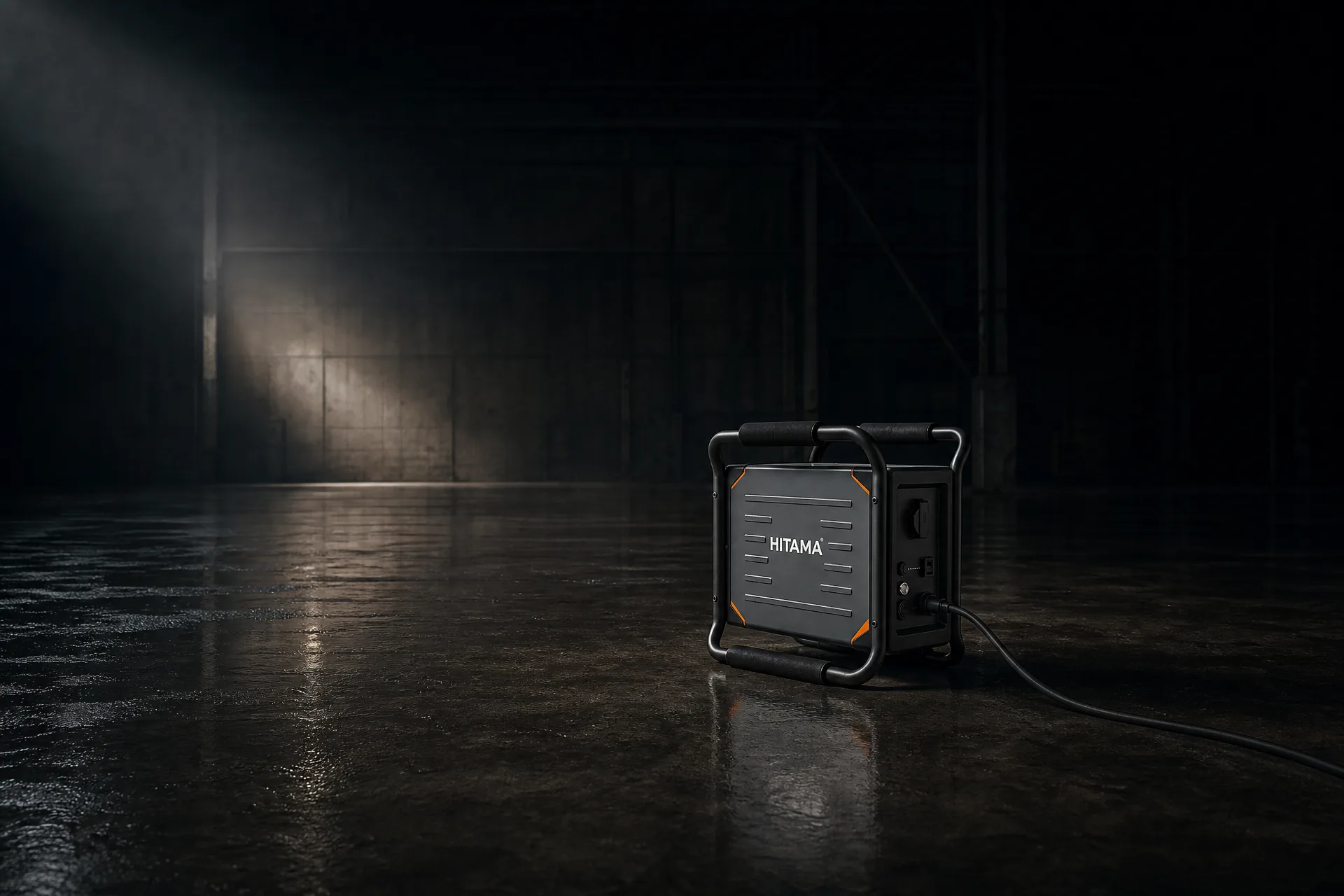
A generator is sized for the site. A battery unit is sized for the person carrying it. The P25 is 29 kg, with no lifting points, because the operating manual forbids stacking and forbids lifting gear.
That is not a shortcoming. It is the decision that makes the unit deployable at all: one person, down the tunnel, past the cable trays, without a plant lift and without a second pair of hands.
Parallel, not bigger
When the load grows, you do not move to a heavier machine. You put a second unit beside the first. One P25 is 2,500 W continuous and 2.7 kWh; two in parallel — the P25-D kit at 230 V — give 5,000 W and 5.4 kWh.
The useful number is not the total. It is the 29 kg that can be carried anywhere, against the 150 kg that cannot.
What changes at 400 V
Three units with the P25-T distribution box deliver 7,500 W and 8.1 kWh at 400 V three-phase. That covers the tools that will not run on 230 V single phase, without bringing a generator into the section.
The limit worth stating
Everything is still carried by hand, and capacity is finite. A unit powers the work — not the signalling, not the fixed lighting. IP54 means dust and water spray, not immersion.
And every unit carried in has to come back out to recharge. Recovery is 500–1,500 W from an ordinary 230 V socket, so the recharge is a task to plan into the possession, not something that happens by itself.
Send us the tool list and the distance to the face, and we will size the configuration with you.