
Geological exploration & survey
Drill rigs, survey instruments, camps with no grid connection.
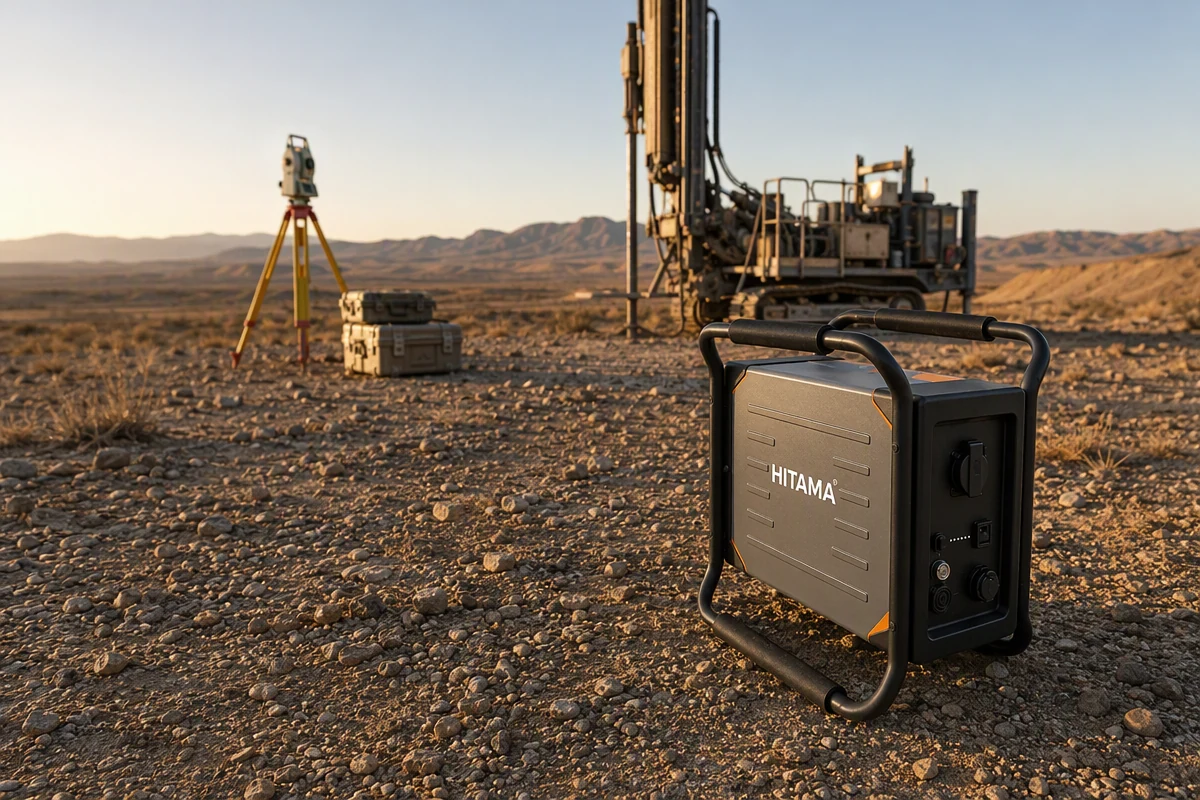
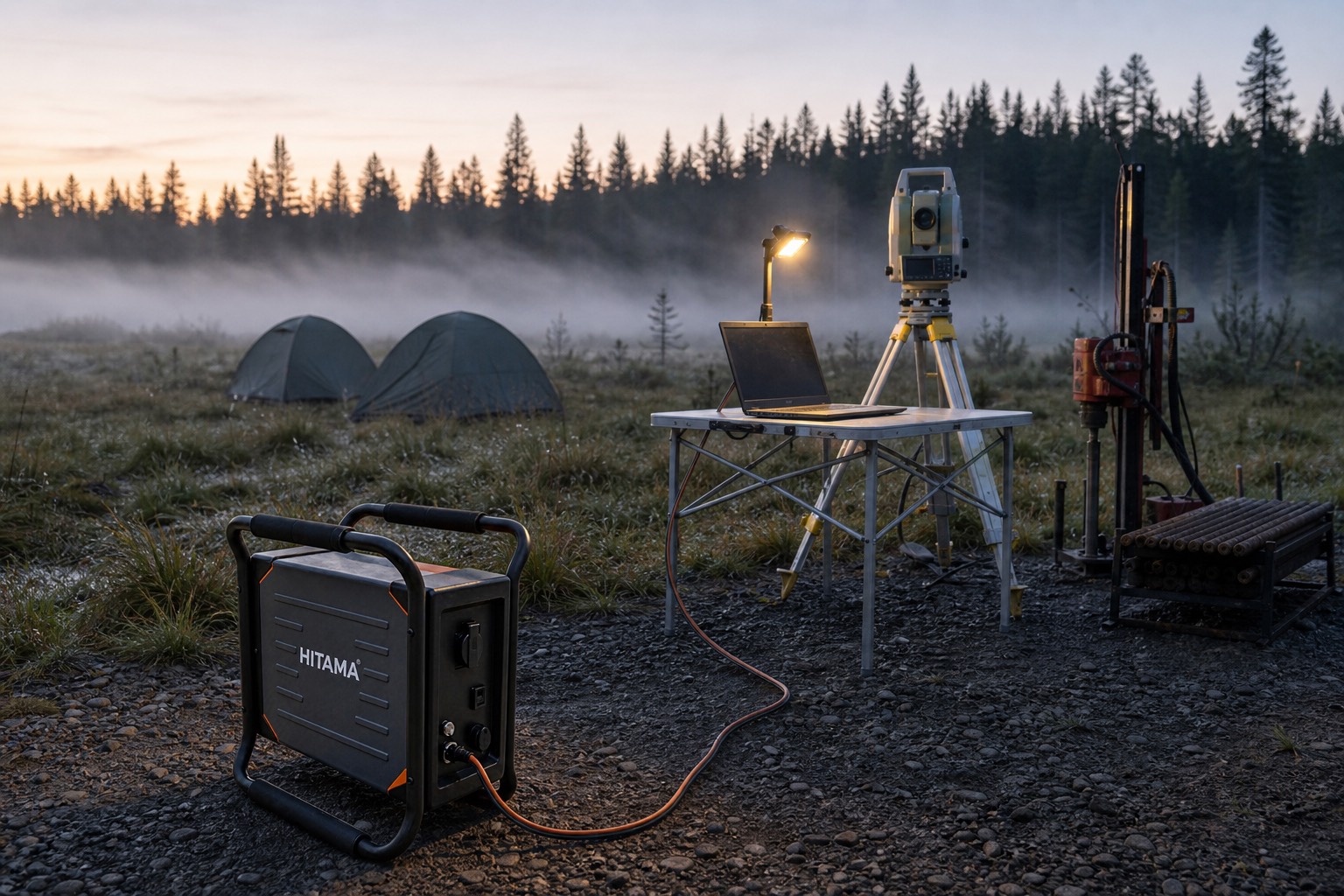
A survey camp is always the last mile beyond the grid: the drill rig, the total station, the receivers and the work lamps all need power, and the position often ends where the 4×4 road does. C24 at 2.0 kWh carries instruments and lighting; P25 at 2.5 kW carries the rig and the small tools. Both weigh under 30 kg — a pickup bed becomes a workshop. No fuel to carry, no engine to maintain: a three-person crew handles its own power.
Field notes in this sector
- Geological exploration & survey
The flight line ends when the packs run out
A UAV survey is planned in square kilometres and flown in sorties, but it is limited by pack charging: 2.7 kWh refills roughly four packs, which is about half a mapping day.
- Geological exploration & survey
Nobody is assigned to the battery on a survey crew
A survey crew's power cost is measured in operator hours, not kilowatt-hours: a 29 kg lift at each station, a recharge that draws 500–1,500 W, and nobody whose job it is.
- Geological exploration & survey
A camp that carries its own power: survey and exploration off-grid
A survey camp is a load list in the middle of nowhere: a core drill, an instrument that must not lose power mid-reading, a laptop, and batteries for everything else.
All sectors
- Construction & civil works
- Equipment rental
- Emergency response
- Fire & technical rescue
- Disaster relief & civil protection
- Defence & field operations
- Mining & quarrying
- Geological exploration & survey
- Welding supply
- Telecommunications & utilities
- Rail, tunnel & infrastructure
- Events, film & media
- Agriculture & outdoor work