
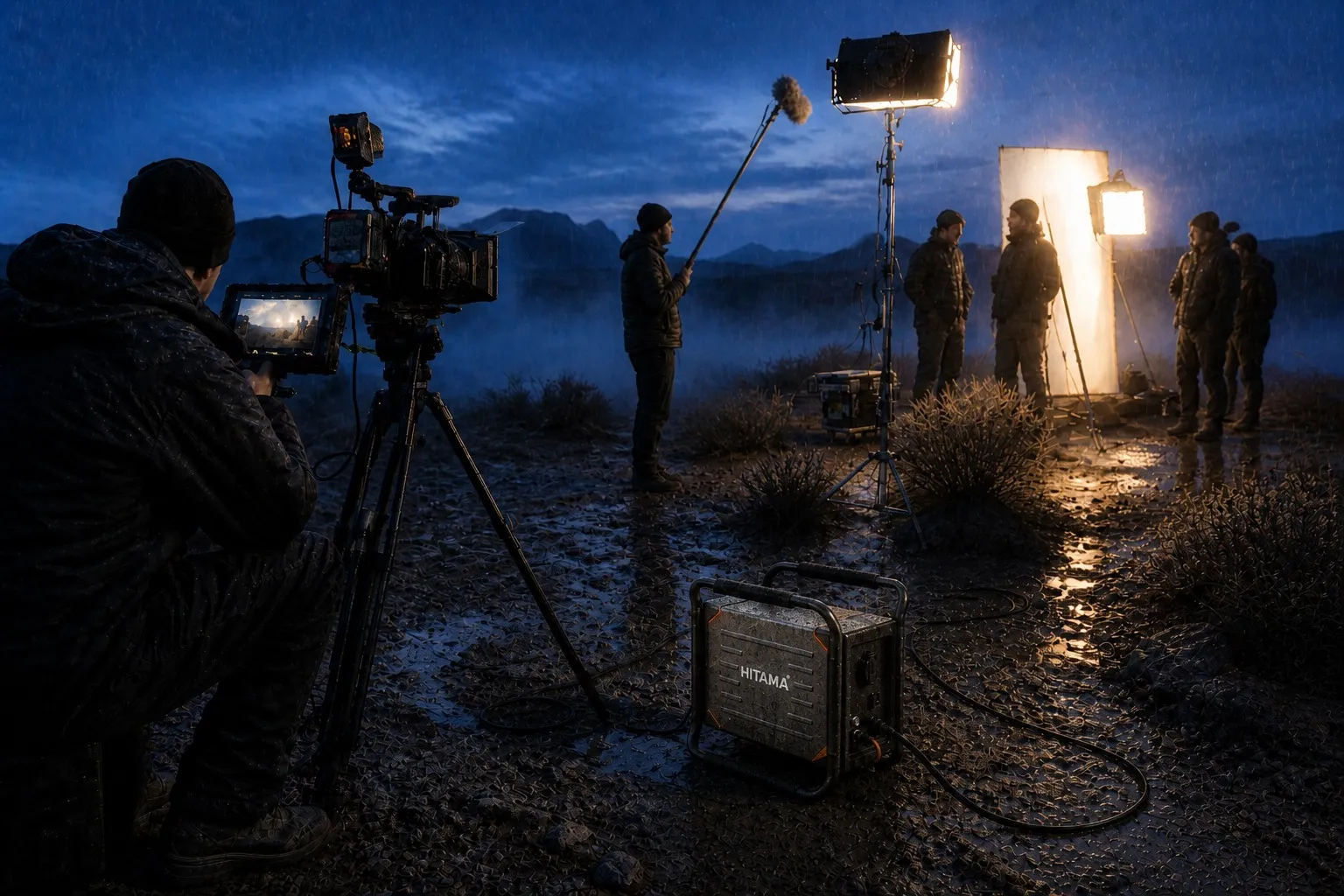
Three months, one date
On 20 January 2027 the transition period ends. From that day the EU Machinery Regulation (EU) 2023/1230 applies in full, replacing the Machinery Directive. It was published in the Official Journal on 19 July 2023, which started the 42-month period (IHK Coburg).
For hire companies and dealers this is not a legal chapter — it is a question standing in the equipment yard: does every unit have the documentation that will be required from that date, and does it still match the machine actually on the shelf?
What changes in substance
The core stays: the essential health and safety requirements. What is added are two points that sound like IT — because they are.
- Protection against tampering. Annex III contains a new paragraph on cyber-security: connected machinery must be protected against outside interference (IHK Coburg).
- AI in control systems. Where artificial intelligence is used in a machine control, safety must be ensured at every point in time — including during the learning phase.
Anyone hiring out equipment with a radio module, app connection or remote service today should not leave this until December. Anyone running only unconnected equipment has an easier time on that point — but not automatically an easier time on documentation.
What has to be in the file
The chambers of commerce summarise it in one sentence: by the deadline, the declaration of conformity and the technical documentation under the regulation must be available — and that may require product tests that cannot be done in a week (IHK Coburg).
In practice, for a hire fleet:
1. A valid declaration of conformity for every series in the fleet — not the one from 2019, but the one matching the delivered build state.
2. Technical documentation retrievable from the manufacturer — not merely "somewhere on file".
3. For connected units: a defensible statement on protection against interference.
4. A list of which units are affected at all.
The uncomfortable question: which unit is a machine?
This is where many quotations go vague. Whether a specific device falls under the Machinery Regulation depends on its design — drive, moving parts, function. That classification is the manufacturer's job, not the dealer's and not the hire company's. Anyone making that call on the customer's behalf carries a risk they do not need to carry.
So the useful question to a supplier is not "is this a machine?" but: "Which declaration exists for this series, and which documents do we get with it?"
In Germany there is one more layer
The regulation applies across the EU; implementation is national. The German cabinet tabled an implementing bill at the end of July 2025 (Haufe). Market surveillance sits with the BAuA — and market surveillance means someone comes and looks, not just asks.
Three questions that should be answered this month
1. Which series in the fleet are affected — and which are not?
2. Is there a declaration of conformity for each affected series that matches the delivered build state?
3. Do we hold the technical documentation, or must we request it from the manufacturer — and how long does that take?
Three months is tight for question 3, and sufficient for question 1.
*Note: this article summarises publicly available information and is not legal advice. Classifying individual devices is the manufacturer's responsibility.*