
Disaster relief & civil protection
Mobile command posts, field kitchens, relief-camp power and charging.
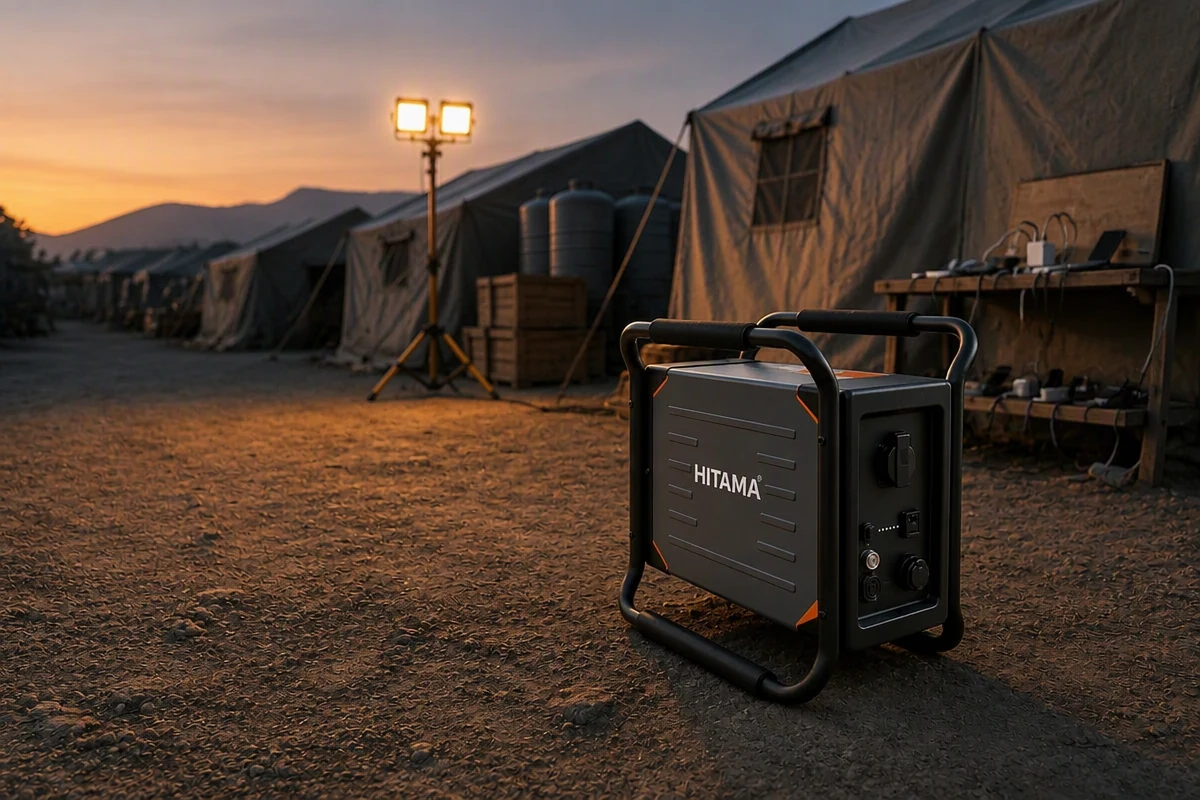
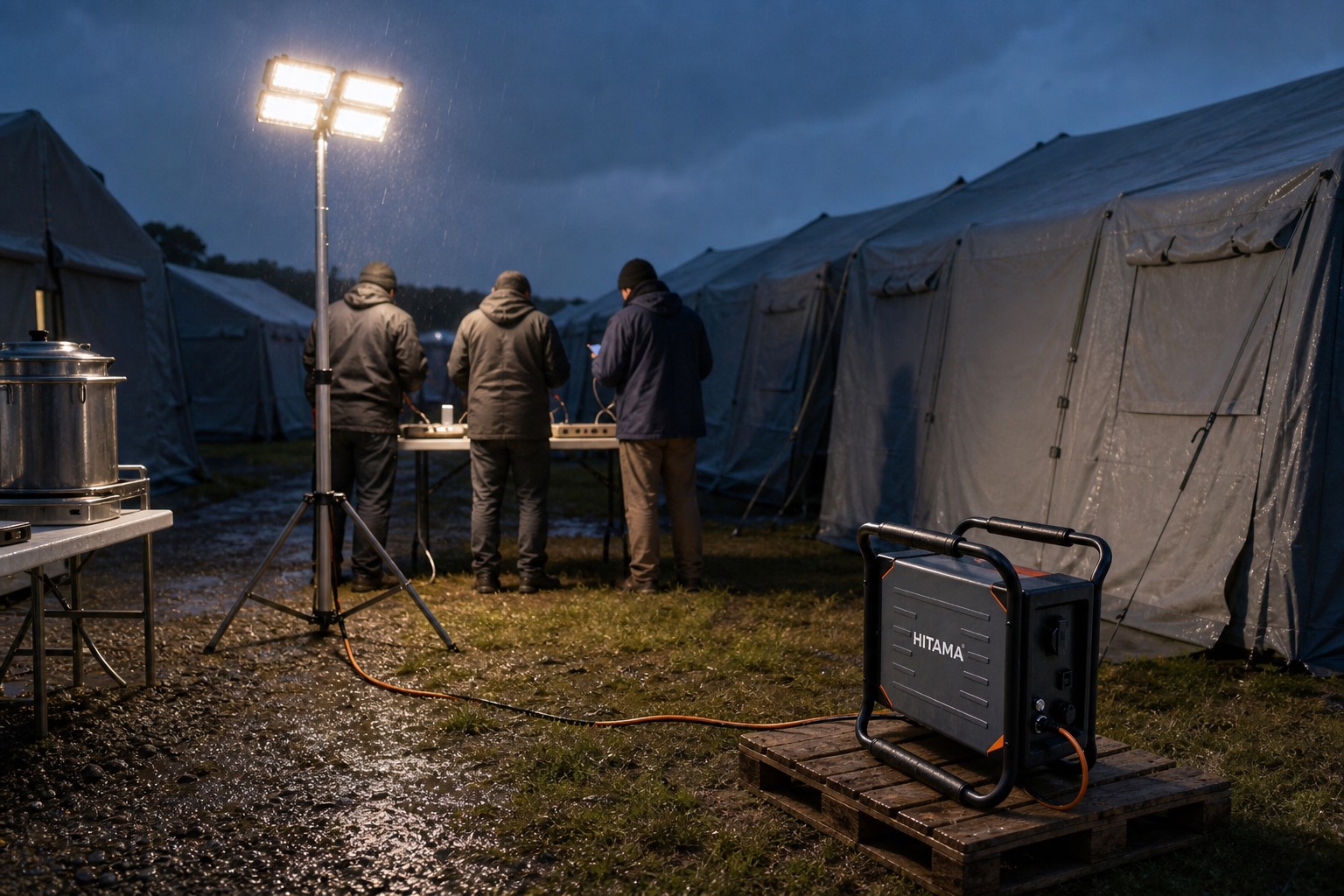
After a disaster, the grid and the fuel supply usually fail together. A mobile command post, a field kitchen, relief-camp power and charging need energy that does not depend on an engine. P25-D at 5 kW carries command and lighting; P36 takes the larger loads. Top up from the grid before deployment, top up from solar in the field. No fuel, no refuelling queue, no exhaust indoors — in a shelter, that is a health question, not a comfort one.
Field notes in this sector
- Disaster relief & civil protection
A flood pump starts more often than it runs
A flood pump does not fail a portable supply while it runs; it fails it at the moment it starts. On a float switch those starts answer to nobody's schedule, and 2.7 kWh is spent by the duty cycle rather than by the rating on the plate.
- Disaster relief & civil protection
The grid returns in instalments: power decisions before the units go home
Restoration after a flood or storm does not arrive as one switch-on. It comes back building by building, and the hardest power decision of a deployment sits in that window — the utility is there, and nobody yet dares to pull the battery.
- Disaster relief & civil protection
The camp is not the whole operation: power across the phases of a relief deployment
Civil protection deployments get planned around the camp, but an operation is a sequence of places: staging point, operational site, handover. The transitions decide the configuration, not the peak load.
- Disaster relief & civil protection
When the grid is the casualty: power for a relief camp
In a relief operation the grid is often the thing that failed. What remains is a list of jobs that all need electricity — and several hundred people who need to charge a phone.
All sectors
- Construction & civil works
- Equipment rental
- Emergency response
- Fire & technical rescue
- Disaster relief & civil protection
- Defence & field operations
- Mining & quarrying
- Geological exploration & survey
- Welding supply
- Telecommunications & utilities
- Rail, tunnel & infrastructure
- Events, film & media
- Agriculture & outdoor work