
Core technology: battery, IP54 & 400 V three-phase
The engineering choices that make the range reliable where a diesel generator struggles.
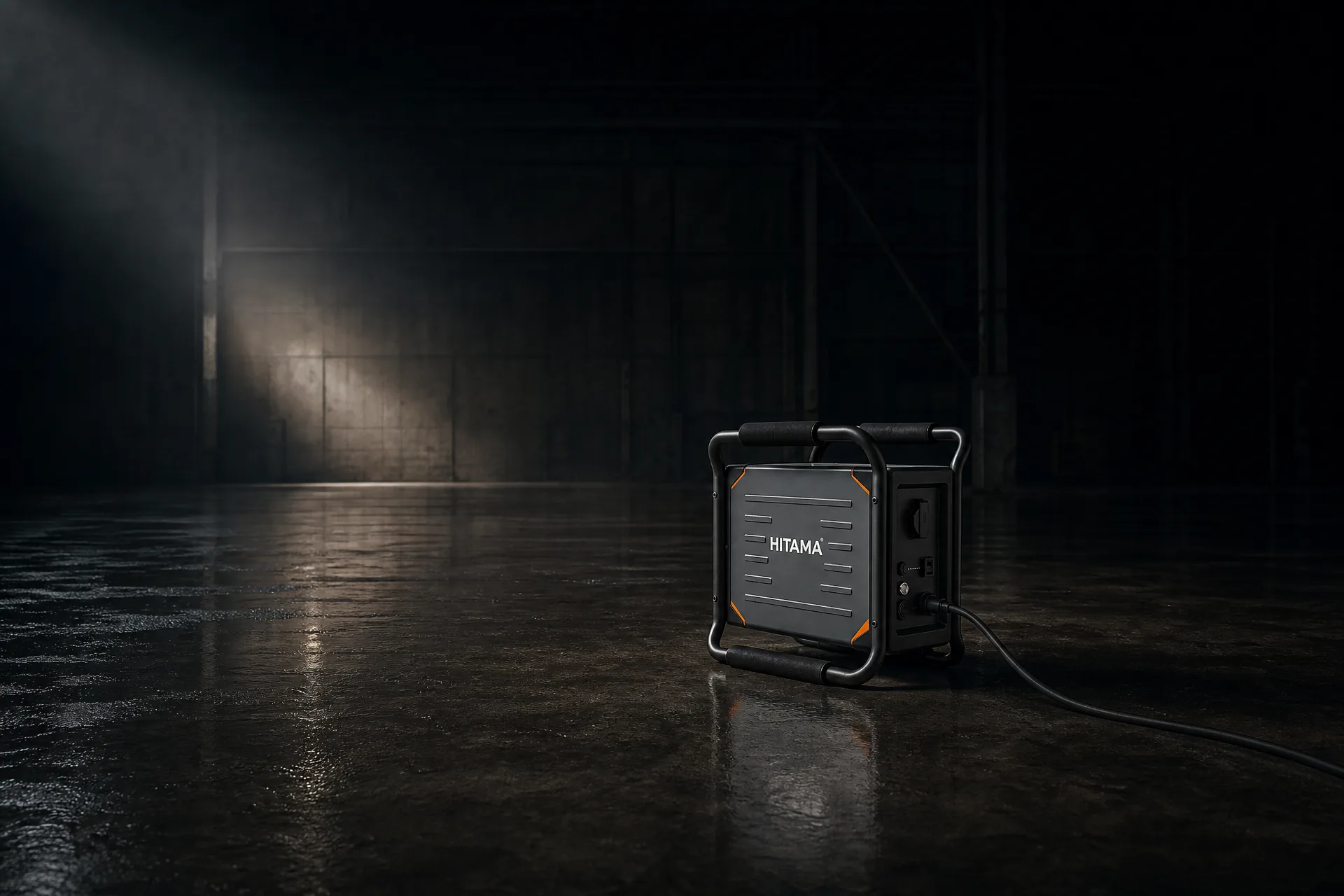
Rain, dust, still running
No intake means no duct for rain to fill or dust to clog — this is how the same range reads on two very different sites.


- 01
Fanless self-cooling
No fan, no moving parts, no intake. In dusty, hot and humid sites it does not clog or wear — zero noise, no maintenance.
- 02
Modular parallel
One unit, two units, or three in three-phase. The same platform scales from 2.4 kW to 10.8 kW / 400 V and can drive 160–200 A inverters and large power tools.
- 03
Compact, high power
P25 at 29 kg and P36 at 21–23 kg — leading energy density in a smaller footprint.
- 04
Fast recharge
P25: 80% in 2 hours, full in 2.5 hours. P36: full in under 1.5 hours.
- 05
Cost advantage
A substantial price advantage versus comparable premium brands, with industrial-grade performance and full customisation.
Frequently asked questions
The questions buyers actually ask before a first order — answered with numbers from our own datasheets, not from a brochure.
Which conformity documents should I request for a specific model?
Request the documents for the model you are ordering, not for the series: declaration of conformity, test reports, safety data sheet and transport papers. Ask to see the model designation and report number. A document without a model reference says nothing about the unit delivered to you.
Does a test report cover the model or only the series?
What counts is the tested type. If the type designation on the report differs from your order, the report does not automatically cover your unit. Ask which models the document covers and whether there is a statement on transferability. With series that span several power classes, this is the most common point of dispute.
How do I tell whether a test report is genuine and attributable?
Check four fields: report number, issuing body, applicant and model. The applicant is the decisive one — if it is not your seller, the report proves nothing about them. Serious suppliers name these four fields unprompted and encourage you to check with the issuing body.
Which parts are consumables, and how often are they replaced?
Ask for a list of consumables with intervals. In storage systems these are mainly connectors, seals and ventilation components where present. A design with no moving parts in the cooling circuit creates practically no recurring maintenance task — the simplest way to avoid failure.