
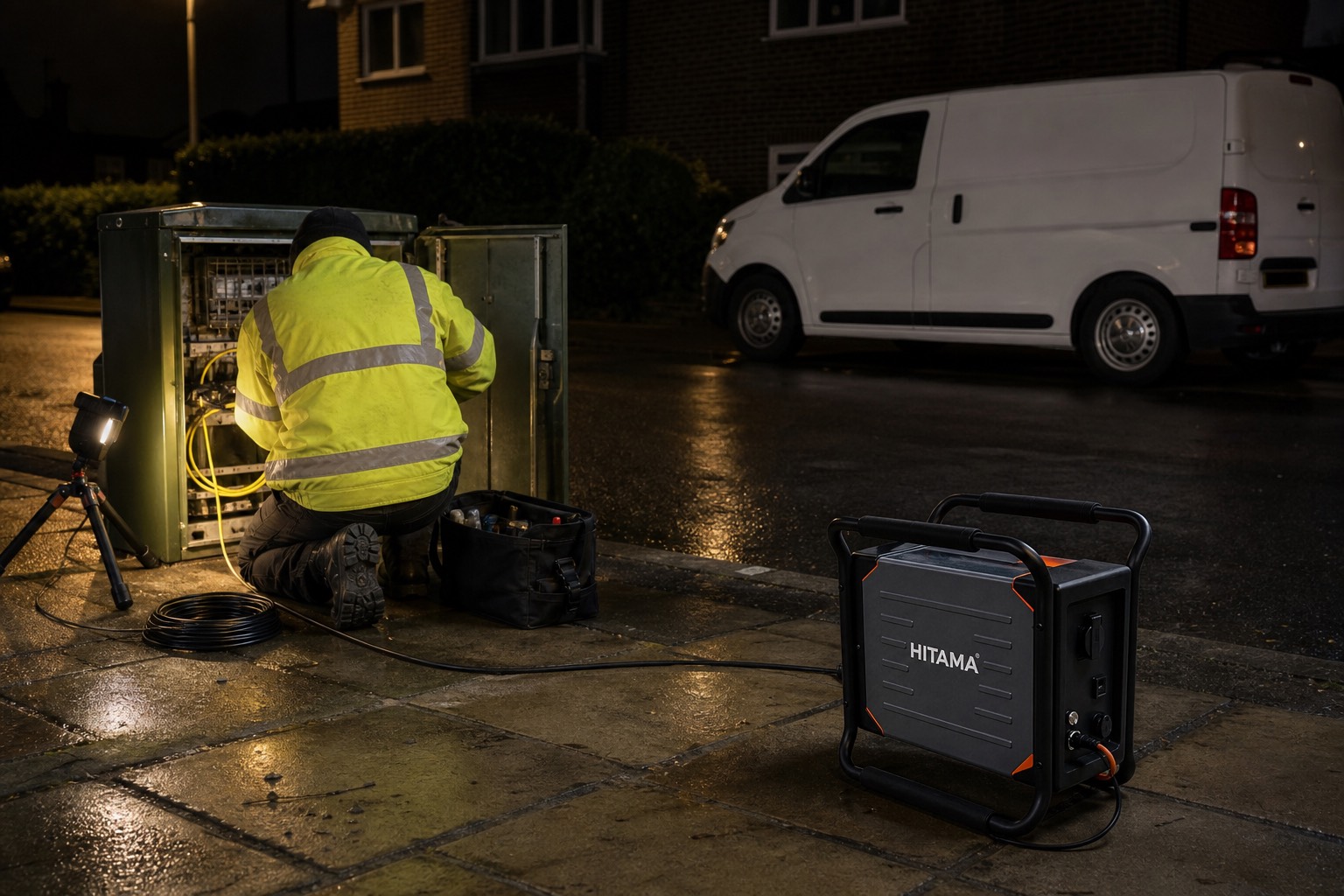
Utilities work happens at street level, at night, in front of somebody's house. That is a hard place for a combustion generator: it is loud enough that the street hears it, and it needs fuel at the end of the shift.
What is on the load list
Fibre splicing. A fusion splicer draws a steady, modest load for the whole job. It decides how long the visit takes, so it is the load that must not drop.
Test equipment. An OTDR or a cable fault locator runs for as long as the fault takes to find, which is never the estimate.
Cabinet work. Power for tool batteries, a laptop, and the light you are working by.
Work lighting. On a residential street that means a lamp on a low tripod on the pavement, not a floodlight.
Why it suits a van
One P25 is 2,500 W, 2.7 kWh and 29 kg — carried in one hand from the van to the cabinet. It recharges from any 230 V socket at 500–1,500 W: the depot, the yard, or the customer's supply. Nothing to fuel, and no engine idling outside a bedroom window at two in the morning.
The limit worth knowing
It is not a standby supply for the network equipment in the cabinet — it powers your work, not the street's service. Capacity is finite, and IP54 means dust and water spray, not immersion.
Send us the splicer and test set you use and we will confirm the runtime.