
Industrial portable power stations
From the entry-level C24 to the flagship P36, one modular platform covers 2.4 kW up to 10.8 kW, single-phase and 400 V three-phase.
Product matrix
| Series | Model | Rated | Peak | Capacity | Weight | Parallel | Output | Position |
|---|---|---|---|---|---|---|---|---|
| C | C24 | 2,400 W | 4,800 W | 2.0 kWh | 23 kg | — | 230 V 1φ | Home & outdoor |
| P | P25 | 2,500 W | 5,000 W | 2.7 kWh | 29 kg | 2–3 units | 230 V 1φ | Workhorse |
| P | P25-D | 5,000 W | 10,000 W | 5.4 kWh | ≈60 kg | 2–3 units | 230 V 1φ | Power upgrade |
| P | P25-T | 7,500 W | 15,000 W | 8.1 kWh | ≈90 kg | 3 units | 400 V 3φ | Flagship |
| P | P36 | 3,600 W | 20,000 W | 2.1 kWh | 21–23 kg | 2–3 units | 230 V 1φ | High-output workhorse |
| P | P36-D | 7,200 W | 40,000 W | 4.2 kWh | ≈40 kg | 2 units | 230 V 1φ | High-output, 2 units |
| P | P36-T | 10,800 W | 60,000 W | 6.3 kWh | ≈60 kg | 3 units | 400 V 3φ | Three-phase heavy duty |
| M | M60 (coming soon) | — | — | 10 kWh | — | Yes, no distribution box | 230 V + 400 V all-in-one, wheeled cart | Mobile heavy duty |
C24Series · C
- Rated
- 2,400 W
- Peak
- 4,800 W
- Capacity
- 2.0 kWh
- Weight
- 23 kg
- Parallel
- —
- Output
- 230 V 1φ
- Position
- Home & outdoor
P25Series · P
- Rated
- 2,500 W
- Peak
- 5,000 W
- Capacity
- 2.7 kWh
- Weight
- 29 kg
- Parallel
- 2–3 units
- Output
- 230 V 1φ
- Position
- Workhorse
P25-DSeries · P
- Rated
- 5,000 W
- Peak
- 10,000 W
- Capacity
- 5.4 kWh
- Weight
- ≈60 kg
- Parallel
- 2–3 units
- Output
- 230 V 1φ
- Position
- Power upgrade
P25-TSeries · P
- Rated
- 7,500 W
- Peak
- 15,000 W
- Capacity
- 8.1 kWh
- Weight
- ≈90 kg
- Parallel
- 3 units
- Output
- 400 V 3φ
- Position
- Flagship
P36Series · P
- Rated
- 3,600 W
- Peak
- 20,000 W
- Capacity
- 2.1 kWh
- Weight
- 21–23 kg
- Parallel
- 2–3 units
- Output
- 230 V 1φ
- Position
- High-output workhorse
P36-DSeries · P
- Rated
- 7,200 W
- Peak
- 40,000 W
- Capacity
- 4.2 kWh
- Weight
- ≈40 kg
- Parallel
- 2 units
- Output
- 230 V 1φ
- Position
- High-output, 2 units
P36-TSeries · P
- Rated
- 10,800 W
- Peak
- 60,000 W
- Capacity
- 6.3 kWh
- Weight
- ≈60 kg
- Parallel
- 3 units
- Output
- 400 V 3φ
- Position
- Three-phase heavy duty
M60 (coming soon)Series · M
- Rated
- —
- Peak
- —
- Capacity
- 10 kWh
- Weight
- —
- Parallel
- Yes, no distribution box
- Output
- 230 V + 400 V all-in-one, wheeled cart
- Position
- Mobile heavy duty
Every unit ships with a bidirectional inverter, fanless self-cooling, a pure sine wave output (THD < 3%) and modular parallel expansion.
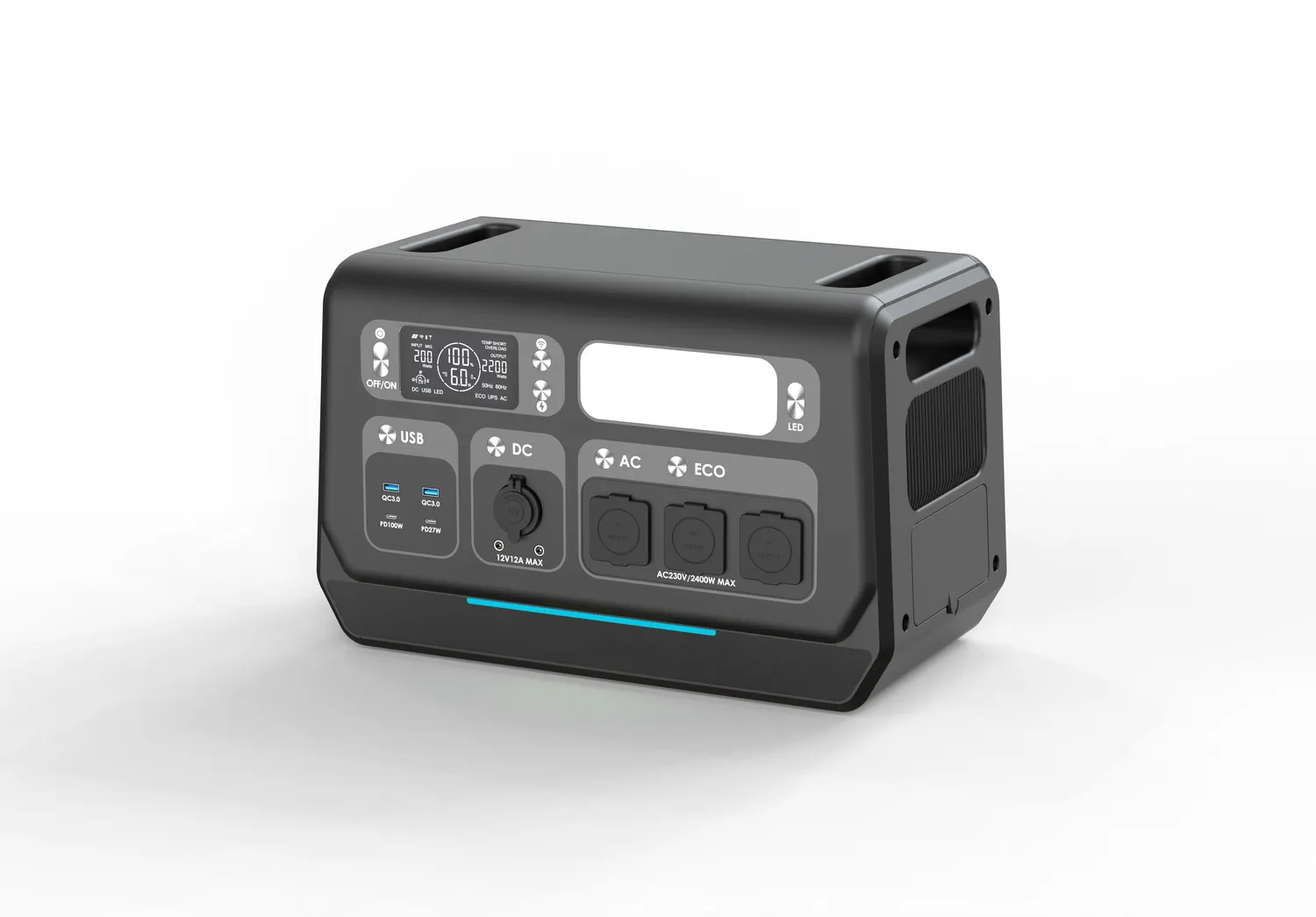 C24Portable solar power station2,400 W · 2,048 Wh · expandable to 10.24 kWh
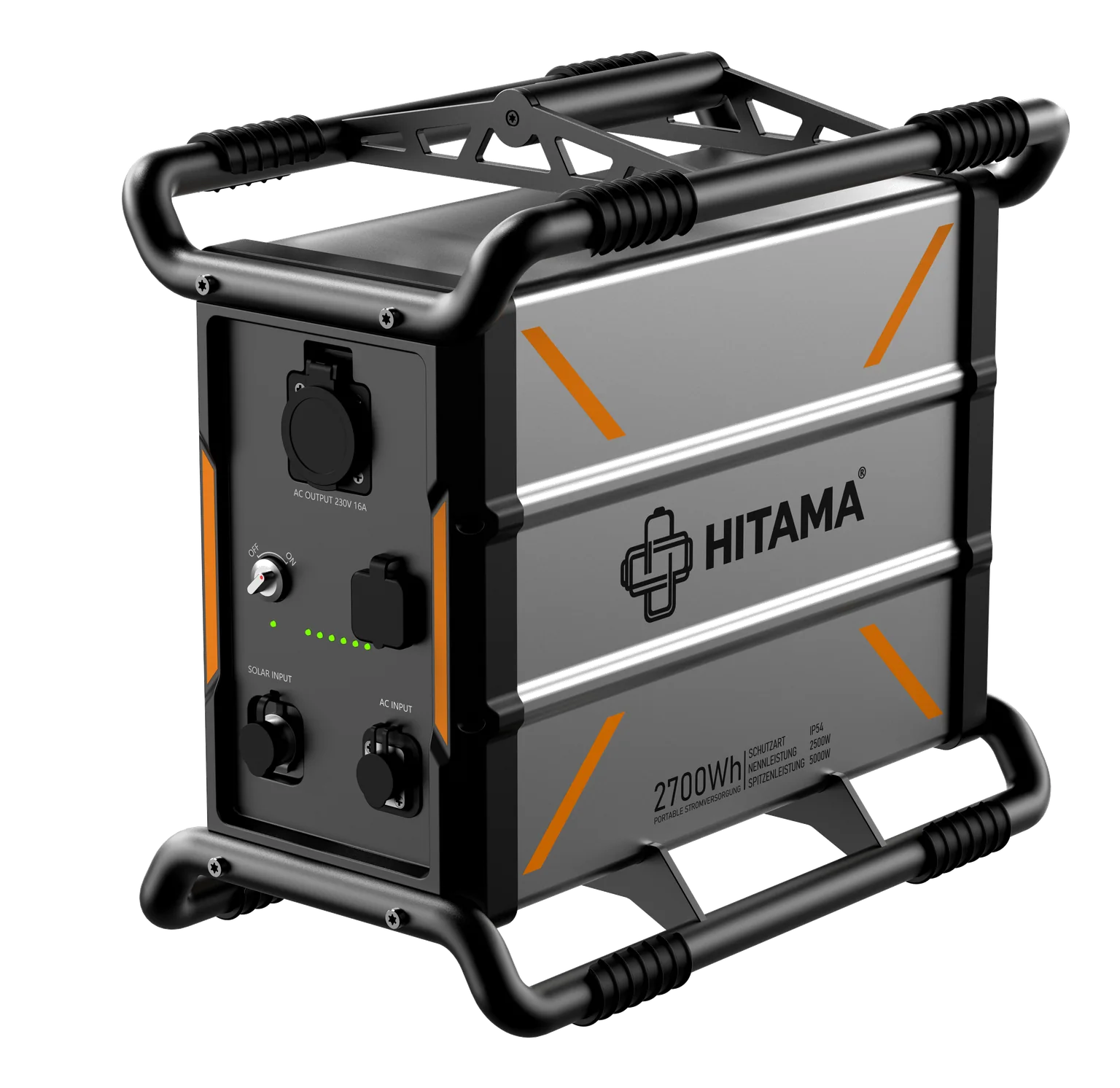 P25 seriesModular parallel platform2,500–7,500 W · 2.7–8.1 kWh · 230 V or 400 V
- P36 seriesFlagship unit and parallel systems3,600–10,800 W · P36 / P36-D / P36-T
- Coming soonM60 series230 V + 400 V all-in-one · wheeled cart10 kWh · parallel capable · no distribution box
Choose by application
Five situations that call for different equipment — each page covers sizing, limits and cost.
- Run the diesel vs. battery numbers — Cost calculator with your own hours, diesel price and CO₂ price.
- Rental fleets — Utilisation, handover and charging time rather than purchase price.
- 400 V three-phase — When loads need three-phase power.
- Fire and rescue services — Standby power at sites without a fixed connection.
- Welding power — When the unit also has to carry welding equipment.
The C24 entry-level unit is listed in the matrix above. Request the detailed datasheet for full specifications, drawings and pricing.
Frequently asked questions
The questions buyers actually ask before a first order — answered with numbers from our own datasheets, not from a brochure.
Can I obtain a sample before placing a larger order?
Yes, that is standard practice — and with battery storage it is the only meaningful test, because internal resistance, cooling behaviour and build quality only show up in operation. Ask explicitly whether the sample matches series condition or is a hand-built pre-production unit.
Does the sample match the later series condition?
Have it confirmed in writing and record it with the sample: cell type, degree of protection, weight, connectors. Without that record the sample is no benchmark for the series, and you lose the basis for comparison if the production run deviates.
How should a sample be tested to be meaningful?
Test it on your own site, with your own equipment: your inrush currents, your dust load, your ambient temperature. Set the test duration by your work sequence, not by the quotation. Log runtime, temperature and anomalies — that becomes your basis for any later claim.
What warranty applies, and what is explicitly not covered?
Ask about the two separately: statutory warranty and voluntary guarantee. More important than the duration is the exclusion list — wear parts, consequential damage, improper operation. Most disputes arise not about the period but about whether a particular damage is covered.
What exactly happens in a damage case?
Have the process set down in writing: whom to contact, with which details, who bears transport, and how quickly you get a response. A clear process is a quality feature. If it is missing from the quotation, it will be improvised in the damage case — at your expense.
Is repair carried out in my country or at the manufacturer's site?
This decides your downtime. Ask whether repairs are possible in the buyer's country, whether replacement units are available, and who bears the freight. For units deployed on changing sites, downtime usually costs more than the repair itself — so the answer should be in hand before you order, not after.
Who bears the risk of transport damage?
That follows from the Incoterm chosen — and only from it. Clarify before ordering at which point risk and cost pass, and whether transport insurance is provided. For dangerous goods, packaging and documents must be in place before shipment. The Incoterm does not govern warranty — those are two separate questions.
How are spare parts available in my region?
Ask about the channel, not just availability: who do I order through, what is the processing time, and can parts be supplied individually. More important than today's answer is whether it still holds in three years. Units without a secured parts supply lose value in year three.
Is there a documented procedure for a failure?
Require a written procedure: replacement unit, repair route, contact point. This matters especially if you rent units out — there the downtime is your problem, not the end customer's. A documented procedure is a tender criterion and separates series suppliers from occasional sellers.
How is the minimum order quantity defined?
Clarify whether it applies per model, per series or per order — those are three very different numbers. Likewise whether sample shipments and follow-up orders are treated separately. This definition decides whether a small entry is possible or not. Settle it before you calculate, because it directly drives the unit count.
Which Incoterm is offered, and what does it include?
Ask for the Incoterm and for the breakdown of what it covers: packaging, transport leg, insurance, export clearance. The Incoterm decides which costs you carry yourself. A price without an Incoterm cannot be compared, because material cost items may be missing from it.
Who handles customs declaration, import duties and the risk of delay?
Settle the roles in writing: who declares, who bears duties, who is liable for delay. With dangerous goods there are documents that must exist before booking. These points belong before the order, not after — otherwise costs appear that were invisible in the quotation.
How is an order of several units delivered?
Ask whether as one shipment, on one pallet or individually — and whether the units are separately packed and transportable. With fleets what counts is that a single unit remains deployable and does not block the whole delivery. Ask for a packing plan for your quantity.