
Fire & technical rescue
Ventilation fans, cutting and breaching tools, deployable floodlighting.
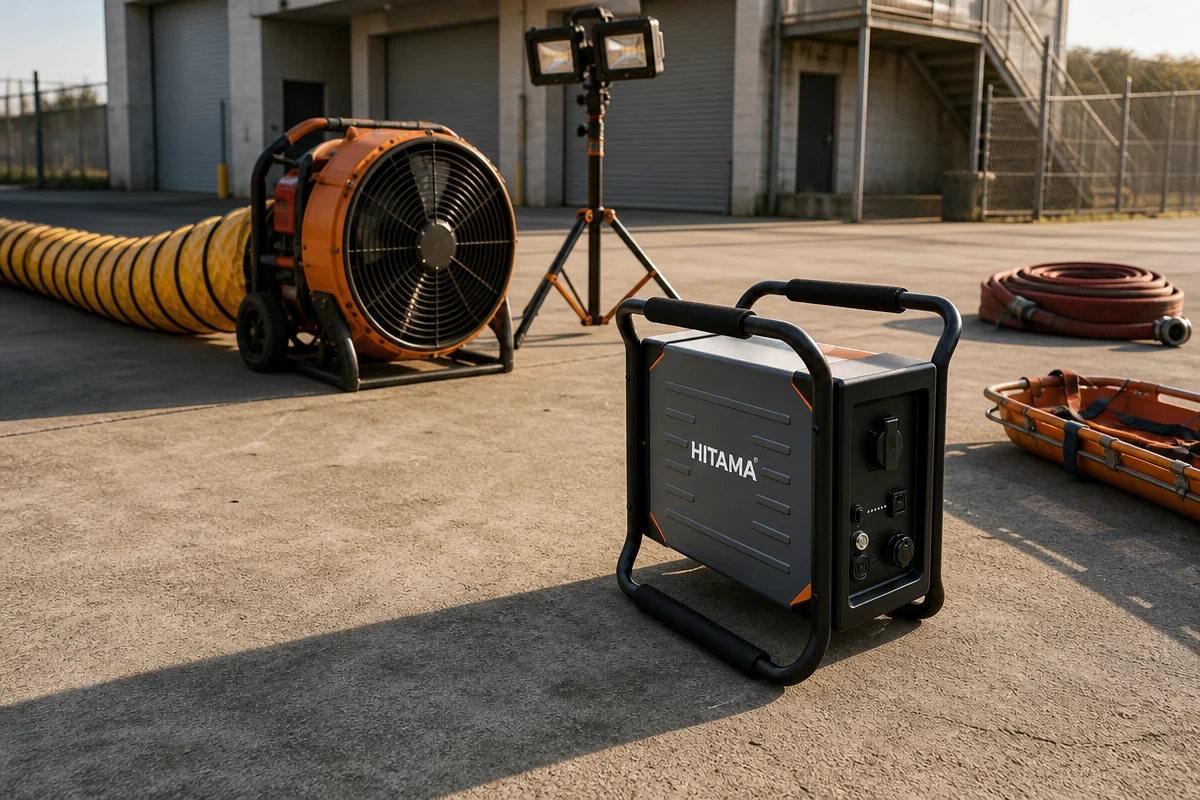
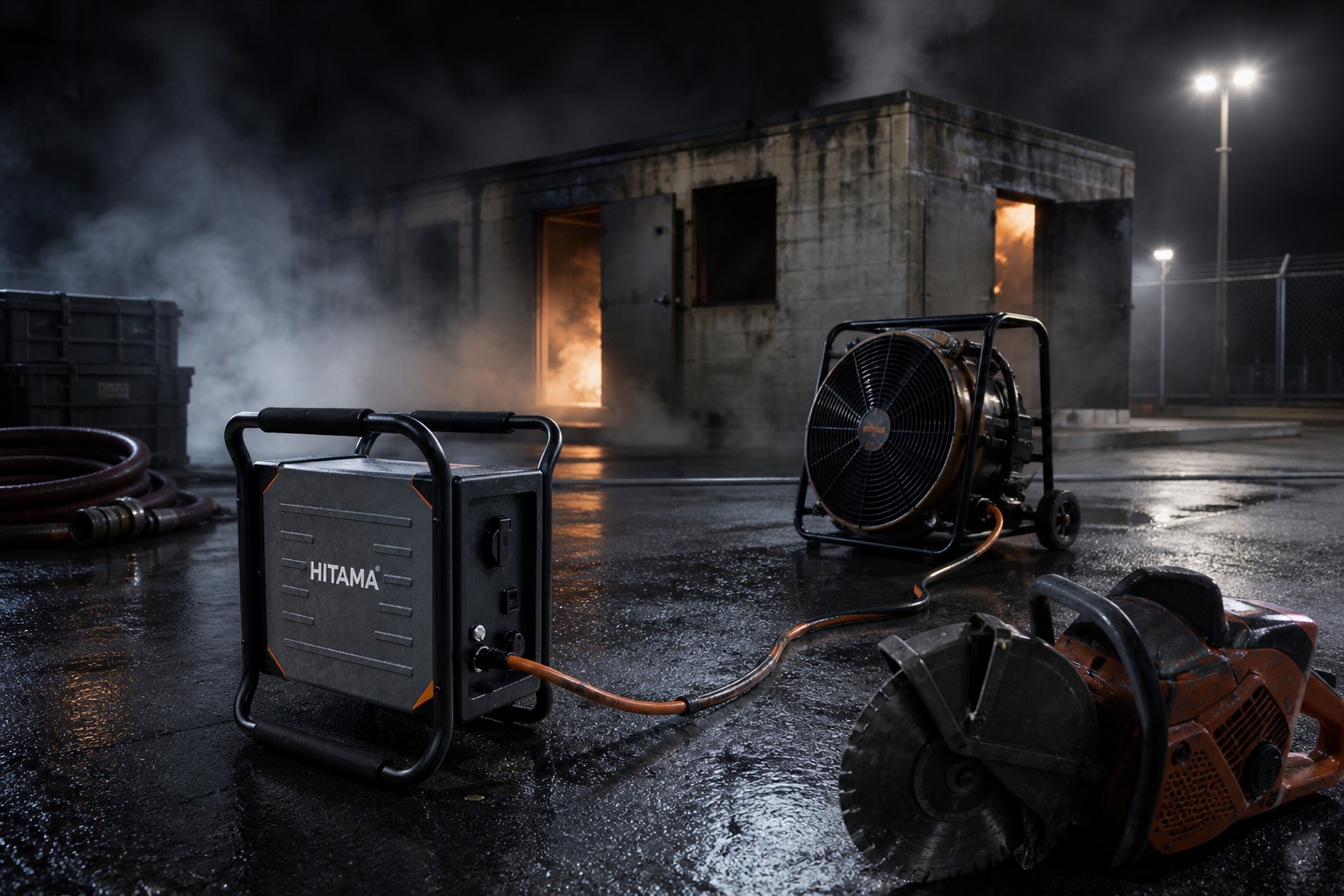
At a fire, exhaust gas is the second hazard: ventilation fans, hydraulic breaching tools and cutters pull hard power inside buildings, and a diesel generator adds its own pollution to the environment you are clearing. The P25-T three-phase system drives the large tools at 7.5 kW / 8.1 kWh; the P25-D covers lighting and communications — zero emissions on scene, near-silence, IP54 for rain and debris. Peak loads from breaching and cutting belong on 400 V three-phase, not a single-phase drop. In the night window, every minute counts.
Field notes in this sector
- Fire & technical rescue
Readiness is a charging schedule, not a battery rating
A 2.7 kWh unit that carried a fan and two floodlights comes back needing hours on a 230 V socket, and the next call can arrive inside the same shift. Readiness at a station is a charging schedule, not a capacity figure.
- Fire & technical rescue
The fire is out and the supply is down: lighting the hours after the main switch
The main switch is isolated before crews enter, and that is the right call. It also takes out every light, every socket and the escape lighting — at exactly the moment overhaul, investigation and the fire watch begin.
- Fire & technical rescue
The drill, not the incident, sets the energy budget
Fire services work out their power requirement from the incident, but the incident lasts minutes and the training day lasts hours. The ventilation fan and the lighting are what actually spend the energy — and that is where the configuration gets decided.
- Fire & technical rescue
Power at the incident: what changes when the generator stays on the truck
Three things a combustion generator does at an incident have nothing to do with wattage: it buries radio traffic, it puts exhaust where crews work, and it stops when the fuel runs out.
All sectors
- Construction & civil works
- Equipment rental
- Emergency response
- Fire & technical rescue
- Disaster relief & civil protection
- Defence & field operations
- Mining & quarrying
- Geological exploration & survey
- Welding supply
- Telecommunications & utilities
- Rail, tunnel & infrastructure
- Events, film & media
- Agriculture & outdoor work