
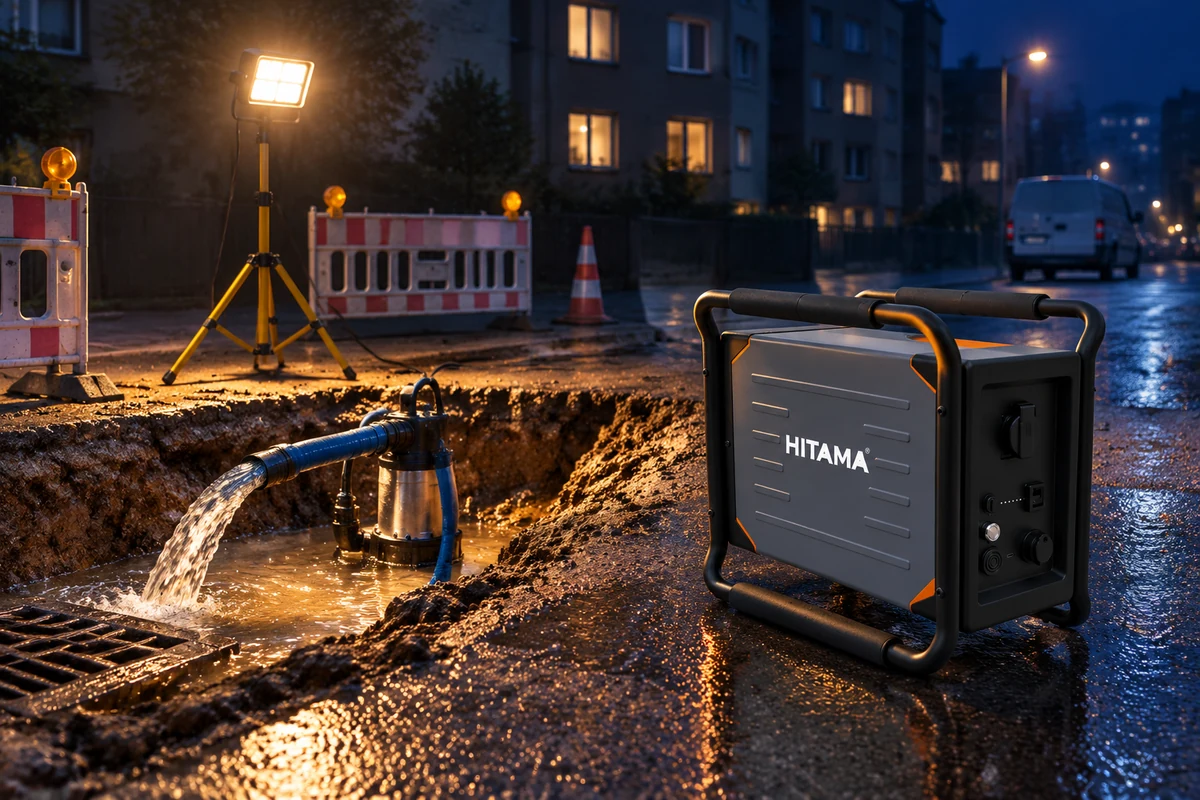
The file is written around a fuel
A diesel generator enters a risk file as three things: an engine, a fuel store, and a person who refuels it. Almost nothing in that sentence is about wattage. The rating appears once, on an asset list. The fuel appears in the fire load, in the environmental section, and in the rule about where a can is allowed to stand.
Swap the machine and the sentences usually stay. The generator leaves, the battery arrives, and the schedule still describes a refuelling point, a jerrycan store and an operator who fills a tank at seven in the morning. Those lines come from a template that has described temporary power this way for decades.
Risk transfer does not follow the invoice. A purchase order changes what stands on the slab. It does not change what the insurer has been told stands there. The gap between the two documents opens on the day of a claim, not on the day of delivery.
The risk moves from the can to the socket
The battery removes a fire load and adds an electrical one. Nothing is stored or refuelled; instead 2.7 kWh sits sealed in a 29 kg case, charged from a 230 V 16 A circuit at 500 to 1,500 W input, and that circuit then runs unattended for about two and a half hours.
Charging is the new hazardous operation, and it looks like nothing. It happens in a container, a basement, next to a stack of insulation. The unit is sealed and fanless — no intake, no exhaust, no moving part — which is exactly why it can stand in a dusty hall. Sealed also means the heat stays in the case. A P25 between −10 and 65 °C is unremarkable; the same unit behind a closed door in August is a different object.
The electrical evidence belongs in the file in writing: CE under the EMC Directive 2014/30/EU with test report A2409245-C01-R01-V1 available on request, UN 3480 Class 9 packaging for sea freight, UN38.3 and the MSDS. IP54 is an enclosure rating, not a certificate — splash, not immersion. And 2.7 kWh has no flash point, no container and no delivery note, so whoever maintains the schedule still has to decide which column it occupies. An empty column is not a covered one.
Where it stands at night is a declared fact
Location is the line an underwriter reads first. A generator in a yard twenty metres from a building is one risk. A battery charging inside that building is another. The equipment did not become more dangerous. It became eligible for indoor use.
Treat the charging point as a fixed installation. Choose the place, write it down, keep it there, and use the same words in the risk assessment, the site plan and the broker's schedule. Three documents that agree beat one document that is thorough.
Numbers age badly when nobody owns them. One, two or three units take a site from 2.5 kW to 10.8 kW, and a P25-T delivers 10 A per phase at 400 V from 8.1 kWh. Each step is a different installation on paper, and a schedule written for one unit does not cover a bank of three.
What this is not
This is not a claim that a battery lowers your premium. We are a manufacturer, not a broker, and we hold no data that would support a number. The usable statement is narrower: the facts an underwriter asks about are the facts a battery changes, so the file has to be edited rather than replaced.
This is not insurance or legal advice, and it does not replace your own assessment. It is a list of the questions that surface when a fleet moves from fuel to stored energy, written from the site side.
And it is not an argument for keeping the generator. A diesel unit that is correctly declared is not safer than a battery that is correctly declared. The subject is the declaration, not the chemistry.
Hand over the load list, not the brochure
The document that settles most of this is boring: the load list. Which tools, what rated and peak draw, how long each runs, where the unit stands, how it is charged, who signs for it at the end of the shift. Send us the real list — tools, distances, and the place the unit will stand overnight — and we will size the configuration against it, including the parallel case when the numbers point there. You can reach us at https://www.hitama.net/en/contact.