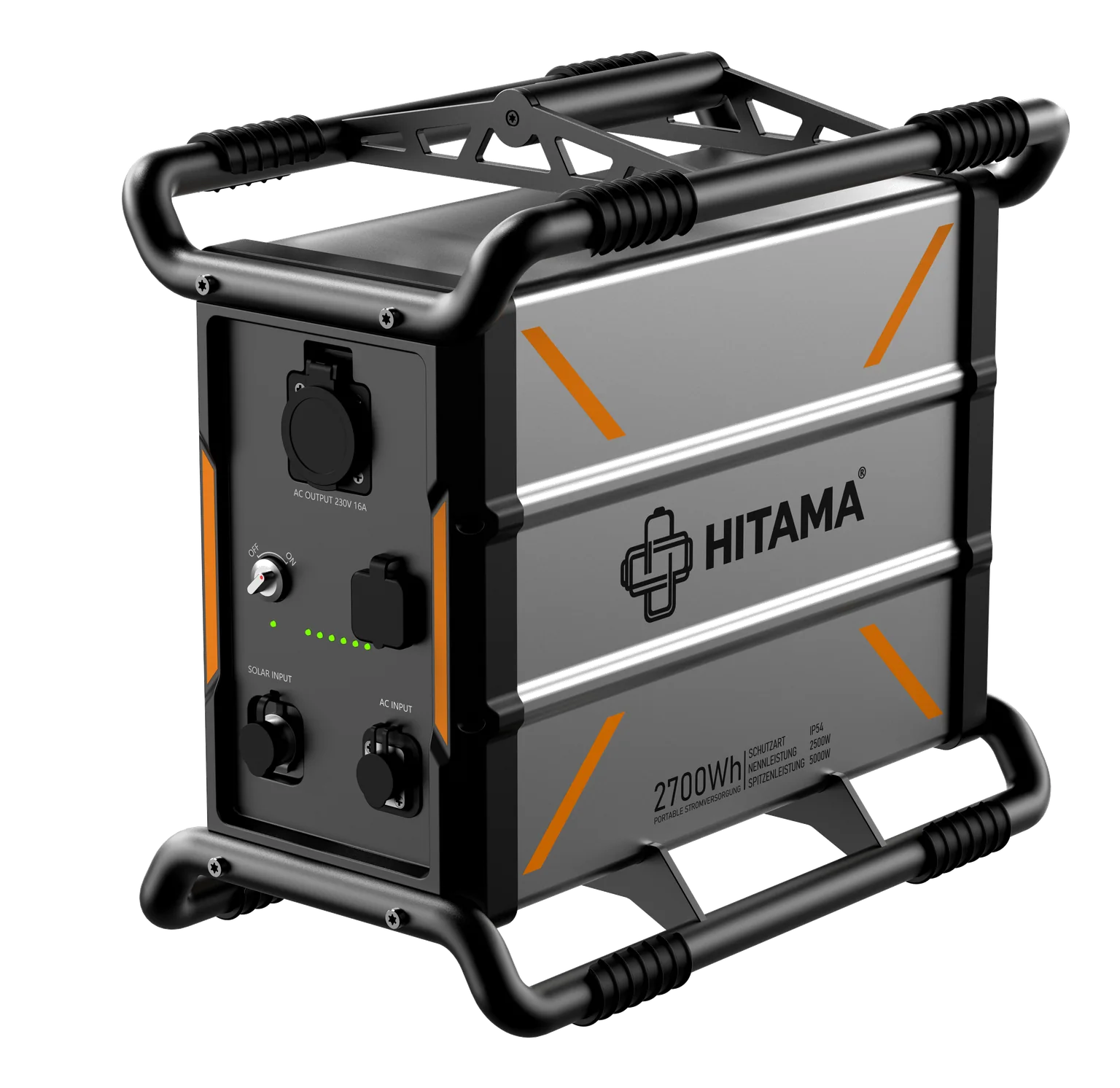
Fanless self-cooling
No fan, no moving parts, no intake. In dusty, hot and humid sites it does not clog or wear — zero noise, no maintenance.
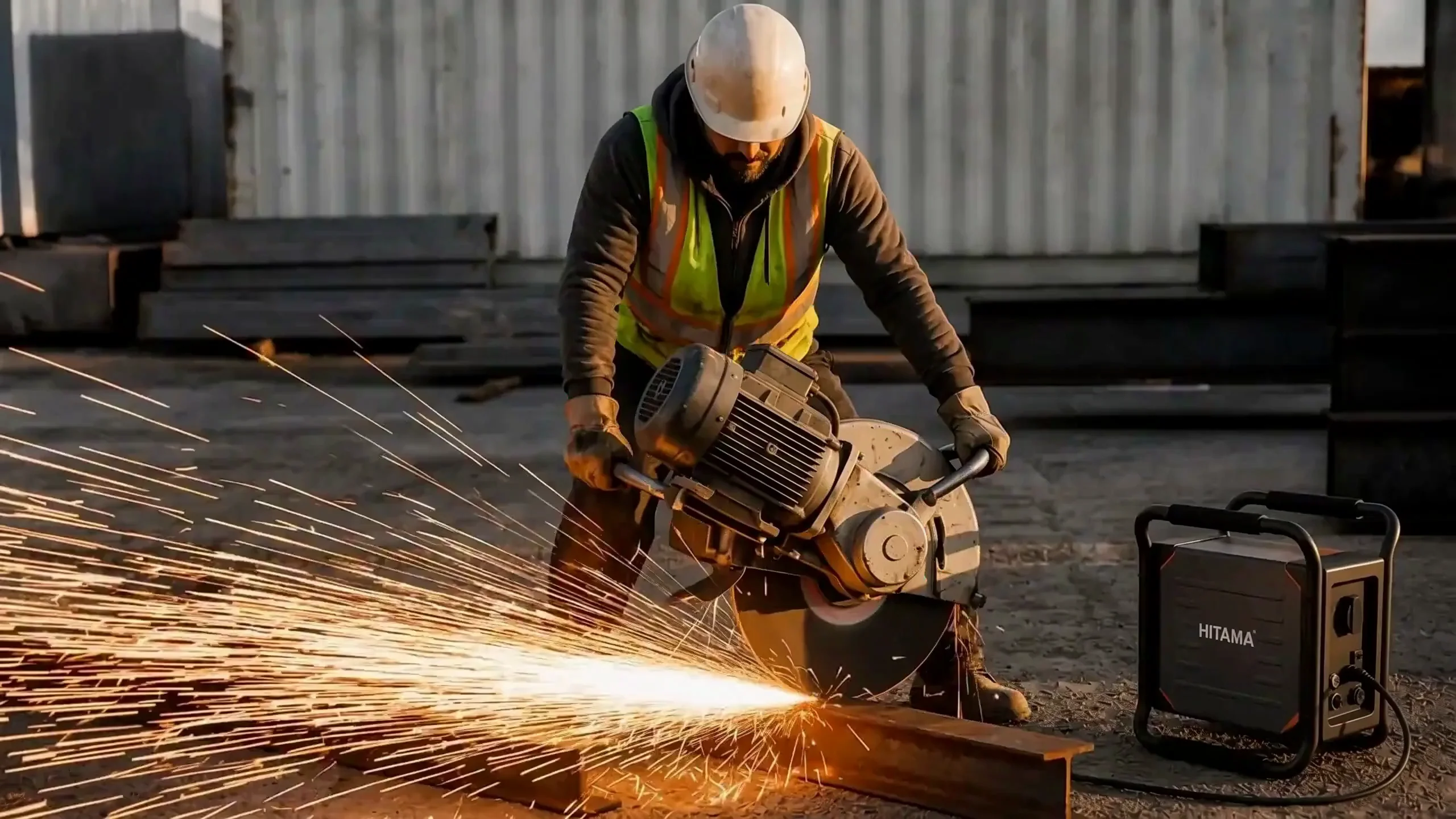
Compact and high-output — 230 V single-phase or 400 V three-phase, your choice.
Build scalable, industrial-grade power — no fuel, no exhaust, no noise.
Fanless self-cooling, modular parallel, and a pure sine wave — built for the jobsite to replace the combustion generator.
3,600 W rated and 20,000 W peak from a single unit, with three-phase output available. Every tool in this range is a compatible load — pick the model that fits the job.
Power figures are typical tool ranges, for reference only — not Hitama specifications.
Tools shown are examples of compatible loads, not products for sale — Hitama does not sell power tools.
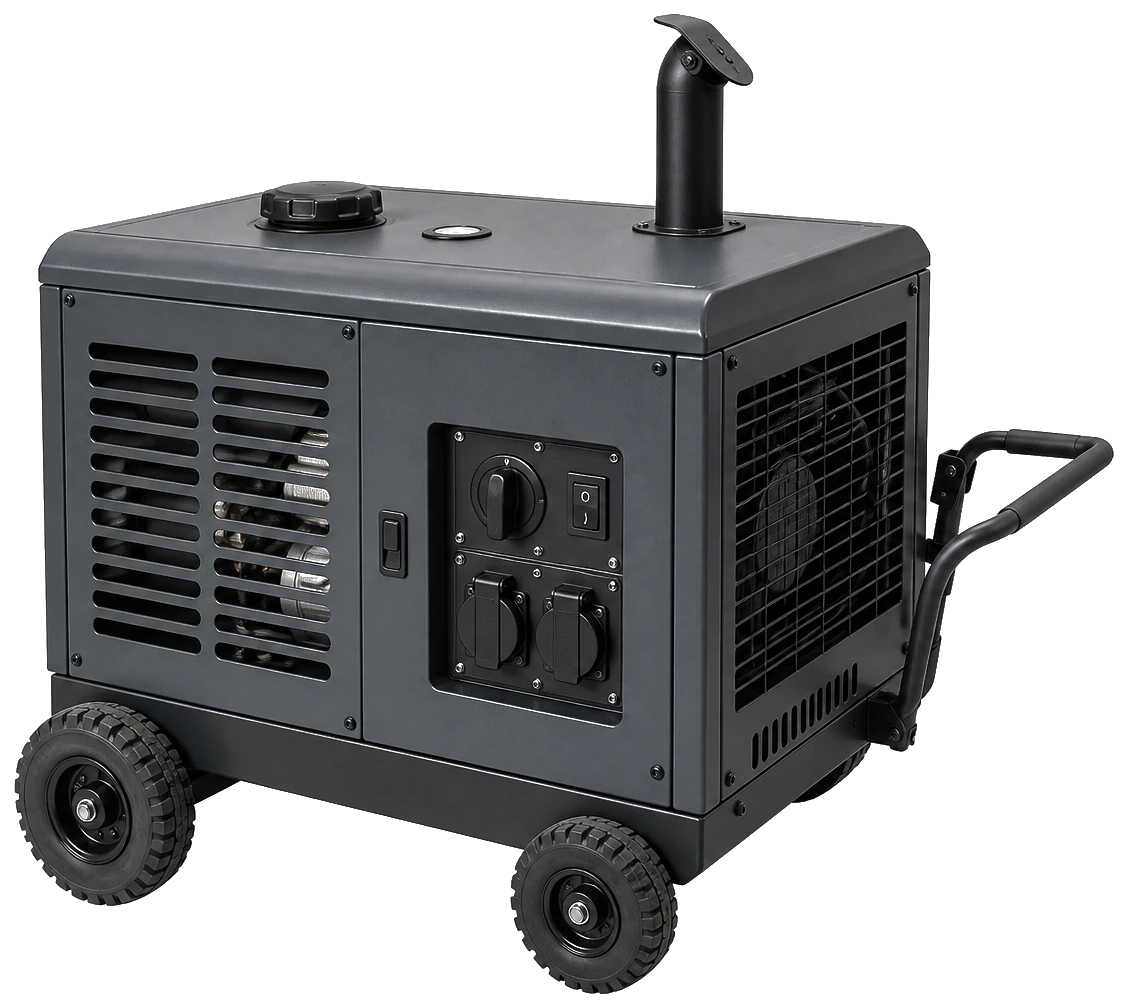
Four decisions make the range reliable where a diesel generator struggles.
No fan, no moving parts, no intake. In dusty, hot and humid sites it does not clog or wear — zero noise, no maintenance.
One unit, two units, or three in three-phase. The same platform scales from 2.4 kW to 10.8 kW / 400 V and can drive 160–200 A inverters and large power tools.
P25 at 29 kg and P36 at 21–23 kg — leading energy density in a smaller footprint.
The same job, two ways of doing it.
| Dimension | Hitama power station | Diesel generator |
|---|---|---|
| On-site emissions | No combustion, no exhaust. Usable indoors, in tunnels and underground. | Burns fuel and vents exhaust; the carbon-monoxide risk rules out enclosed spaces. |
| Noise | No moving parts — effectively silent on site. | An engine running all shift; hard to justify at night or beside housing. |
| Fuel | No fuel, no cans — charge it and go. | Fuel to buy, carry and top up, plus storage and transport to manage. |
| Maintenance | No engine oil, no filters, no carburettor. | Oil, air filters and spark plugs on a service schedule. |
| Dust | Fully sealed and self-cooled — there is no air vent to clog. | The intake filter traps the dust, and is cleaned or replaced on the service schedule. |
| Scaling | Parallel 2-3 units — power and capacity stack. | More power means buying a second, separate set. |
| Power quality | Pure sine wave, THD below 3%. | Voltage and frequency move with the load. |
| Running cost | No fuel bill and no engine servicing. | Fuel and servicing are a permanent line item. |
On-site emissions
No combustion, no exhaust. Usable indoors, in tunnels and underground.
Diesel generatorBurns fuel and vents exhaust; the carbon-monoxide risk rules out enclosed spaces.
Noise
No moving parts — effectively silent on site.
Diesel generatorAn engine running all shift; hard to justify at night or beside housing.
Fuel
No fuel, no cans — charge it and go.
Diesel generatorFuel to buy, carry and top up, plus storage and transport to manage.
Maintenance
No engine oil, no filters, no carburettor.
Diesel generatorOil, air filters and spark plugs on a service schedule.
Dust
Fully sealed and self-cooled — there is no air vent to clog.
Diesel generatorThe intake filter traps the dust, and is cleaned or replaced on the service schedule.
Scaling
Parallel 2-3 units — power and capacity stack.
Diesel generatorMore power means buying a second, separate set.
Power quality
Pure sine wave, THD below 3%.
Diesel generatorVoltage and frequency move with the load.
Running cost
No fuel bill and no engine servicing.
Diesel generatorFuel and servicing are a permanent line item.
One more note: having no cooling vent to clog is also what separates us from air-cooled battery storage — dust, metal particles included, blocks their duct and takes the cooling capacity with it.
The diesel column describes the characteristics of the category, not any particular brand; check the manufacturer own data for a specific set.
Two views of the same question: what a working day costs, and what a year costs. Both share your price assumptions — change one figure and both recalculate.
at 21 working days a month
A kilowatt-hour from the generator costs 0.82 € here, from the grid 0.20 € — a factor of 4.2.
Both figures are per kilowatt-hour delivered to the load; charging losses are already included.
Is the capacity enough for a working day?
At 1.8 kW for 6 h the day needs 10.5 kWh. One P25 holds 2.7 kWh usable — the remaining 7.8 kWh comes from the grid, or you link 4 units for a day without a socket.
Diesel: daily energy × consumption (l/kWh) × diesel price + maintenance per operating hour. Power station: daily energy divided by (1 − charging losses) × electricity price. The diesel price excludes CO₂ cost; that sits separately in the calculator below.
Adjust the assumptions
Estimate, not a commitment. Actual cost depends on load profile, machine, service interval and your tariff.
ADAC, Monatsmittel Oktober 2026: 2,261 €/l (Tankrabatt seit 1. Oktober) · BDEW-Strompreisanalyse Herbst 2026: 17,2 ct/kWh, kleine bis mittlere Industriebetriebe
Full assumptions, CO₂ calculation and cumulative curve in the cost comparison
One litre of diesel not burned is one less lungful of exhaust on site; one generator gone is one less fuel run and one less drum in the store. Cutting emissions is not a figure in a report — it is a choice made every morning. One machine, one crew, one site at a time: that is the part we would like to do with you.