
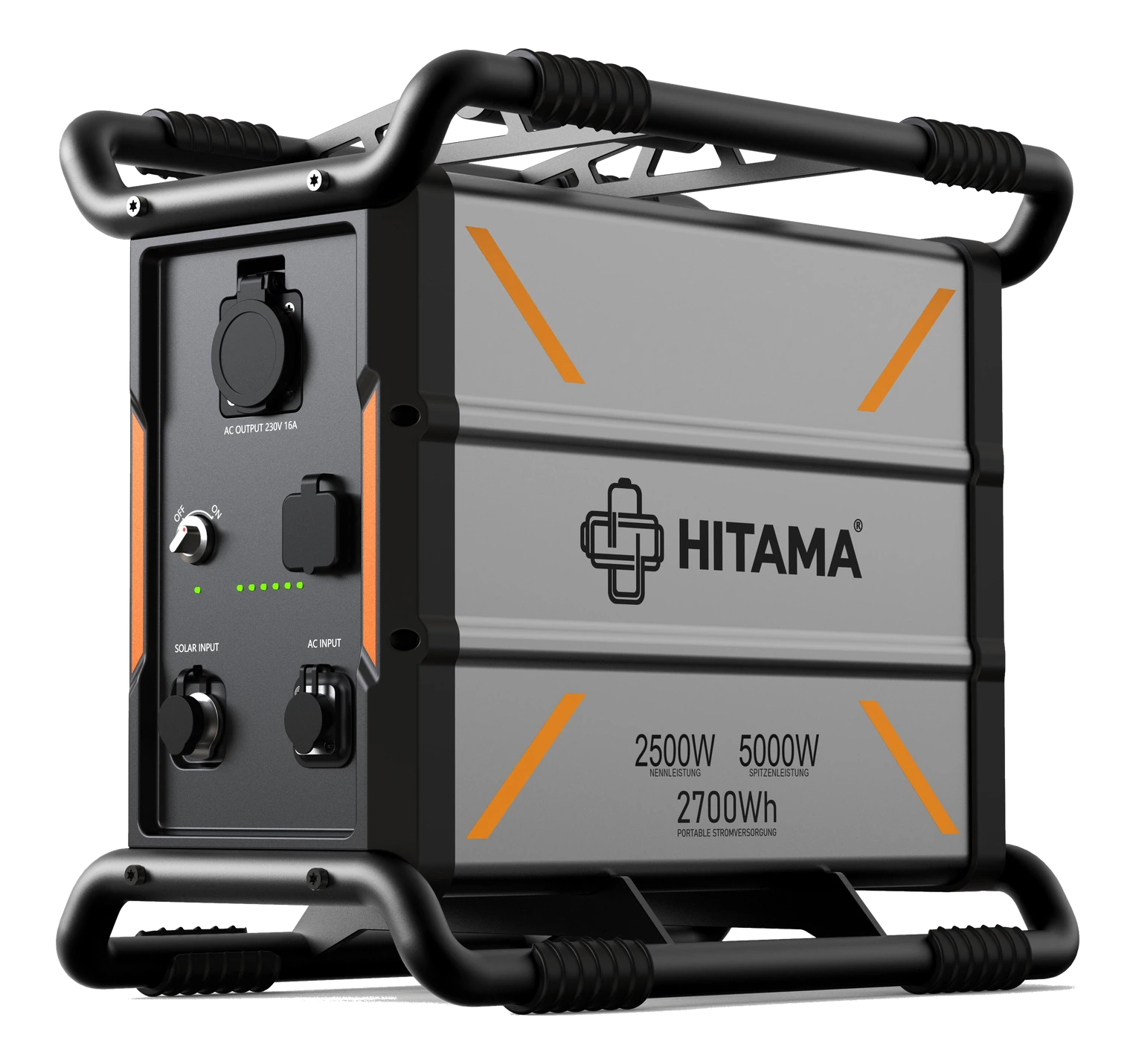
On 27 October the ASEW published its 2027 figures: the three German electricity levies rise from 2.946 to 3.621 cents per kilowatt hour — 22.9 percent. For a site with a grid connection, that sits on every kilowatt hour that passes the meter.
What the 22.9 percent consists of
The breakdown is traceable — and it adds up:
- Offshore grid levy: 0.941 → 1.143 ct/kWh (+21.5 %)
- Special grid usage surcharge: → 2.027 ct/kWh (+30 %)
- CHP levy (KWKG): → 0.451 ct/kWh (+1.1 %)
Together these three items come to exactly the stated 3.621 ct/kWh. Anyone who checks the arithmetic arrives at the same figure — not a given at this scale.
Two thirds of it is grid, not energy
Of the 3.621 cents, 3.170 are offshore levy and special grid usage. What is paid for is mostly not the energy but the readiness to supply it at any moment. On a site, that is precisely the expensive part: the connection has to be sized for the peak, while consumption arrives unevenly — tools in the morning, the saw in the afternoon, almost nothing at night.
In one sentence: what gets more expensive is not consumption, it is availability.
What this means for rental companies and dealers
Two shifts visible in quotations:
1. The question changes. Customers ask less often “how many kW?” and more often “how many kilowatt hours per charge?”. A quote that names only the rating does not answer the question being asked.
2. Diesel is not a bypass. The same report notes that costs under the German fuel emissions trading act rise by 18.2 percent in 2027 to 1.1791 cents per kilowatt hour. Both energy sources move at once — just at different points.
In practice that means separating cost per kilowatt hour from usable energy per charge. The second number decides how often anyone has to recharge at all.
What this report does not say
- These are levies, not end-customer prices. What is billed at the meter also depends on the grid operator, procurement and metering.
- The 2027 values are published or expected figures. The planned federal subsidy for grid costs falls from 6.5 to 5.525 billion euros in 2027; if it is not passed by 7 December, grid fees may come out higher.
- Regional differences are substantial — no single figure supports a nationwide statement.
Every figure in this article comes from the same report; the source is linked below and can be read in full.
To put the two calculations side by side — grid power per kilowatt hour and battery per charge — see the comparison at generators compared.
Source: stadt+werk, 27 October 2026, “ASEW: Strom-Umlagen steigen 2027 um knapp 23 Prozent” — to the report