
Latest from Hitama
Every entry belongs to an application: which tools our systems drive, where they replace a diesel generator, and how partners configure them. Filter by sector below.
Industry coverage
- Equipment rentalP25 · P36
- Fire & technical rescueP25-D · P25-T
- Disaster relief & civil protectionP25-D · P36
- Defence & field operationsP36 · P25-D
- Mining & quarryingP25-T · P36
- Geological exploration & surveyC24 · P25
- Welding supplyP25-T (400 V)
- Telecommunications & utilitiesP25 · P36
- Rail, tunnel & infrastructureP25-T · P25-D
- Events, film & mediaC24 · P25
- Agriculture & outdoor workC24 · P25
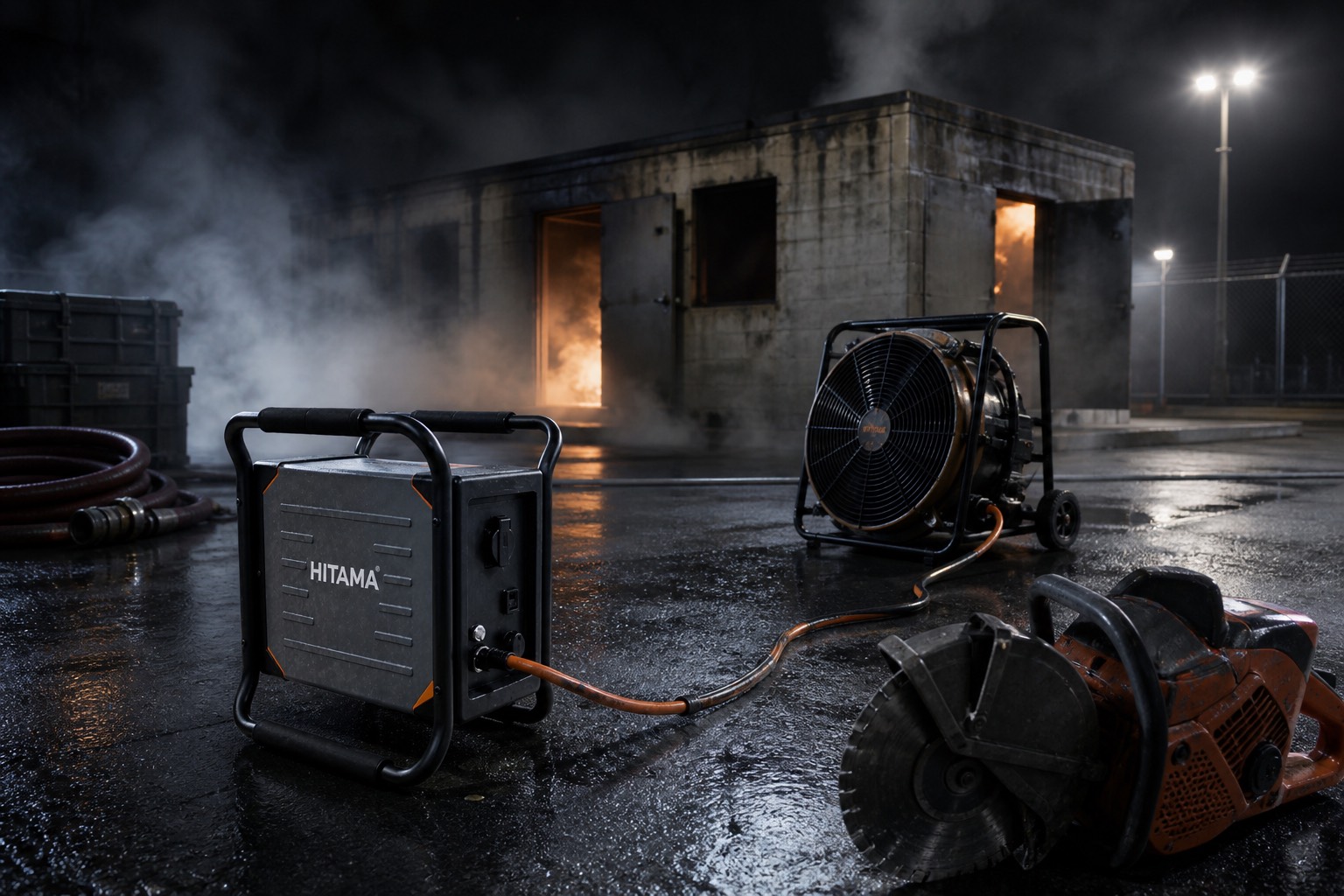
- Fire & technical rescue
Power at the incident: what changes when the generator stays on the truck
Three things a combustion generator does at an incident have nothing to do with wattage: it buries radio traffic, it puts exhaust where crews work, and it stops when the fuel runs out.
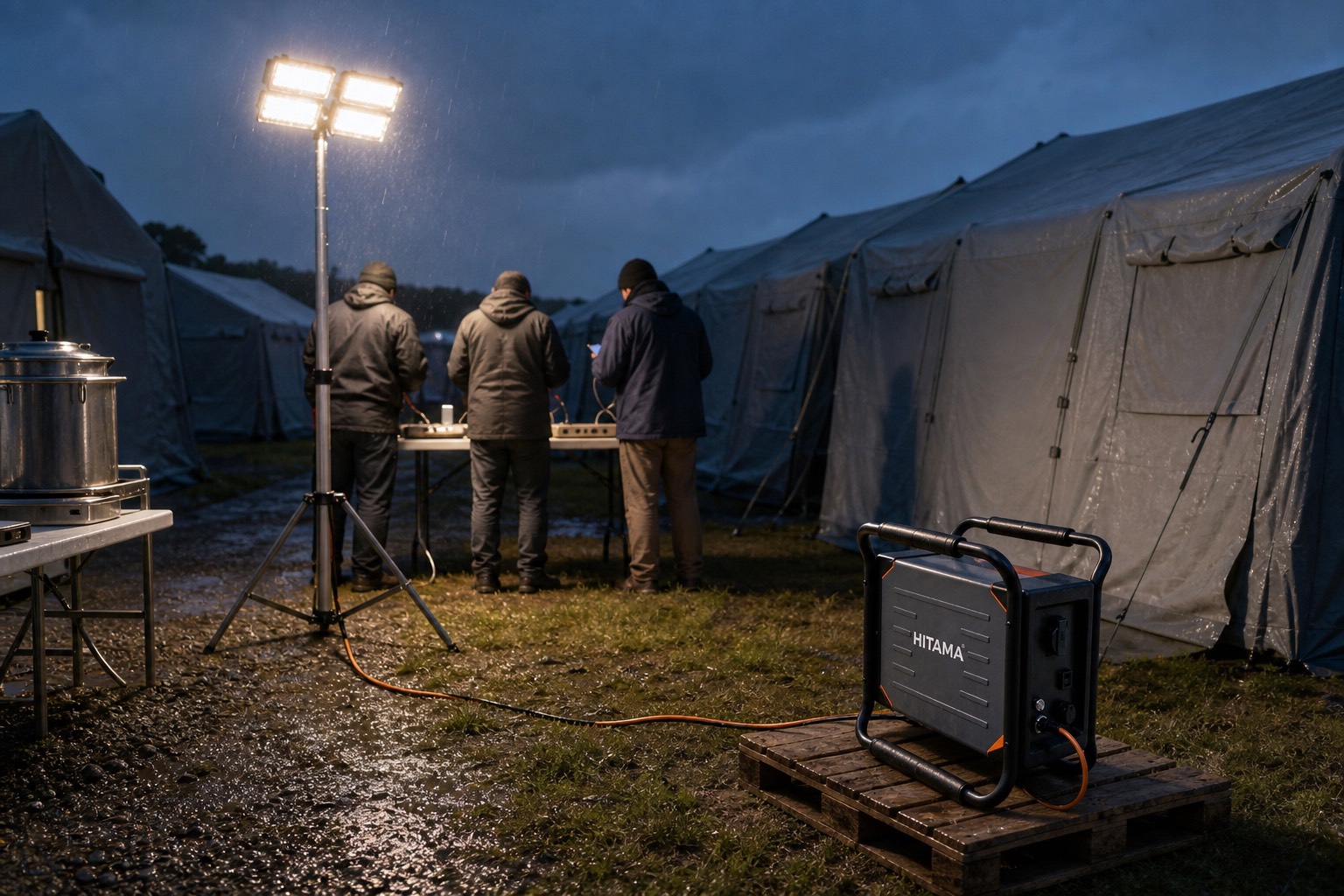
- Disaster relief & civil protection
When the grid is the casualty: power for a relief camp
In a relief operation the grid is often the thing that failed. What remains is a list of jobs that all need electricity — and several hundred people who need to charge a phone.
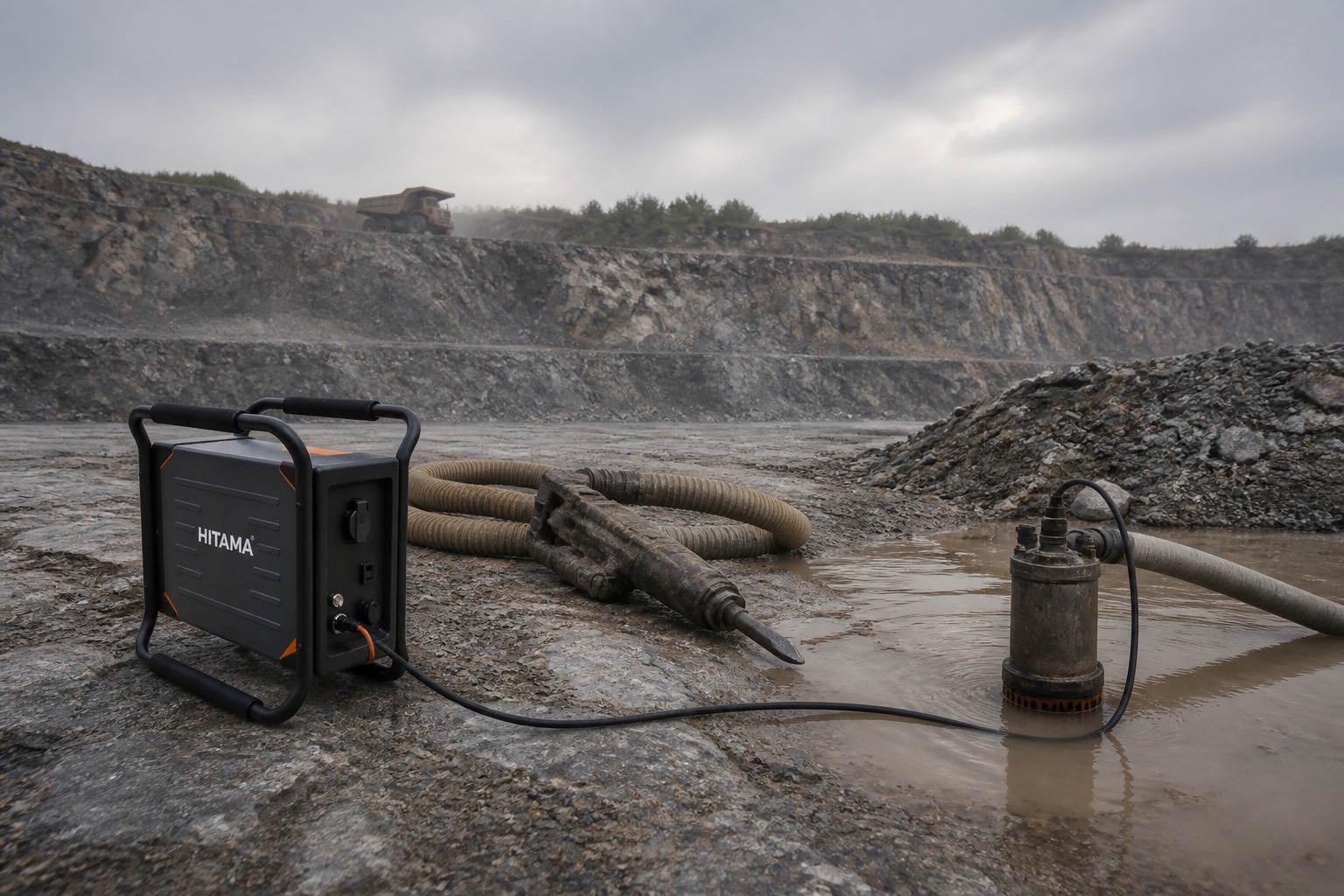
- Mining & quarrying
Dewatering and drilling at the face, without a generator on the bench
Dust, vibration, a slope nobody wants to carry a can up, and a rule against refuelling where the dust is explosive. The work moves with the face — the power has to move with it.
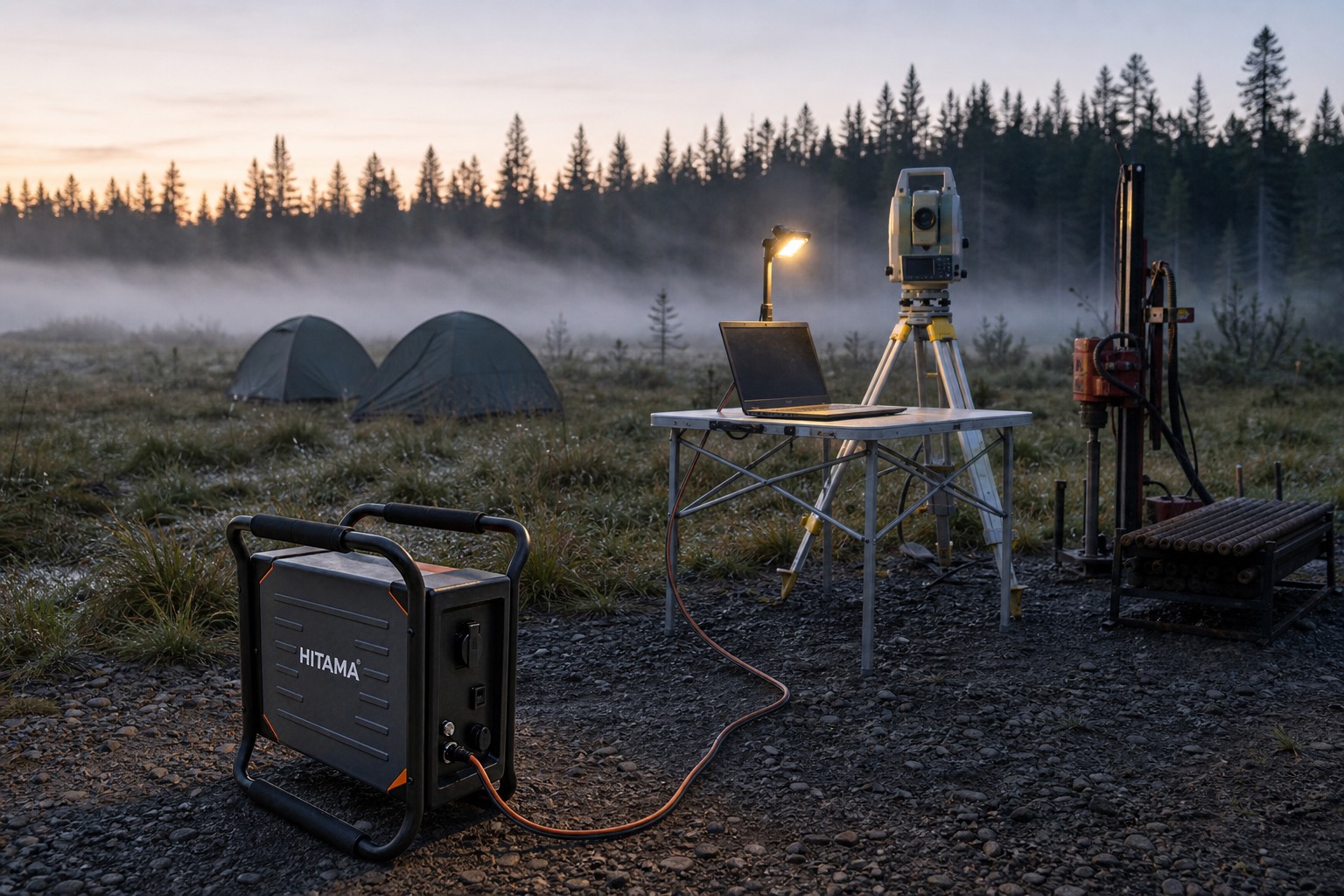
- Geological exploration & survey
A camp that carries its own power: survey and exploration off-grid
A survey camp is a load list in the middle of nowhere: a core drill, an instrument that must not lose power mid-reading, a laptop, and batteries for everything else.
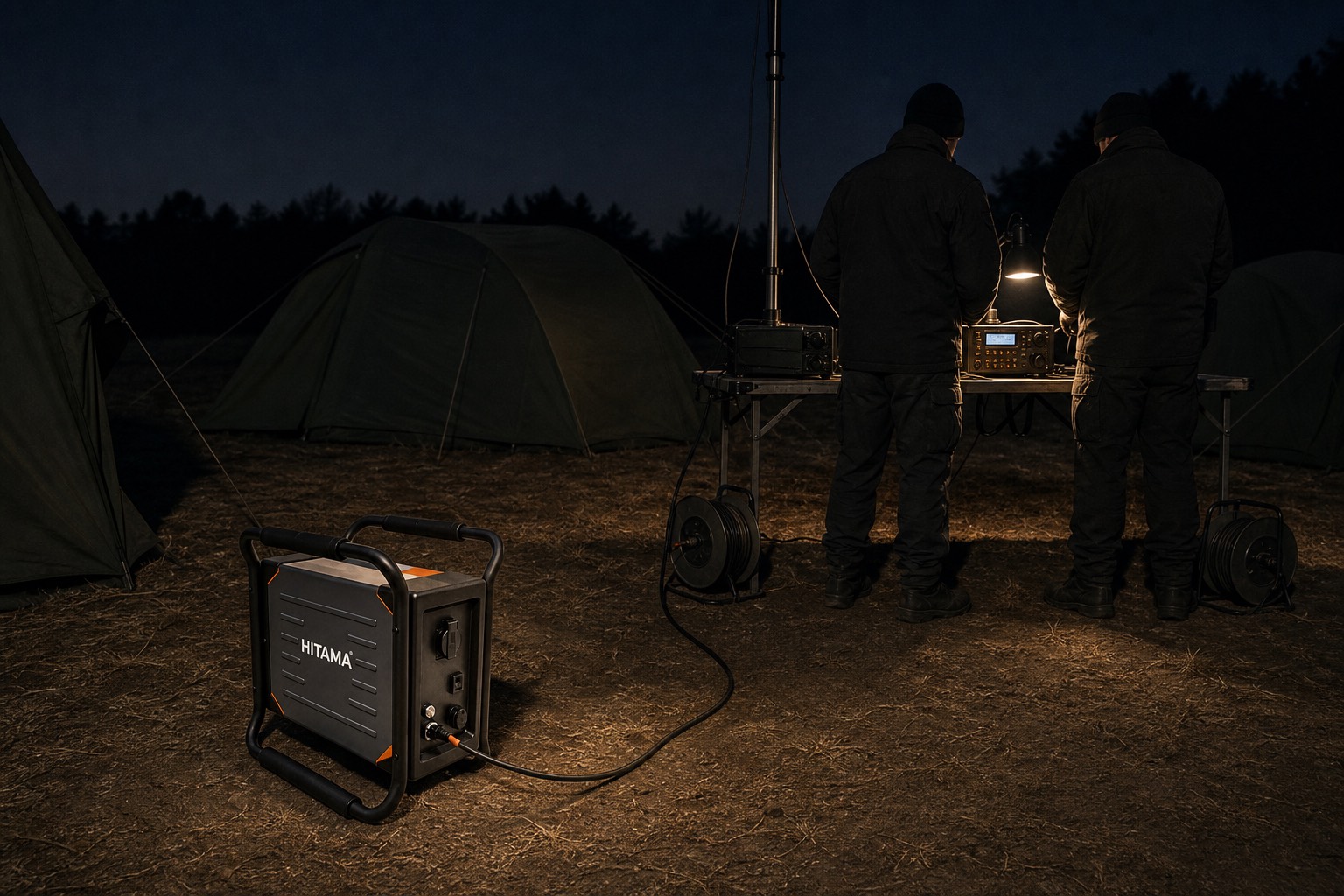
- Defence & field operations
Silent power in the field: camps, communications and charging
What a field camp actually runs on: a radio set that must not drop, charging for a section all at once, and lighting. No engine to hear, no exhaust where you sleep, no fuel run.
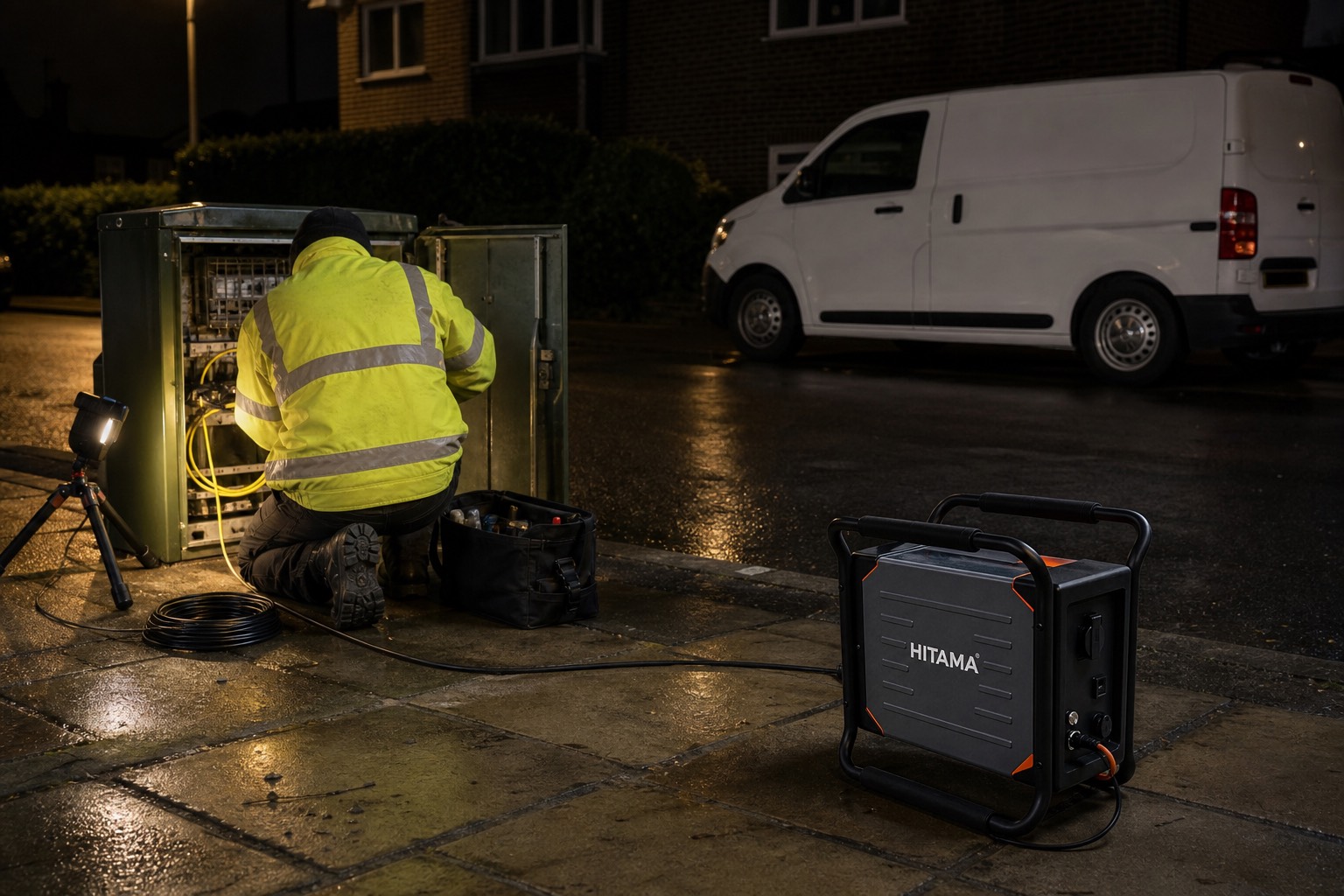
- Telecommunications & utilities
Cabinet work, fibre and cable faults: power at street level
A utilities crew works from a van on a residential street, often at night. The generator has two problems there: it is loud enough for the street to hear, and it needs fuel at the end of the shift.
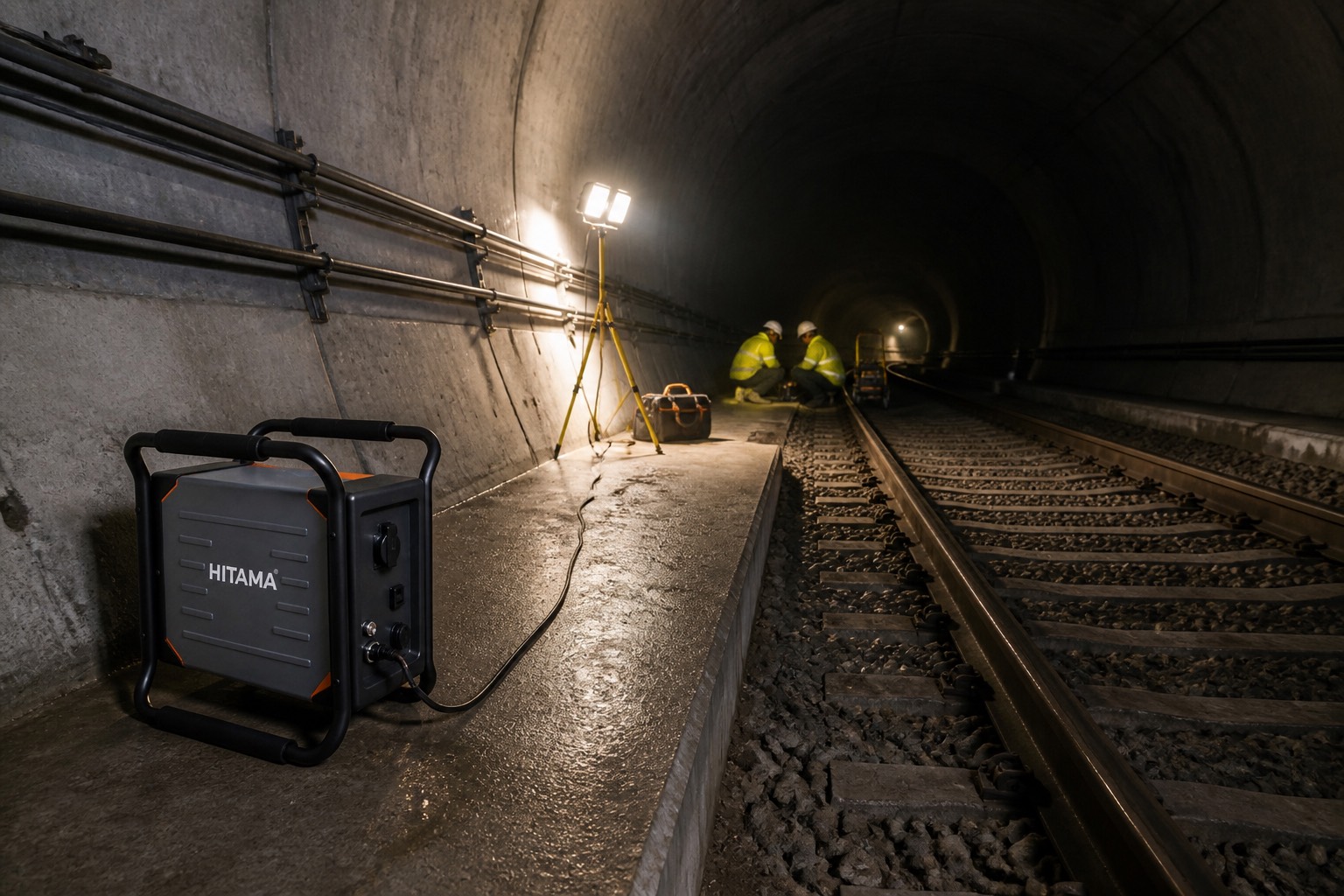
- Rail, tunnel & infrastructure
Night possessions: power for rail and tunnel work
A possession window is fixed and short. What eats into it is rarely the work itself: it is bringing a generator in, fuelling it, and dragging cables down a tunnel.
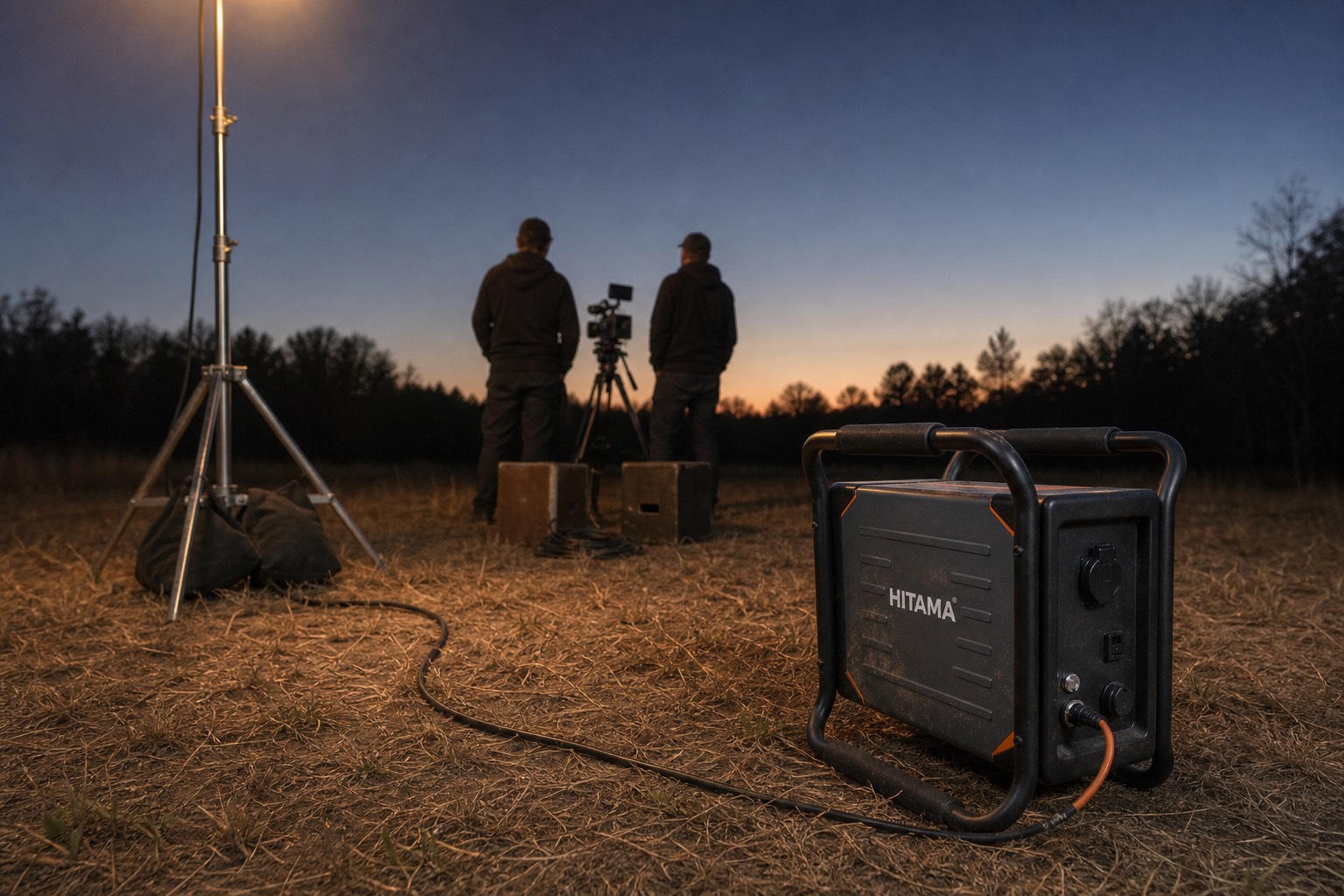
- Events, film & media
Silent power for stages and sets
On a set, noise is contractual. A generator on location means a cable run, a fuel run, and a sound department working around an engine all day.
- Equipment rental
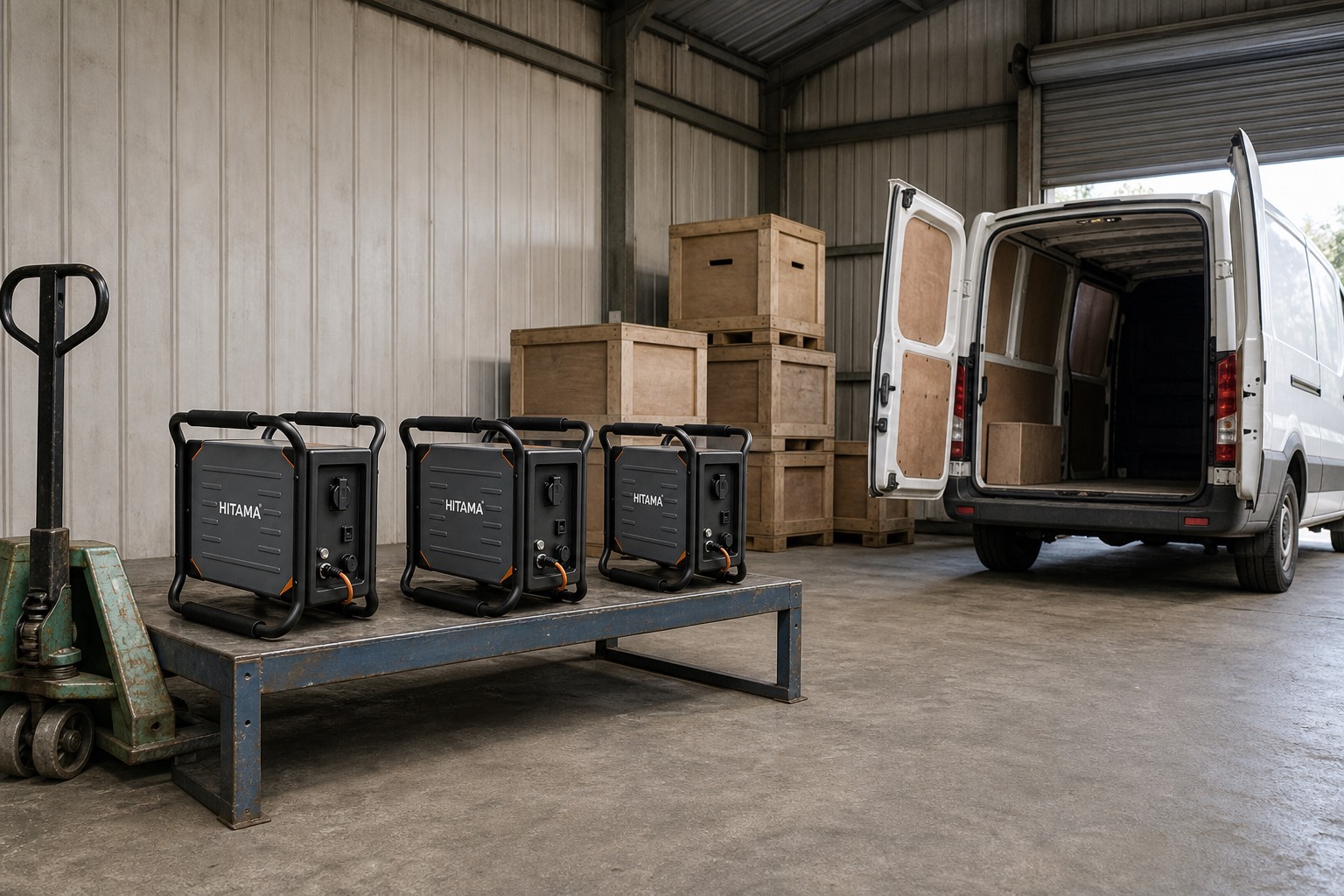
What a rental fleet needs from a battery: turnover, not watts
A hire desk does not buy power, it buys turnover. The question is not what a unit can do but how quickly it goes out, comes back and goes out again.
- Welding supply
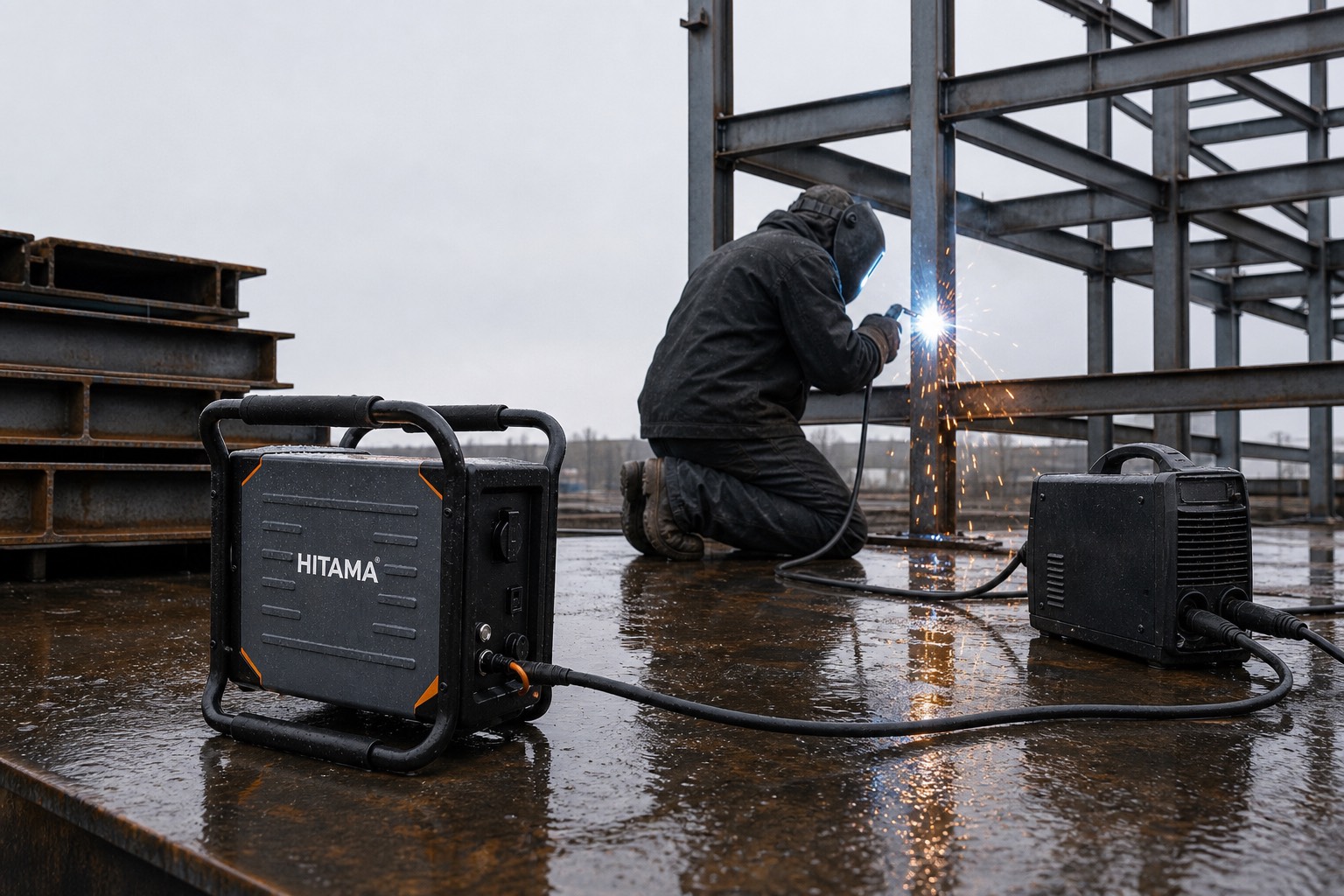
Three-phase welding without a generator
A 160–200 A inverter welder needs 400 V and a starting surge. That is a specification, not an obstacle — and peak output, not continuous output, is the number that decides it.
- Agriculture & outdoor work
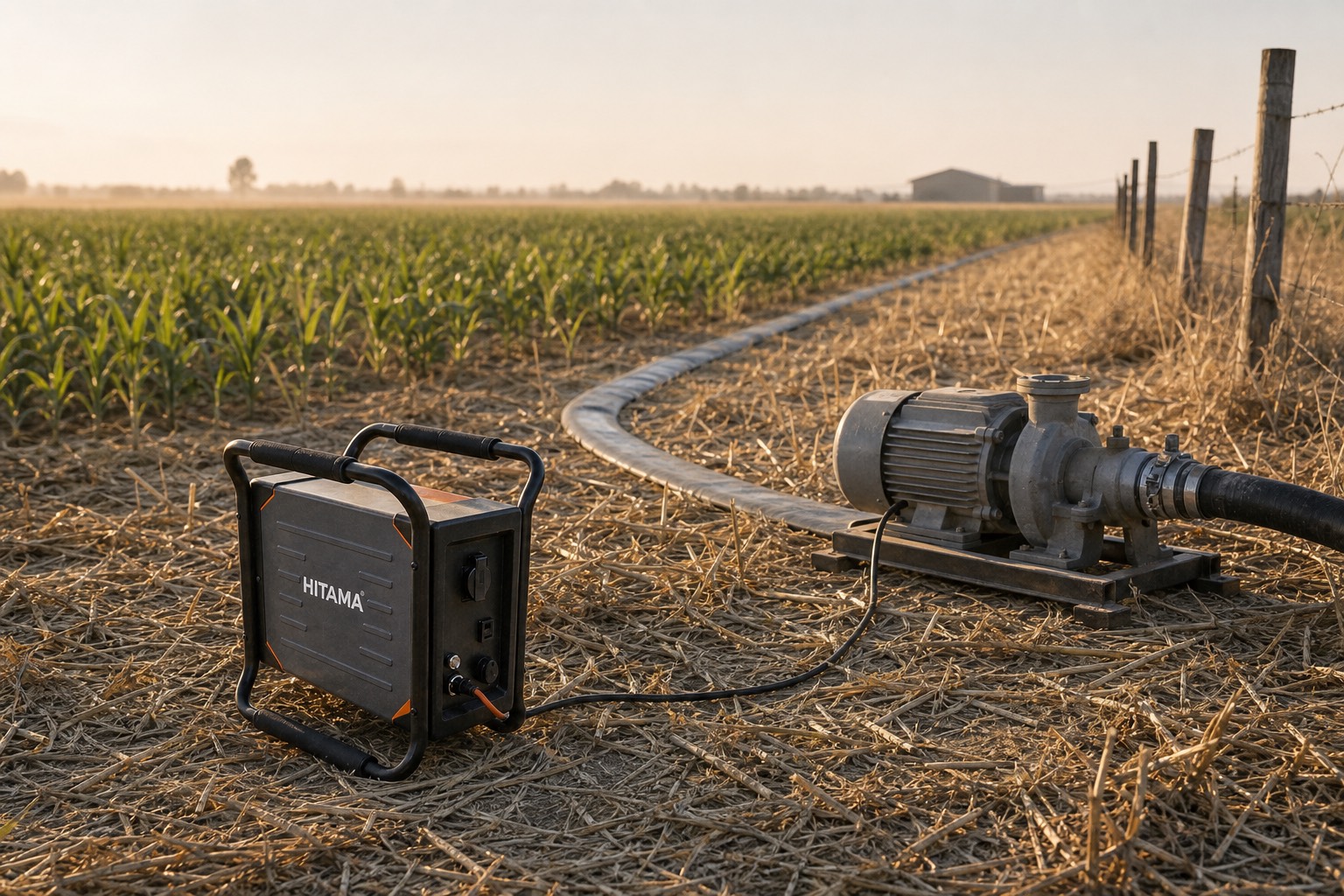
Irrigation pumps and remote buildings: power with no connection
A pump is the clearest test of a battery system: it starts against a head of water, which means a surge far above its running draw — and then it runs for hours.
Industrial-gradeportable power,without the diesel.
Build scalable, industrial-grade power at roughly half the cost.