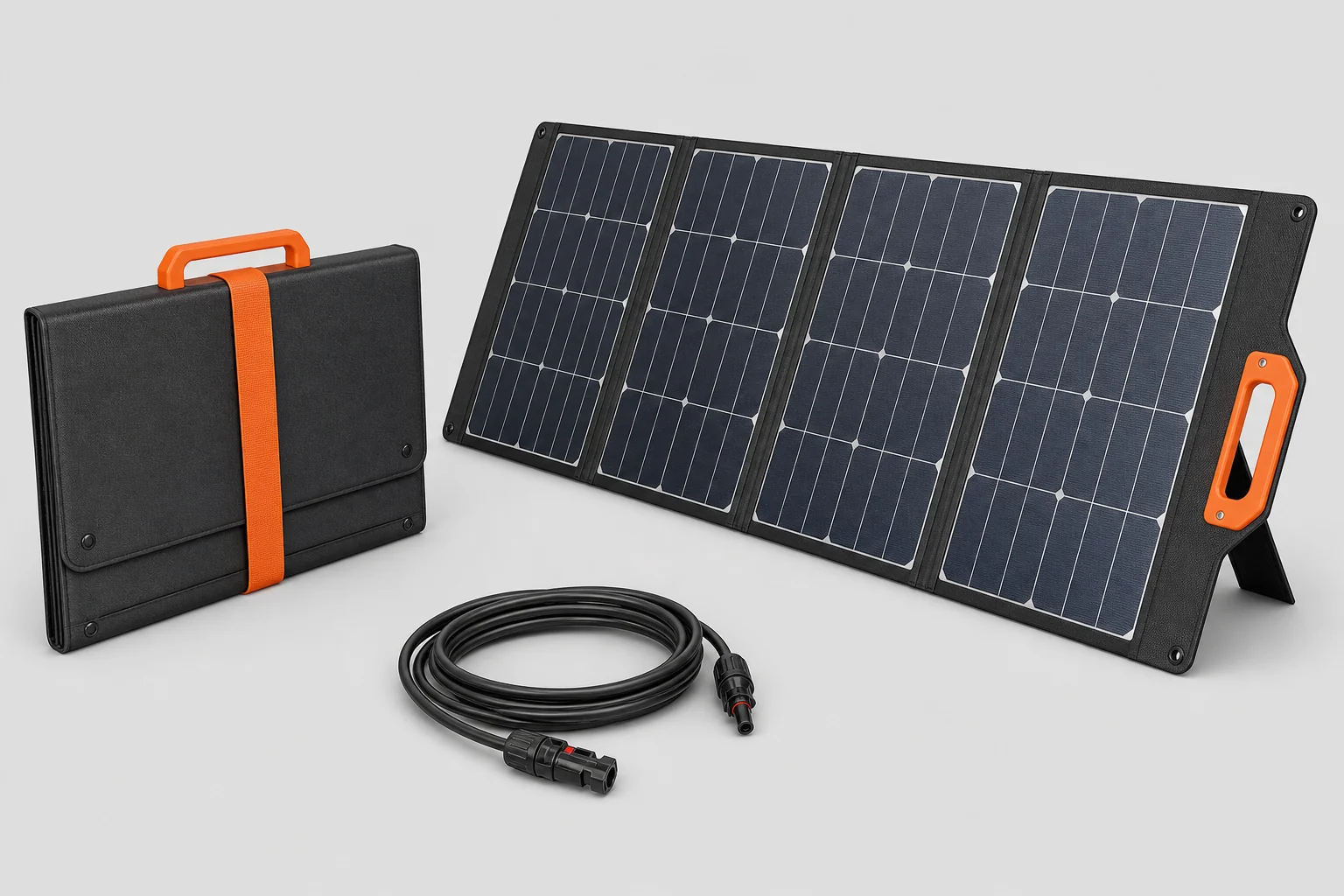
Emergency power for fire services, technical relief and municipal depots
For standby equipment, efficiency is not the question — whether the unit still starts in six months is. Storage wins where no tank needs servicing, no oil changing and no cold start has to be overcome.
What counts differently for standby equipment
Plan for idle time, not runtime. A unit standing unused for fifty weeks must work afterwards without preparation — that is the real difference from site equipment.
Treat state of charge as part of readiness. A maintenance charger or a fixed charging window in the duty roster belongs to the specification; otherwise availability is luck.
Think the place of use through: stairwell, basement, underground car park, collapse zone. In all of them exhaust is not merely unwanted but rules the combustion unit out.
Settle the vehicle interface. Anyone intending to charge from the vehicle needs that decided before procurement — not as a retrofit.
What covers which task
One unit: lighting at the scene, radio and measuring equipment, chargers — the basic need of an incident command.
Two units in parallel: lighting plus tools (cut-off saw, breaker) at the same time, without dropping out at start-up.
Three units plus distribution: 400 V for larger units and blowers, with the load spread across three storage units.
P-series parallel power systems
One modular platform. Add parallel units where the load grows — two or three units single-phase, or three units for 400 V three-phase.
Configuration
Units
Rated power
Usable capacity
Weight
Output
P25
1
2,500 W
2.7 kWh
29 kg
230 V / 16 A · single-phase
P25 + P25-D
2
5,000 W
5.4 kWh
≈60 kg
230 V · single-phase · AC230V/20A output
P25 + P25-D
3
7,500 W
8.1 kWh
≈90 kg
230 V · single-phase · AC230V/30A output
P25 + P25-T
3
7,500 W
8.1 kWh
≈90 kg
400 V · three-phase · AC400V/10A output
P25
Units
1
Rated power
2,500 W
Usable capacity
2.7 kWh
Weight
29 kg
Output
230 V / 16 A · single-phase
P25 + P25-D
Units
2
Rated power
5,000 W
Usable capacity
5.4 kWh
Weight
≈60 kg
Output
230 V · single-phase · AC230V/20A output
P25 + P25-D
Units
3
Rated power
7,500 W
Usable capacity
8.1 kWh
Weight
≈90 kg
Output
230 V · single-phase · AC230V/30A output
P25 + P25-T
Units
3
Rated power
7,500 W
Usable capacity
8.1 kWh
Weight
≈90 kg
Output
400 V · three-phase · AC400V/10A output
Wiring
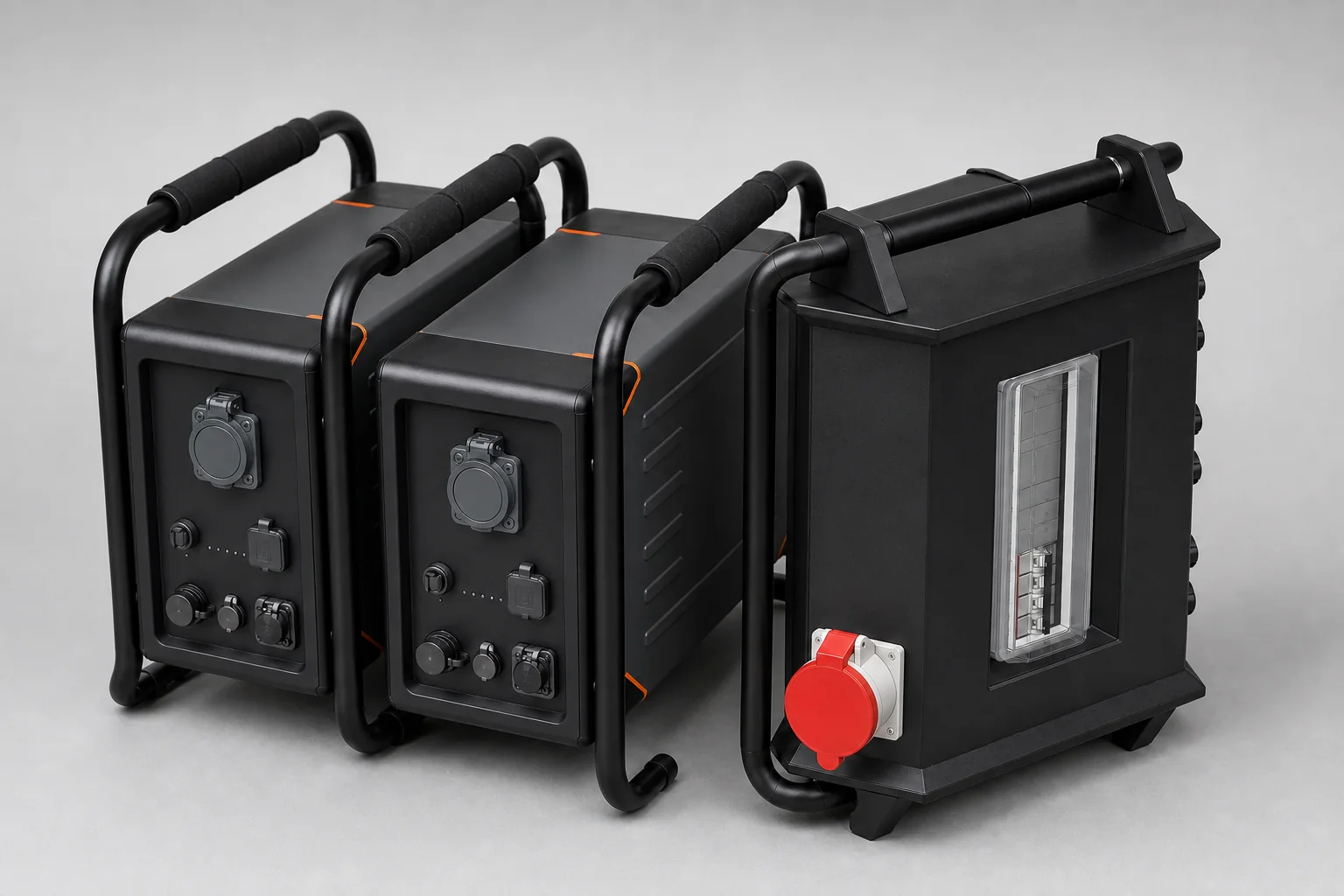
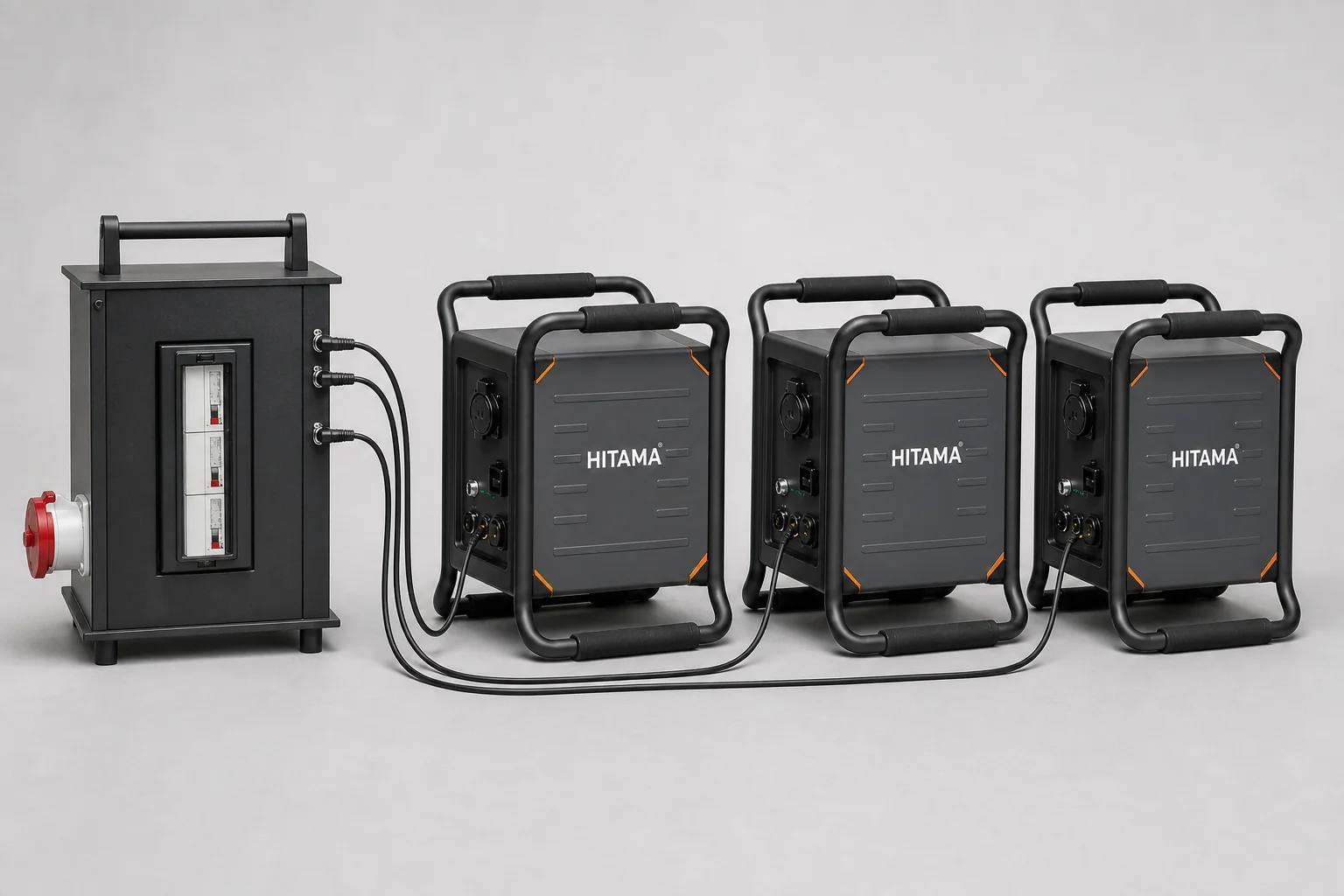
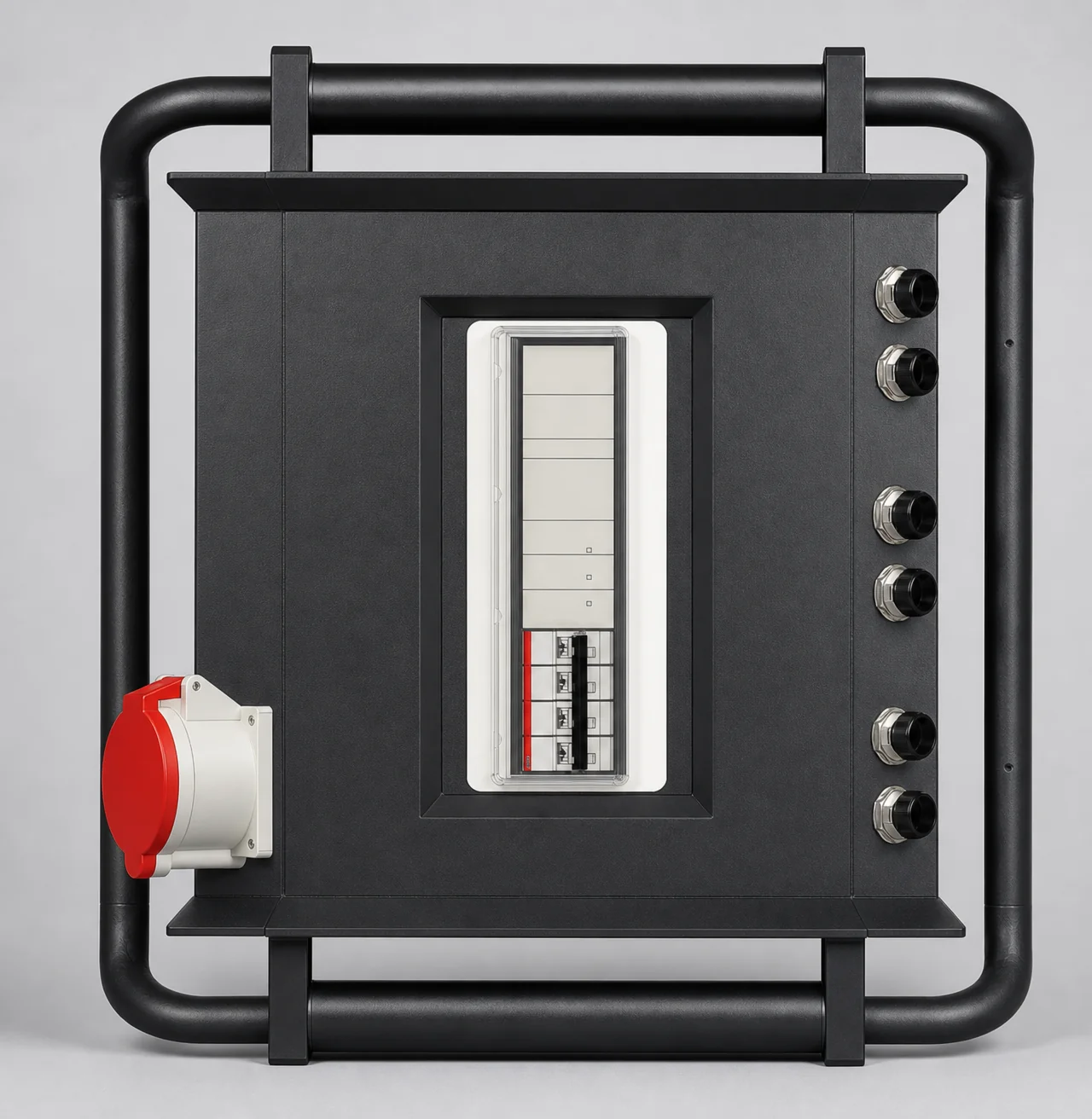
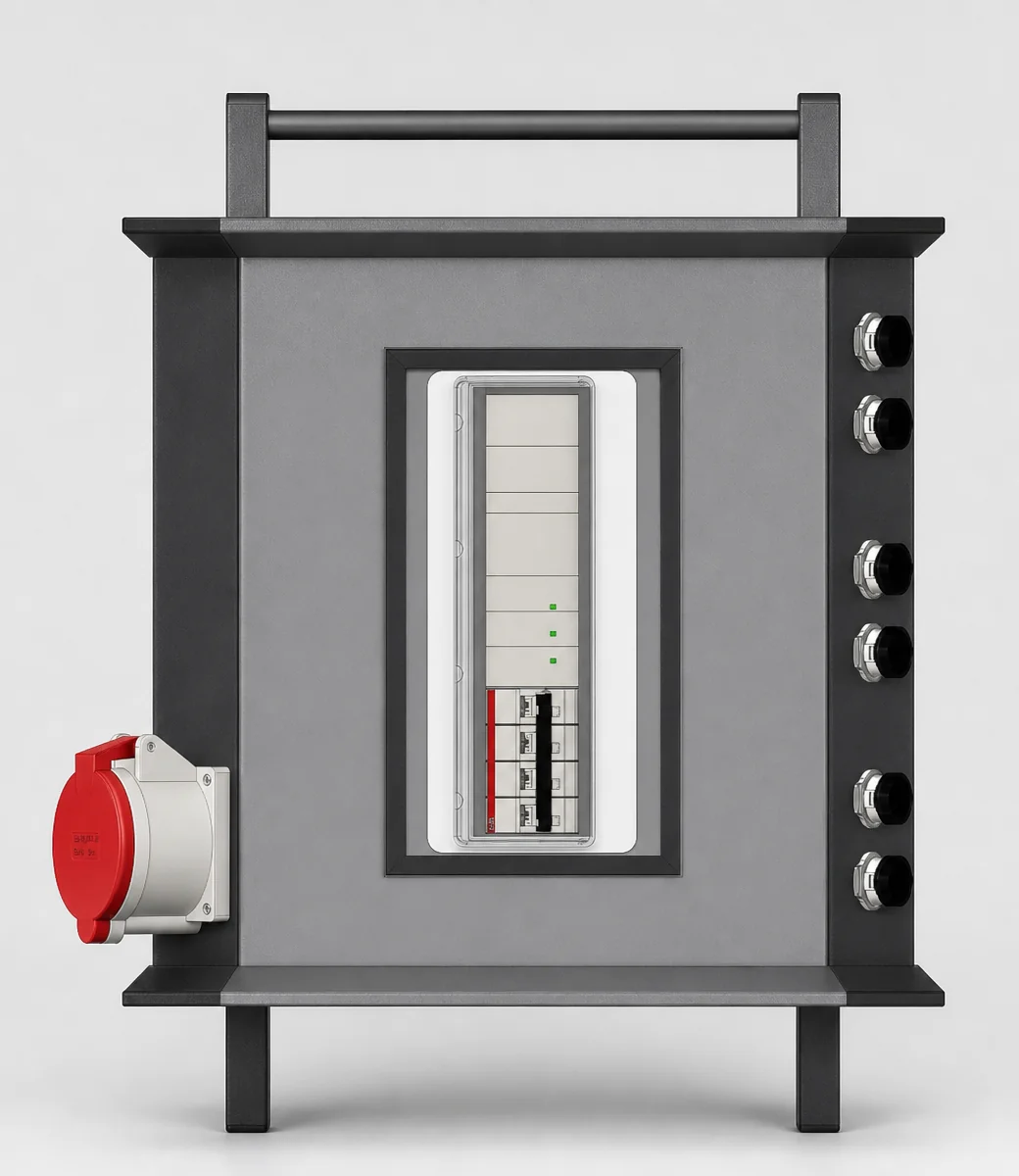
The parallel distribution unit carries one power input and one data input per battery unit, and a single output to the load.
AC230V/20ATwo P25 units, 230 V single-phase.
AC230V/30AThree P25 units, 230 V single-phase.
AC400V/10AThree 230 V P25 units in parallel make 400 V three-phase — all three required, or the system loses a phase.
How the parallel link is wired
Each P25 runs one power cable and one data cable to its own input pair on the distribution unit.
The distribution unit has three input pairs (L1 / L2 / L3); one pair per battery unit.
Only the distribution unit output feeds the load. Battery units are never connected to the load directly.
Each unit keeps its own protective device; no unit back-feeds another.
Three configurations, one platform
Start with a single unit and add parallel units only when the load demands it. Every configuration runs the same battery unit and the same distribution unit.
P25
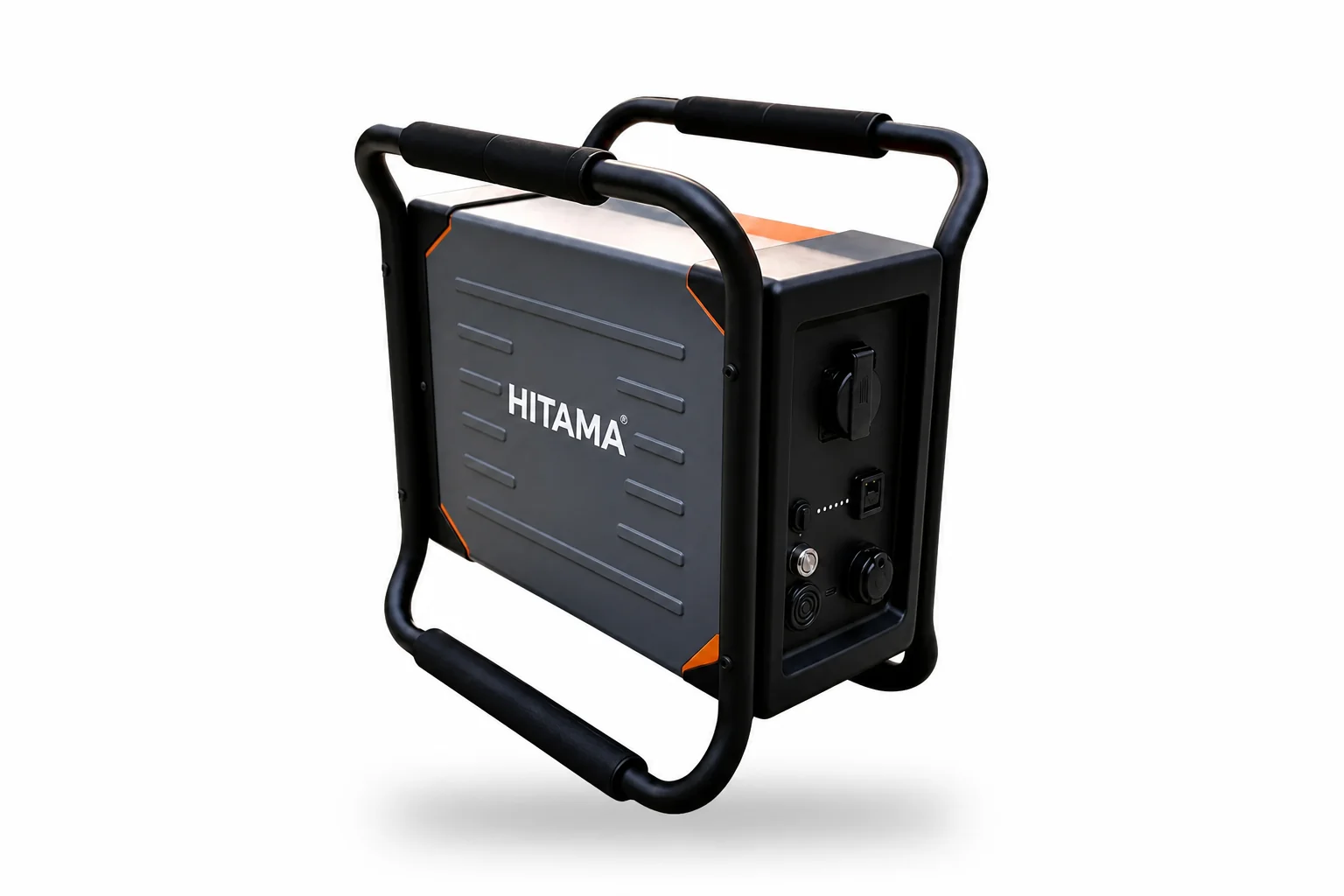
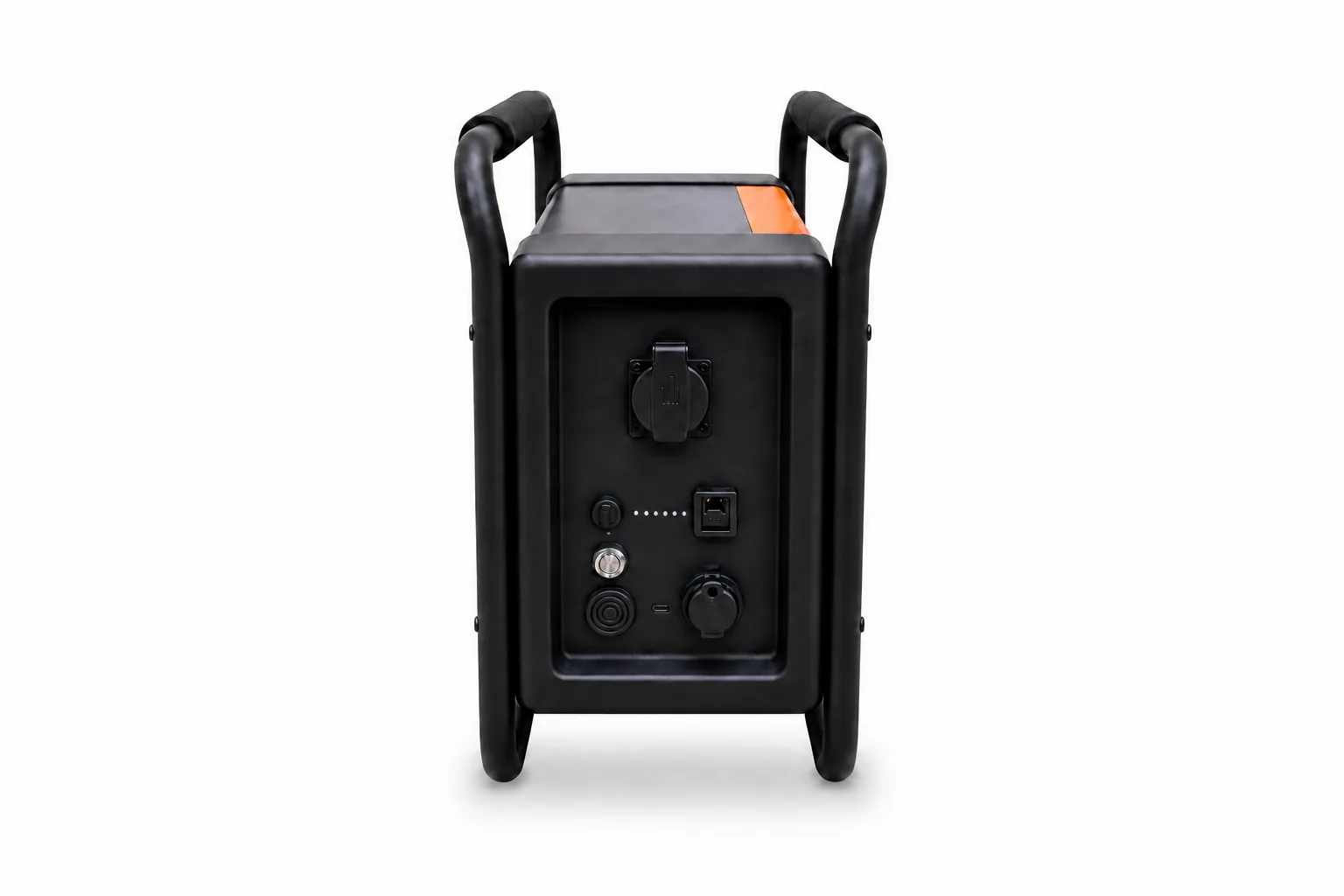
The core unit. A fanless, self-cooling 230 V power station that replaces the combustion generator on site — no exhaust, no idling noise, no fuel run.
Two or three units linked through the parallel distribution unit for 230 V single-phase loads. Power and capacity stack — start with two, add a third when the job needs it.
Three 230 V P25 units in parallel produce the 400 V three-phase supply that runs tools which will not start on single phase. All three are required — remove one and the system loses a phase. Carried and assembled by hand: no crane, no lifting gear.
The questions buyers actually ask before a first order — answered with numbers from our own datasheets, not from a brochure.
Does storage start reliably after months of idle time?
It does not start worse than on day one, but state of charge must be part of readiness: a maintenance charger or a fixed charging window in the duty roster. Without that, availability is luck — with any unit.
Does storage fully replace a generator?
No. For continuous operation over hours and for large loads a generator remains the right choice. The combination — storage for base load and peaks, generator as fallback — is the usual route.
How do I supply a 400 V blower?
Through three units in parallel with a distribution module. A single-phase solution cannot serve a three-phase load, regardless of rating.
Can the unit be charged in the vehicle?
That must be settled before procurement: charging port, charging power and mounting are specification questions. Retrofitting costs more than ordering it.

 12345678
 1234567891011
 1234567891011