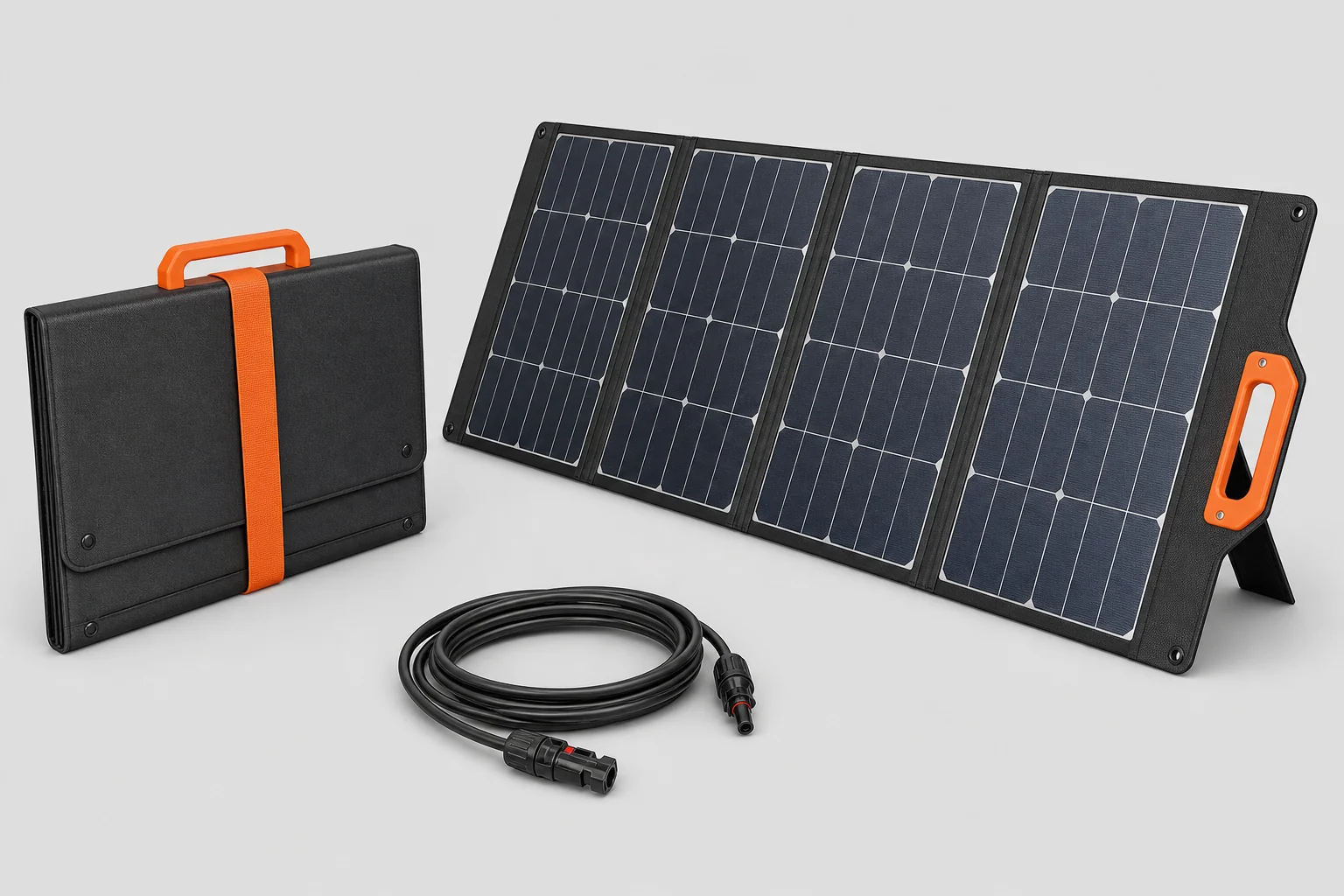
The question is rarely "which is better" but "which fits this site". Four details decide it — daily energy, voltage, location, and how often someone can recharge.
Four questions that make the decision
How much energy per day, not how much power? One litre of diesel holds roughly ten kilowatt-hours of energy; only part of that becomes electricity in a generator. Knowing daily energy is what makes the two options comparable at all.
Do you need 400 V three-phase? If so, the choice is often not diesel versus battery but "battery in parallel" versus "generator" — a single-phase unit drops out.
Where does the unit stand? Indoors, in trenches, tunnels and dense residential areas a combustion unit is often ruled out by exhaust and noise rather than price.
Who recharges it? Storage without a charging route is an expensive paperweight. If nobody drives to the site daily, a generator remains the more honest choice.
Three constellations that work in practice
Storage only: short to medium shifts, a charging route available, loads below the three-phase threshold. The standard case for trades, strip-out and events.
Storage plus generator: continuous load over days (dewatering, winter heating) with peaks that storage absorbs. The generator then runs only at peak — fewer hours, less noise.
Generator only: remote stations without a charging route and continuous operation without interruption. Selling storage here sells a promise the site cannot keep.
P-series parallel power systems
One modular platform. Add parallel units where the load grows — two or three units single-phase, or three units for 400 V three-phase.
Configuration
Units
Rated power
Usable capacity
Weight
Output
P25
1
2,500 W
2.7 kWh
29 kg
230 V / 16 A · single-phase
P25 + P25-D
2
5,000 W
5.4 kWh
≈60 kg
230 V · single-phase · AC230V/20A output
P25 + P25-D
3
7,500 W
8.1 kWh
≈90 kg
230 V · single-phase · AC230V/30A output
P25 + P25-T
3
7,500 W
8.1 kWh
≈90 kg
400 V · three-phase · AC400V/10A output
P25
Units
1
Rated power
2,500 W
Usable capacity
2.7 kWh
Weight
29 kg
Output
230 V / 16 A · single-phase
P25 + P25-D
Units
2
Rated power
5,000 W
Usable capacity
5.4 kWh
Weight
≈60 kg
Output
230 V · single-phase · AC230V/20A output
P25 + P25-D
Units
3
Rated power
7,500 W
Usable capacity
8.1 kWh
Weight
≈90 kg
Output
230 V · single-phase · AC230V/30A output
P25 + P25-T
Units
3
Rated power
7,500 W
Usable capacity
8.1 kWh
Weight
≈90 kg
Output
400 V · three-phase · AC400V/10A output
Wiring
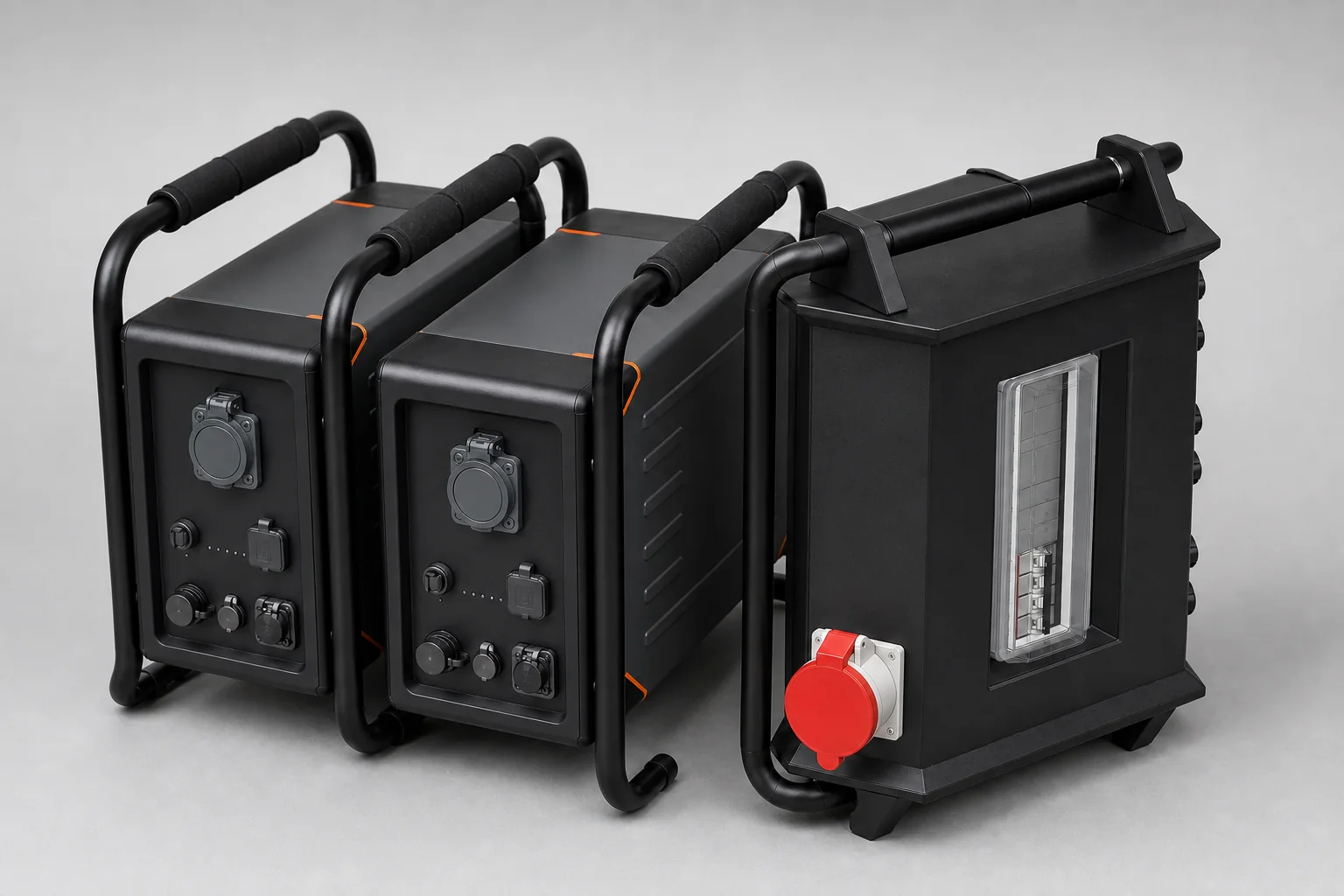
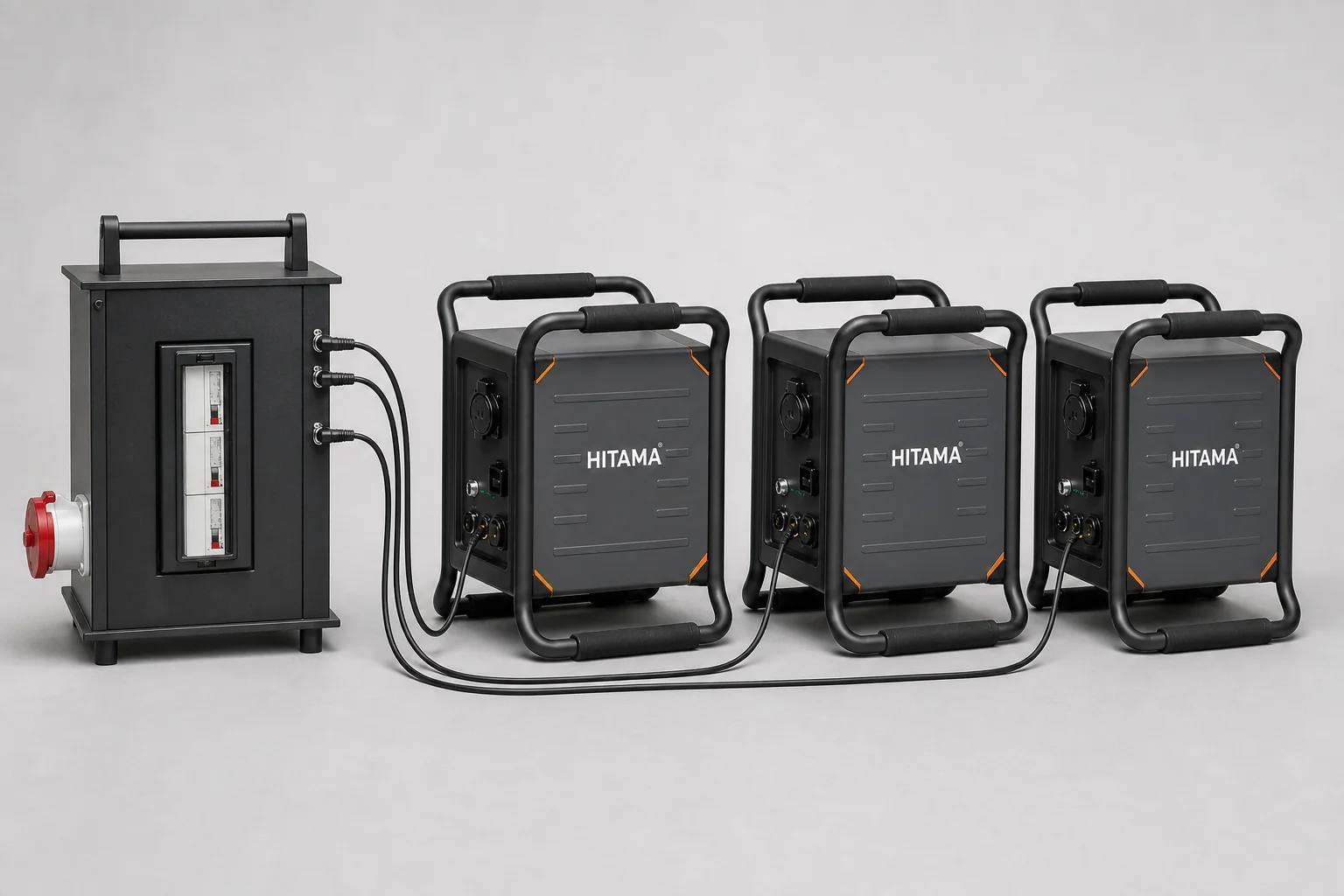
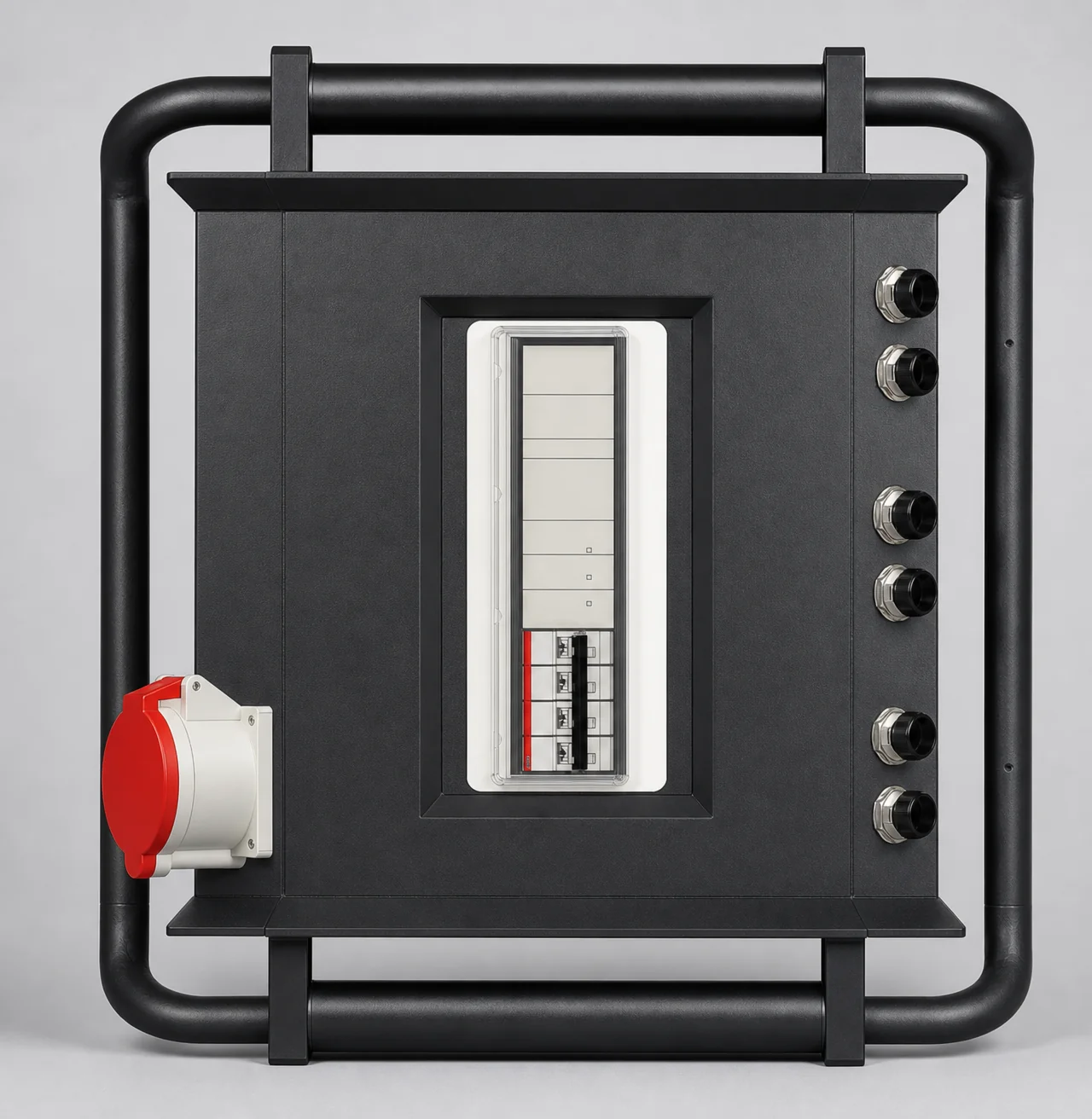
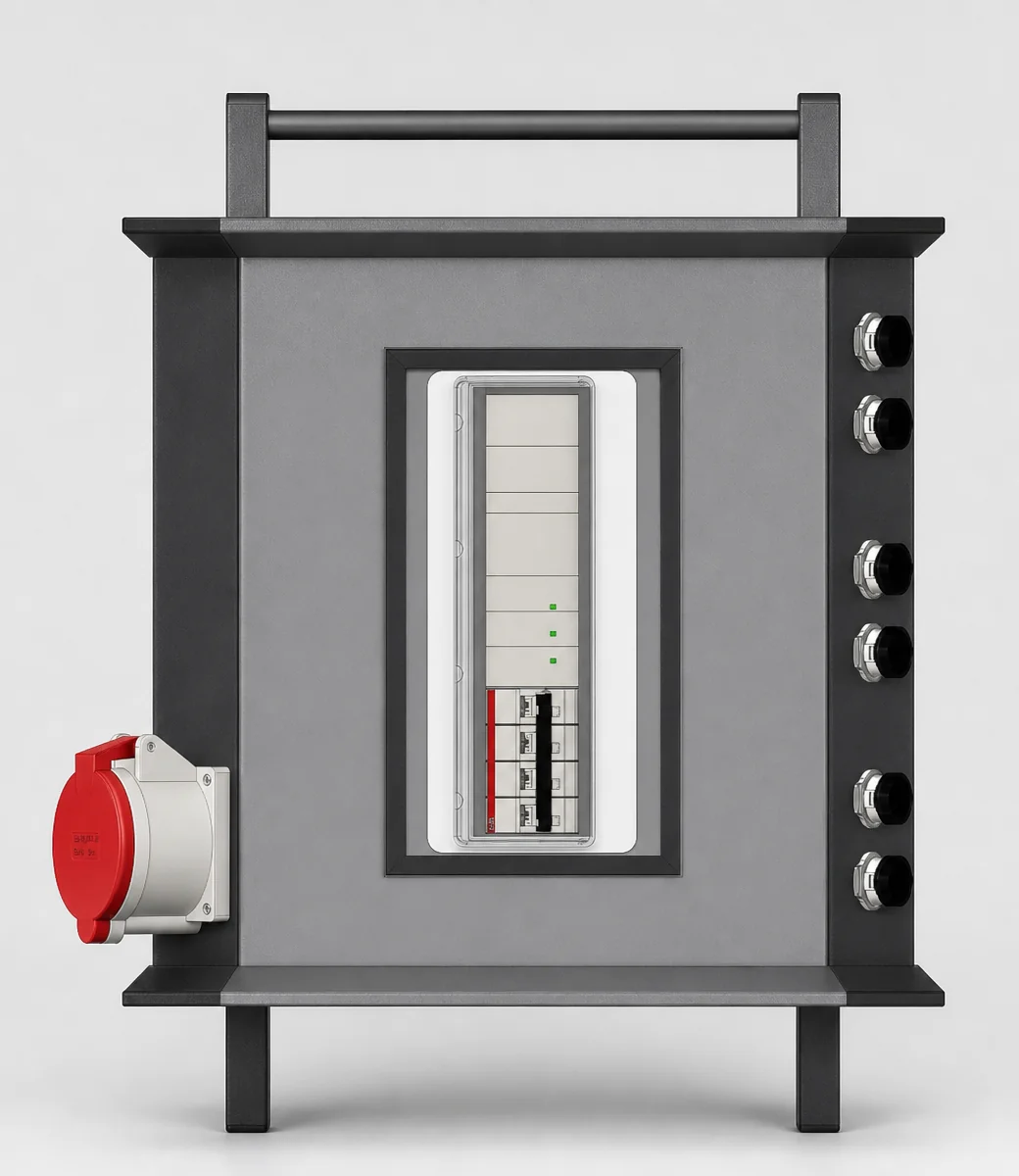
The parallel distribution unit carries one power input and one data input per battery unit, and a single output to the load.
AC230V/20ATwo P25 units, 230 V single-phase.
AC230V/30AThree P25 units, 230 V single-phase.
AC400V/10AThree 230 V P25 units in parallel make 400 V three-phase — all three required, or the system loses a phase.
How the parallel link is wired
Each P25 runs one power cable and one data cable to its own input pair on the distribution unit.
The distribution unit has three input pairs (L1 / L2 / L3); one pair per battery unit.
Only the distribution unit output feeds the load. Battery units are never connected to the load directly.
Each unit keeps its own protective device; no unit back-feeds another.
Three configurations, one platform
Start with a single unit and add parallel units only when the load demands it. Every configuration runs the same battery unit and the same distribution unit.
P25
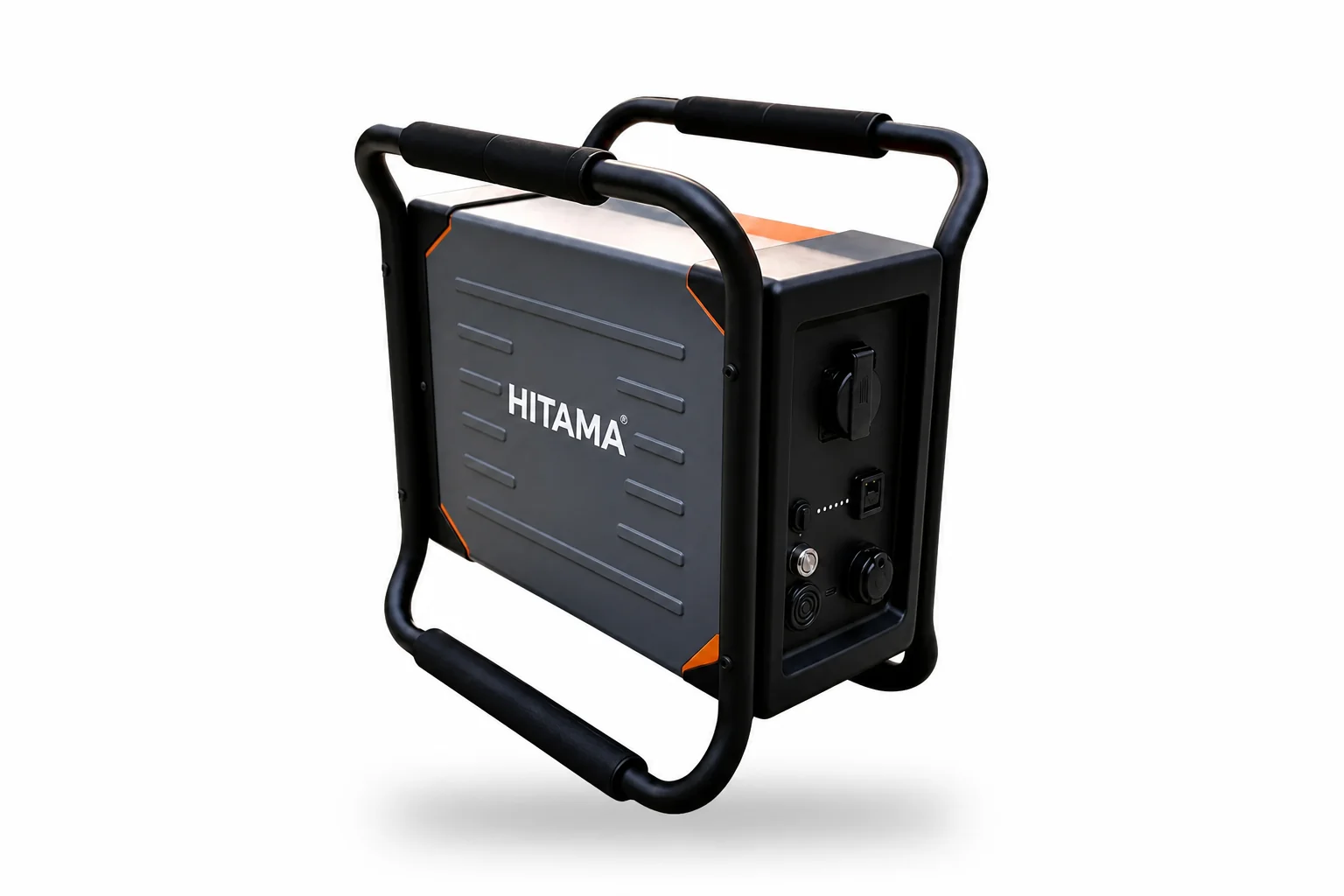
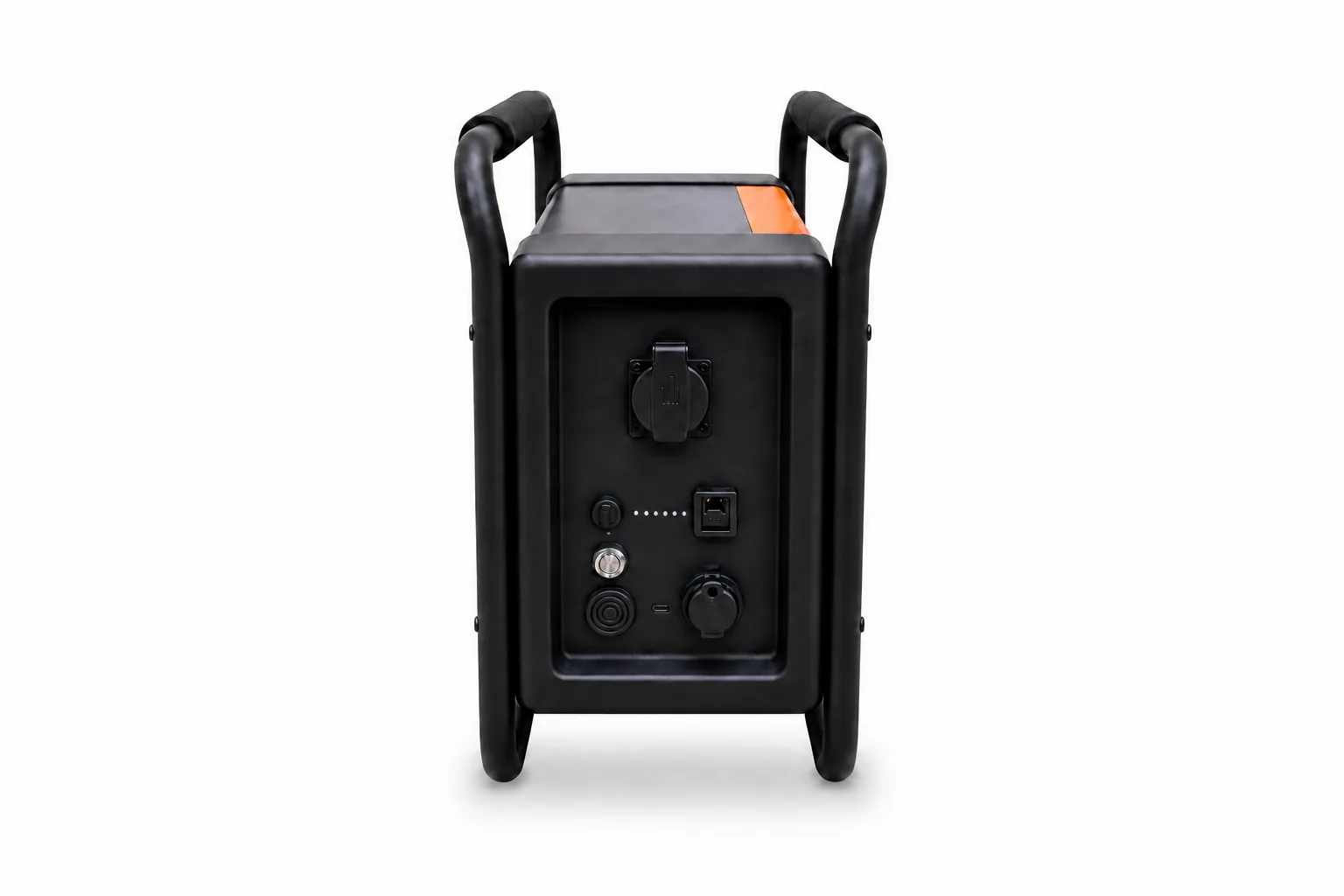
The core unit. A fanless, self-cooling 230 V power station that replaces the combustion generator on site — no exhaust, no idling noise, no fuel run.
Two or three units linked through the parallel distribution unit for 230 V single-phase loads. Power and capacity stack — start with two, add a third when the job needs it.
Three 230 V P25 units in parallel produce the 400 V three-phase supply that runs tools which will not start on single phase. All three are required — remove one and the system loses a phase. Carried and assembled by hand: no crane, no lifting gear.
OEM and ODM: we work with partners on these projects — from custom logo printing to adapted configurations.
Whoever holds both in the fleet sells the solution instead of the unit — and turns down fewer jobs.
Tell us the loads, the voltage and the quantity — we confirm feasibility, required tooling and lead time.
What shifts in the calculation
Fuel plus logistics against electricity price: with a generator you pay per operating hour, with storage per kilowatt-hour — plus the effort of getting the unit to a charger.
Maintenance: oil, filters, spark plug and exhaust disappear; connectors and seals remain. That moves cost from operation into purchase.
Downtime: refuelling and cold starts cost turns — in rental, the item that decides profitability, not the price per litre.
Permits: separation distances, operating hours and indoor use are costs that appear in no fuel bill, yet govern the schedule.
What does a year of operation actually cost?
Diesel generator and power station compared on running cost. Every assumption is editable — use your own figures.
Give us three details — daily energy or a load list, the voltage, and how often the site is reachable — and you get an assessment of which of the three constellations fits. Data sheet and terms on request.
The questions buyers actually ask before a first order — answered with numbers from our own datasheets, not from a brochure.
Which is cheaper: diesel generator or battery?
That cannot be answered with a price per unit. It depends on utilisation days, daily energy, and how far the nearest charging point is. Compare annual cost of fuel, logistics and maintenance against electricity plus charging effort.
How do I calculate it for my case?
Establish daily energy first: loads times runtime, plus reserve for starting currents. Only then are the two options comparable — peak power alone says nothing about cost.
Can storage and a generator be combined?
Yes, and it is often the most honest answer: storage covers base load and peaks, the generator runs only in the hours it is really needed. Fewer operating hours, less noise, less fuel logistics.
When is storage not worth it?
When nobody drives to the site to charge, when operation must run continuously for days, or when the required load permanently exceeds what a configuration carries. Then a generator is the better fit.

 12345678
 1234567891011
 1234567891011