Storage earns through turnaround, not through purchase price. No fuel station, no cold start, no waiting to refuel — the unit goes straight back out after return.
What actually drives the fleet calculation
Calculate turns per unit per year, not purchase price. A generator loses availability to every refuel, every service, and every cold start in winter.
Check which jobs you turn down today. Interiors, tunnels, residential areas and night work are ruled out with combustion — that is where the margin sits.
Treat charging time as part of the rental period. Four hours on the charger after return are four hours the unit is not earning.
Keep the consumables list short. Connectors and seals instead of oil filter, spark plug and exhaust — the maintenance list gets shorter, not longer.
How a fleet typically grows
One unit to start: for the jobs you turn down today, and as something to show in the sales conversation.
Two to three units plus parallel operation: covers larger loads and lets you offer a customer a configuration instead of a single unit.
A fleet with parallel and three-phase configurations: enough to accompany whole build phases rather than single trades.
P-series parallel power systems
One modular platform. Add parallel units where the load grows — two or three units single-phase, or three units for 400 V three-phase.
Configuration
Units
Rated power
Usable capacity
Weight
Output
P25
1
2,500 W
2.7 kWh
29 kg
230 V / 16 A · single-phase
P25 + P25-D
2
5,000 W
5.4 kWh
≈60 kg
230 V · single-phase · AC230V/20A output
P25 + P25-D
3
7,500 W
8.1 kWh
≈90 kg
230 V · single-phase · AC230V/30A output
P25 + P25-T
3
7,500 W
8.1 kWh
≈90 kg
400 V · three-phase · AC400V/10A output
P25
Units
1
Rated power
2,500 W
Usable capacity
2.7 kWh
Weight
29 kg
Output
230 V / 16 A · single-phase
P25 + P25-D
Units
2
Rated power
5,000 W
Usable capacity
5.4 kWh
Weight
≈60 kg
Output
230 V · single-phase · AC230V/20A output
P25 + P25-D
Units
3
Rated power
7,500 W
Usable capacity
8.1 kWh
Weight
≈90 kg
Output
230 V · single-phase · AC230V/30A output
P25 + P25-T
Units
3
Rated power
7,500 W
Usable capacity
8.1 kWh
Weight
≈90 kg
Output
400 V · three-phase · AC400V/10A output
Wiring
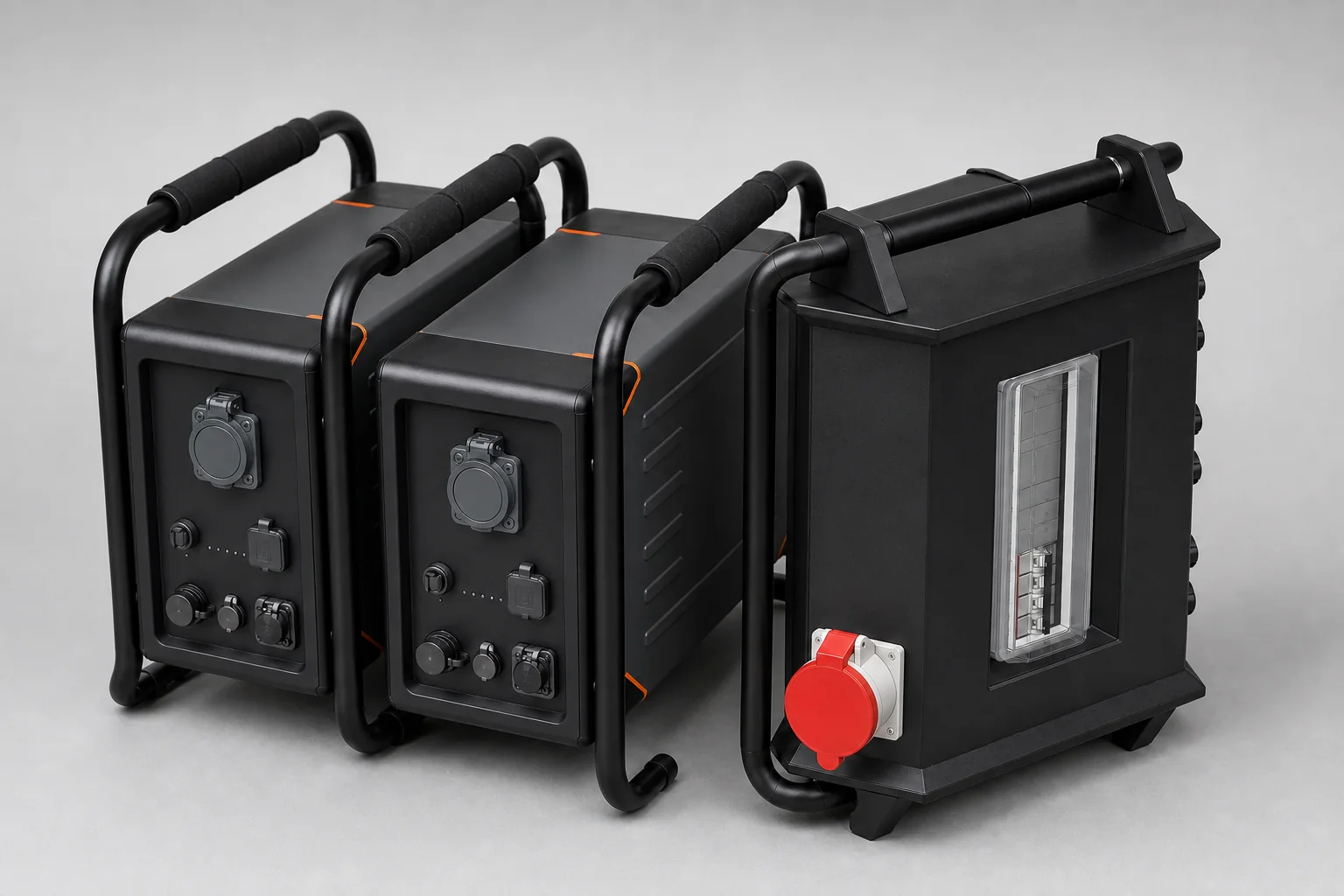
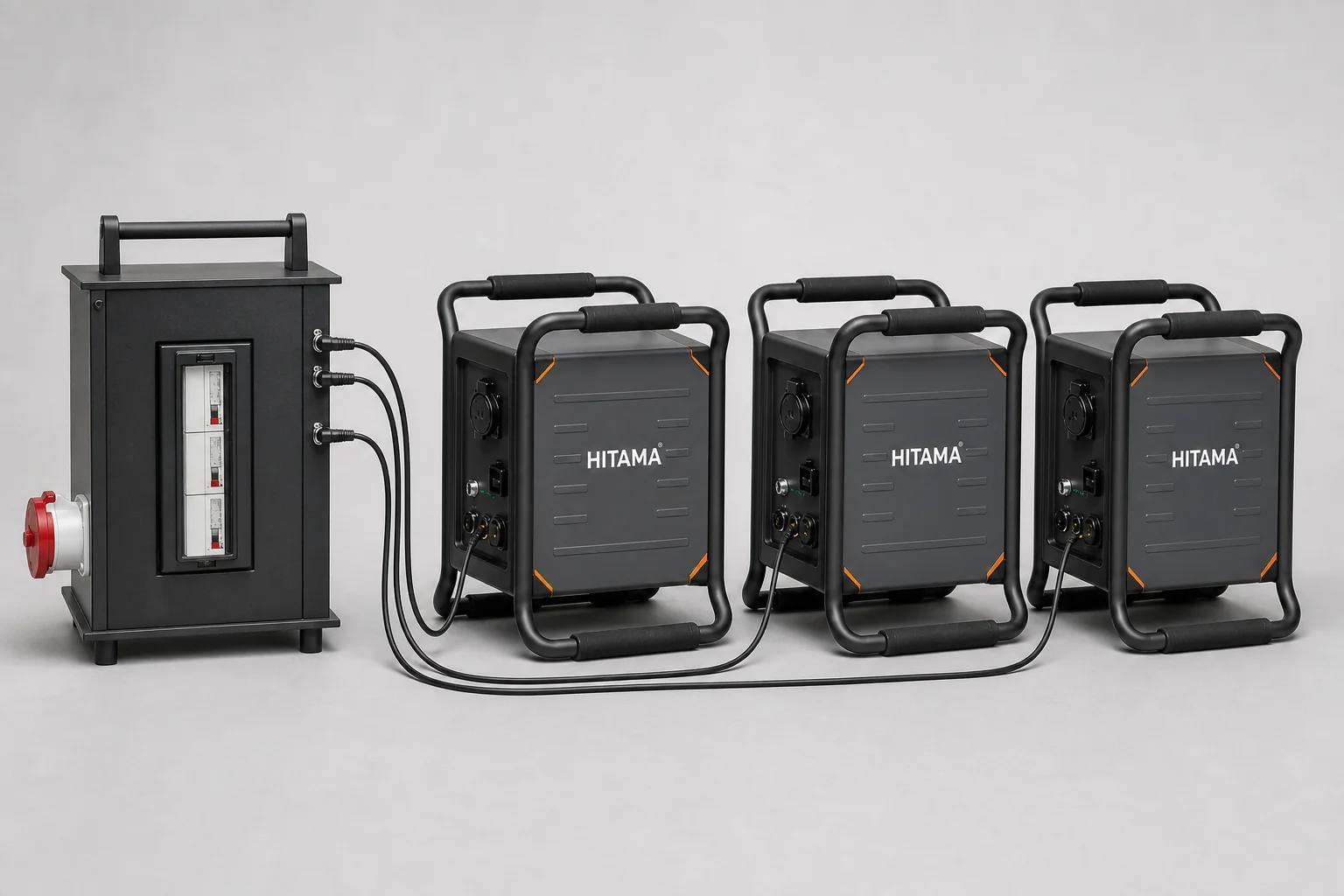
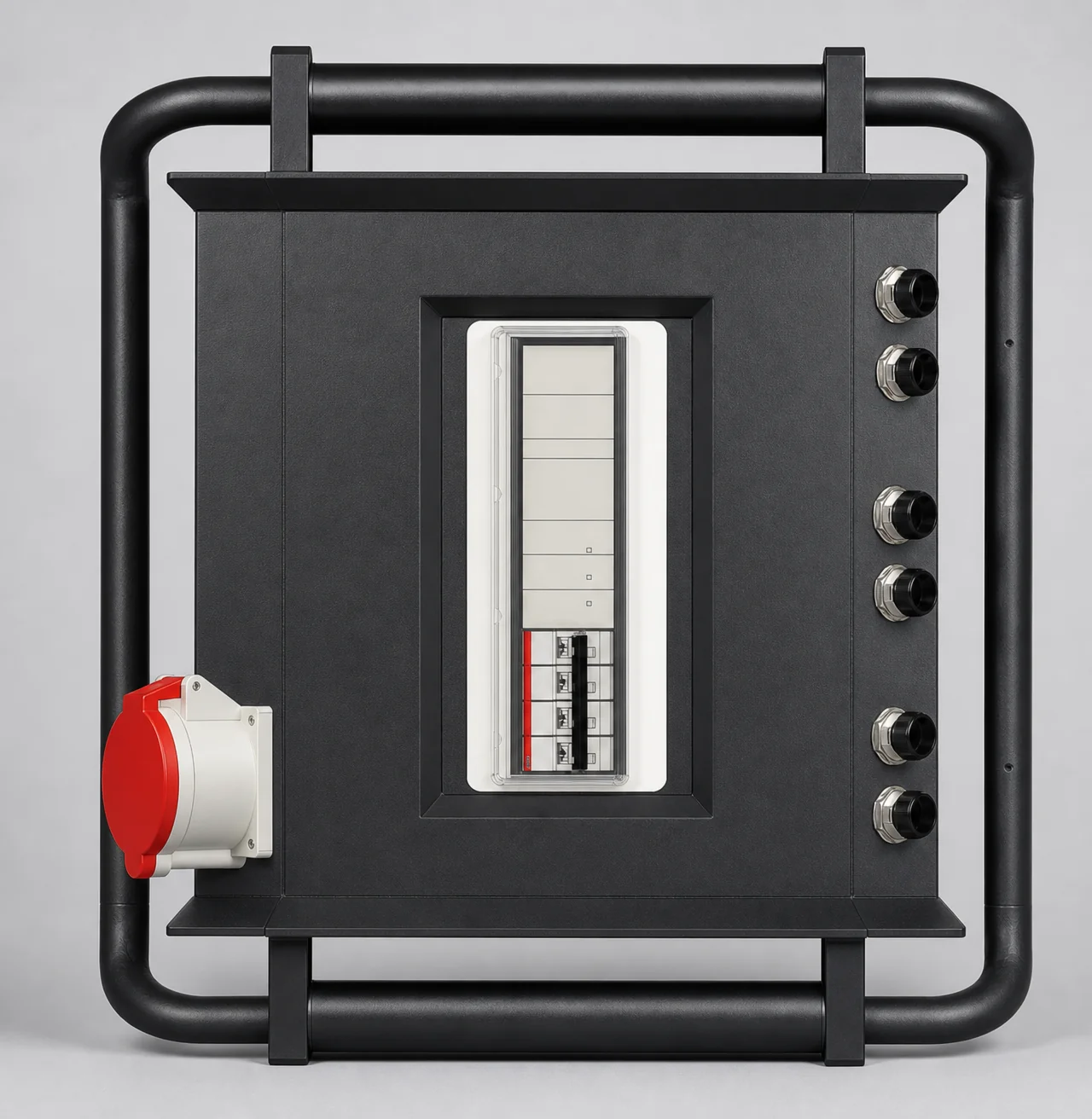
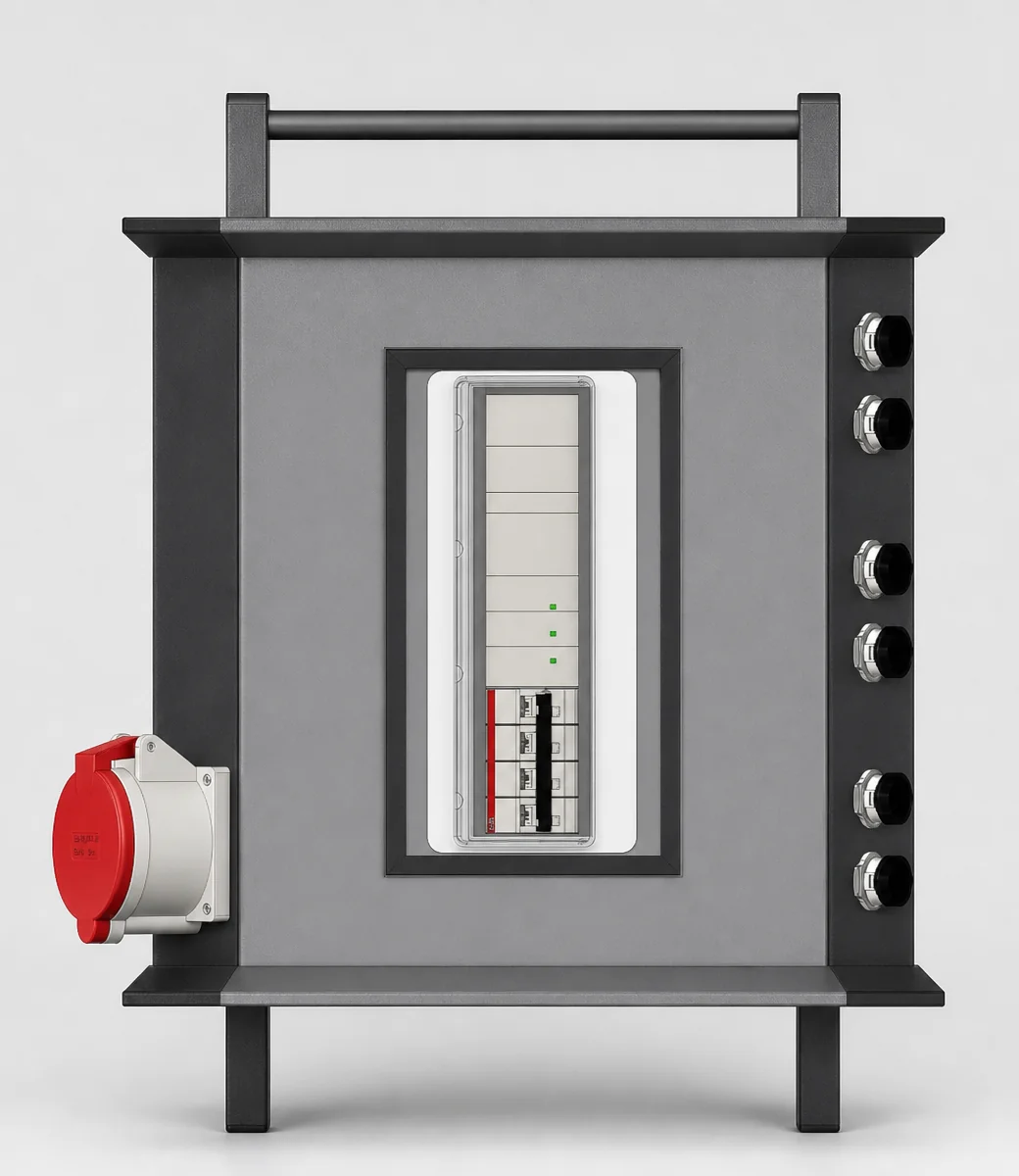
The parallel distribution unit carries one power input and one data input per battery unit, and a single output to the load.
AC230V/20ATwo P25 units, 230 V single-phase.
AC230V/30AThree P25 units, 230 V single-phase.
AC400V/10AThree 230 V P25 units in parallel make 400 V three-phase — all three required, or the system loses a phase.
How the parallel link is wired
Each P25 runs one power cable and one data cable to its own input pair on the distribution unit.
The distribution unit has three input pairs (L1 / L2 / L3); one pair per battery unit.
Only the distribution unit output feeds the load. Battery units are never connected to the load directly.
Each unit keeps its own protective device; no unit back-feeds another.
Three configurations, one platform
Start with a single unit and add parallel units only when the load demands it. Every configuration runs the same battery unit and the same distribution unit.
P25
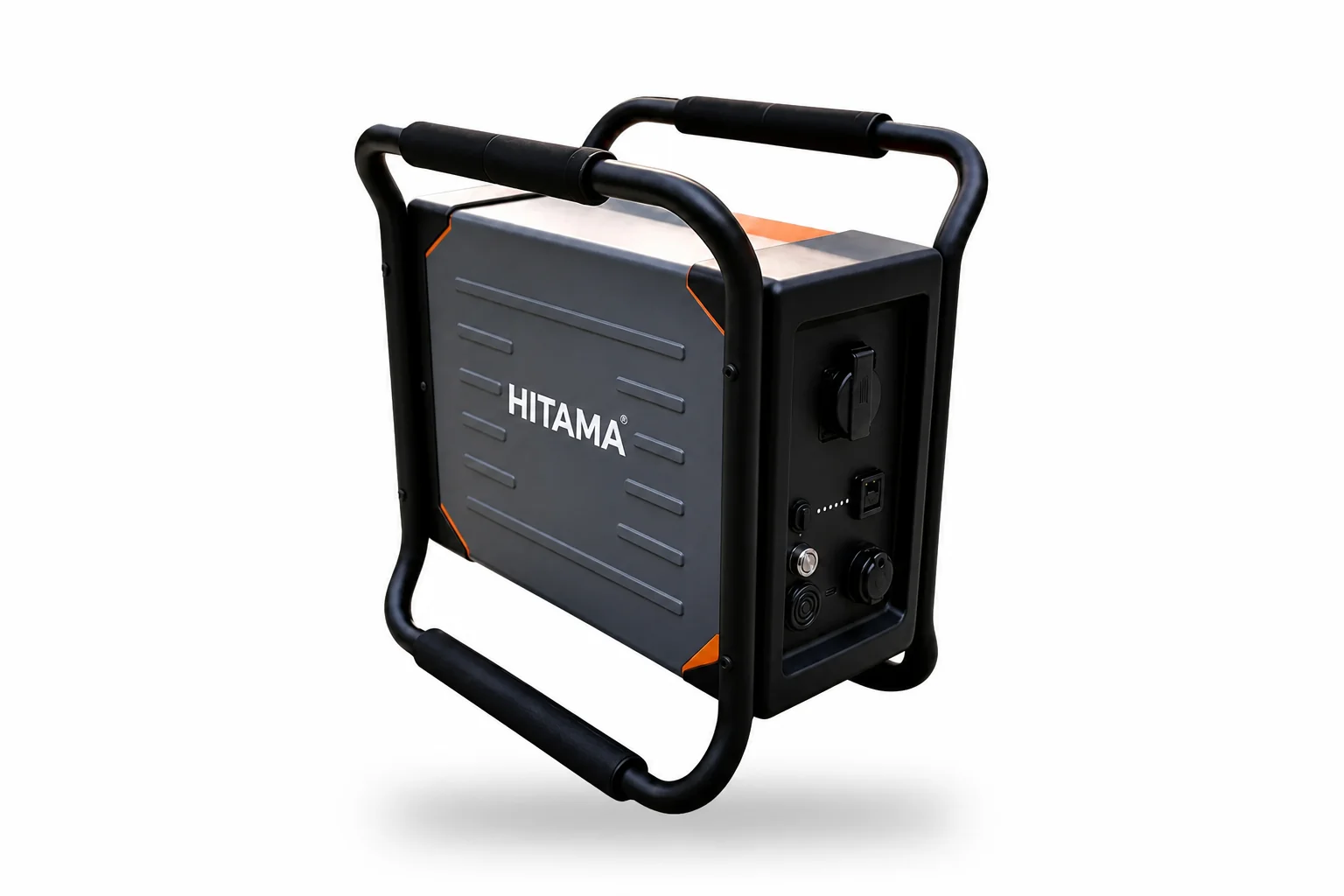
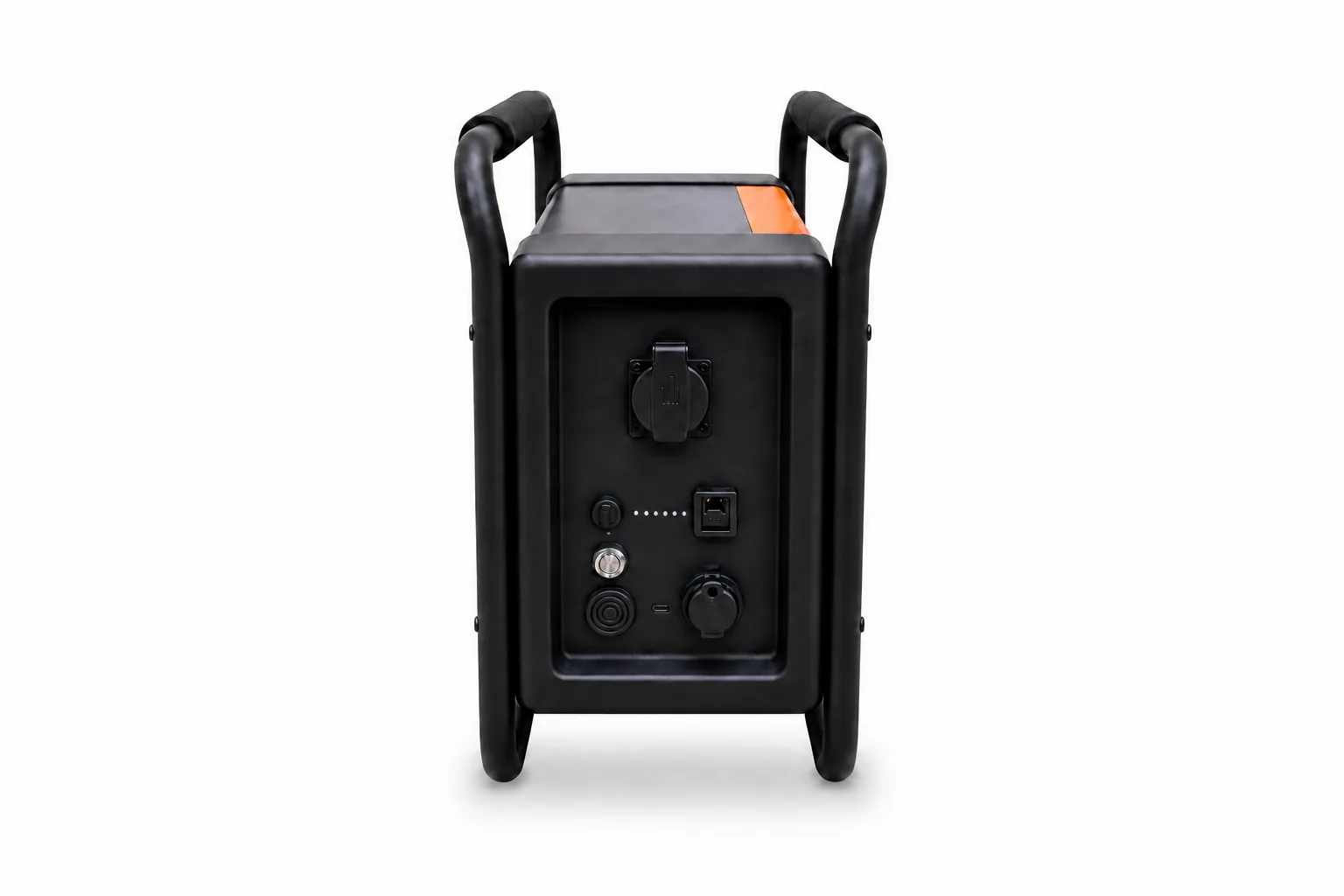
The core unit. A fanless, self-cooling 230 V power station that replaces the combustion generator on site — no exhaust, no idling noise, no fuel run.
Two or three units linked through the parallel distribution unit for 230 V single-phase loads. Power and capacity stack — start with two, add a third when the job needs it.
Three 230 V P25 units in parallel produce the 400 V three-phase supply that runs tools which will not start on single phase. All three are required — remove one and the system loses a phase. Carried and assembled by hand: no crane, no lifting gear.
Three details are enough for a fleet sizing: the loads your customers typically run, whether three-phase is needed, and how many units should be in circulation at once. Terms and data sheet on request.
The questions buyers actually ask before a first order — answered with numbers from our own datasheets, not from a brochure.
What does storage offer a rental business compared with a generator?
No refuelling, no cold start, no refuelling time between two rentals. Turnaround rises — not the rental price.
How do I assess the economics?
Through turns and utilisation days, not purchase price. What matters is downtime from refuelling, servicing and cold starts, plus the jobs you have to turn down today.
What needs attention at return?
Document the state of charge and visually check the connectors. No fuel level, no fuel billing, no argument about the gauge.
Can the units carry my brand?
Yes, custom logo printing is possible, so the units go into rental under your brand.

 12345678
 1234567891011
 1234567891011