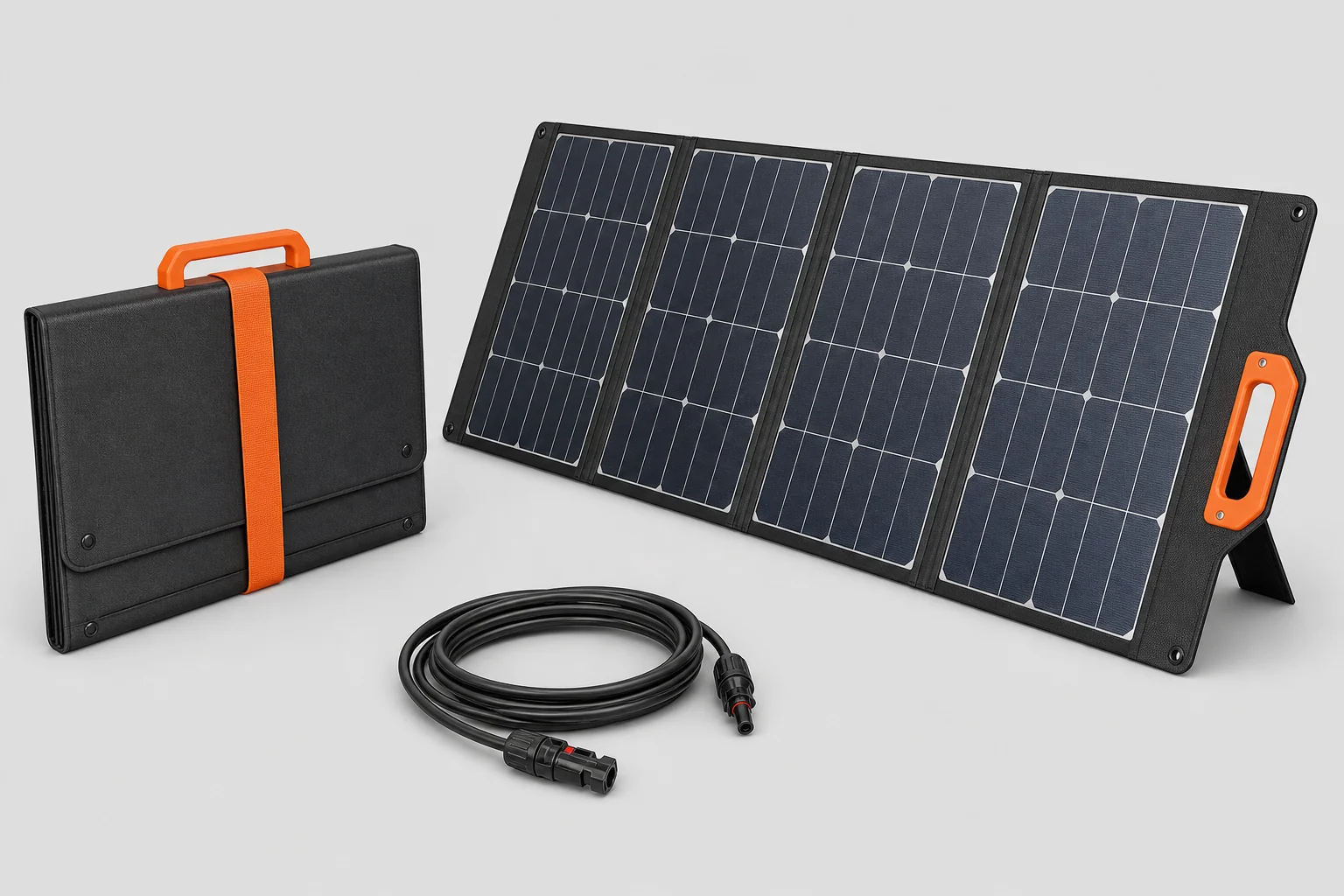
At events the generator rarely fails on power — it fails on noise and permits: exhaust, engine sound, separation distances. Storage needs none of that, and still does not drop out when the band plays the chorus twice.
What drives event power planning
Plan in peaks, not averages. Lighting cues, amplifiers and haze machines ramp up together; the peak defines the system, not the evening average.
Separate continuous from peak load. Stage tech and cooling run through, light and sound in waves — two separate circuits keep the system smaller.
Check noise limits before planning a generator. City centres and residential areas often exclude combustion entirely; the permit decides, not the price.
Plan reserve for encores. A set running ten minutes longer is the normal case, not the exception.
From a small set to a stage
One unit: small stage, radio mics, mixer, lighting — the case nobody wants to keep a generator for.
Two units in parallel: sound and light separated, plus cooling; one circuit does not fail when the other hits its peak.
Three units plus distribution: 400 V for larger lighting rigs and chain hoists, with the load spread across three units.
P-series parallel power systems
One modular platform. Add parallel units where the load grows — two or three units single-phase, or three units for 400 V three-phase.
Configuration
Units
Rated power
Usable capacity
Weight
Output
P25
1
2,500 W
2.7 kWh
29 kg
230 V / 16 A · single-phase
P25 + P25-D
2
5,000 W
5.4 kWh
≈60 kg
230 V · single-phase · AC230V/20A output
P25 + P25-D
3
7,500 W
8.1 kWh
≈90 kg
230 V · single-phase · AC230V/30A output
P25 + P25-T
3
7,500 W
8.1 kWh
≈90 kg
400 V · three-phase · AC400V/10A output
P25
Units
1
Rated power
2,500 W
Usable capacity
2.7 kWh
Weight
29 kg
Output
230 V / 16 A · single-phase
P25 + P25-D
Units
2
Rated power
5,000 W
Usable capacity
5.4 kWh
Weight
≈60 kg
Output
230 V · single-phase · AC230V/20A output
P25 + P25-D
Units
3
Rated power
7,500 W
Usable capacity
8.1 kWh
Weight
≈90 kg
Output
230 V · single-phase · AC230V/30A output
P25 + P25-T
Units
3
Rated power
7,500 W
Usable capacity
8.1 kWh
Weight
≈90 kg
Output
400 V · three-phase · AC400V/10A output
Wiring
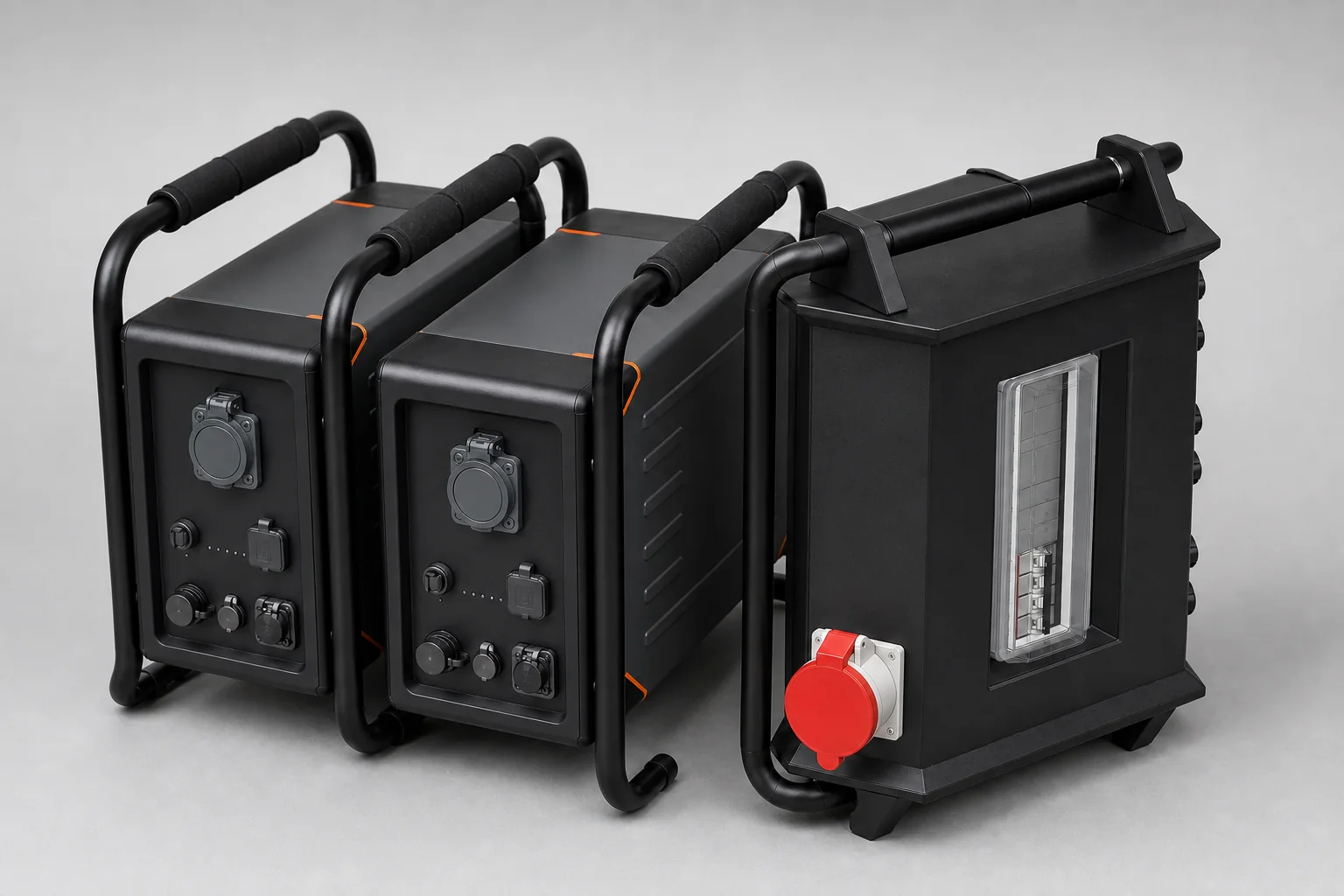
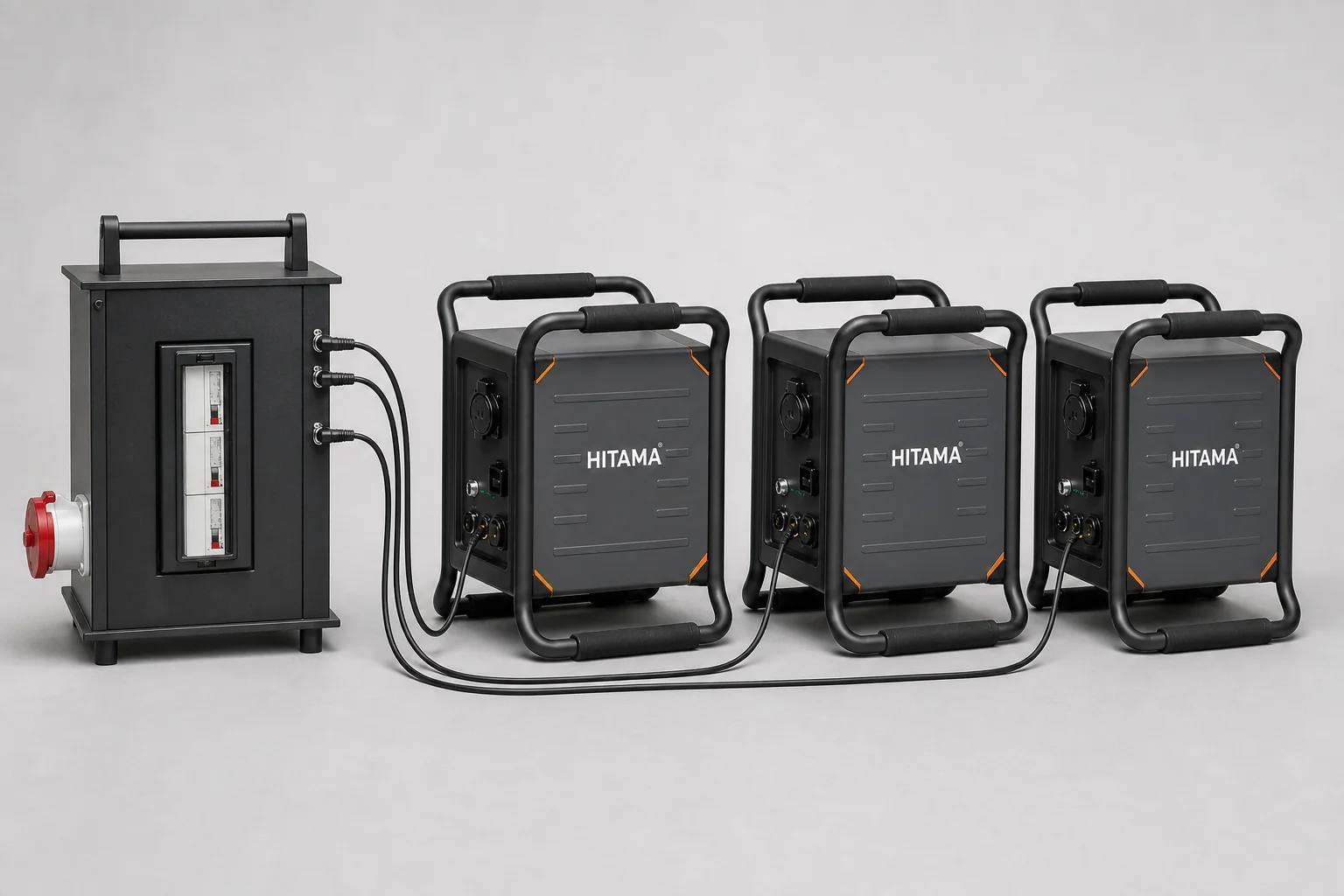
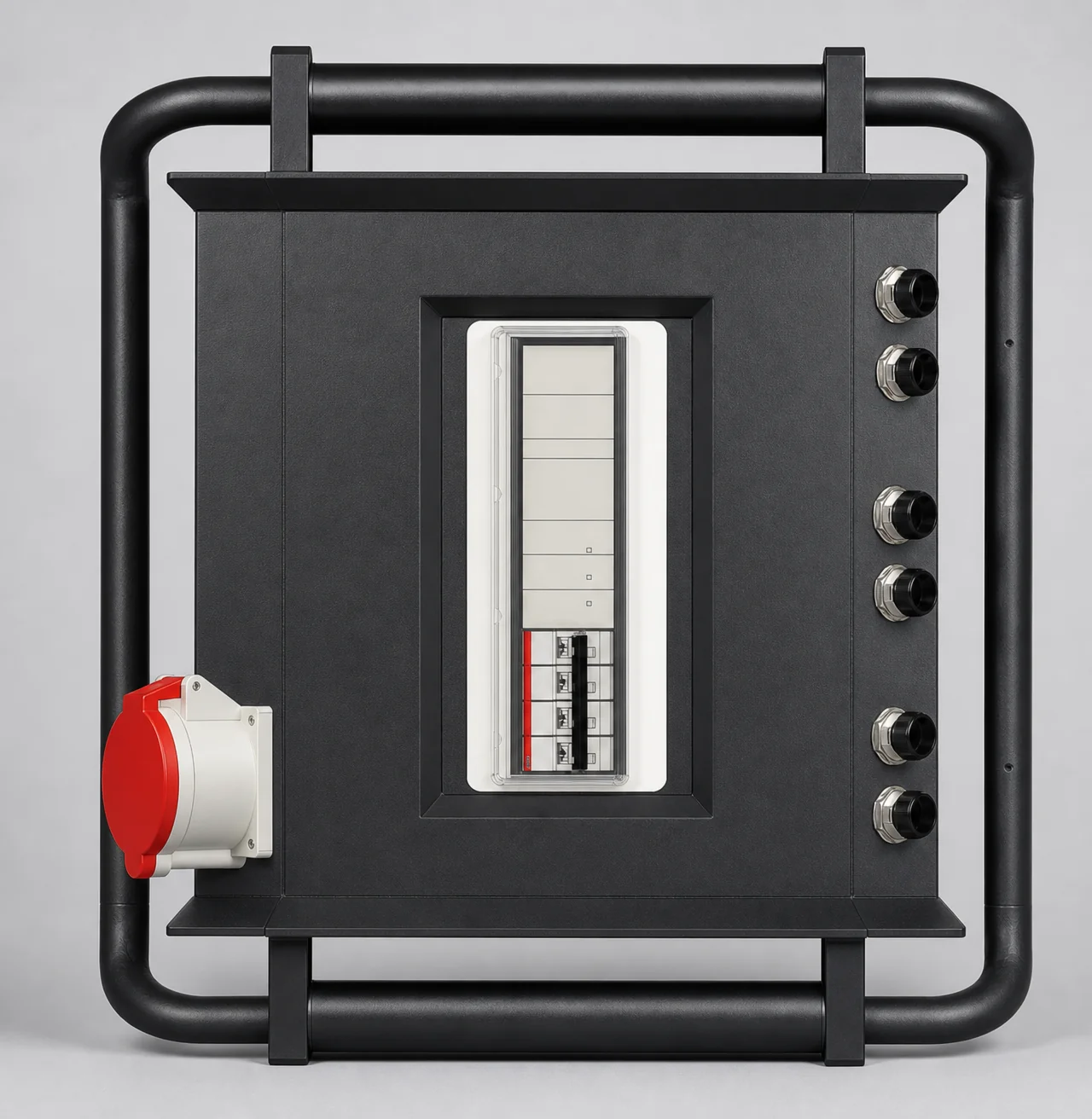
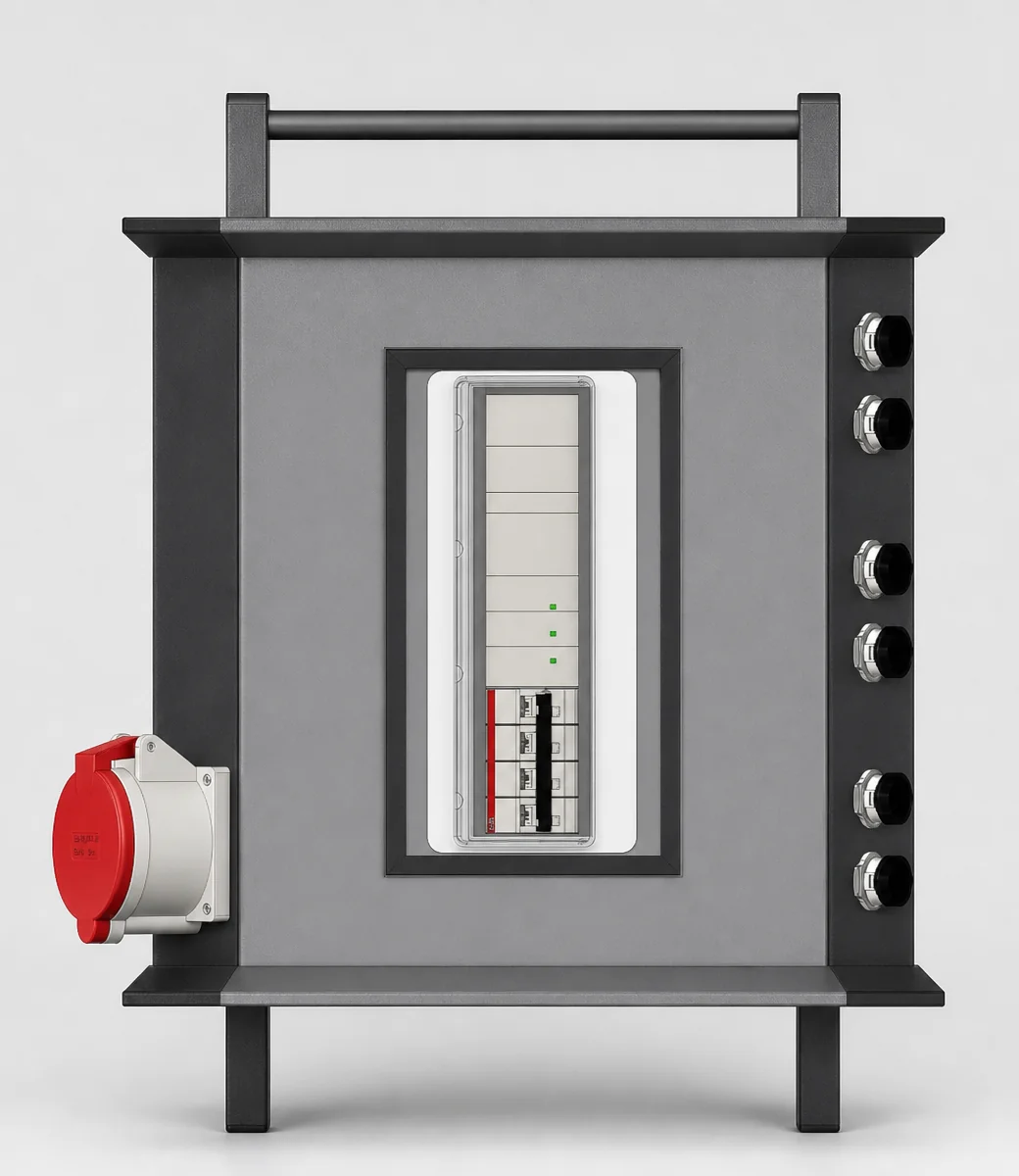
The parallel distribution unit carries one power input and one data input per battery unit, and a single output to the load.
AC230V/20ATwo P25 units, 230 V single-phase.
AC230V/30AThree P25 units, 230 V single-phase.
AC400V/10AThree 230 V P25 units in parallel make 400 V three-phase — all three required, or the system loses a phase.
How the parallel link is wired
Each P25 runs one power cable and one data cable to its own input pair on the distribution unit.
The distribution unit has three input pairs (L1 / L2 / L3); one pair per battery unit.
Only the distribution unit output feeds the load. Battery units are never connected to the load directly.
Each unit keeps its own protective device; no unit back-feeds another.
Three configurations, one platform
Start with a single unit and add parallel units only when the load demands it. Every configuration runs the same battery unit and the same distribution unit.
P25
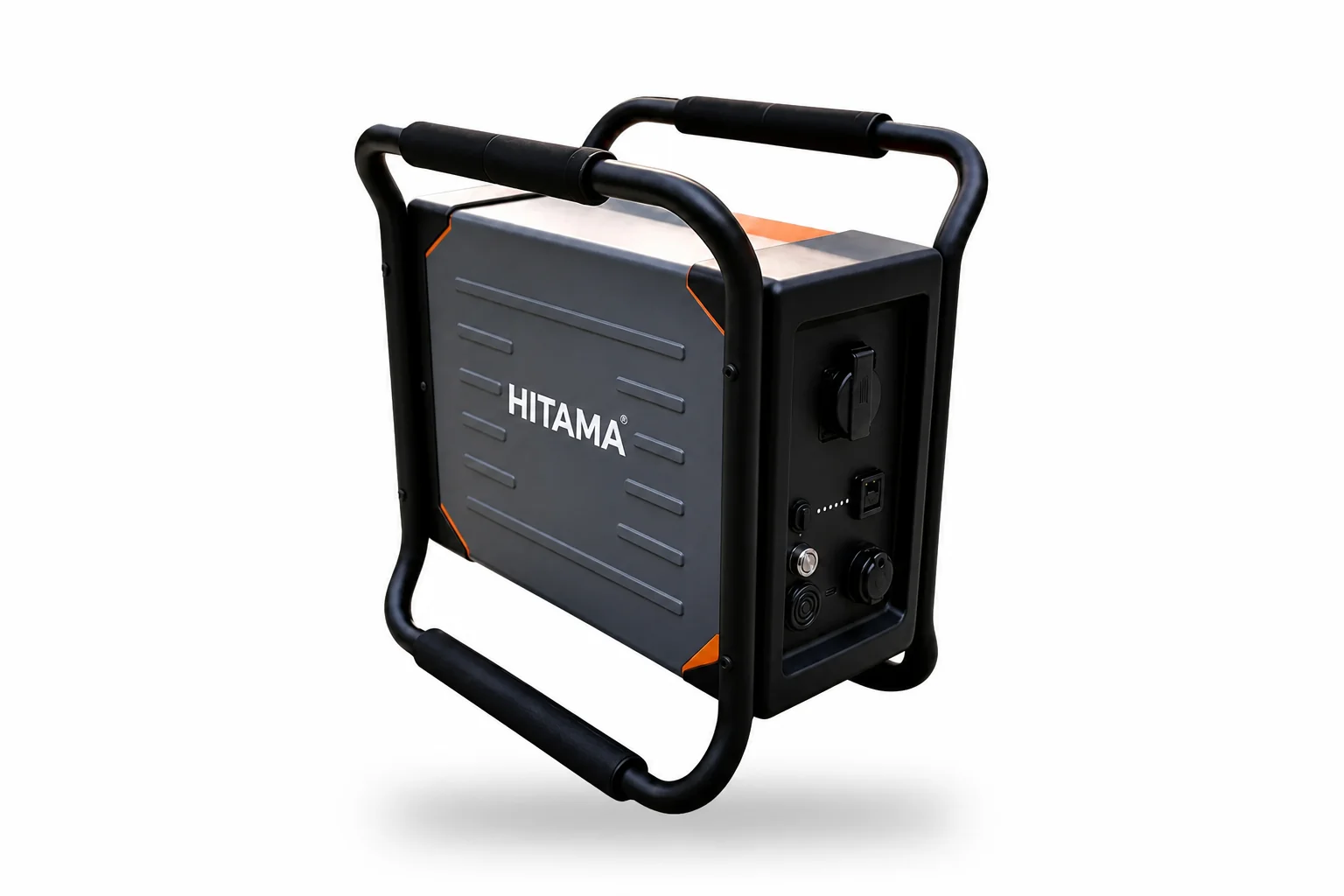
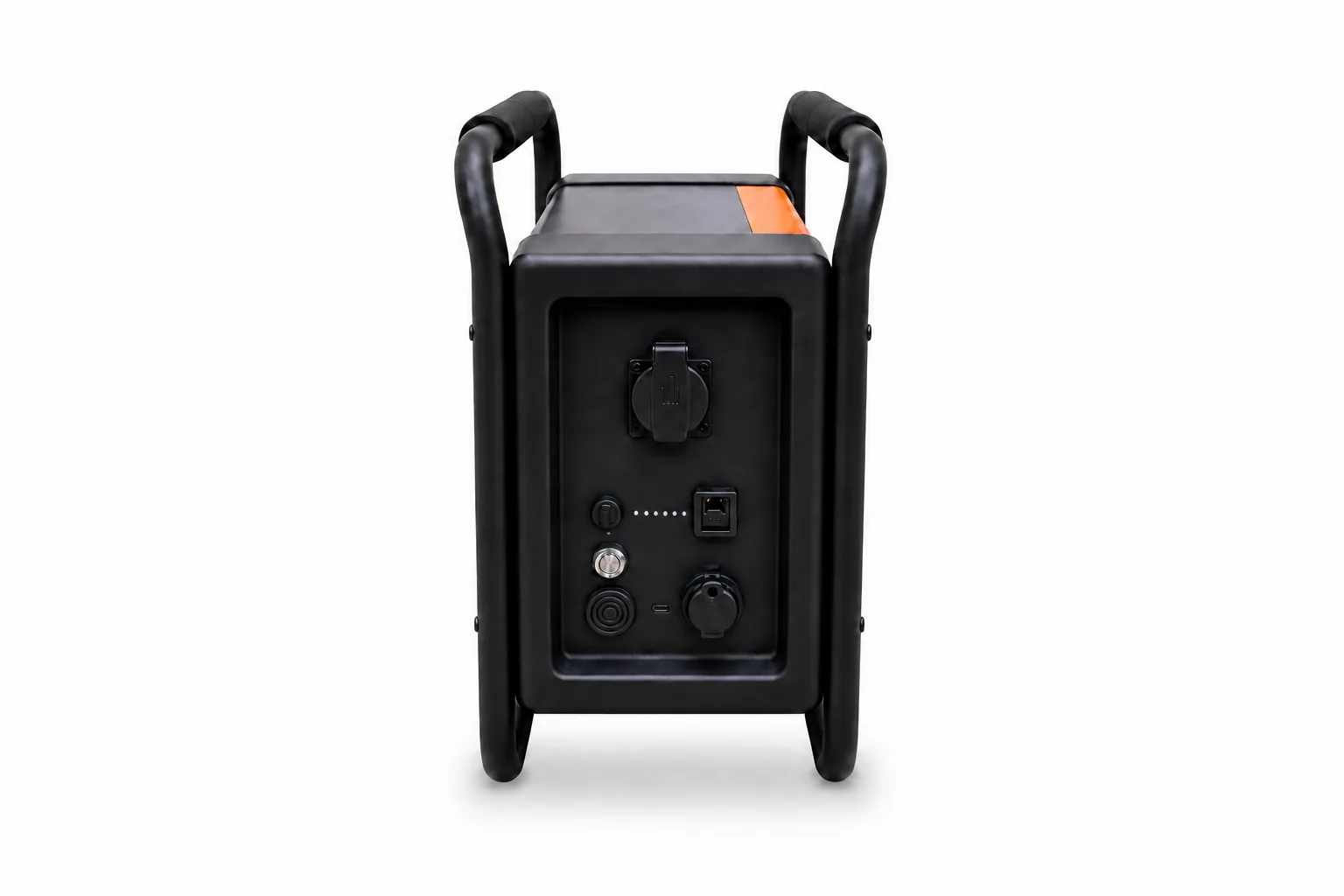
The core unit. A fanless, self-cooling 230 V power station that replaces the combustion generator on site — no exhaust, no idling noise, no fuel run.
Two or three units linked through the parallel distribution unit for 230 V single-phase loads. Power and capacity stack — start with two, add a third when the job needs it.
Three 230 V P25 units in parallel produce the 400 V three-phase supply that runs tools which will not start on single phase. All three are required — remove one and the system loses a phase. Carried and assembled by hand: no crane, no lifting gear.
The questions buyers actually ask before a first order — answered with numbers from our own datasheets, not from a brochure.
Why do diesel generators fail on permits at events more often than on power?
Because exhaust, engine noise and separation distances drive the conditions — in city centres and residential areas often so strict that a combustion unit may not be placed at all.
How do I plan peak load?
Count what ramps up together: lighting cues, amplifiers, haze machines. The peak defines the system, not the evening average.
Why put sound and light on separate circuits?
Because they draw differently: stage tech runs through, light and sound in waves. Separate circuits keep the whole system smaller.
What about encores and overruns?
A set running ten minutes longer is the normal case. Plan reserve instead of sizing to the planned runtime.

 12345678
 1234567891011
 1234567891011