Replacing a diesel generator: what a battery covers — and what it does not
Anyone looking for a generator wants one thing above all: power at the moment it matters. A battery storage unit delivers that in some cases — and not in others. This page separates the two instead of blurring them.
Four questions before you replace a diesel generator
How long does the unit really have to run? One shift yes, three days no. Continuous duty over many hours remains the strength of a combustion engine.
Which motor starts? The starting surge of the largest load decides the configuration — not the sum of the wattage figures.
230 V or 400 V three-phase? Single-phase loads are covered by one unit; three-phase loads need the bank with a distribution unit.
Where does the unit stand, and is exhaust acceptable there? Basements, car parks, stairwells and tunnels rule the combustion engine out regardless of its rating.
Which configuration carries which load
One unit: lighting, radio, measuring equipment, chargers and hand tools — the basic need of a working site.
Two units in parallel: tools alongside lighting, with headroom for the starting surge of the largest device.
Three units plus distribution: 400 V three-phase for larger motors, pumps and welders, with the load split across three storage units.
P-series parallel power systems
One modular platform. Add parallel units where the load grows — two or three units single-phase, or three units for 400 V three-phase.
Configuration
Units
Rated power
Usable capacity
Weight
Output
P25
1
2,500 W
2.7 kWh
29 kg
230 V / 16 A · single-phase
P25 + P25-D
2
5,000 W
5.4 kWh
≈60 kg
230 V · single-phase · AC230V/20A output
P25 + P25-D
3
7,500 W
8.1 kWh
≈90 kg
230 V · single-phase · AC230V/30A output
P25 + P25-T
3
7,500 W
8.1 kWh
≈90 kg
400 V · three-phase · AC400V/10A output
P25
Units
1
Rated power
2,500 W
Usable capacity
2.7 kWh
Weight
29 kg
Output
230 V / 16 A · single-phase
P25 + P25-D
Units
2
Rated power
5,000 W
Usable capacity
5.4 kWh
Weight
≈60 kg
Output
230 V · single-phase · AC230V/20A output
P25 + P25-D
Units
3
Rated power
7,500 W
Usable capacity
8.1 kWh
Weight
≈90 kg
Output
230 V · single-phase · AC230V/30A output
P25 + P25-T
Units
3
Rated power
7,500 W
Usable capacity
8.1 kWh
Weight
≈90 kg
Output
400 V · three-phase · AC400V/10A output
Wiring
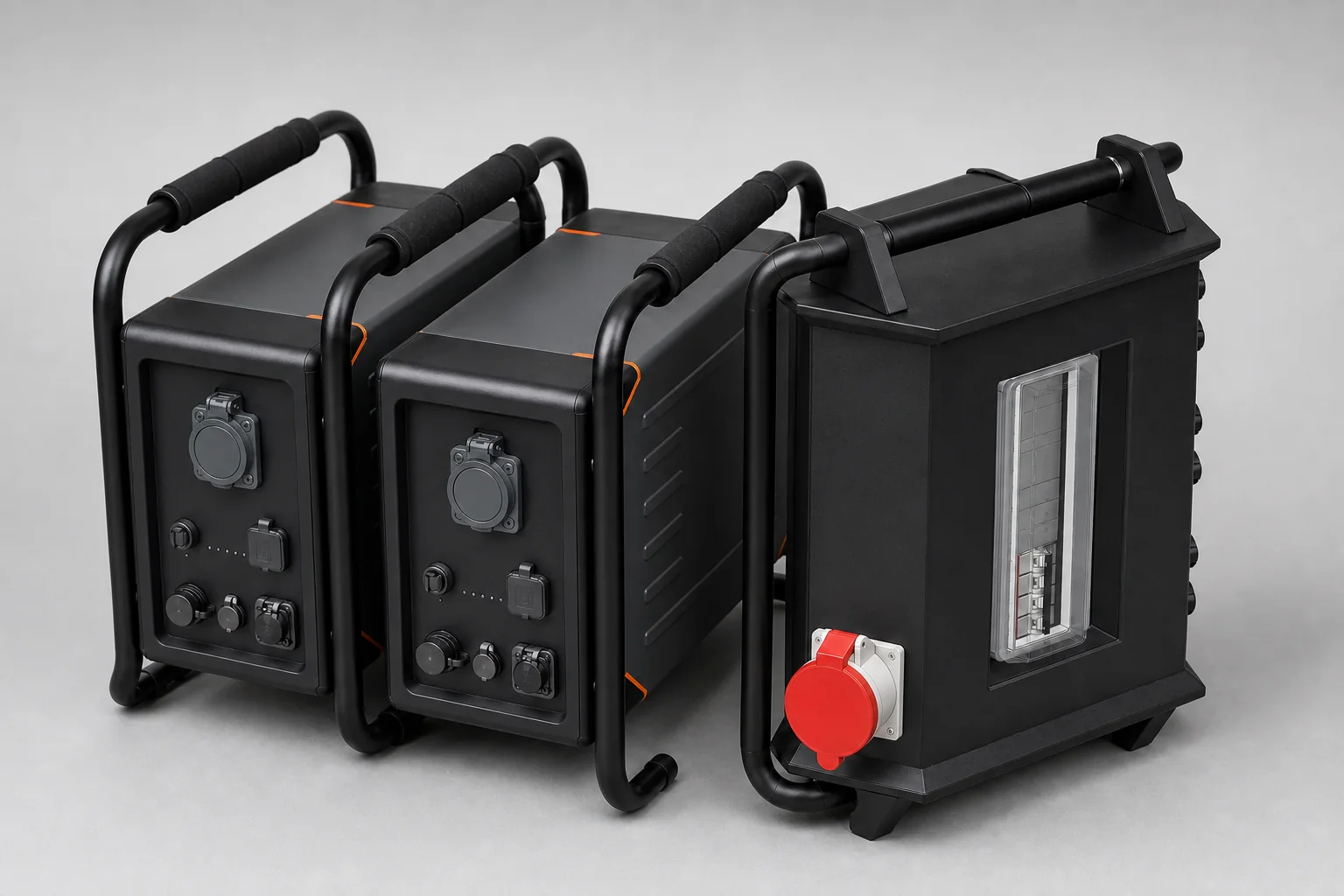
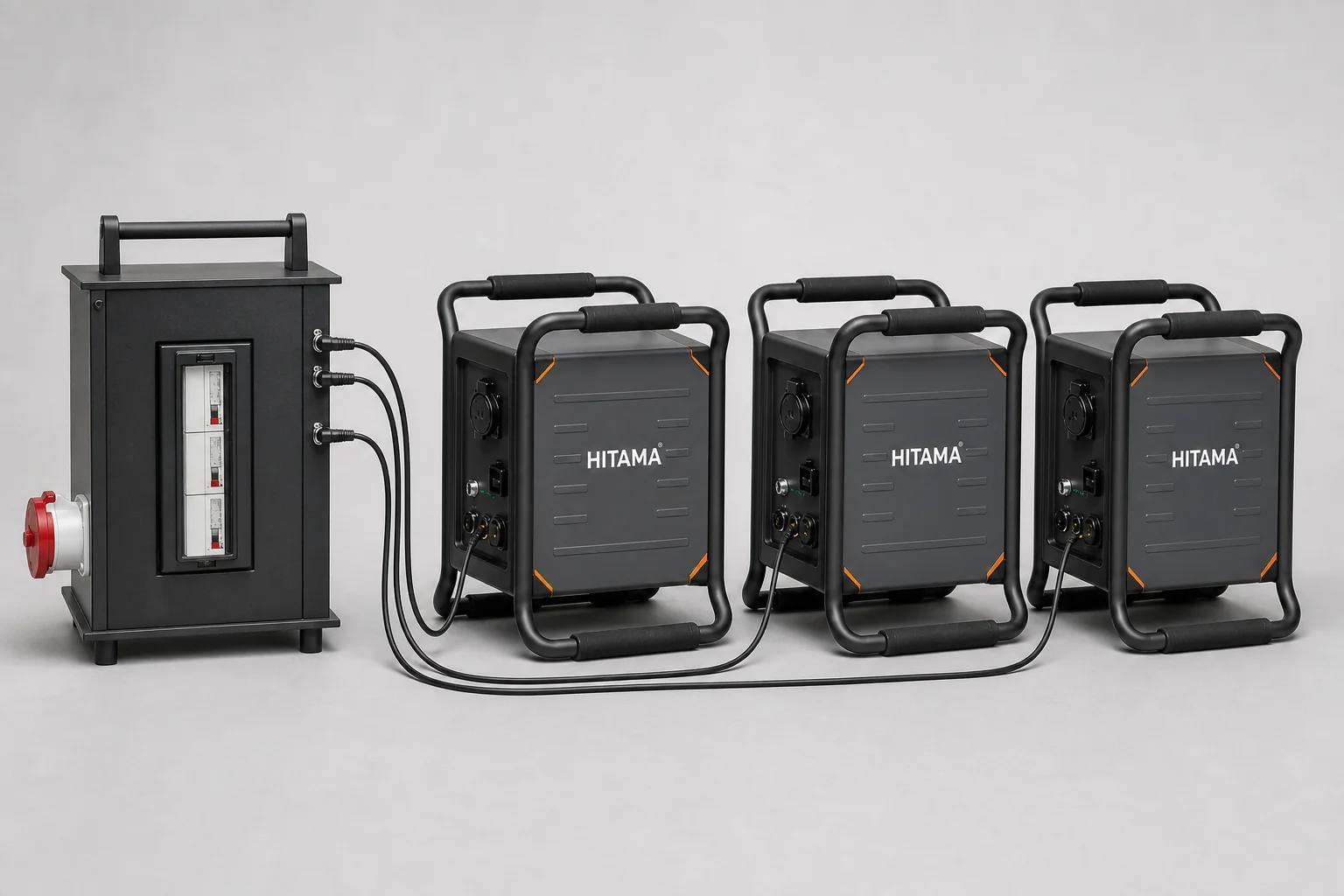
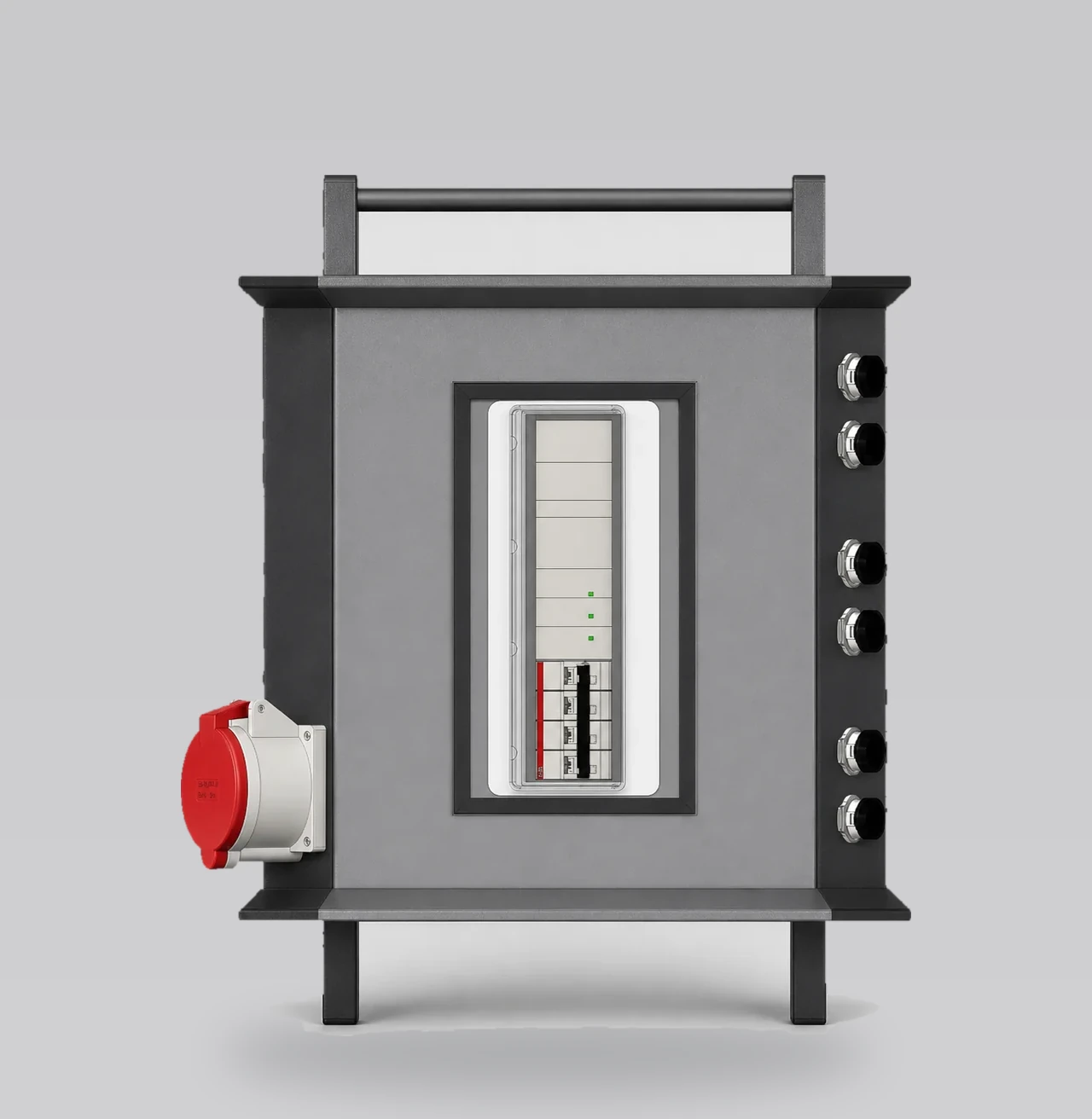
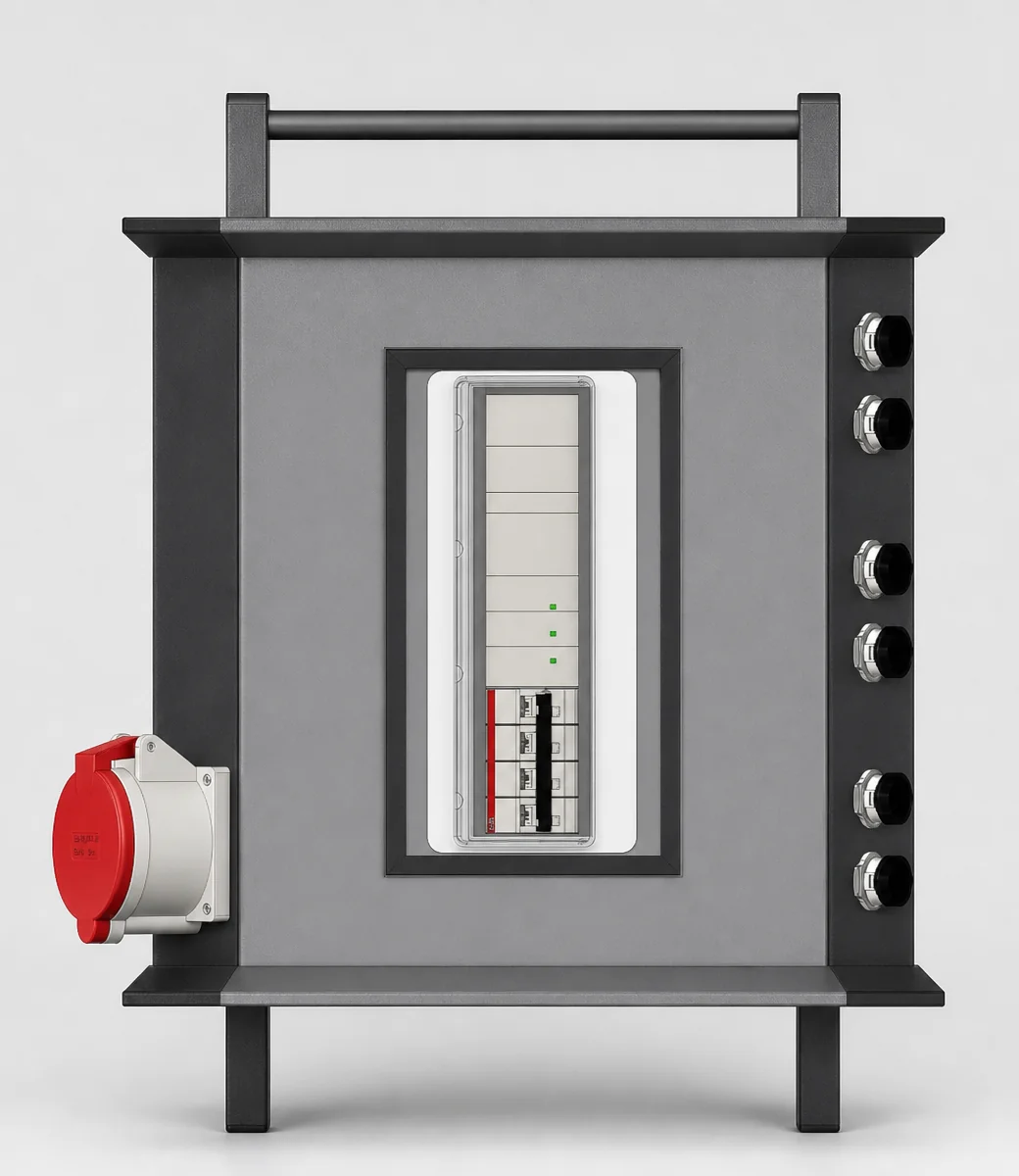
The parallel distribution unit carries one power input and one data input per battery unit, and a single output to the load.
AC230V/20ATwo P25 units, 230 V single-phase.
AC230V/30AThree P25 units, 230 V single-phase.
AC400V/10AThree 230 V P25 units in parallel make 400 V three-phase — all three required, or the system loses a phase.
How the parallel link is wired
Each P25 runs one power cable and one data cable to its own input pair on the distribution unit.
The distribution unit has three input pairs (L1 / L2 / L3); one pair per battery unit.
Only the distribution unit output feeds the load. Battery units are never connected to the load directly.
Each unit keeps its own protective device; no unit back-feeds another.
Three configurations, one platform
Start with a single unit and add parallel units only when the load demands it. Every configuration runs the same battery unit and the same distribution unit.
P25
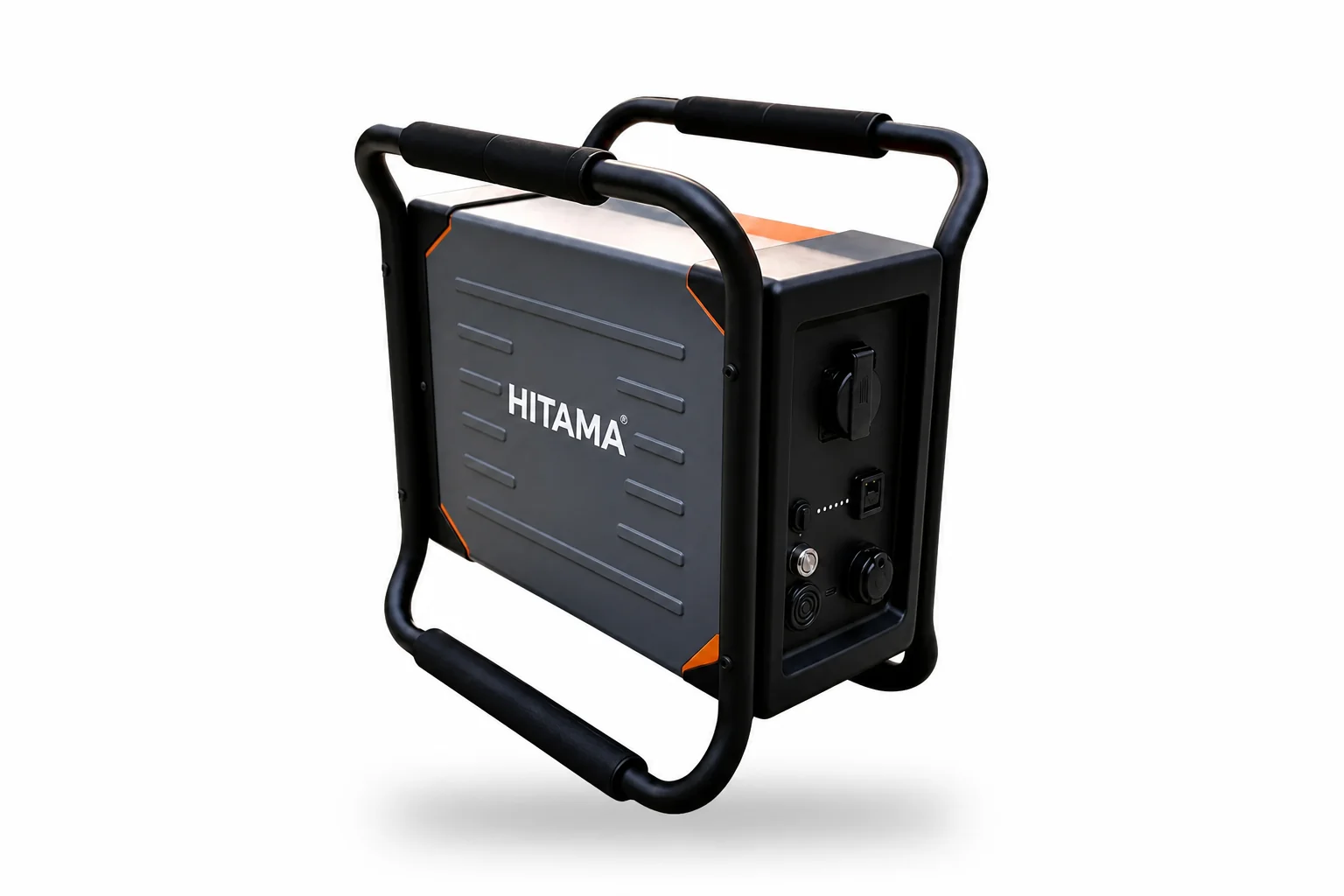
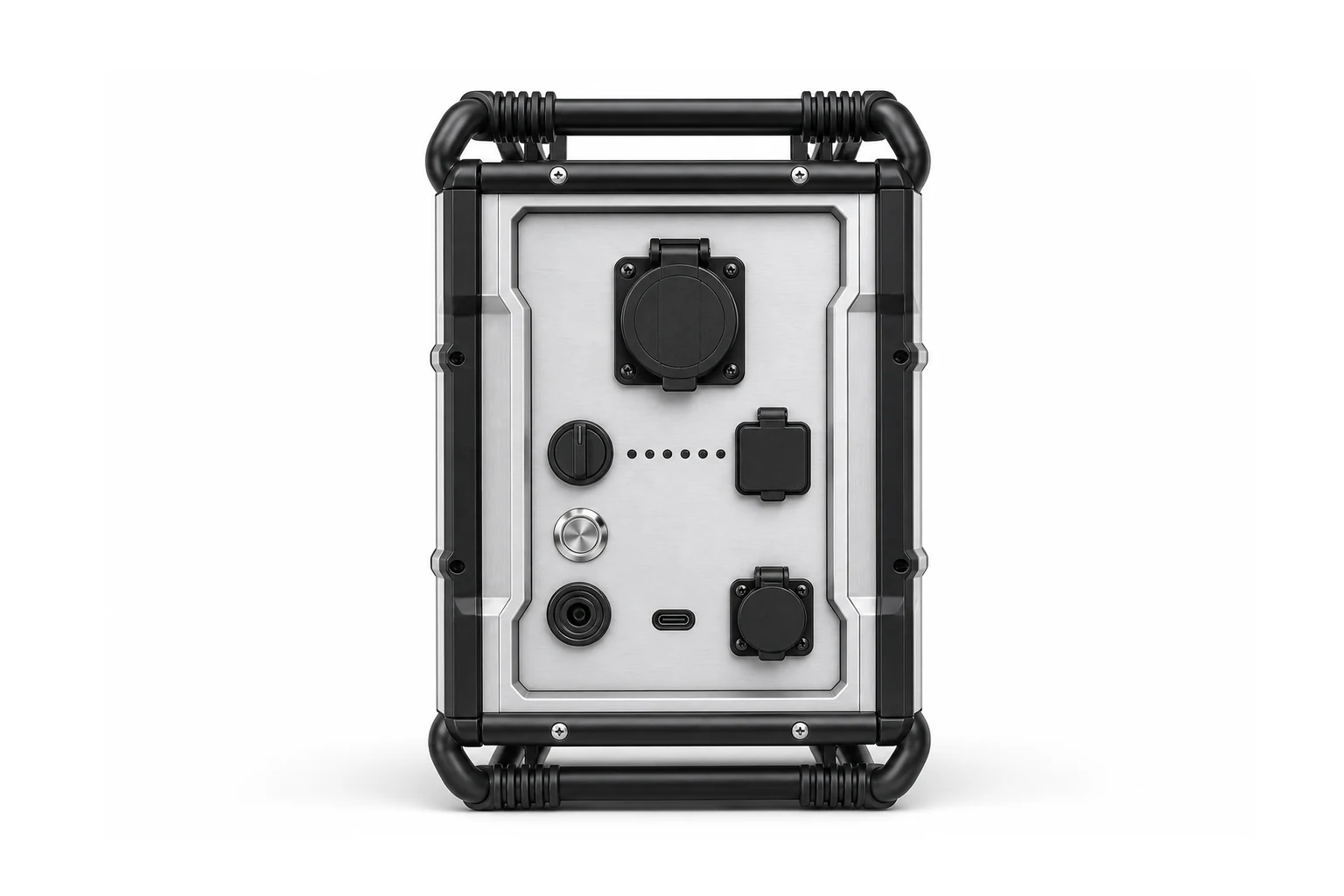
The core unit. A fanless, self-cooling 230 V power station that replaces the combustion generator on site — no exhaust, no idling noise, no fuel run.
Two or three units linked through the parallel distribution unit for 230 V single-phase loads. Power and capacity stack — start with two, add a third when the job needs it.
Three 230 V P25 units in parallel produce the 400 V three-phase supply that runs tools which will not start on single phase. All three are required — remove one and the system loses a phase. Carried and assembled by hand: no crane, no lifting gear.
OEM and ODM: custom logo printing, adapted configuration and packaging for your own channel.
Rental fleets: the units are built for circulation — carrying handle, IP54, no fuel, no instruction on a combustion engine.
Public procurement: technical documentation on output, conformity and transport for the tender.
Three details are enough for a quotation: loads, voltage, quantity.
Why without diesel — and where the genset stays better
No exhaust: in basements, car parks, stairwells and tunnels exhaust is not a nuisance but rules the combustion engine out. There the battery unit is not the convenient option, it is the only one.
No fuel that ages: diesel in the tank loses its ignition quality over months. Those who rarely need the unit discover that only when it fails.
No cold start in frost: the starting procedure is the most common reason a genset does not run when it matters.
No engine noise: communication on site remains possible without hearing protection.
The counter-check: for continuous duty over many hours, for large loads and where no charging point is reachable for days, the genset remains the right choice. Anyone telling you otherwise is selling you the wrong unit.
The questions buyers actually ask before a first order — answered with numbers from our own datasheets, not from a brochure.
Does battery storage fully replace a generator?
No. For continuous duty over many hours, for large loads and where no charging point is reachable for days, the genset remains the right choice. The usual path is the combination: storage for base load and peaks, genset as fallback.
How long can I run which load?
That is a calculation, not a promise: capacity divided by continuous load, plus headroom for starting surges. Send us your load list and we size the configuration.
Can I rent a battery unit instead of a diesel generator?
We sell to trade and rental fleets, not directly on a rental basis. For rental, contact your regional dealer or ask us for a partner.
Do I need a separate unit for 400 V?
No. Three units with a distribution box give a three-phase supply; a single unit delivers 230 V.
What about a petrol generator?
It carries the same drawbacks as a diesel one — fuel, exhaust, cold start, noise — with an even shorter fuel shelf life. In closed rooms and close to people, both are out.

 12345678
 1234567891011
 1234567891011