Energy storage for the jobsite: battery generator, battery storage — where the difference lies
Three words, one device — and three different expectations. Anyone looking for energy storage on a jobsite finds offers labelled battery generator, battery storage or accumulator. This page separates the terms, orders the power classes and says plainly when a combustion unit remains the better choice.
Load first, term second
List the tools that run at the same time, not the ones standing in the yard. Two cut-off saws used one after the other are a different load from two running together.
Read the input power off each rating plate and add them up. Where a value is missing, rated current times 230 V is a workable approximation — a estimate, not a measurement, and it should be treated as one.
Add 20 to 30 percent headroom. Motors, compressors and pumps draw several times their rated current when starting; the storage has to cover the start, not just continuous duty.
Check the voltage before you check the size. If a tool needs 400 V three-phase, the configuration decides — not a larger single-phase unit.
Estimate the energy of the day, not only the peak. Power says what runs at once; capacity says for how long. Calculating them separately prevents the most common sizing error.
Include the charging route in the calculation. Storage that runs empty on site and cannot be charged there becomes a paperweight. Anyone who knows how long the next charge takes plans the handover differently — and less often sells a unit that does not carry the day.
Which configuration carries which load
A unit in the 2,500 W class with 2.7 kWh covers hand tools, lighting and chargers. As a rule of thumb, capacity divided by continuous load gives runtime — roughly one hour at full load. On site rarely everything runs at once, so usable time is usually longer; it cannot be guaranteed.
Two units in parallel double both output and capacity. That is the usual step when a cutter and extraction run together, or when a shift should pass without recharging.
The 7,500 W class with 8.1 kWh and 400 V three-phase answers equipment that will not start without three phases: larger welding sets, some pumps, distribution boards with a three-phase outlet.
Three units in a bank form the three-phase configuration and spread the load across three enclosures. This is where weight becomes a sizing question: around 90 kg per unit in the 7,500 W class is transport, not hand luggage.
P-series parallel power systems
One modular platform. Add parallel units where the load grows — two or three units single-phase, or three units for 400 V three-phase.
Configuration
Units
Rated power
Usable capacity
Weight
Output
P25
1
2,500 W
2.7 kWh
29 kg
230 V / 16 A · single-phase
P25 + P25-D
2
5,000 W
5.4 kWh
≈60 kg
230 V · single-phase · AC230V/20A output
P25 + P25-D
3
7,500 W
8.1 kWh
≈90 kg
230 V · single-phase · AC230V/30A output
P25 + P25-T
3
7,500 W
8.1 kWh
≈90 kg
400 V · three-phase · AC400V/10A output
P25
Units
1
Rated power
2,500 W
Usable capacity
2.7 kWh
Weight
29 kg
Output
230 V / 16 A · single-phase
P25 + P25-D
Units
2
Rated power
5,000 W
Usable capacity
5.4 kWh
Weight
≈60 kg
Output
230 V · single-phase · AC230V/20A output
P25 + P25-D
Units
3
Rated power
7,500 W
Usable capacity
8.1 kWh
Weight
≈90 kg
Output
230 V · single-phase · AC230V/30A output
P25 + P25-T
Units
3
Rated power
7,500 W
Usable capacity
8.1 kWh
Weight
≈90 kg
Output
400 V · three-phase · AC400V/10A output
Wiring
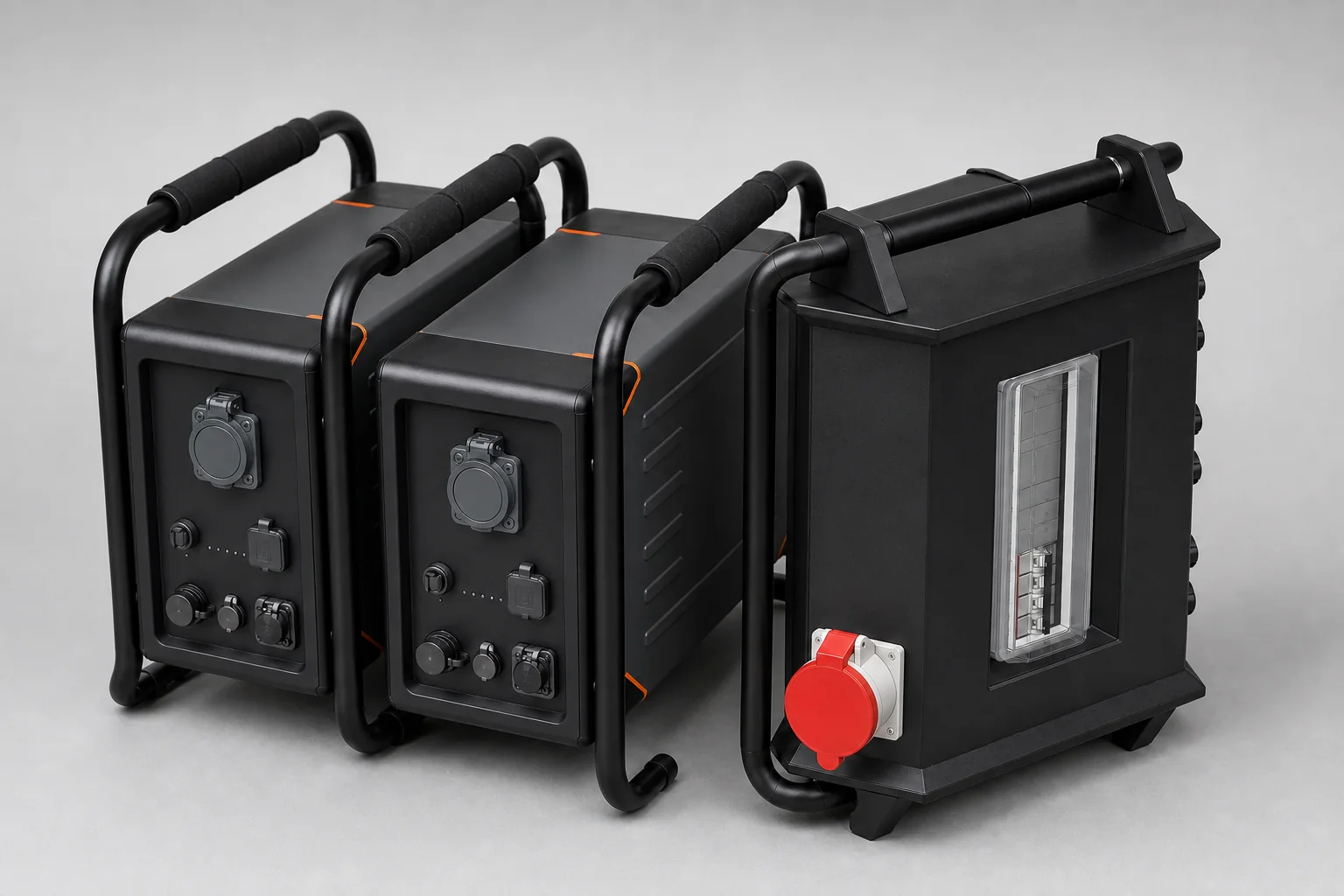
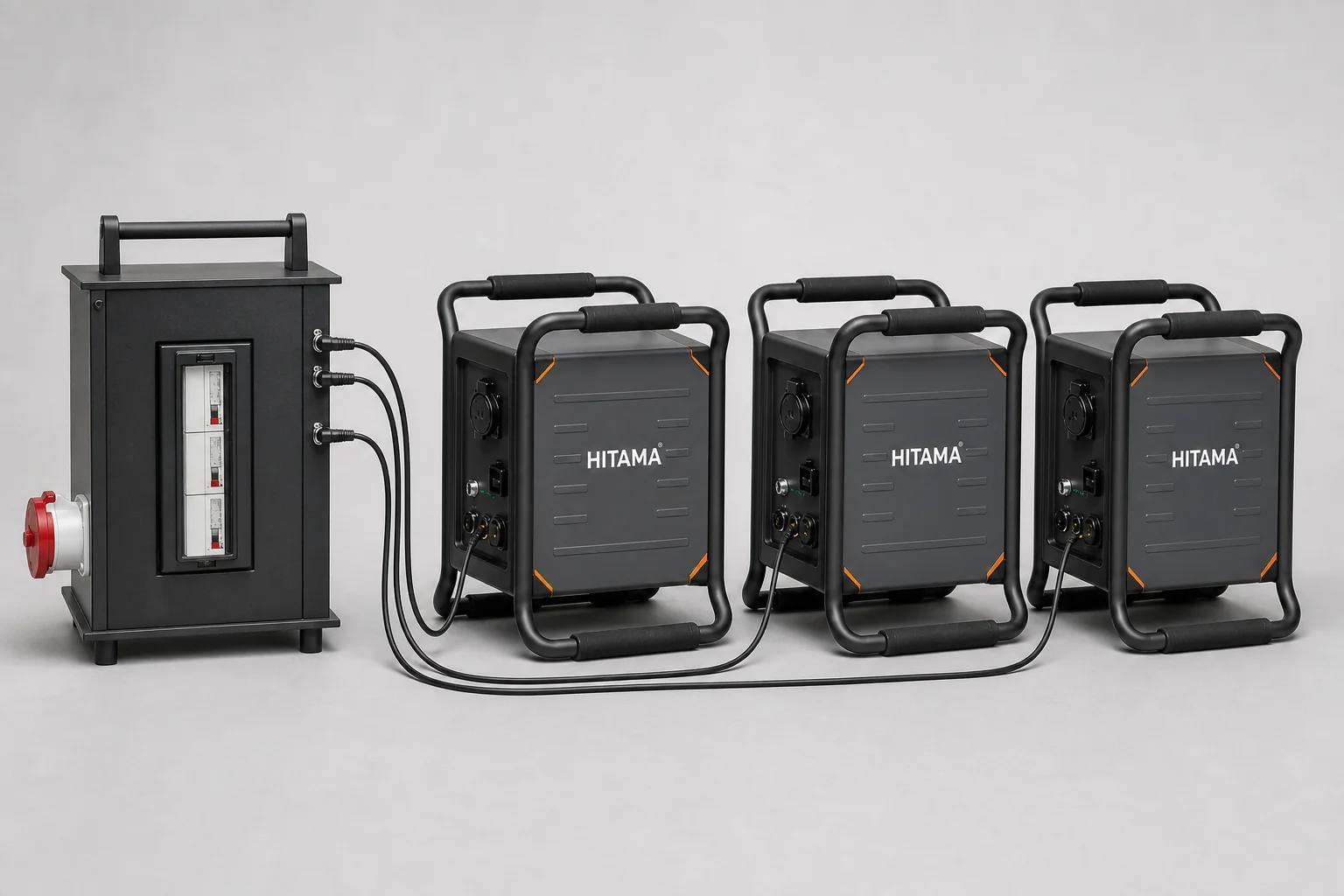
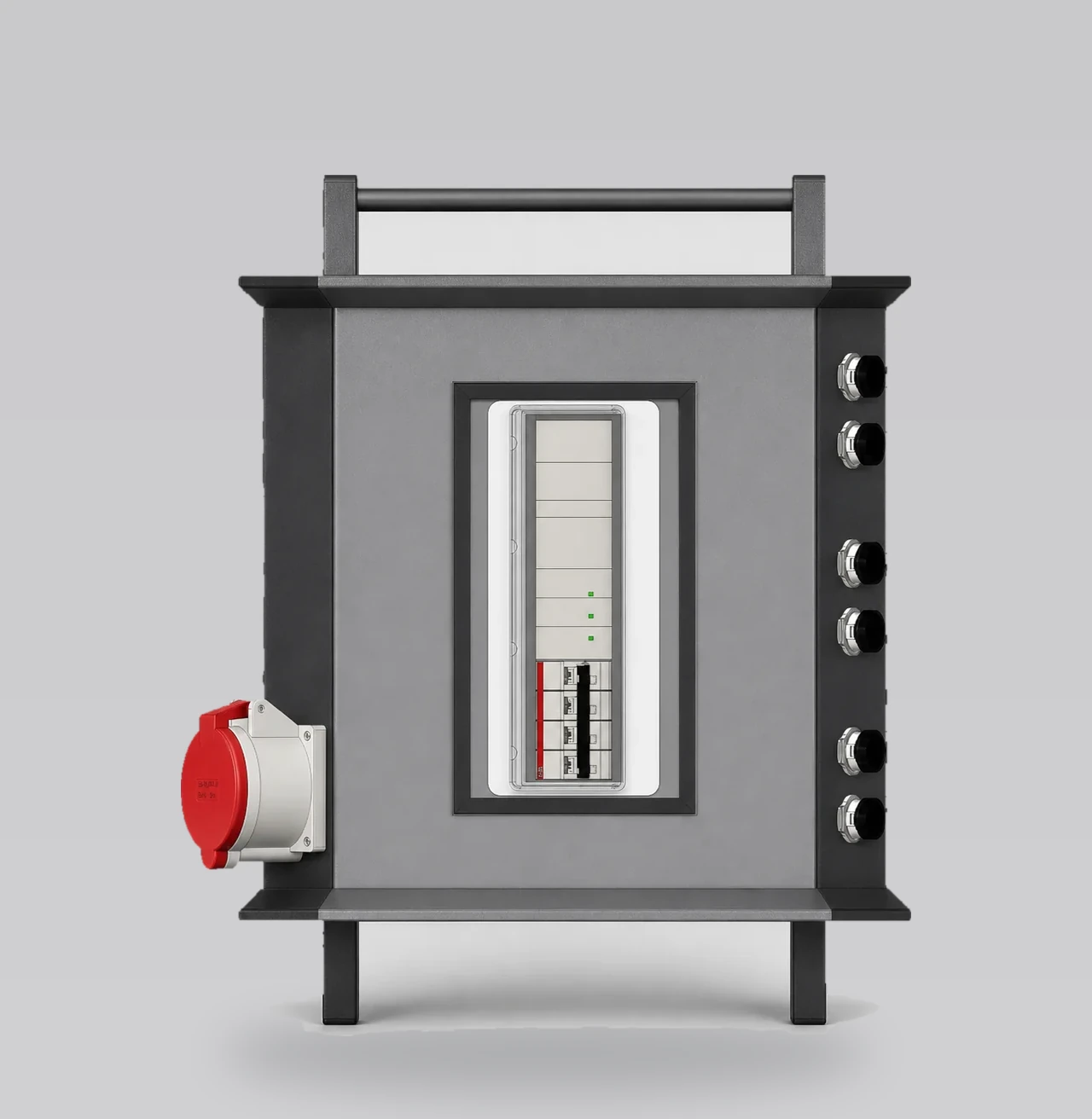
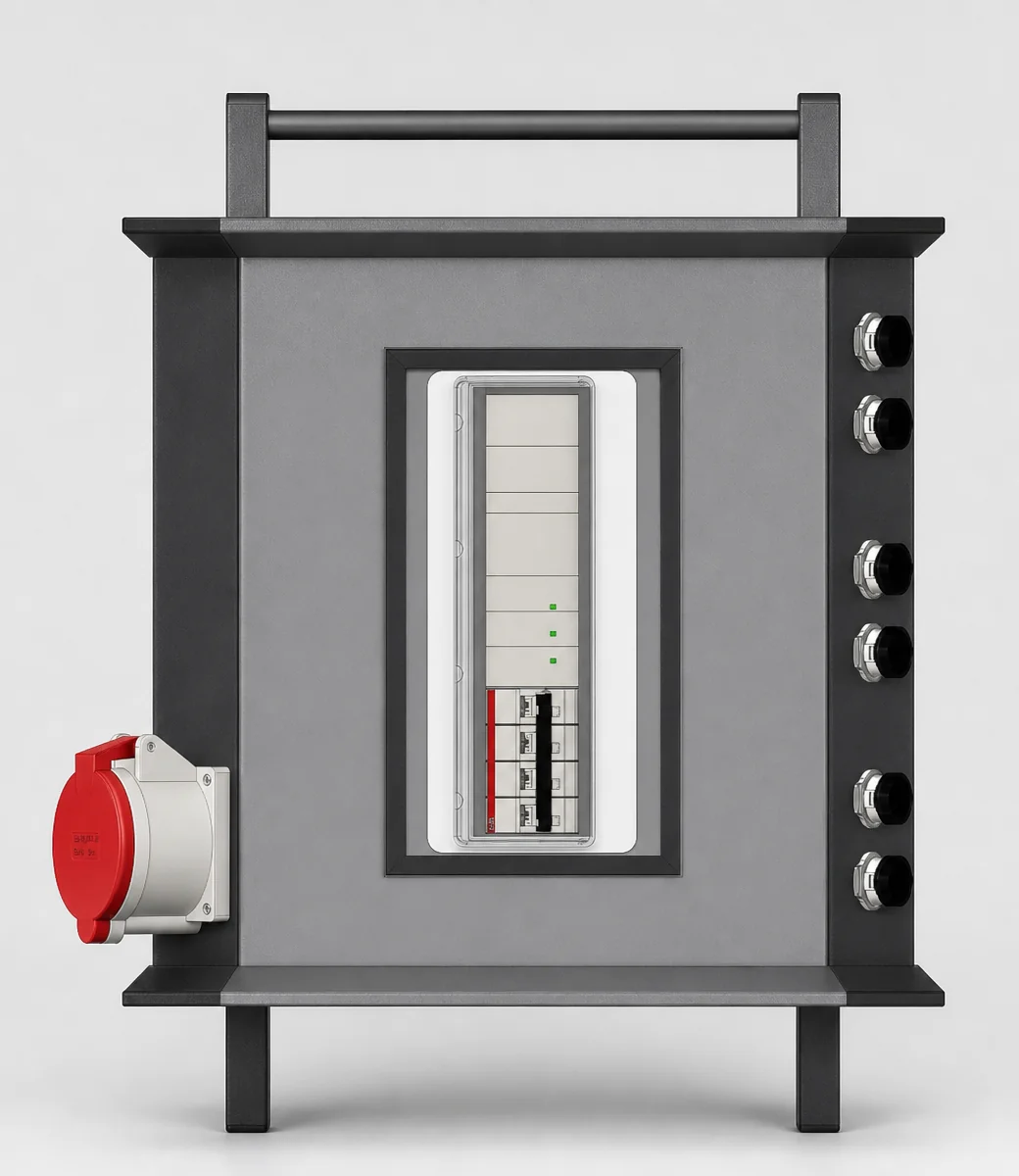
The parallel distribution unit carries one power input and one data input per battery unit, and a single output to the load.
AC230V/20ATwo P25 units, 230 V single-phase.
AC230V/30AThree P25 units, 230 V single-phase.
AC400V/10AThree 230 V P25 units in parallel make 400 V three-phase — all three required, or the system loses a phase.
How the parallel link is wired
Each P25 runs one power cable and one data cable to its own input pair on the distribution unit.
The distribution unit has three input pairs (L1 / L2 / L3); one pair per battery unit.
Only the distribution unit output feeds the load. Battery units are never connected to the load directly.
Each unit keeps its own protective device; no unit back-feeds another.
Three configurations, one platform
Start with a single unit and add parallel units only when the load demands it. Every configuration runs the same battery unit and the same distribution unit.
P25
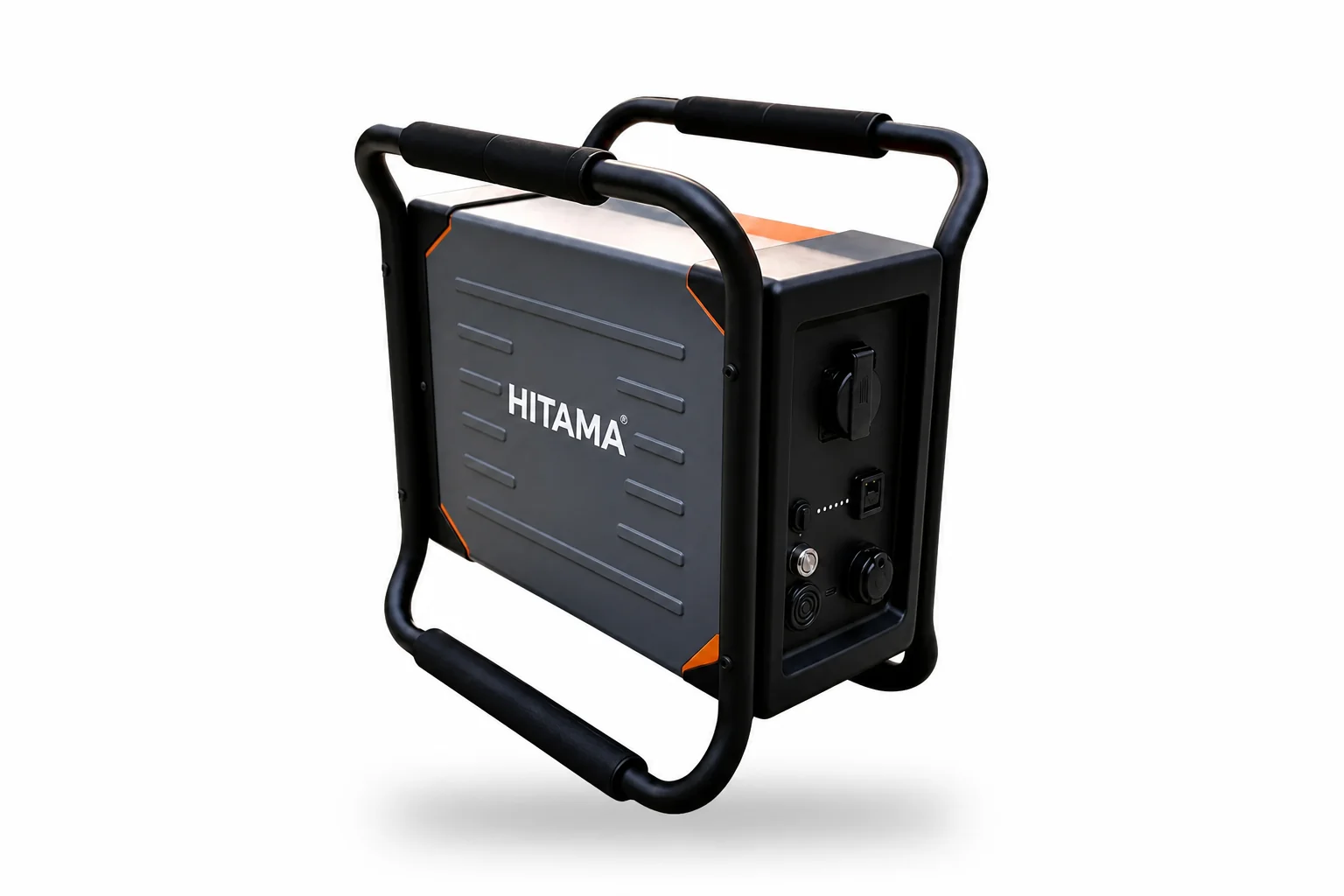
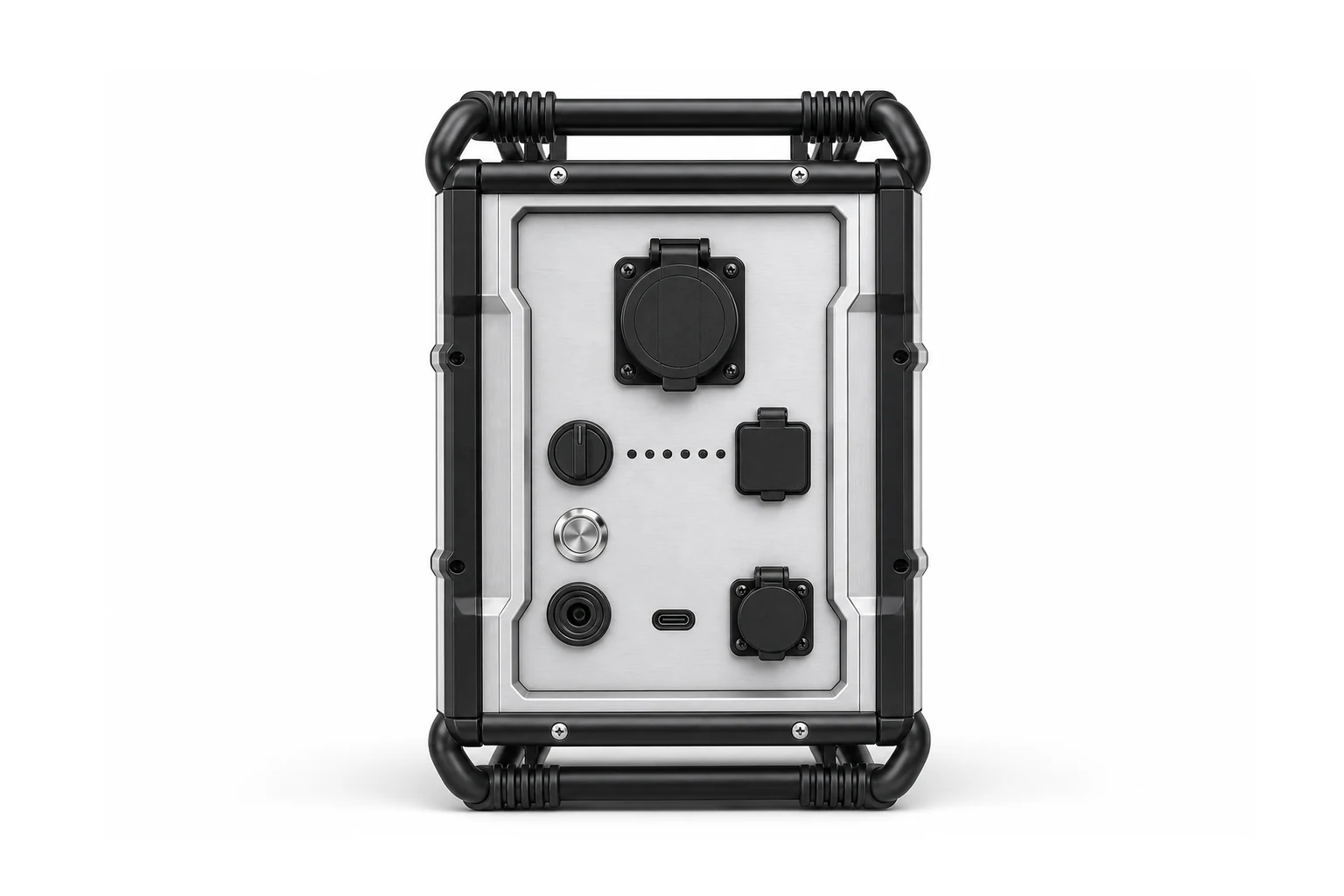
The core unit. A fanless, self-cooling 230 V power station that replaces the combustion generator on site — no exhaust, no idling noise, no fuel run.
Two or three units linked through the parallel distribution unit for 230 V single-phase loads. Power and capacity stack — start with two, add a third when the job needs it.
Three 230 V P25 units in parallel produce the 400 V three-phase supply that runs tools which will not start on single phase. All three are required — remove one and the system loses a phase. Carried and assembled by hand: no crane, no lifting gear.
Dealers and rental fleets rarely order a single unit; they order a fleet that must stay rentable for years. So the question is not only which output is needed today, but which configuration can be extended later.
OEM and ODM: we work with partners on adapted configurations, from logo printing to a different equipment set. What is feasible depends on volume and tooling; we settle both before committing.
Public procurement rewards traceability: a clear specification, documented outlets and a sizing that can be defended in the tender.
Prices and minimum quantities are deliberately absent from this page. Both depend on configuration, volume and target market, and belong in a quotation rather than on a product page.
Why without diesel — and where the genset stays better
No exhaust at the point of use: in halls, tunnels, pits and basements a combustion engine is often not permitted at all — storage is.
No refuelling, no oil change, no cold start in frost. This is the point where a unit simply starts in the morning instead of warming up first.
No engine noise. Night work and residential areas rarely fail on power; they fail on sound.
Fanless cooling without an intake: dust finds no opening to clog. The enclosure is protected to IP54 against water jets — manufacturer's data, not a measurement.
The limit belongs here: for continuous duty over many hours, for very large loads and where no charging route is reachable for days, the genset remains the right choice.
Also honest: storage delivers no surplus heat. Anyone drying, heating or cooking for hours keeps calculating with a combustion unit — or combines both: storage for base load and peaks, genset as fallback.
Technical data is in the datasheet. All power and capacity figures on this page are manufacturer's data, not measurements. Three details are enough to size a system: where it is used, which tools with which input power, and whether three-phase is required. Give us those three and you get a configuration instead of a price list.
The questions buyers actually ask before a first order — answered with numbers from our own datasheets, not from a brochure.
Are battery generator, energy storage and battery storage the same thing?
In everyday language yes, technically not quite. Battery generator refers to a portable unit that supplies power like a generator. Energy storage and battery storage emphasise the stored energy and are also used for larger, stationary systems. For sizing, the term matters less than which load runs simultaneously and how much energy a day requires.
How long does a given load run?
That is a calculation, not a promise: capacity divided by continuous load. 2.7 kWh at 2,500 W comes to roughly one hour at full load, 8.1 kWh at 7,500 W likewise. Because rarely everything runs at once on site, practical runtime is usually longer. It cannot be guaranteed.
Can the system be extended later?
Yes, through parallel operation. A second unit is added instead of a larger one; output and capacity add up. For rental fleets this is the cheaper route, because the existing unit stays in the fleet rather than being replaced.
When does a diesel genset remain better?
For continuous duty over many hours, for large loads and where no charging route is reachable for days. Heat cannot be drawn from storage either. The usual path is the combination: storage for base load and peaks, genset as fallback.
What does IP54 mean in practice?
Protection against dust in damaging quantities and against water jets from any direction. On a jobsite that means rain and dust are no reason to cover the unit. Immersion or cleaning with a high-pressure jet from below is not included.
How cold may it be?
The stated range ends at −10 °C; below that no operation is promised. Anyone working in winter should plan so the unit does not stand outdoors overnight — not only because of the cells, but because cold starts stress any battery.

 12345678
 1234567891011
 1234567891011