Site power without a generator

Site power no longer means a diesel set by default. Once you know connected load, simultaneity and shift length, a large share of the loads can run from storage — keeping a generator only for the remainder.

Three numbers decide, not gut feeling

  1. Count the loads that run at the same time — not everything standing on site. Simultaneity is the most common sizing error, and it usually lowers the required power considerably.
  2. Read the input rating from every rating plate and add them up. Not the figure in the brochure, but what the tool actually draws.
  3. Add 20 to 30 percent reserve. Motors, compressors and welding sets draw a multiple of their rated current when starting.
  4. Check whether any load requires 400 V three-phase. If so, that decides the configuration — not the size of the generator.

What storage carries — and what it does not

  1. Lighting, hand tools, extraction, chargers and electronics: the standard base of a site, which storage covers without limitation.
  2. Welding sets and compressors: feasible, but the starting current must be covered. This is where one unit often becomes two in parallel.
  3. Dewatering across days, winter heating, continuous operation: the case where a generator still makes sense — or a combination of both.

P-series parallel power systems

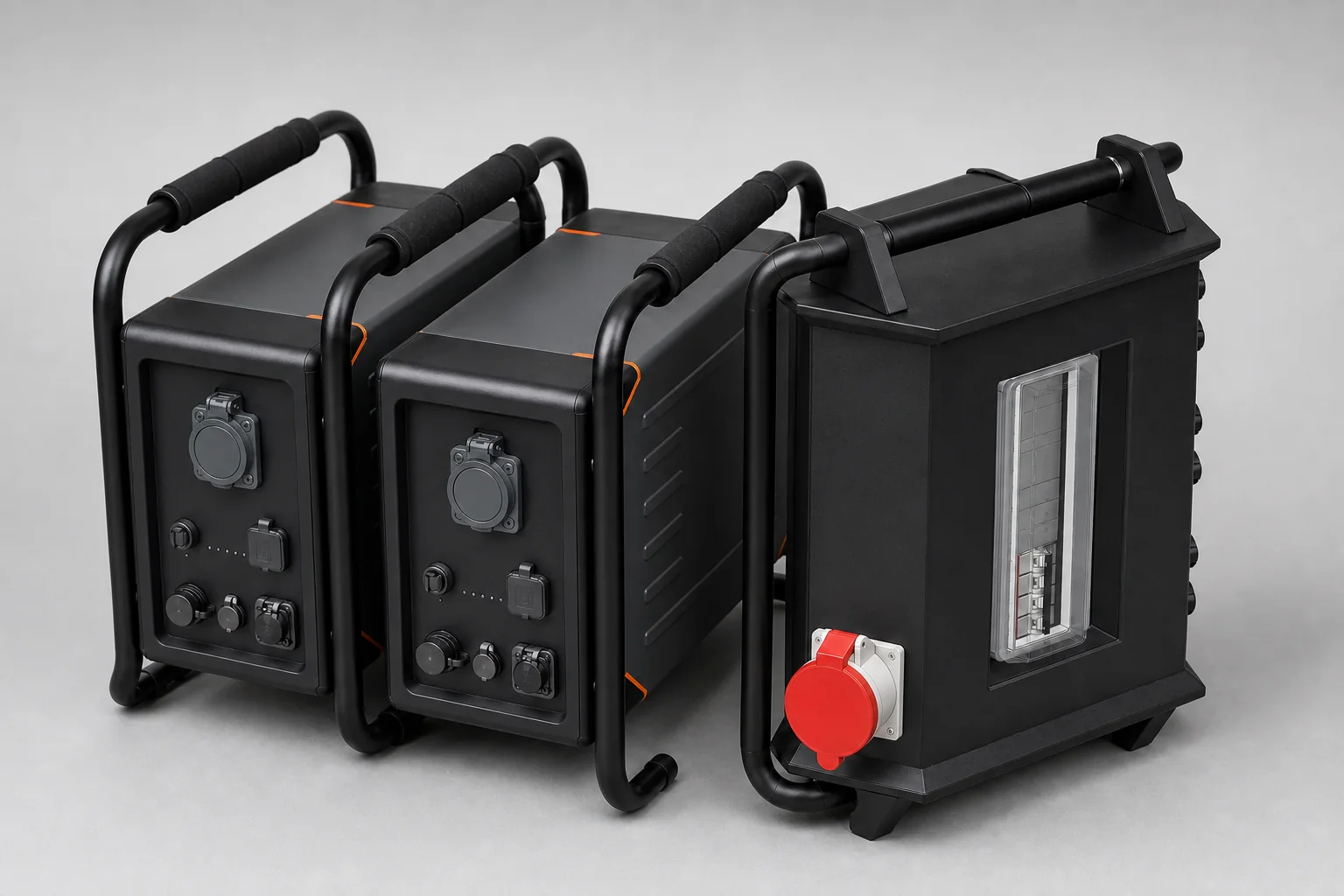
One modular platform. Add parallel units where the load grows — two or three units single-phase, or three units for 400 V three-phase.

ConfigurationUnitsRated powerUsable capacityWeightOutput
P2512,500 W2.7 kWh29 kg230 V / 16 A · single-phase
P25 + P25-D25,000 W5.4 kWh≈60 kg230 V · single-phase · AC230V/20A output
P25 + P25-D37,500 W8.1 kWh≈90 kg230 V · single-phase · AC230V/30A output
P25 + P25-T37,500 W8.1 kWh≈90 kg400 V · three-phase · AC400V/10A output
  • P25

    Units
    1
    Rated power
    2,500 W
    Usable capacity
    2.7 kWh
    Weight
    29 kg
    Output
    230 V / 16 A · single-phase
  • P25 + P25-D

    Units
    2
    Rated power
    5,000 W
    Usable capacity
    5.4 kWh
    Weight
    ≈60 kg
    Output
    230 V · single-phase · AC230V/20A output
  • P25 + P25-D

    Units
    3
    Rated power
    7,500 W
    Usable capacity
    8.1 kWh
    Weight
    ≈90 kg
    Output
    230 V · single-phase · AC230V/30A output
  • P25 + P25-T

    Units
    3
    Rated power
    7,500 W
    Usable capacity
    8.1 kWh
    Weight
    ≈90 kg
    Output
    400 V · three-phase · AC400V/10A output

Wiring

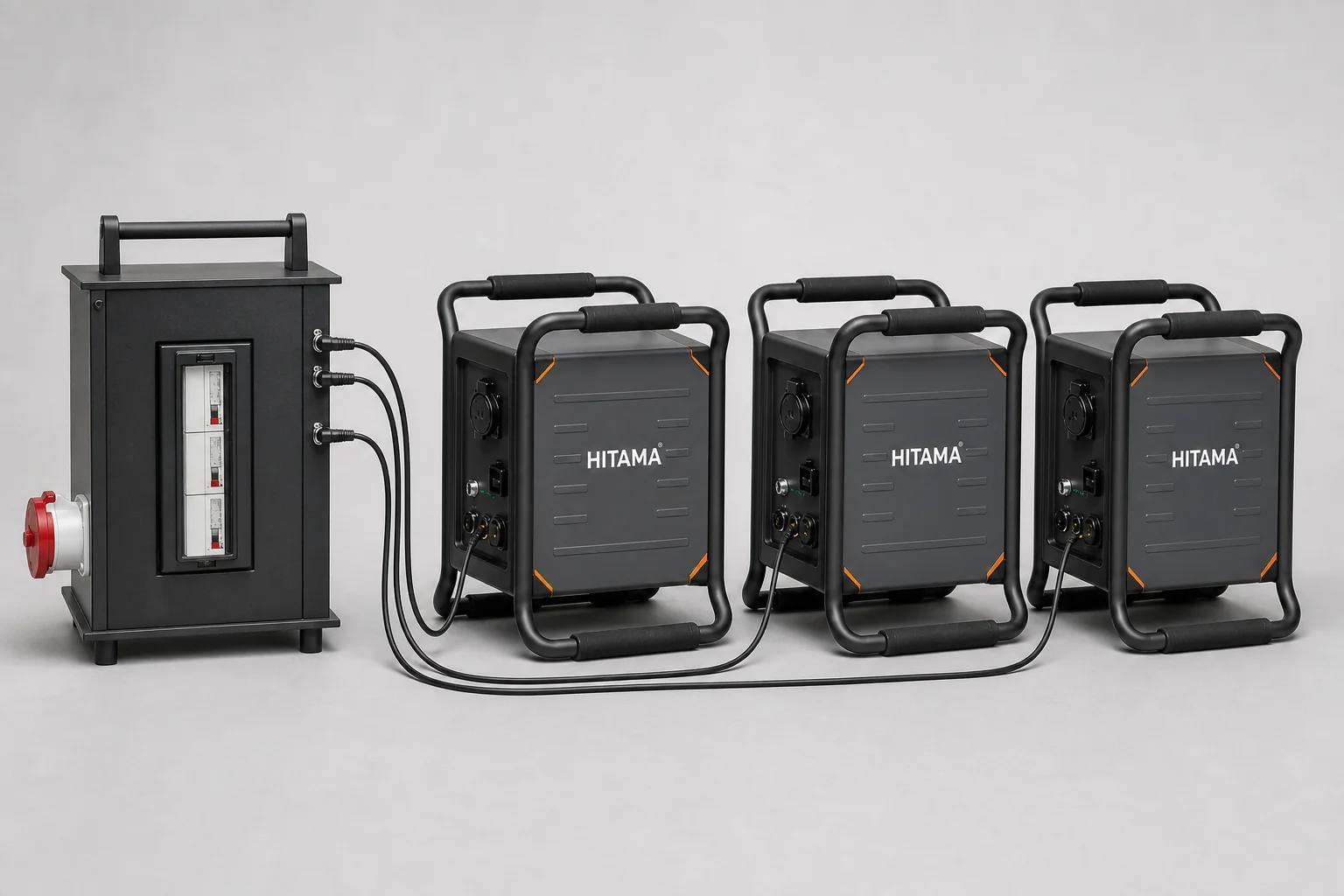
The parallel distribution unit carries one power input and one data input per battery unit, and a single output to the load.

  • P25-D2 × P25P25 1P25 2AC230V/20A
    AC230V/20ATwo P25 units, 230 V single-phase.
  • P25-D3 × P25P25 1P25 2P25 3AC230V/30A
    AC230V/30AThree P25 units, 230 V single-phase.
  • P25-T3 × P25P25 1P25 2P25 3AC400V/10A
    AC400V/10AThree 230 V P25 units in parallel make 400 V three-phase — all three required, or the system loses a phase.

How the parallel link is wired

  1. Each P25 runs one power cable and one data cable to its own input pair on the distribution unit.
  2. The distribution unit has three input pairs (L1 / L2 / L3); one pair per battery unit.
  3. Only the distribution unit output feeds the load. Battery units are never connected to the load directly.
  4. Each unit keeps its own protective device; no unit back-feeds another.

Three configurations, one platform

Start with a single unit and add parallel units only when the load demands it. Every configuration runs the same battery unit and the same distribution unit.

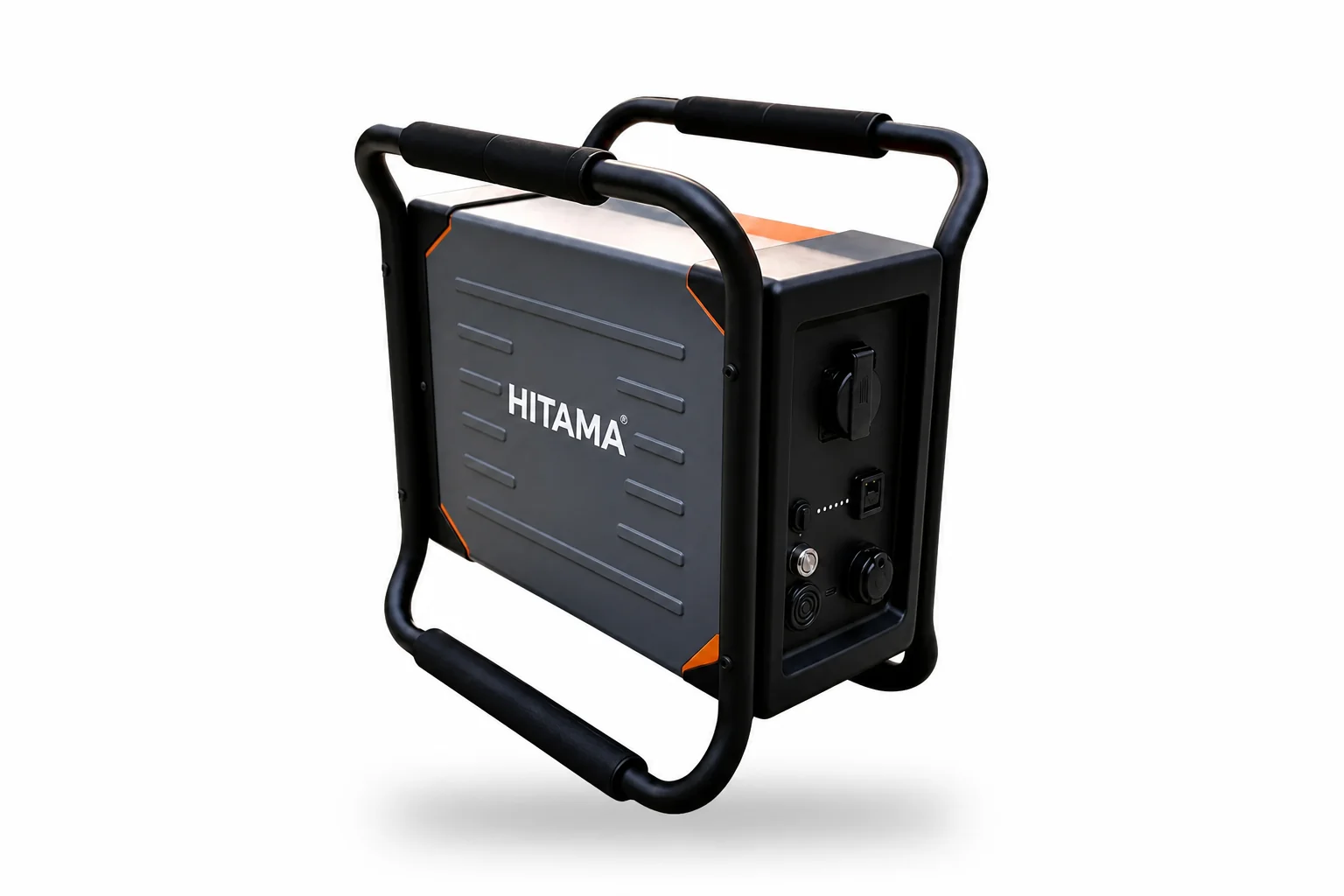
  • Hitama P25 portable industrial battery power station, three-quarter view on white

    P25

    The core unit. A fanless, self-cooling 230 V power station that replaces the combustion generator on site — no exhaust, no idling noise, no fuel run.

    Key figures

    Rated power
    2,500 W
    Peak power
    5,000 W (≤10 s)
    Usable capacity
    2.7 kWh
    Output
    230 V · 16 A
    Protection
    IP54
    Weight
    29 kg
    Request a quote
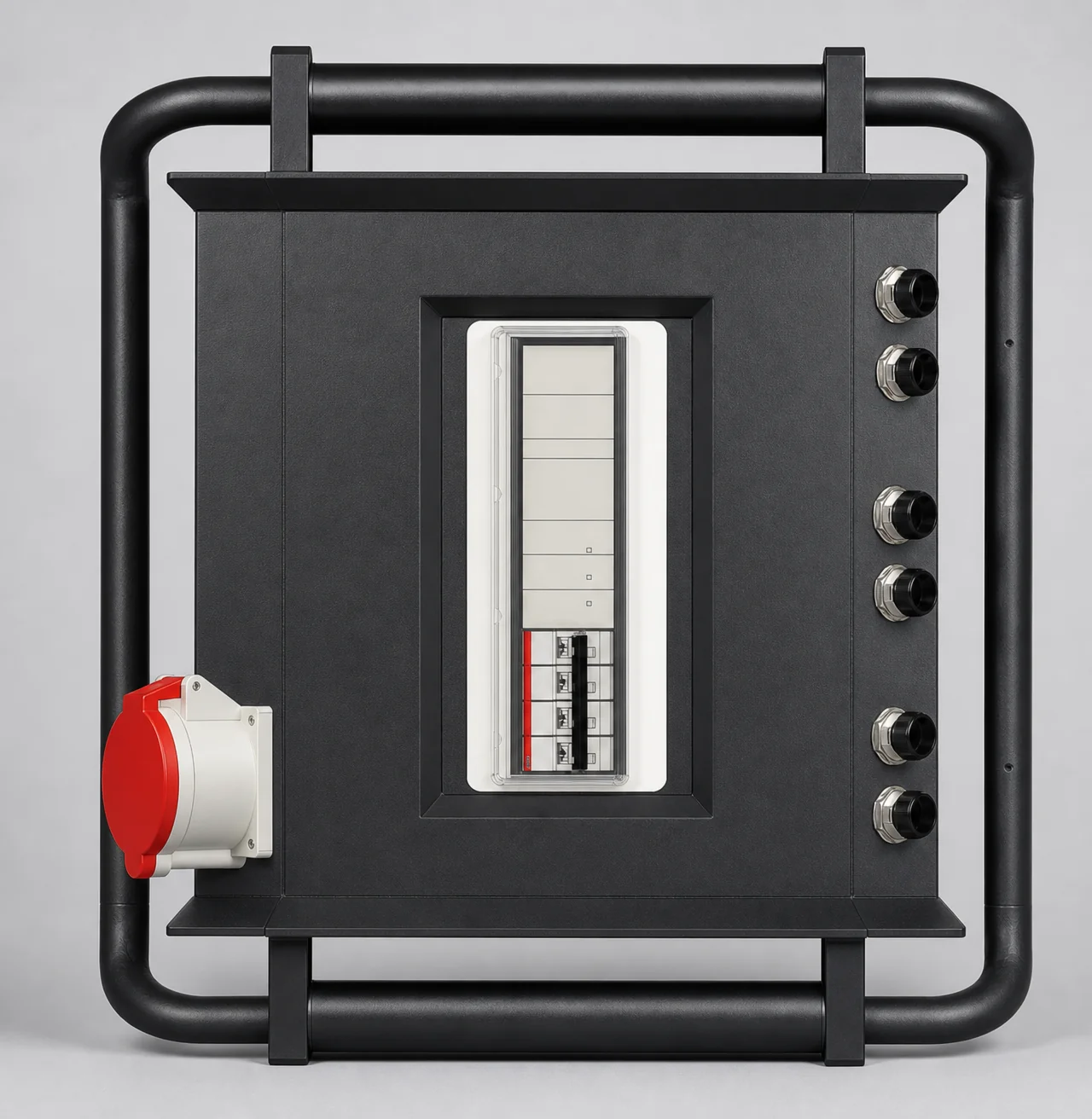
  • Hitama P25-D parallel distribution unit for two P25 power stations

    P25 + P25-D

    Two or three units linked through the parallel distribution unit for 230 V single-phase loads. Power and capacity stack — start with two, add a third when the job needs it.

    Key figures

    Units
    2–3 × P25
    Rated power
    5,000–7,500 W
    Usable capacity
    5.4–8.1 kWh
    Output
    AC230V · 20–30 A
    Request a quote
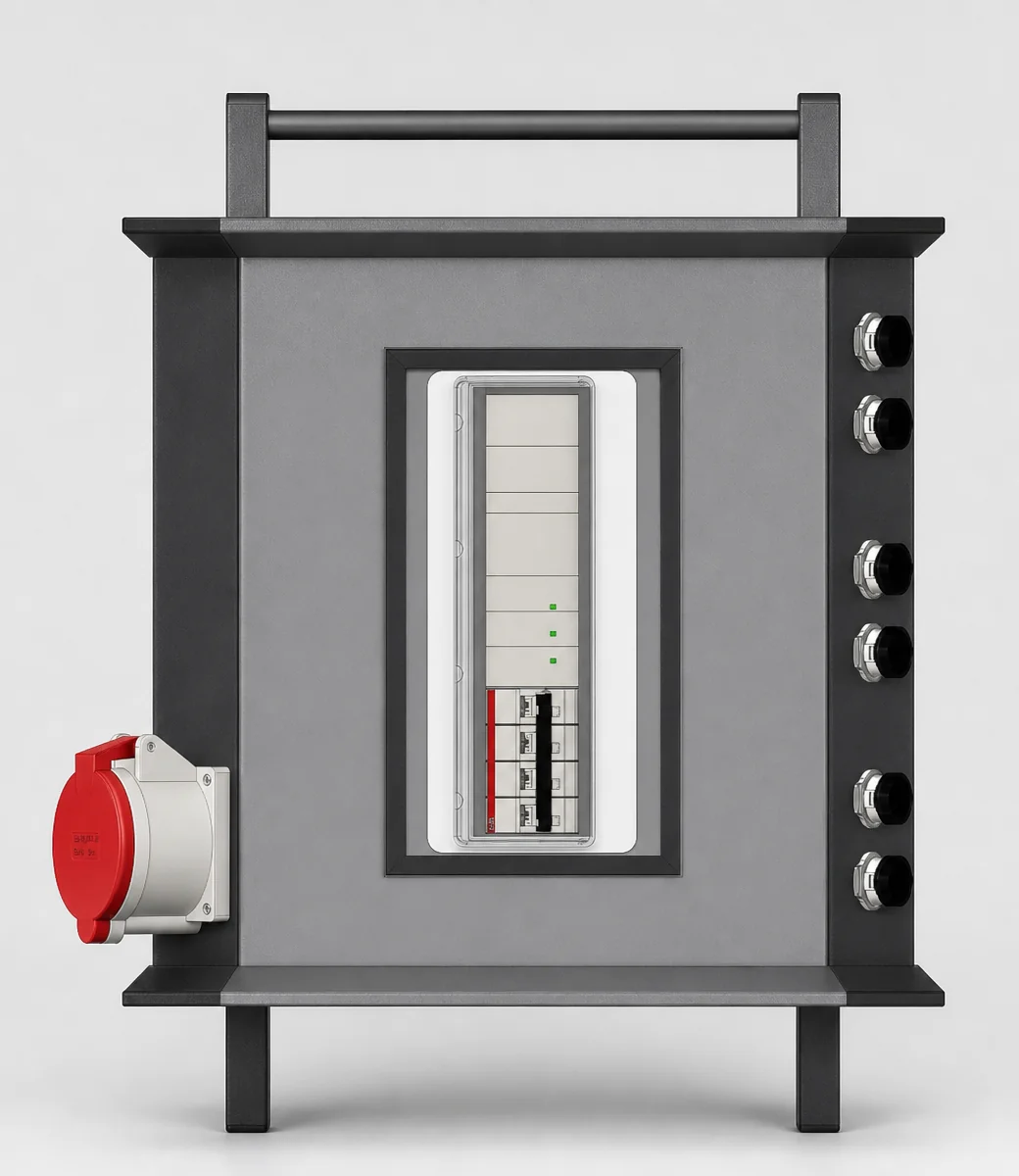
  • Hitama P25-T three-phase parallel distribution unit for three P25 power stations

    P25 + P25-T

    Three 230 V P25 units in parallel produce the 400 V three-phase supply that runs tools which will not start on single phase. All three are required — remove one and the system loses a phase. Carried and assembled by hand: no crane, no lifting gear.

    Key figures

    Units
    3 × 230V P25
    Rated power
    7,500 W
    Usable capacity
    8.1 kWh
    Output
    AC400V · 10 A three-phase
    Request a quote

Feature overview

Every part, numbered on the real machine — the same order as the wiring diagrams above.

P25 — the workhorse unit

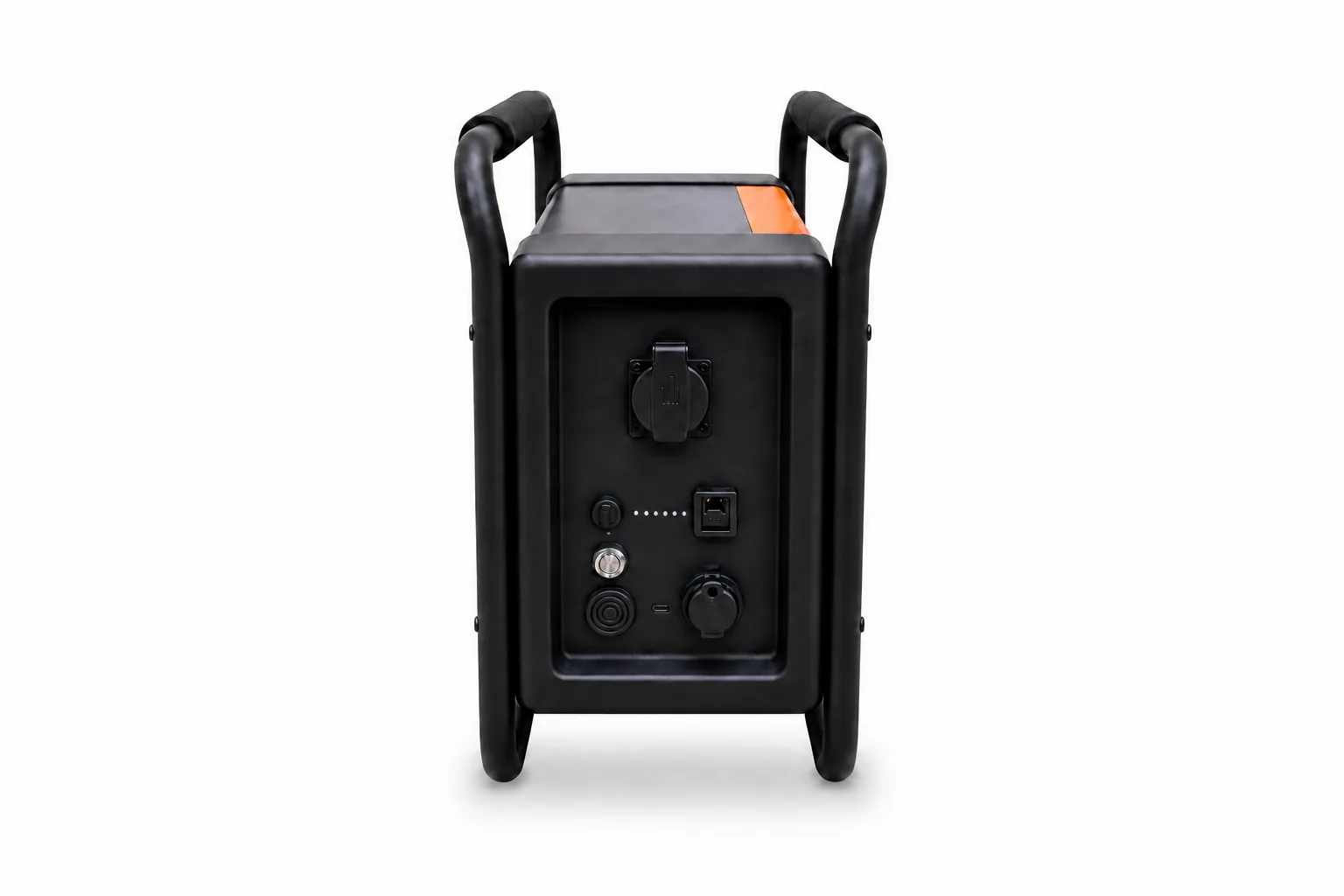
Hitama P25 site power station front port panel: AC output socket, AC charging input, power switch, battery display, USB-C, solar input, parallel power and data ports12345678
Port panel
  1. AC output · 230 V / 16 APlug cutters, welders and drills straight in.
  2. AC charging inputOn grid power, charge it overnight.
  3. Power switchOne turn starts the station.
  4. Battery displaySix LEDs — charge readable from the doorway.
  5. USB-CKeeps phones and laptops topped up.
  6. Solar inputFit a panel, keep charging on site.
  7. Parallel power portPower line to the P25-D / P25-T box.
  8. Parallel data portData line — the units stay in sync.
Hitama P25 portable power station three-quarter view: carry handle, IP54 enclosure, 2.7 kWh battery body123
Body
  1. Carry handle29 kg — carried by hand to the load.
  2. IP54 enclosureDust-protected, spray-water protected.
  3. 2.7 kWh batteryUsable capacity per unit, fanless.

P25-D — 230 V parallel box

Hitama P25-D parallel distribution box front view: mounting hook, AC230V-30A output, breaker protection window, six parallel input ports1234567891011
Front
  1. Mounting hookHang the P25 units on the box.
  2. EnclosureThe parallel box — ready out of the crate.
  3. Parallel output · AC230V-30AThe only feed to the load.
  4. Mounting stopHolds the box in place on the ground.
  5. Protection device areaThe breakers, behind a protected window.
  6. Parallel 1 inputP25 No.1 power line — AC230V-10A.
  7. Parallel 1 data inputP25 No.1 data line.
  8. Parallel 2 inputP25 No.2 power line — AC230V-10A.
  9. Parallel 2 data inputP25 No.2 data line.
  10. Parallel 3 inputP25 No.3 power line — AC230V-10A.
  11. Parallel 3 data inputP25 No.3 data line.

P25-T — 400 V three-phase box

Hitama P25-T three-phase parallel box front view: mounting hook, AC400V-10A output, breaker protection window, six parallel input ports1234567891011
Front
  1. Mounting hookHang the P25 units on the box.
  2. EnclosureThe three-phase box — ready out of the crate.
  3. Parallel output · AC400V-10AThree-phase — the only feed to the load.
  4. Mounting stopHolds the box in place on the ground.
  5. Protection device areaThe breakers, behind a protected window.
  6. Parallel 1 input · L1P25 No.1 power line — AC230V-10A.
  7. Parallel 1 data inputP25 No.1 data line.
  8. Parallel 2 input · L2P25 No.2 power line — AC230V-10A.
  9. Parallel 2 data inputP25 No.2 data line.
  10. Parallel 3 input · L3P25 No.3 power line — AC230V-10A.
  11. Parallel 3 data inputP25 No.3 data line.

Optional accessory

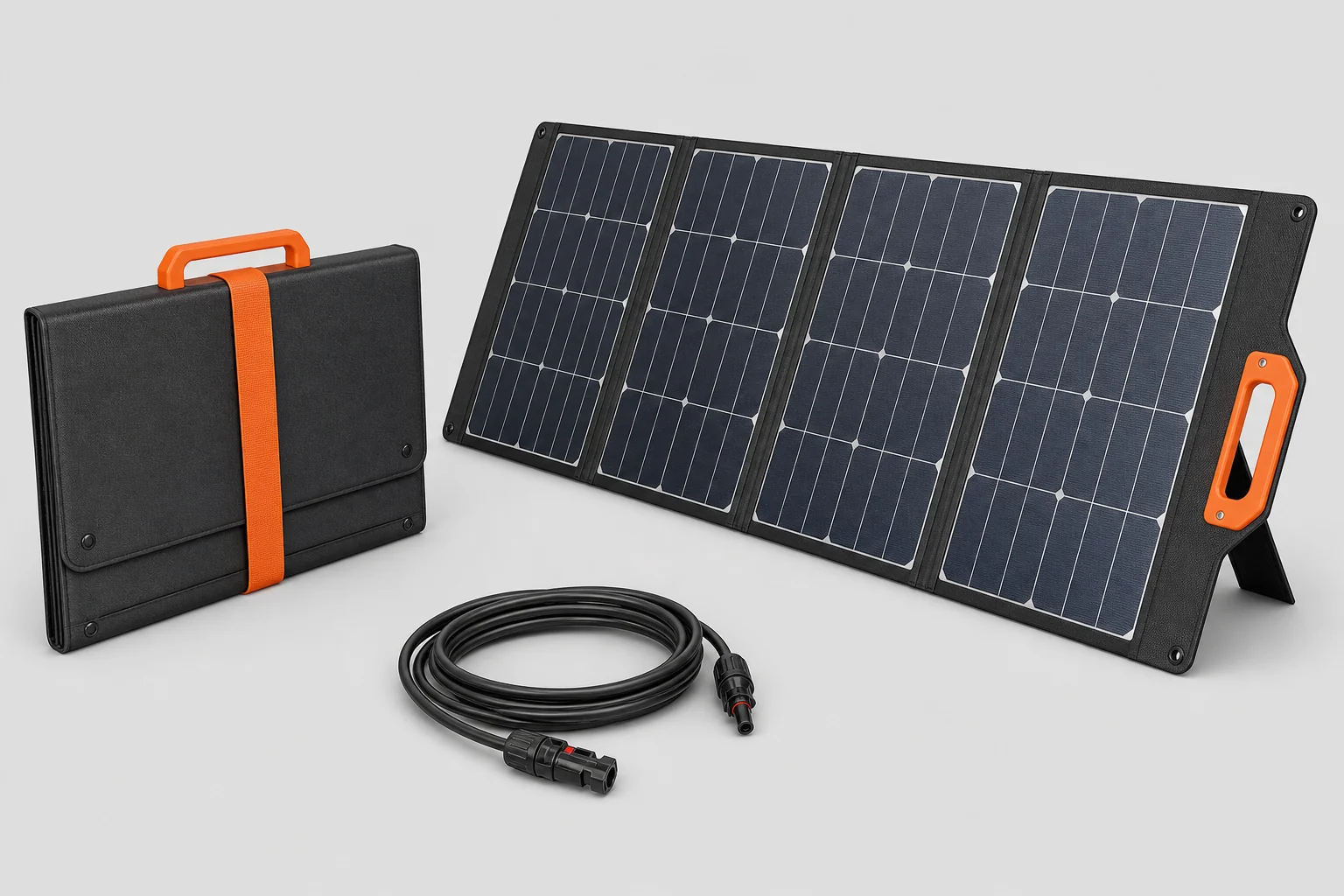
Put the sun to work. A 400 W folding panel clips into the P25 solar input — charge on site, no mains. Parallel two of them: 800 W into the station.

Hitama 400 W folding solar panel for the P25 — unfolded four-section panel, folded case with orange handle, and a 3 m MC4 cable

Optional

Folding Solar Panel 400 W

One panel, 400 W. Folds flat, carries by hand, plugs into the P25 solar input. Parallel two panels — 800 W charging the station together.

Max. power (Pmax)
400 W
Voltage at Pmax (Vmp)
72 V
Current at Pmax (Imp)
5.56 A
Open-circuit voltage (Voc)
86.4 V
Short-circuit current (Isc)
5.89 A
Max. system voltage
1000 V
Connector
MC4
Frame
ETFE
Protection
IP54
Weight
9.1 kg
Size, folded
612 × 590 × 50 mm
Size, unfolded
2230 × 590 × 25 mm
Operating temperature
-40 °C to +70 °C
In the box
3 m connection cable
Request a quote

For dealers and rental fleets

  • OEM and ODM: we work with partners on these projects — from custom logo printing to adapted configurations.
  • For rental fleets the turnaround counts: no fuel station, no cold start, no downtime for refuelling.
  • Tell us loads, voltage and quantity — we confirm feasibility, required tooling and lead time.

What changes compared with a generator

  • No exhaust at the point of use: relevant in halls, tunnels, trenches and wherever occupational exposure limits would otherwise be exceeded.
  • No engine noise — the point at which night work and residential areas fail, not the price of electricity.
  • No refuelling, no oil change, no cold start in frost: the unit arrives charged and goes back charged.
  • Fanless cooling without vents — dust and grinding swarf cannot block anything.

Data sheet and dealer terms

Technical data, conformity and transport conditions are in the data sheet. Three details are enough for a sizing: the load list, the voltage, and how long the system must run without recharging.

Frequently asked questions

The questions buyers actually ask before a first order — answered with numbers from our own datasheets, not from a brochure.

Does one storage unit cover a whole site?

For lighting, hand tools, extraction and chargers usually yes. What decides is simultaneity: count what actually runs in parallel and add the input ratings — not the number of tools standing on site.

What about continuous load over days, such as dewatering?

Storage alone is not intended for that. Calculate the daily energy demand and the recharging option; if the two do not match, a generator or a combination remains the right choice.

Why plan 20 to 30 percent reserve?

Because motors, compressors and welding sets draw a multiple of their rated current when starting. Without reserve the system trips exactly at start-up — the most common reason for the feedback that a unit is too weak.

Can I expand later instead of buying bigger?

Yes, through parallel operation. A second unit is added instead of replacing the first; for rental that is the cheaper strategy because the base equipment stays in the fleet.