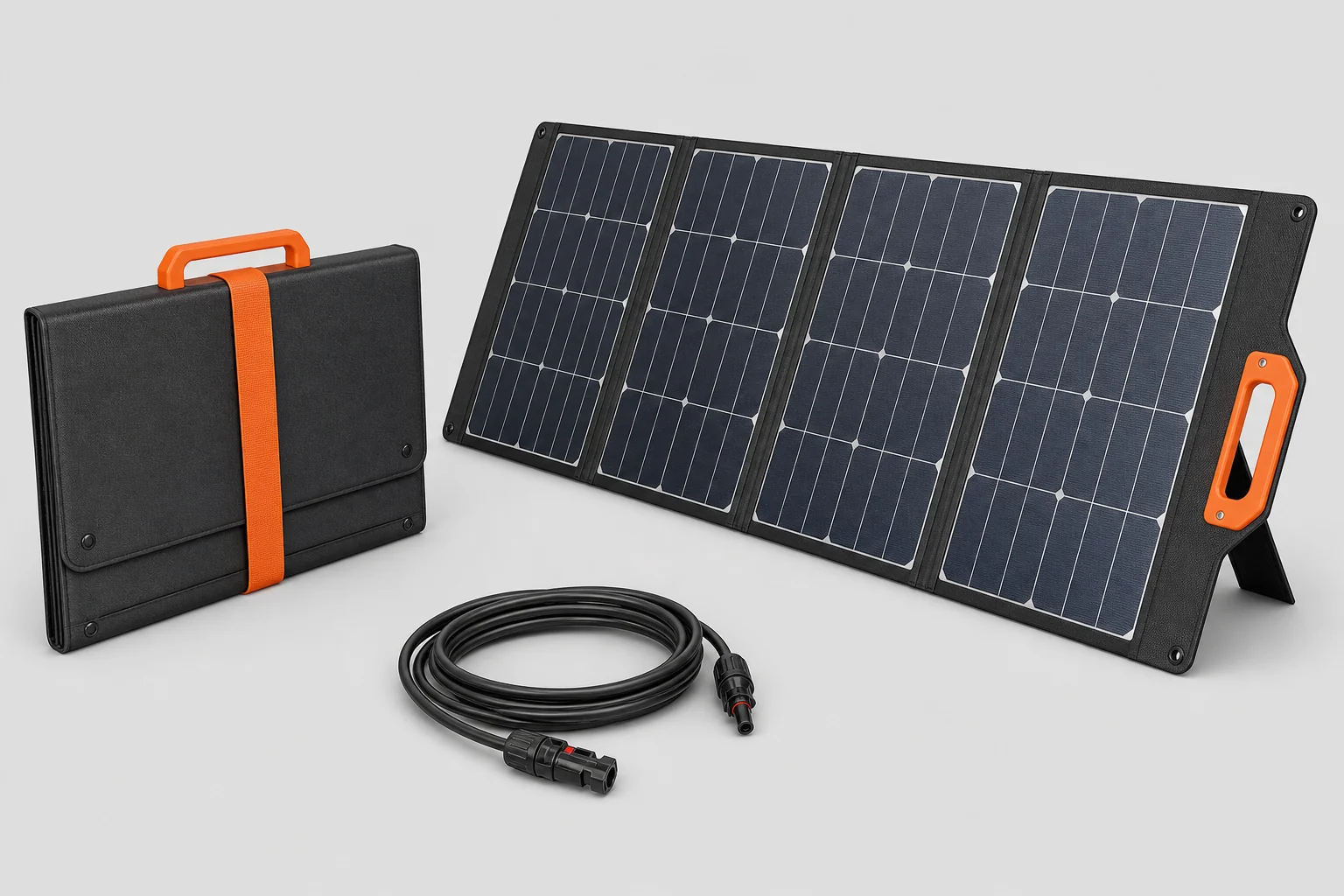
A quarry has no mains connection, and dewatering must not stop. That is exactly where a solution proves itself: dust, vibration, heat, and a site nobody visits daily.
Four points that decide the sizing here
Size dewatering first. It runs through, including at night — and therefore sets the energy demand, not the peak power.
Separate continuous from tool load. Pumps run continuously, drilling and cutting in bursts; two circuits keep the system smaller than one big one.
Check the dust load on site. In crushing plants and on stockpiles every intake clogs — fanless cooling is a prerequisite here, not a marketing feature.
Clarify who recharges. A remote site without a charging route is the real sticking point; if nobody drives out, a generator or a combination stays the right answer.
What storage carries
One unit: lighting, hand tools, instruments and a small pump — the base at remote stations.
Two units in parallel: dewatering plus tools at the same time, without tripping at start-up.
Three units plus distribution: 400 V for larger pumps and crusher ancillaries, spread across three storage units.
P-series parallel power systems
One modular platform. Add parallel units where the load grows — two or three units single-phase, or three units for 400 V three-phase.
Configuration
Units
Rated power
Usable capacity
Weight
Output
P25
1
2,500 W
2.7 kWh
29 kg
230 V / 16 A · single-phase
P25 + P25-D
2
5,000 W
5.4 kWh
≈60 kg
230 V · single-phase · AC230V/20A output
P25 + P25-D
3
7,500 W
8.1 kWh
≈90 kg
230 V · single-phase · AC230V/30A output
P25 + P25-T
3
7,500 W
8.1 kWh
≈90 kg
400 V · three-phase · AC400V/10A output
P25
Units
1
Rated power
2,500 W
Usable capacity
2.7 kWh
Weight
29 kg
Output
230 V / 16 A · single-phase
P25 + P25-D
Units
2
Rated power
5,000 W
Usable capacity
5.4 kWh
Weight
≈60 kg
Output
230 V · single-phase · AC230V/20A output
P25 + P25-D
Units
3
Rated power
7,500 W
Usable capacity
8.1 kWh
Weight
≈90 kg
Output
230 V · single-phase · AC230V/30A output
P25 + P25-T
Units
3
Rated power
7,500 W
Usable capacity
8.1 kWh
Weight
≈90 kg
Output
400 V · three-phase · AC400V/10A output
Wiring
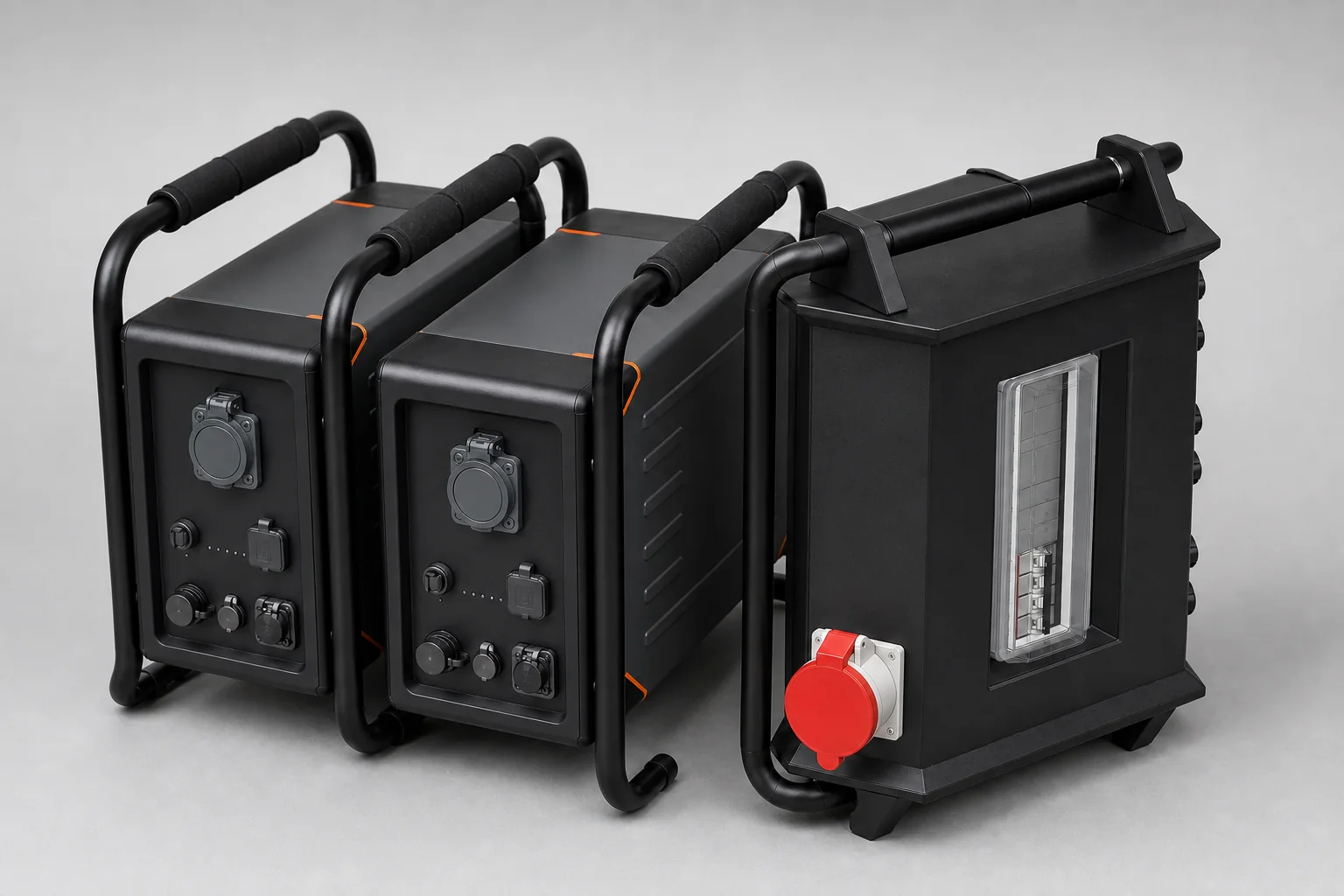
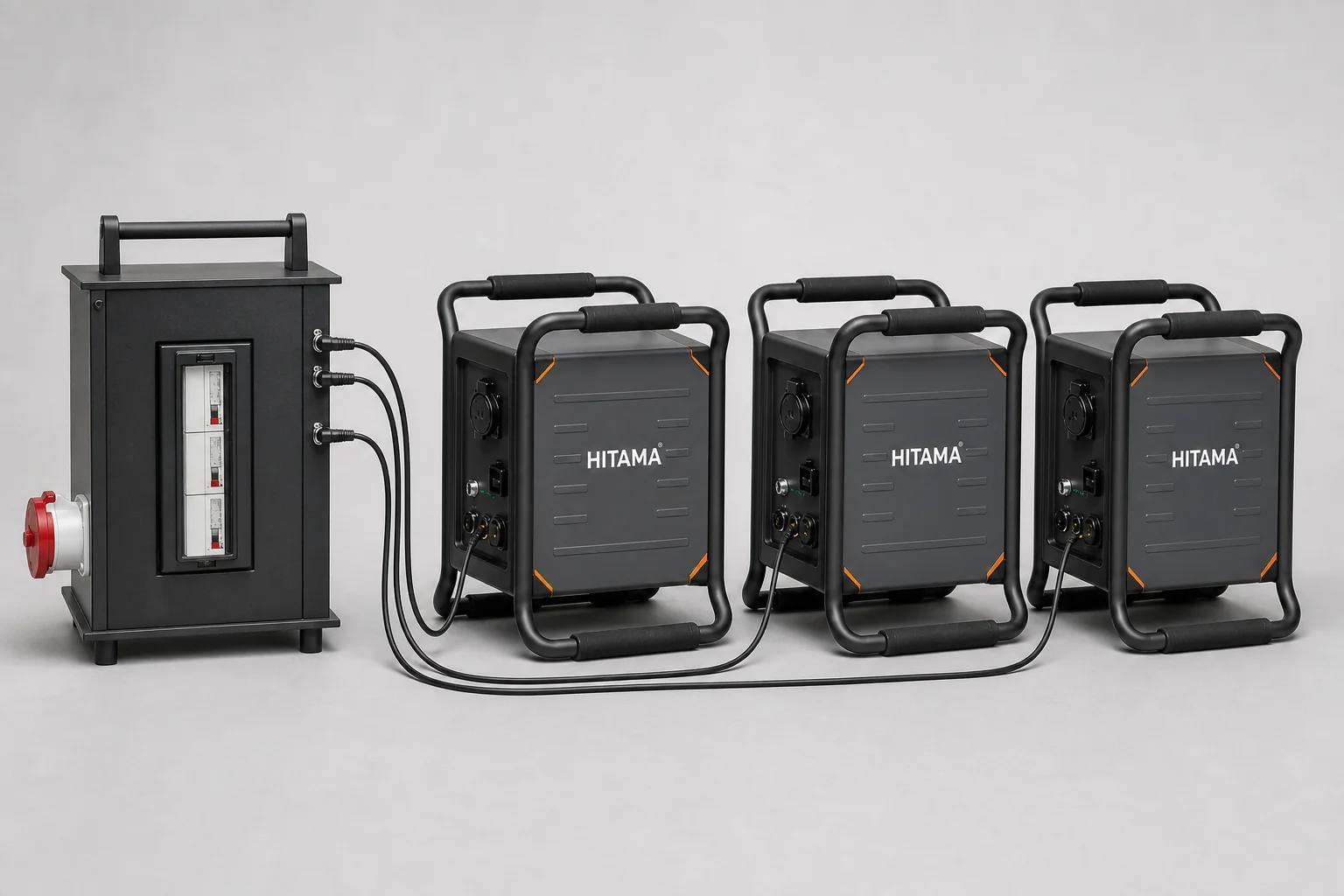
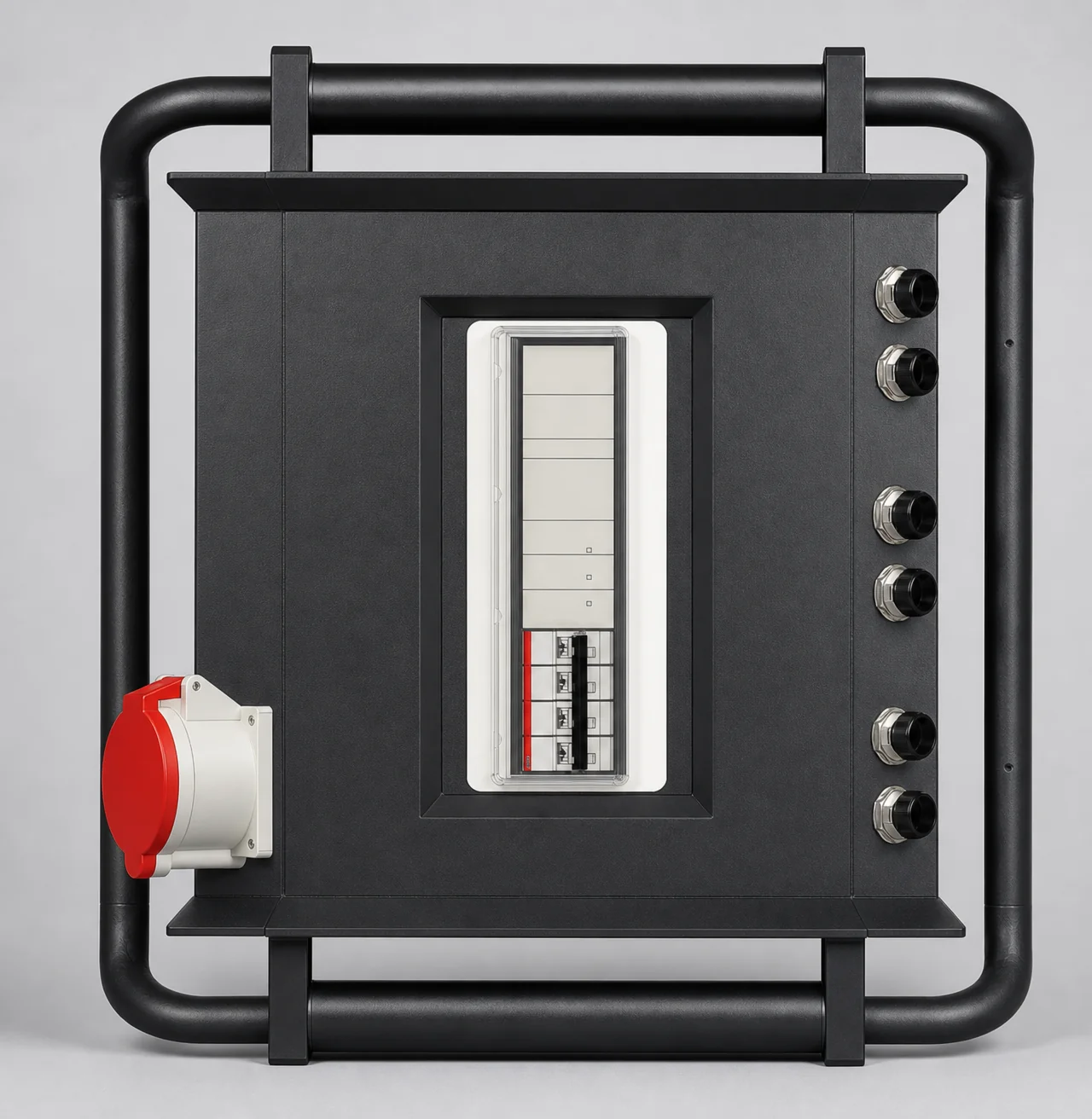
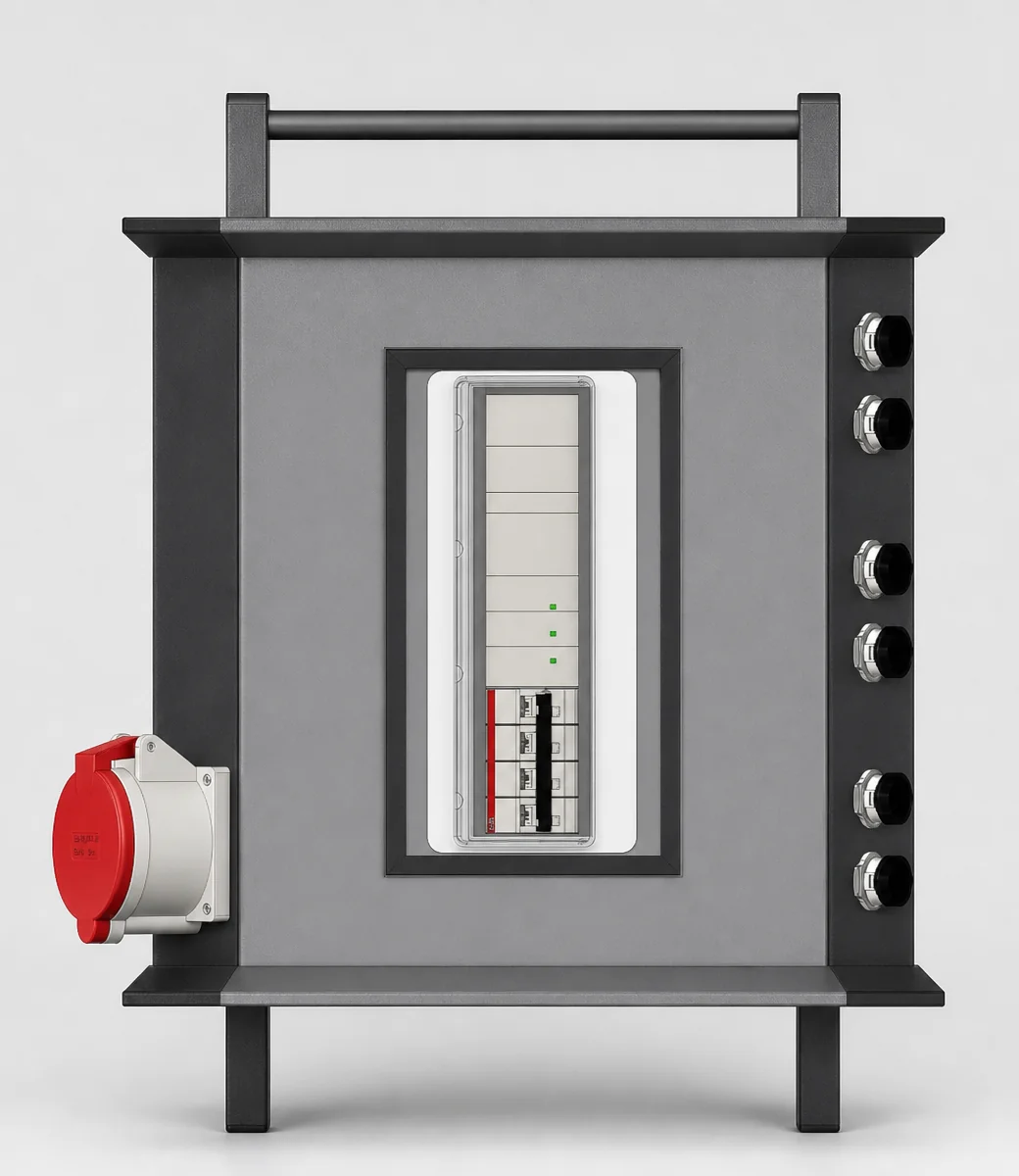
The parallel distribution unit carries one power input and one data input per battery unit, and a single output to the load.
AC230V/20ATwo P25 units, 230 V single-phase.
AC230V/30AThree P25 units, 230 V single-phase.
AC400V/10AThree 230 V P25 units in parallel make 400 V three-phase — all three required, or the system loses a phase.
How the parallel link is wired
Each P25 runs one power cable and one data cable to its own input pair on the distribution unit.
The distribution unit has three input pairs (L1 / L2 / L3); one pair per battery unit.
Only the distribution unit output feeds the load. Battery units are never connected to the load directly.
Each unit keeps its own protective device; no unit back-feeds another.
Three configurations, one platform
Start with a single unit and add parallel units only when the load demands it. Every configuration runs the same battery unit and the same distribution unit.
P25
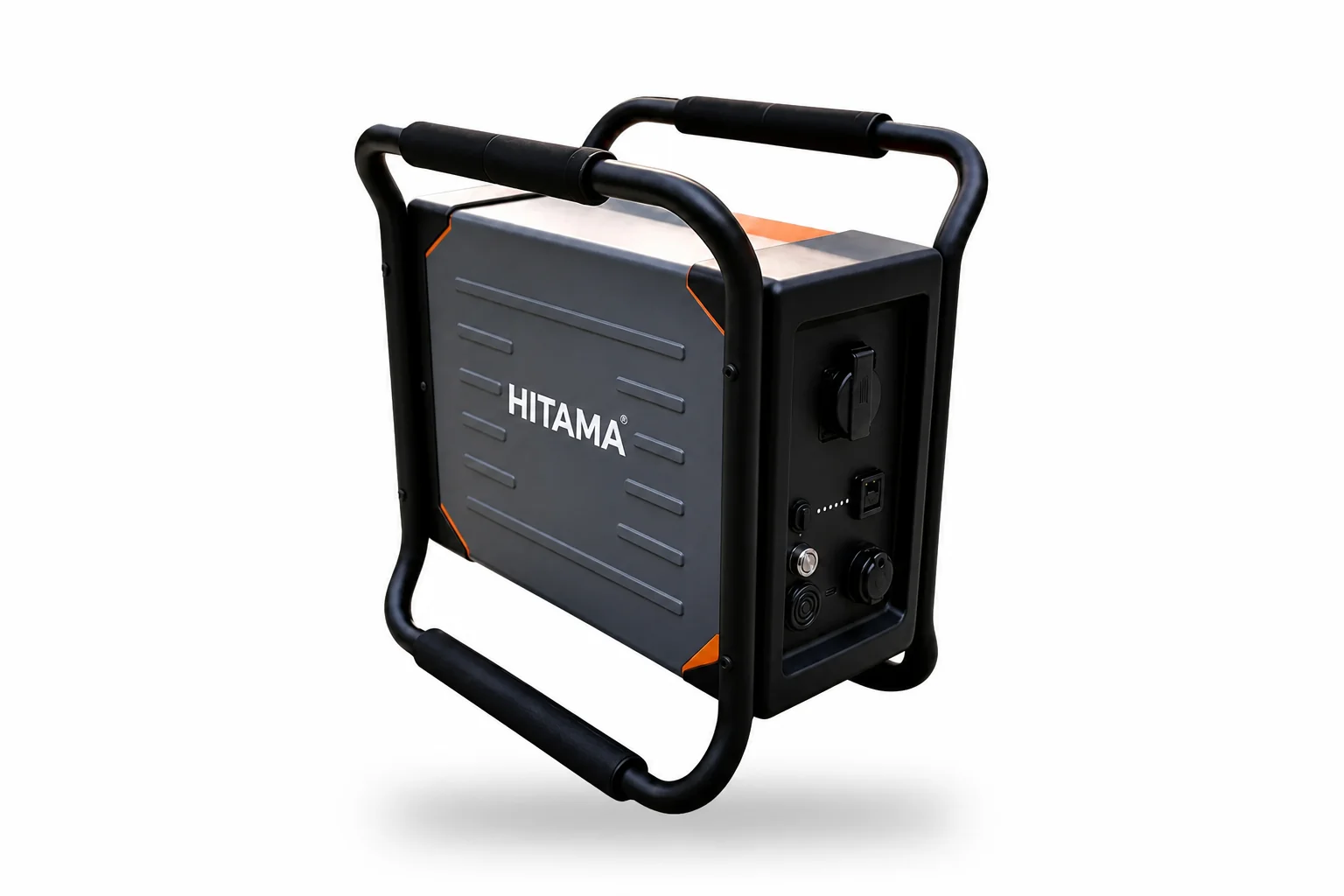
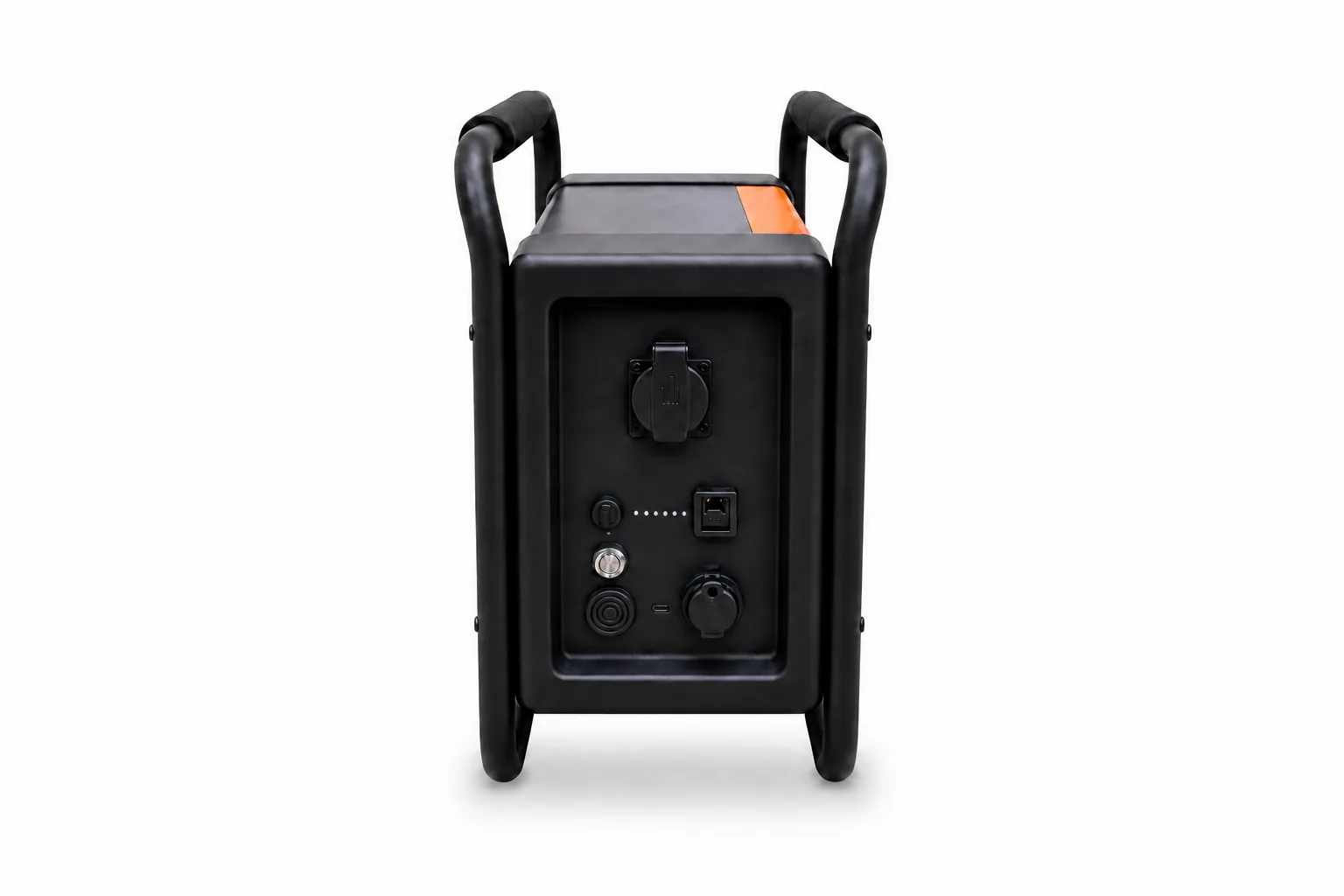
The core unit. A fanless, self-cooling 230 V power station that replaces the combustion generator on site — no exhaust, no idling noise, no fuel run.
Two or three units linked through the parallel distribution unit for 230 V single-phase loads. Power and capacity stack — start with two, add a third when the job needs it.
Three 230 V P25 units in parallel produce the 400 V three-phase supply that runs tools which will not start on single phase. All three are required — remove one and the system loses a phase. Carried and assembled by hand: no crane, no lifting gear.
The questions buyers actually ask before a first order — answered with numbers from our own datasheets, not from a brochure.
What determines sizing in a quarry?
Dewatering first: it runs through, including at night, and sets the energy demand. Peak power follows from the tools, not the other way round.
How often must it be recharged?
That depends on daily energy demand and the charging route. At remote stations the route is the real criterion — if nobody drives out, a generator stays sensible.
Why is dust the main issue here?
In crushing plants and on stockpiles every intake clogs. Fanless cooling is therefore a prerequisite, not equipment.
Can dewatering and tools run in parallel?
Yes, with two units in parallel. A single unit that only just covers the continuous load trips when the tool starts.

 12345678
 1234567891011
 1234567891011