
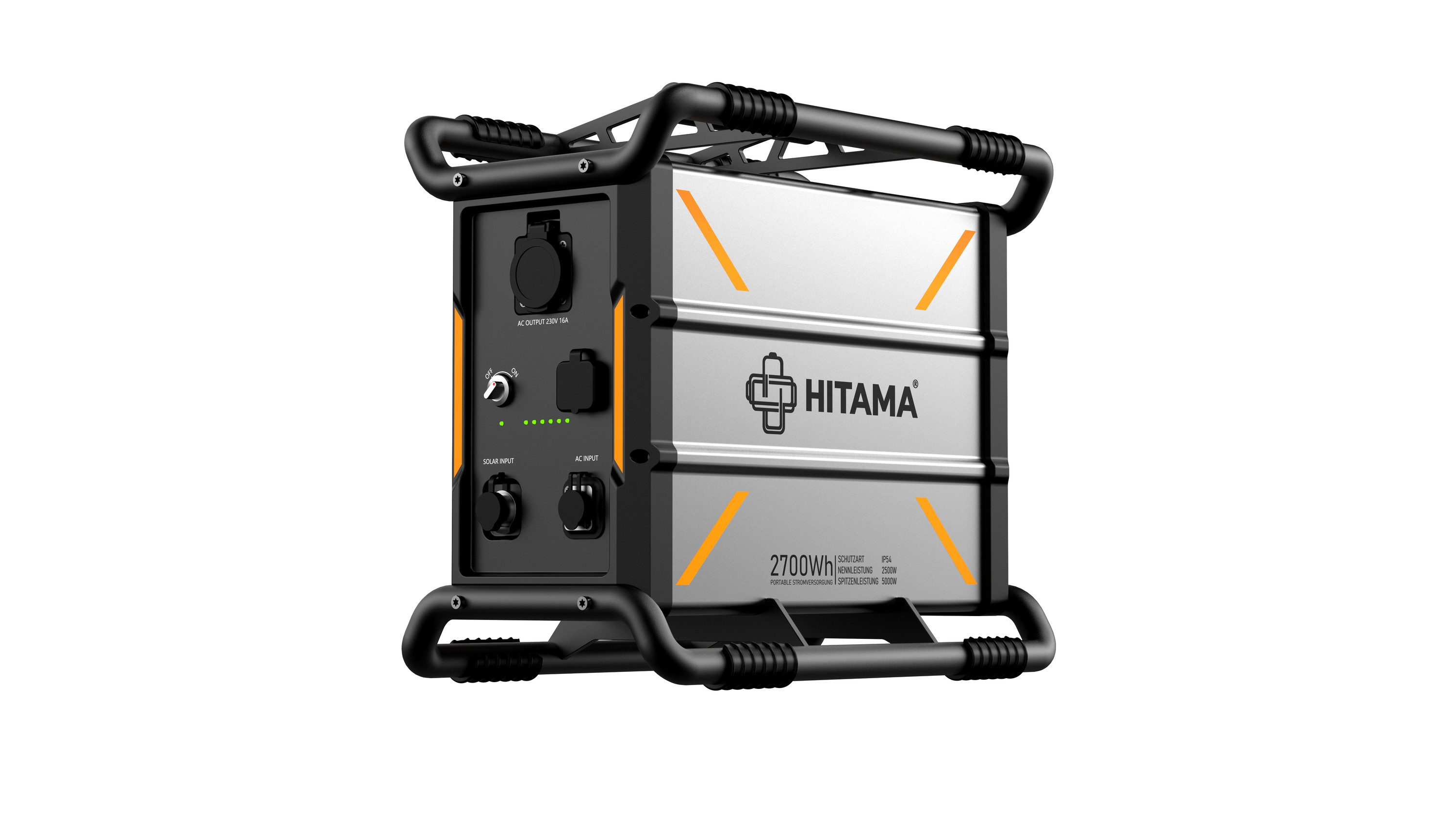
Usable battery capacity is the figure a shift can plan with, and it is always smaller than the nameplate. A unit rated 2.7 kWh and 2,500 W continuous keeps a reserve at the bottom of the pack, loses a slice in conversion and loses more when the pack is cold. It stops being the deciding number when the shift contains a motor start, because a start is a peak problem rather than a capacity problem.
What usable battery capacity leaves out
Two numbers describe the same pack. The plate states stored energy; the crew needs withdrawable energy. Between them sits a protection strategy the buyer meets on night two.
1. Where does the difference go?
Reserve, conversion, temperature — roughly in that order. The battery management system stops discharge before the pack is empty, so the depth of discharge it allows is a factory decision. The inverter turns direct current into 230 V alternating current, and inverter losses are part of every hour it runs. Cold slows the chemistry.
2. Why the difference is not a defect
Each of the three keeps the pack usable next year. Removing the reserve buys a few percent tonight and costs cycle life; conversion losses are physics; the cold is weather. A supplier offering rated capacity as withdrawable describes a pack at its limit.
Rated capacity is a purchase figure, not a plan figure
Procurement compares rated capacity because it is comparable. Every supplier prints kilowatt-hours on a plate, and a tender needs one number per column. That is fine for choosing between offers, and wrong the moment the number goes into the operations plan, which divides withdrawable energy by a load.
A spreadsheet that multiplies units by 2.7 kWh is always optimistic. Three units are not three nameplate figures in the field, they are three times the usable battery capacity that survives reserve and weather. The shortfall shows at four in the morning, when a second unit must be driven out.
Planning a shift in usable battery capacity
Start with the load list, end with a unit count. The table holds only figures HITAMA publishes for the P25; the withdrawable share comes from your own measurement.
| Item | Figure | What it decides |
|---|---|---|
| Rated energy, one unit | 2.7 kWh | ceiling a stock plan must discount |
| Continuous output | 2,500 W | which loads run at the same time |
| Charge input, 230 V socket | 500–1,500 W | how long the gap takes to close |
| Two units, 230 V | 5,000 W / 5.4 kWh | capacity and headroom in one step |
| Case protection | IP54 | splash, not immersion |
The arithmetic on the label is the optimistic version. A command post drawing 350 W for lighting, radios and chargers runs 7.7 hours on label arithmetic. On the withdrawable figure the shift is shorter — the margin a deployment needs when the handover slips. The wider sequence is in relief deployments and their phases.
Ask for the measured figure in writing. A supplier who names the withdrawable energy for a given load and temperature describes a tested unit; one who repeats the plate describes a label.
Where usable capacity stops being the question
Capacity is not peak, and it is not time. A flood pump or a welder asks for several times its running load at the start; a full unit can still refuse it.
Several days without a recharge is another class of machine. A 2.7 kWh pack one person carries is built for a shift and a handover; a relief camp on a failed grid is a fleet question.
IP54 is splash protection, not a diving rating. A unit in a flooded cellar is outside its case rating. Recharging is its own task: from an ordinary socket it runs at 500–1,500 W and takes hours.
Questions a stock planner asks
1. Is 2.7 kWh per unit a safe planning figure?
No. Treat 2.7 kWh as the ceiling, plan below it, and confirm the real figure once with a load and a clock. The gap between the two numbers is the reserve, the conversion and the temperature doing their work, and it is the reason a stock plan needs a margin.
2. Does a larger unit remove the gap?
It moves the gap. A parallel pair raises the ceiling to 5,000 W and 5.4 kWh at 230 V, and the withdrawable share stays smaller than 5.4 kWh. What changes is the number of handovers per night.
3. Are a shortfall in hours and a shortfall in peak the same problem?
No. Hours are bought with energy: a second unit adds 2.7 kWh of rated capacity. A start is bought with headroom: the same pair delivers 5,000 W continuous instead of 2,500 W, which is a different purchase.
4. How fast does the gap close again?
Recharging runs at 500–1,500 W from a normal 230 V socket, so a refill is hours rather than minutes. That window belongs in the plan beside the load list: a charging unit is not on the line.
Send us the load list, the hours and where the unit must stand; we will work the withdrawable figure back from there. The sector archive is civil protection and disaster relief; the hardware is on the P25 series.