
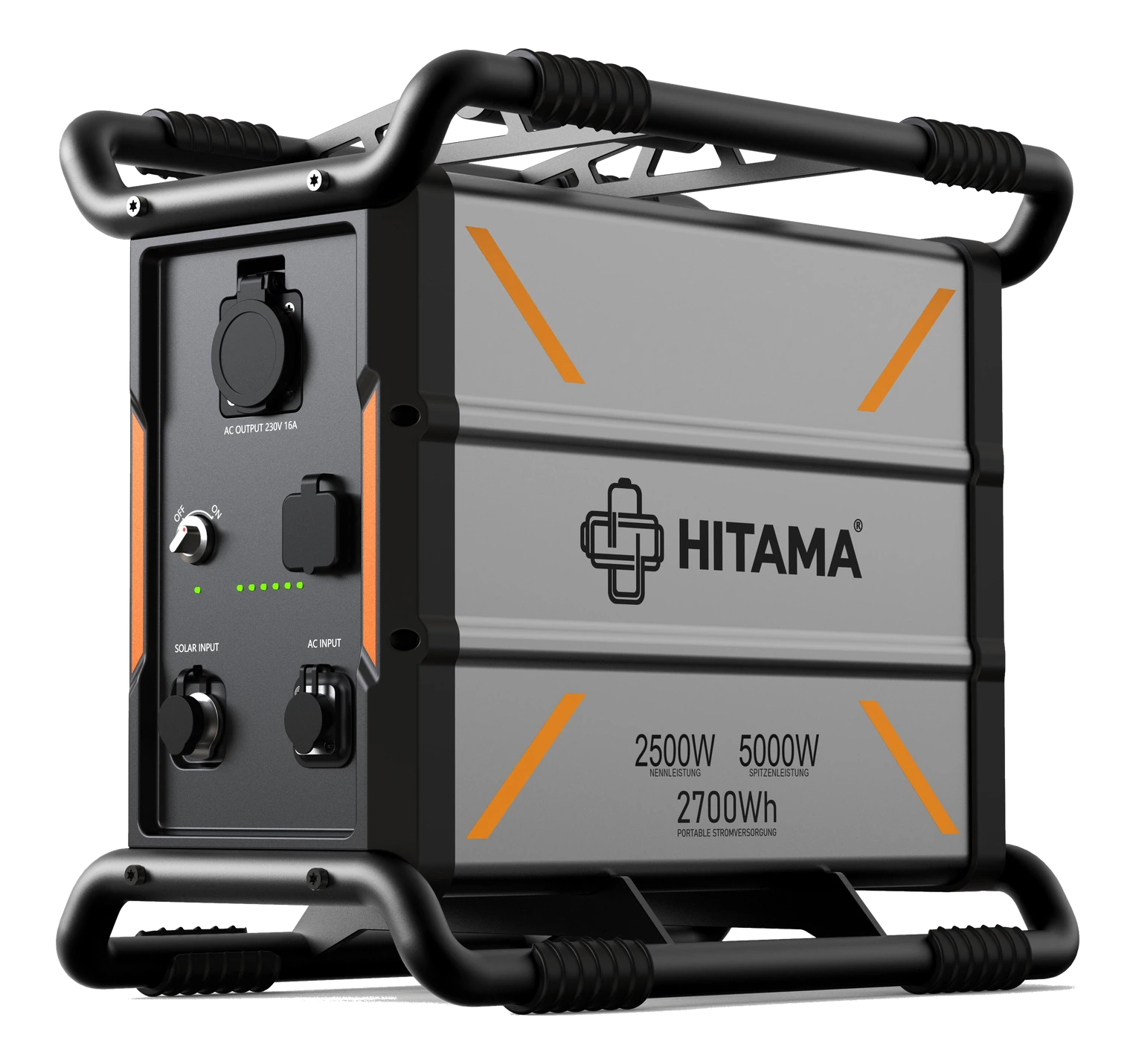
Anyone building their own brand for mobile storage rarely underestimates the hardware. What gets underestimated is who ends up answering for the device afterwards.
Three levels, not two
In trade, "OEM" is often used as a switch: either catalogue goods or your own product. In practice there are three levels, and they differ less in the device than in the work behind it.
Level one — standard programme. You carry the existing configurations under our brand. The fastest route, because documentation and designations already exist. Also the route with the least differentiation: what you sell, someone next to you sells too.
Level two — own brand with adaption. Logo printing, different equipment, your own packaging. The device stays technically the same but appears under your brand. This is where many start — and where the first disappointment waits for anyone expecting the logo to change the hardware. It does not.
Level three — OEM project. This is where development starts: a configuration that does not yet exist in the programme, with tooling, a sample phase and a commitment that only becomes possible after review. Anyone taking this route should plan it as a project, not an order.
Alongside them sits a fourth, often overlooked variant: a mix of standard and adaption. It is rarely written out, yet in practice it is often the most honest answer — because it leaves the device where it is proven and changes only what has to change.
What separates OEM and ODM
With OEM the specification comes from the customer and we build to it. With ODM we develop the configuration together and the customer distributes it. The difference is not quality — it is where the specification comes from, and who answers for it.
In practice: bringing your own specification is a different role from carrying an existing configuration under your own brand. Both are fine. You should just know which of the two you are in before talking about dates.
The question rarely asked
At level three it is not only the device that changes but the work behind it — and the question of who carries responsibility for the documents. That is why such a project starts with a question, not a logo: who signs?
Once that is settled, tooling and lead time become calculable. Before that, they are not.
What we do not promise
Level two does not turn into a new housing. An enquiry does not turn into a date before configuration, voltage and quantity are on the table. And a logo on a device does not turn a catalogue product into your own development — it makes it your product, with everything that entails.
Knowing this beforehand saves the round in which everyone discovers they were talking about two different things.
---
*The three levels and the OEM/ODM distinction are described on our dealer page: Powerstation wholesale & OEM. It also states what we deliver as a partner — and what expressly not.*