
On 13 November Germany's Federal Statistical Office published wholesale prices for October 2026. One line in it concerns every site manager and every rental fleet: mineral oil products stood 47.6 percent above October 2025. Wholesale selling prices overall rose 8.8 percent year on year, after 8.7 percent in September and 6.8 percent in August.
One caveat belongs in every sentence built on that figure: this is the wholesale price for mineral oil products, not the diesel price at the pump. And it is a price index, not a calculation for a single machine. Anyone turning it into a cost statement for their own yard has to use their own consumption, not the index.
The direction, though, is unambiguous, and it is uncomfortable for anyone who budgets site power by the litre. The statistical office names the fighting in Iran and the Middle East as the cause; as a result, wholesale prices for energy products in particular had risen. Month on month, mineral oil products added another 0.9 percent. The last higher rise in overall wholesale prices was in February 2023.
A second finding from the same week adds to it. Corporate insolvencies in construction ran at 71.9 cases per 10,000 companies from January to August 2026 – behind transport and warehousing (97.6) and hospitality (80.1), the third-highest rate of any sector. In total, 17,252 corporate insolvencies were registered in the first eight months, 6.6 percent more than a year earlier.
So what does that mean for power on site? A pattern anyone knows who has spent a day supplying a cutter, a compressor and two chargers at once: the generator runs because something might start at any moment – not because power is drawn continuously. But you pay for the running, not for the load.
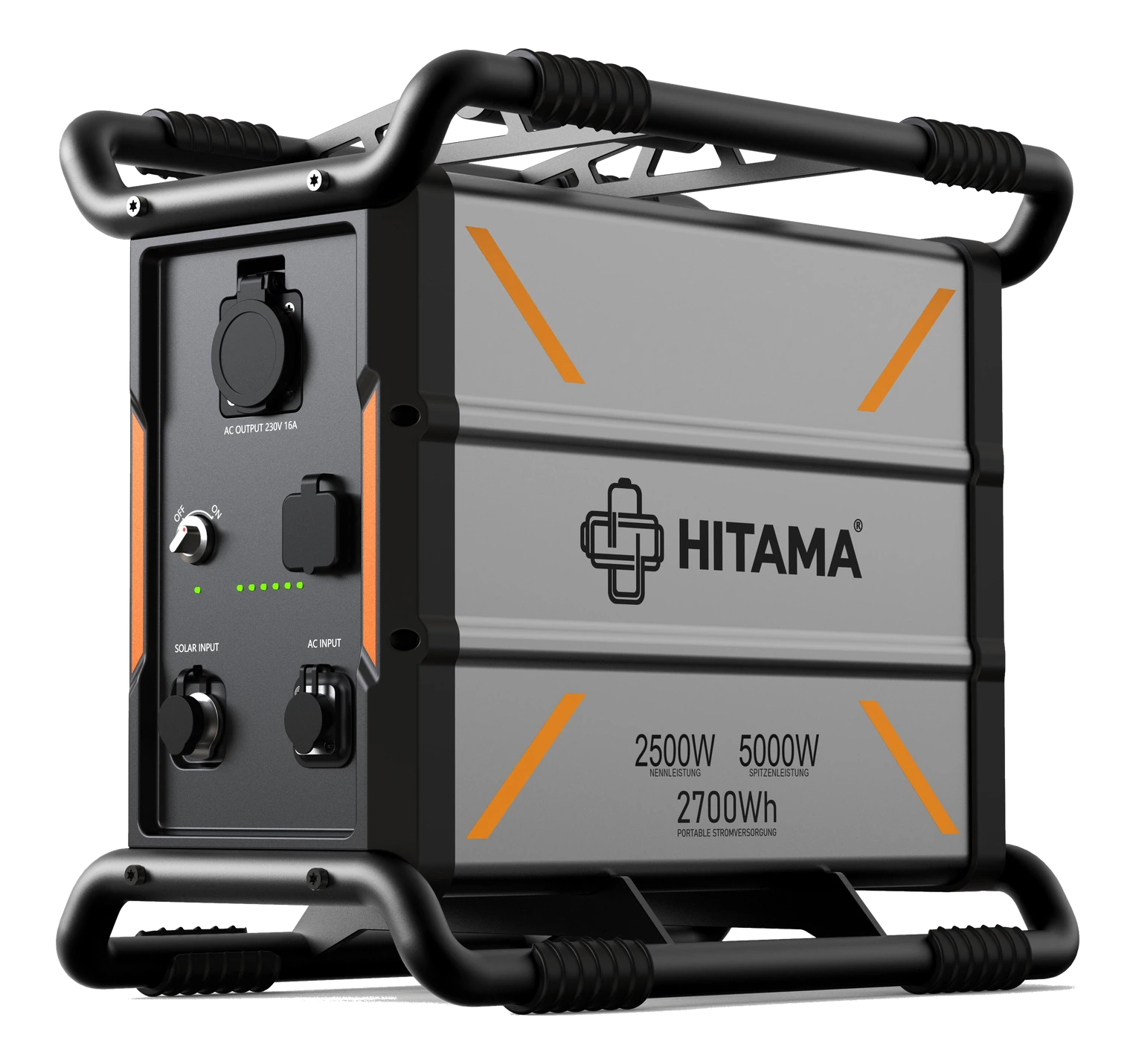
That is exactly where the discussion usually goes wrong. "Generator or battery" is not a matter of belief, and not a question answered by a data sheet, but a question of load profile: which consumers run when, for how long, and with what starting current? A battery unit with 2.7 kWh usable capacity and 2.5 kW rated output (5 kW peak) lasts, at full load, arithmetically a good hour – simple arithmetic from two data sheet values, not a measurement. Too little for a morning with two cutters; possibly enough for an hour of core drilling, a test, or an evening event. Whoever does not write that down beforehand buys by feel.
The Wiesbaden index only says that one side of the calculation has become more expensive. The other side – how many hours the machine actually stands under load – appears in no index. It appears in your own operating log.
Sources (official, retrievable):
Wholesale prices October 2026, press release No. 396 of 13 November 2026:
https://www.destatis.de/DE/Presse/Pressemitteilungen/2026/11/PD26_396_61281.html
Corporate insolvencies August 2026, press release No. 398 of 13 November 2026:
https://www.destatis.de/DE/Presse/Pressemitteilungen/2026/11/PD26_398_52411.html