Renting out battery storage: what a rental fleet really needs per unit
Anyone renting out battery storage is not buying electricity, but utilisation. This page works backwards from the rental job: which power class fits which rental, how parallel operation changes fleet building, and where the limits of storage in rental lie. It addresses rental companies — we build and sell the units, we do not rent them out ourselves.
Five questions from the rental desk before ordering
Which rental job should the unit carry? Jobsite power for trades, welding work, events or municipal work are four different load profiles. The job decides power class and accessories, not the wish for the largest number in the datasheet.
How long is the unit with the customer, how long in the depot? Charging time between two rentals is part of the utilisation calculation, not a side issue. Whoever fails to plan it owns equipment that is formally available and practically booked.
Who carries it and who loads it? 29 kg goes into a van with two people, around 90 kg needs a ramp or a trailer. That decides whether a unit actually leaves the yard in daily business or is only booked for planned jobs.
Which outlets does the renter expect? 230 V at 16 A covers the usual tool park. Anyone advertising 400 V three-phase must also meet the expectation that three phases are really present — otherwise the unit comes back.
How is the renter briefed? Storage operated like a genset does not last. Rental needs a short, repeatable handover: plug in, switch on, show the load limit, take it back.
Three rental jobs, three configurations
For day rental to trades: the 2,500 W class with 5,000 W peak and 2.7 kWh at 29 kg. One unit, one person, one van — this is the unit that actually circulates, because it gets taken along without planning.
For welding and three-phase loads: the 7,500 W class with 15,000 W peak, 8.1 kWh and 400 V. Around 90 kg means ramp, trailer and a second person; in return it replaces set-ups that otherwise only run on a genset.
For events and municipalities: two or three units in a bank. Output and capacity add up and the load spreads across several enclosures — the route when a single unit will not carry the whole day.
For a mixed fleet: a base stock of small units plus a few large ones. Small units generate turnover, large units generate margin. Holding only large units is the most common fleet-building mistake — and the most expensive, because the investment then stands still.
P-series parallel power systems
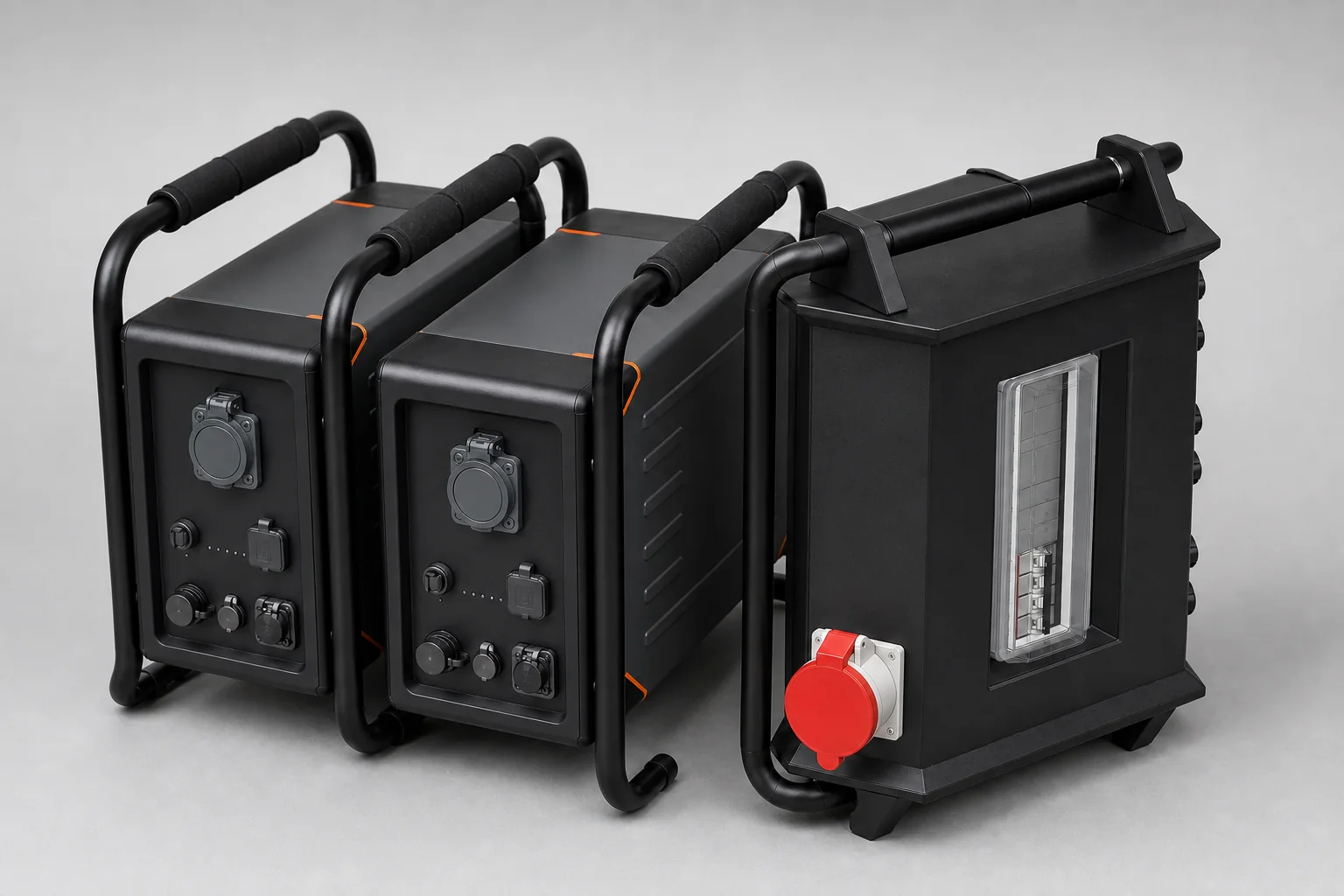
One modular platform. Add parallel units where the load grows — two or three units single-phase, or three units for 400 V three-phase.
Configuration
Units
Rated power
Usable capacity
Weight
Output
P25
1
2,500 W
2.7 kWh
29 kg
230 V / 16 A · single-phase
P25 + P25-D
2
5,000 W
5.4 kWh
≈60 kg
230 V · single-phase · AC230V/20A output
P25 + P25-D
3
7,500 W
8.1 kWh
≈90 kg
230 V · single-phase · AC230V/30A output
P25 + P25-T
3
7,500 W
8.1 kWh
≈90 kg
400 V · three-phase · AC400V/10A output
P25
Units
1
Rated power
2,500 W
Usable capacity
2.7 kWh
Weight
29 kg
Output
230 V / 16 A · single-phase
P25 + P25-D
Units
2
Rated power
5,000 W
Usable capacity
5.4 kWh
Weight
≈60 kg
Output
230 V · single-phase · AC230V/20A output
P25 + P25-D
Units
3
Rated power
7,500 W
Usable capacity
8.1 kWh
Weight
≈90 kg
Output
230 V · single-phase · AC230V/30A output
P25 + P25-T
Units
3
Rated power
7,500 W
Usable capacity
8.1 kWh
Weight
≈90 kg
Output
400 V · three-phase · AC400V/10A output
Wiring
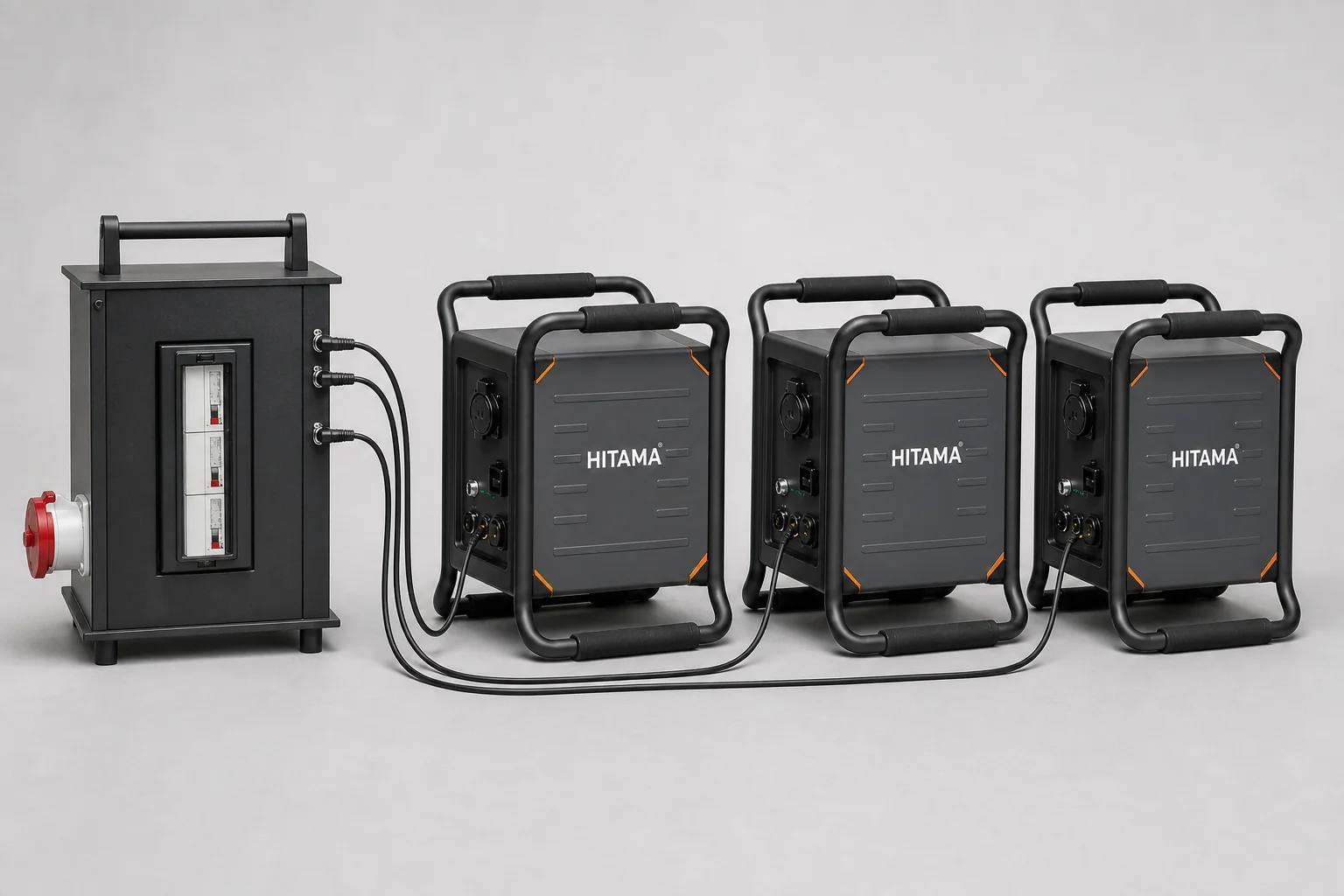
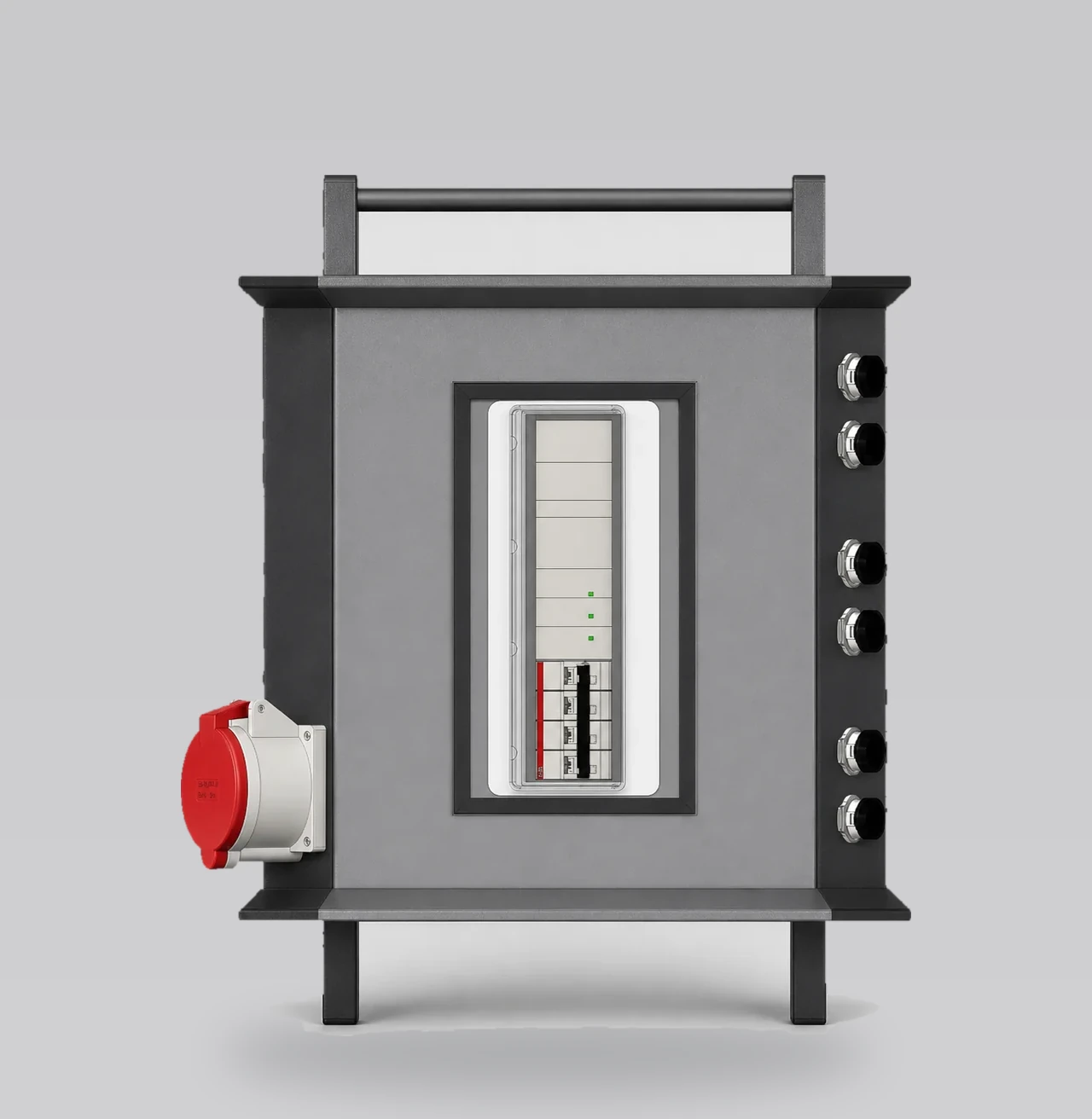
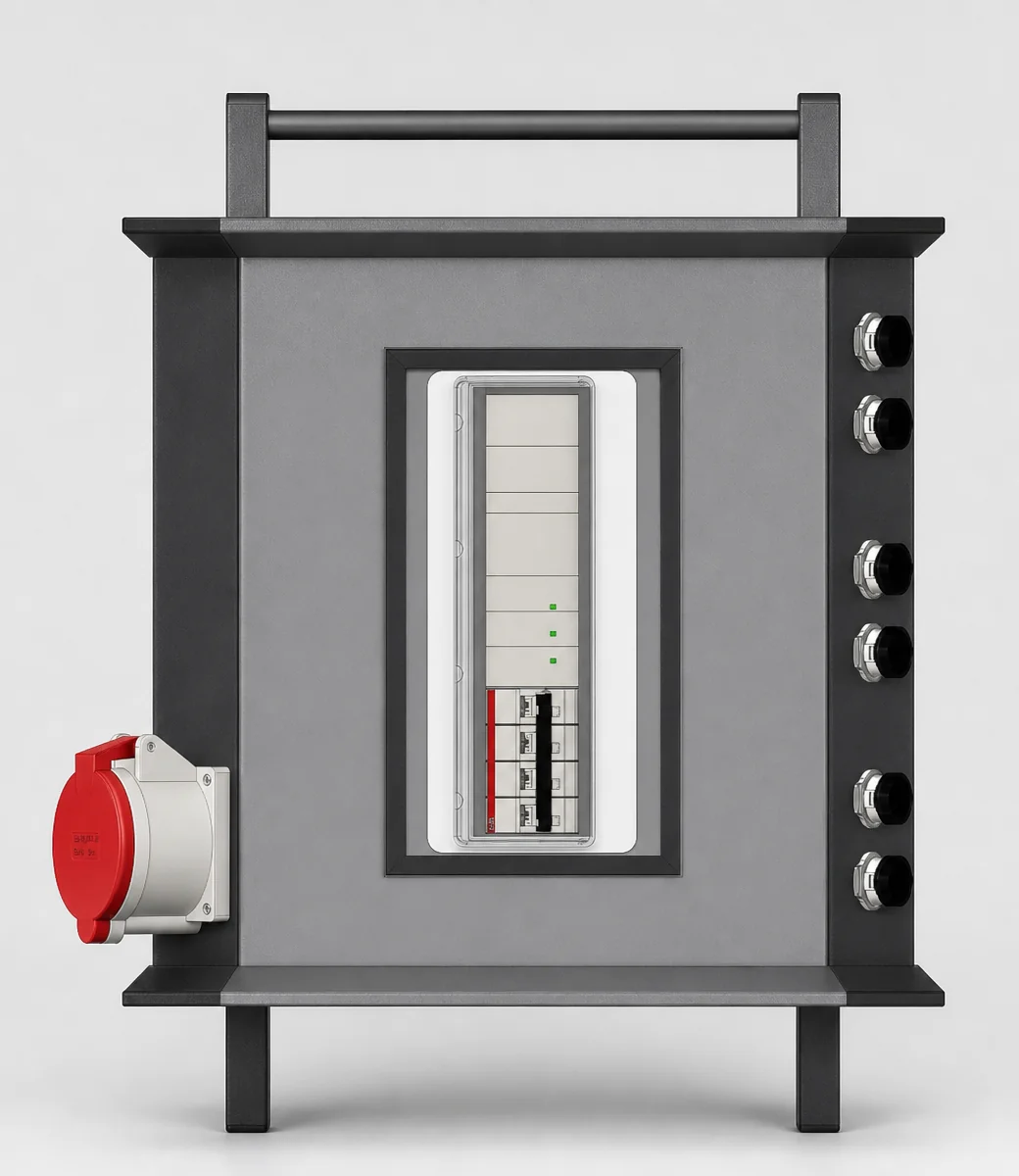
The parallel distribution unit carries one power input and one data input per battery unit, and a single output to the load.
AC230V/20ATwo P25 units, 230 V single-phase.
AC230V/30AThree P25 units, 230 V single-phase.
AC400V/10AThree 230 V P25 units in parallel make 400 V three-phase — all three required, or the system loses a phase.
How the parallel link is wired
Each P25 runs one power cable and one data cable to its own input pair on the distribution unit.
The distribution unit has three input pairs (L1 / L2 / L3); one pair per battery unit.
Only the distribution unit output feeds the load. Battery units are never connected to the load directly.
Each unit keeps its own protective device; no unit back-feeds another.
Three configurations, one platform
Start with a single unit and add parallel units only when the load demands it. Every configuration runs the same battery unit and the same distribution unit.
P25
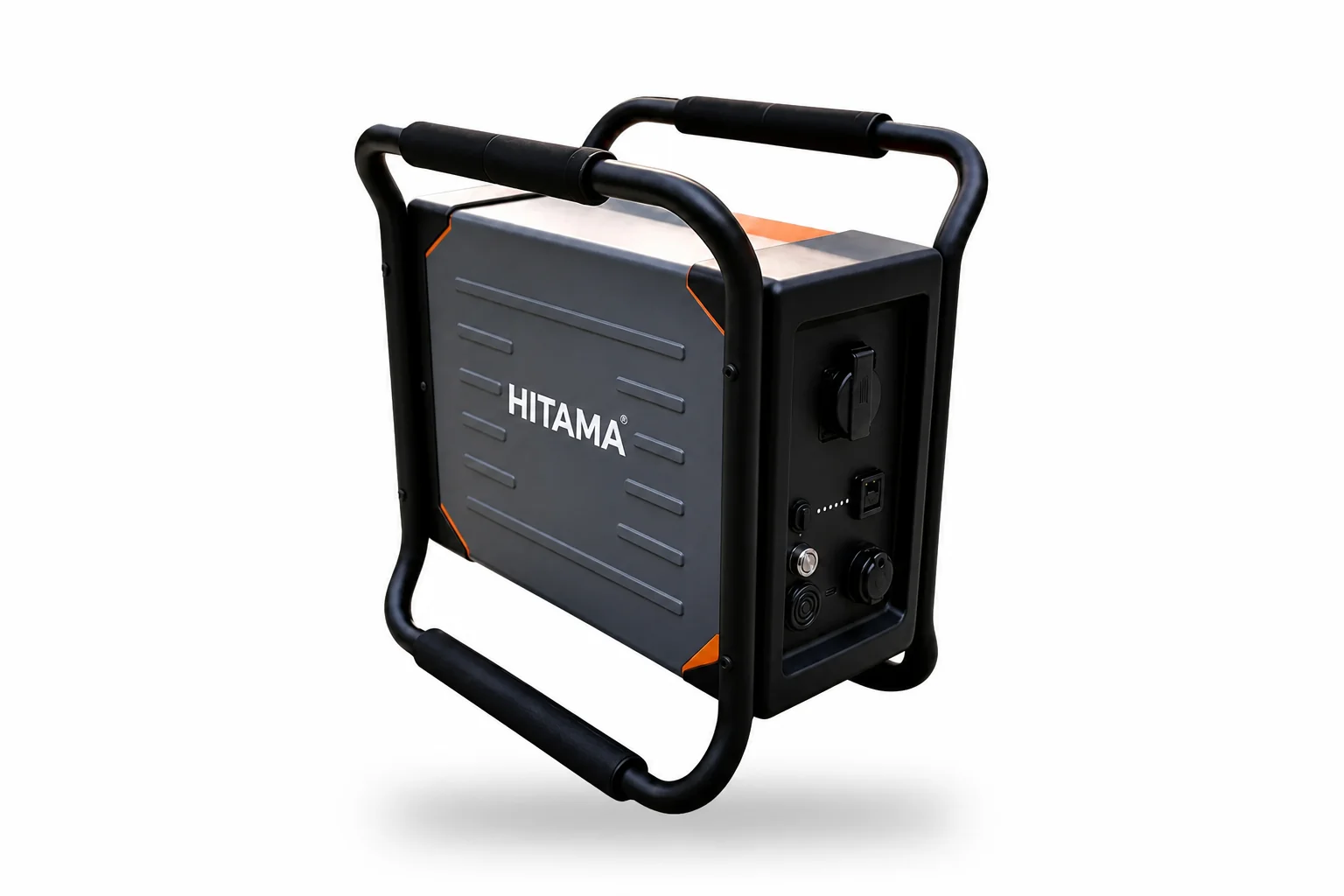
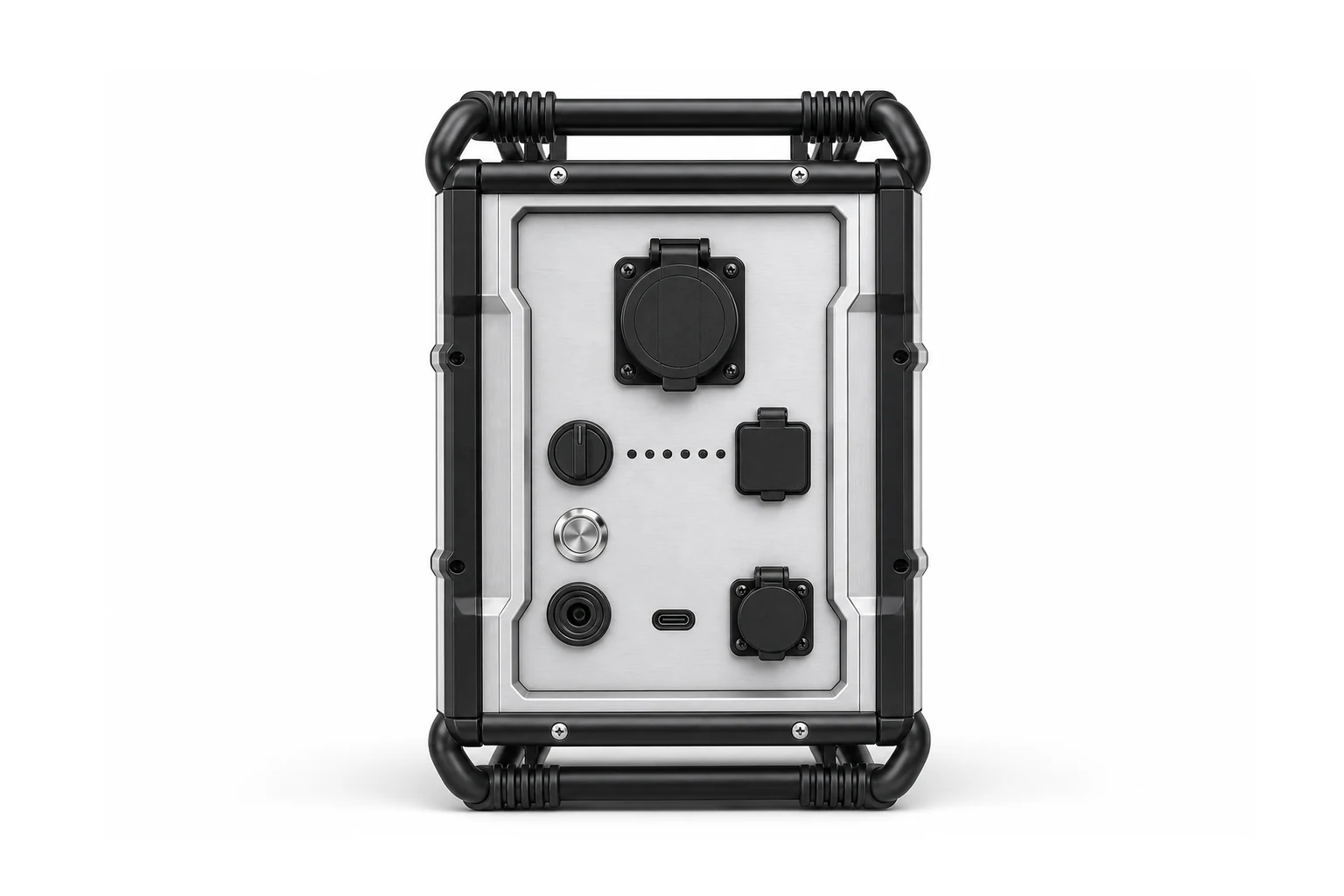
The core unit. A fanless, self-cooling 230 V power station that replaces the combustion generator on site — no exhaust, no idling noise, no fuel run.
Two or three units linked through the parallel distribution unit for 230 V single-phase loads. Power and capacity stack — start with two, add a third when the job needs it.
Three 230 V P25 units in parallel produce the 400 V three-phase supply that runs tools which will not start on single phase. All three are required — remove one and the system loses a phase. Carried and assembled by hand: no crane, no lifting gear.
What we supply as manufacturer — and what we do not
We build and sell the units. We do not rent them out ourselves and do not act as a rental company in the market — that is our partners' role.
OEM and ODM: logo printing, a different equipment set and adapted configuration are possible. Whether it pays depends on volume and tooling; we say beforehand what means effort and what does not.
The datasheet with technical data is part of the delivery. For rental it is the basis of every handover — and the basis for the renter knowing the load limit.
Prices and minimum quantities are deliberately absent from this page. Both belong in a quotation, because they depend on configuration, volume and target market.
Why storage works in rental — and where it does not
No refuelling, no smell, no oil: the unit can be placed in flats, basements, halls and stairwells. That is exactly where a genset fails not on power but on permission.
No engine noise: night work, residential areas, events with neighbours. Storage answers a noise condition, not a power wish.
No cold start in frost, no carburettor, no choke. In rental this counts more than in own use: a unit that will not start at the customer always costs a trip.
The first limit is energy per day. Capacity divided by continuous load gives runtime; anyone promising eight hours of continuous load needs several units or a genset.
The second limit is the charging route. A rental company without charging capacity in the depot should settle that question before buying units, not after.
That is why a genset stays sensible in the range: for long continuous duty, for large loads and as a fallback. A rental business offering both does not lose the enquiry to a competitor.
All power, capacity and weight figures on this page are manufacturer's data, not measurements. Four details are enough for a fleet conversation: which rental jobs to cover, how many units circulate, whether 400 V is needed, and how you charge in the depot. That produces a split, not a price list.
The questions buyers actually ask before a first order — answered with numbers from our own datasheets, not from a brochure.
Does HITAMA rent out battery storage itself?
No. We build and sell the units to dealers and rental fleets. Renting to end customers is handled by our partners — which is why this page describes what rental companies need for fleet building, not what a rental costs.
Which unit fits which rental job?
Day rental to trades: 2,500 W with 5,000 W peak, 2.7 kWh, 29 kg. Welding and three-phase loads: 7,500 W with 15,000 W peak, 8.1 kWh, 400 V, around 90 kg. Events and municipalities: two or three units in a bank. The job decides, not the largest number.
How many rentals per day are possible?
That cannot be answered in general and depends on return time, charging route and handover. Anyone planning circulation must include charging time between rentals — that is the real bottleneck, not unit availability.
How is it charged between two rentals?
From the existing mains supply; for the 2,500 W class at 230 V and 16 A. How long that takes depends on state of charge and the protection at the depot — we do not quote a blanket charging time.
Does parallel operation add power or capacity?
Both. Two units in parallel add output and capacity. For rental this is the cheaper route to a larger solution, because the existing unit stays in the fleet instead of being replaced.
What happens in cold weather?
The stated range ends at −10 °C. For rental that means: do not leave units outdoors overnight and keep the winter handover short. Storage that starts cold becomes a topic at the customer.

 12345678
 1234567891011
 1234567891011