
An early-spring day in landscaping looks like eight hours on paper. In reality it is four hundred cuts, walking between them, one tool change, and a break during which nobody switches the machine off because the next property is already waiting.
That is where the thinking goes wrong. The hour on the datasheet is an arithmetic figure: capacity divided by rated power, under laboratory conditions, without inrush current, without dust, without sun on the housing. A working day in green maintenance is not made of rated power. It is made of many short load peaks and long stretches in which the machine runs without working.
What matters in the field are two numbers that appear on no tool datasheet: the inrush current of the tool, and the duty cycle in the real rhythm of the day. Comparing capacity alone compares the tank, not the consumption.
Two kilowatts rated, five kilowatts peak
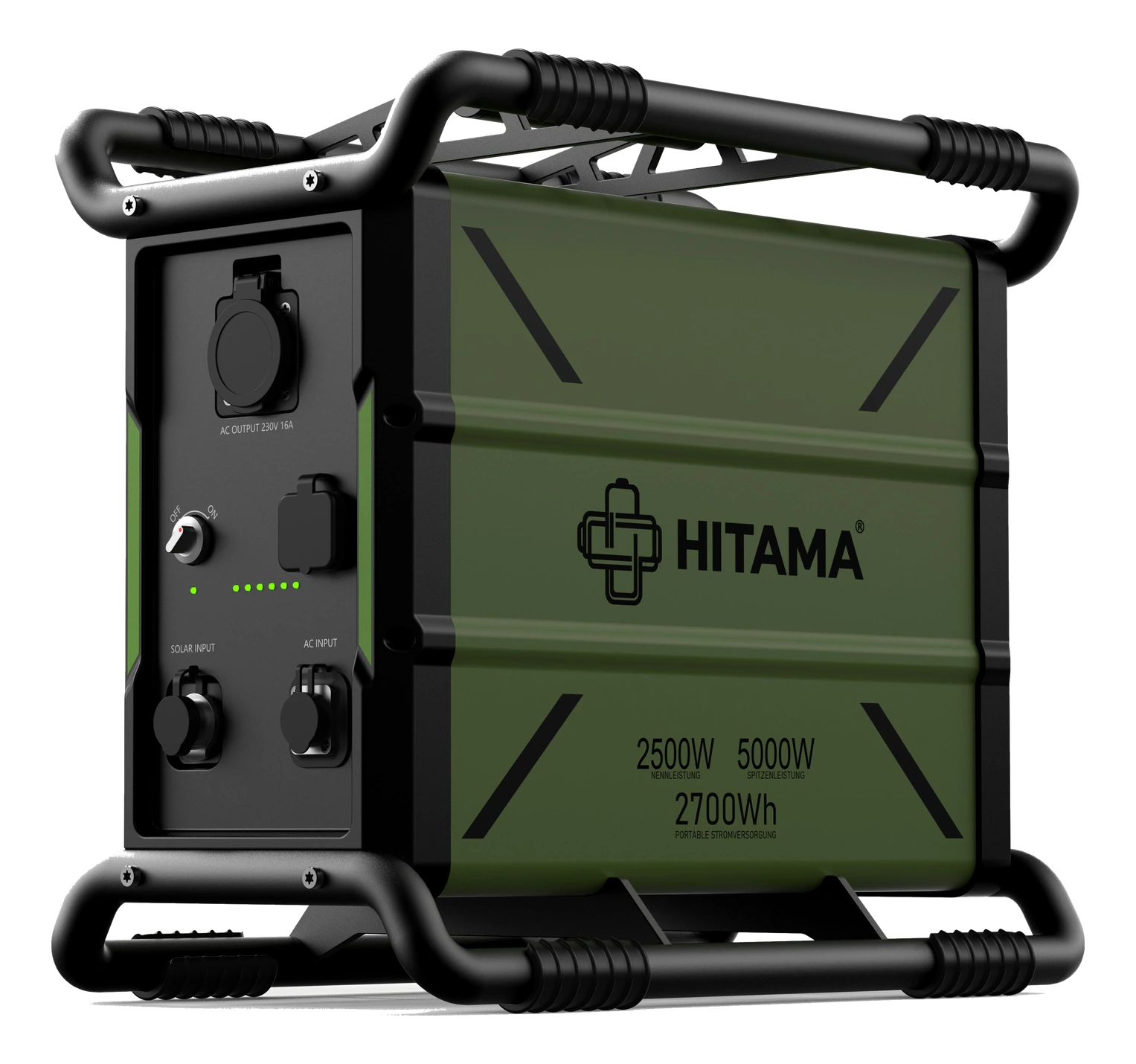
The P25 is quoted at 2.7 kWh, 2.5 kW rated and 5 kW peak. The second figure is the interesting one. A motor draws a multiple of its rated power at start-up. When that peak is available, the voltage does not collapse and the motor spins up instead of humming and tripping the breaker. The peak is therefore not a brochure value but the number that decides between "runs" and "does not run".
For day-to-day work this means the bottleneck is not capacity but the moment three tools start at once.
The site has a vote
Green cuttings mean dust, and dust means heat, because no airflow reaches the cooling fins any more. The P25 has no fan: it dissipates heat through the housing. A fan is a good idea in an office and, on a dry and dusty property, an opening through which dirt travels into the heat sink. IP54 and 29 kg say the same thing from the other side: sealed, and heavy enough that the machine does not wander when it is moved.
What three units actually add up to
Follow the arithmetic with the assumptions stated: 2.5 kW per unit, three units in parallel give 7.5 kW rated and 8.1 kWh of capacity. The 5 kW peak per unit is untouched by this — it is a question of the starting moment, not of addition. How long that lasts depends on the duty cycle, and only the operator knows that, not the datasheet.
Six questions before buying
Three for the tool:
1. What is its inrush current?
2. How long does it actually run per work cycle?
3. How often is it started per day?
Three for the site:
1. Will the machine stand in dust?
2. Will it stand in the sun?
3. Is it carried or rolled?
Anyone with these six answers no longer needs an hour figure. They know how many cuts are in it. No engine, no fuel, no exhaust — just a number that was settled beforehand.