
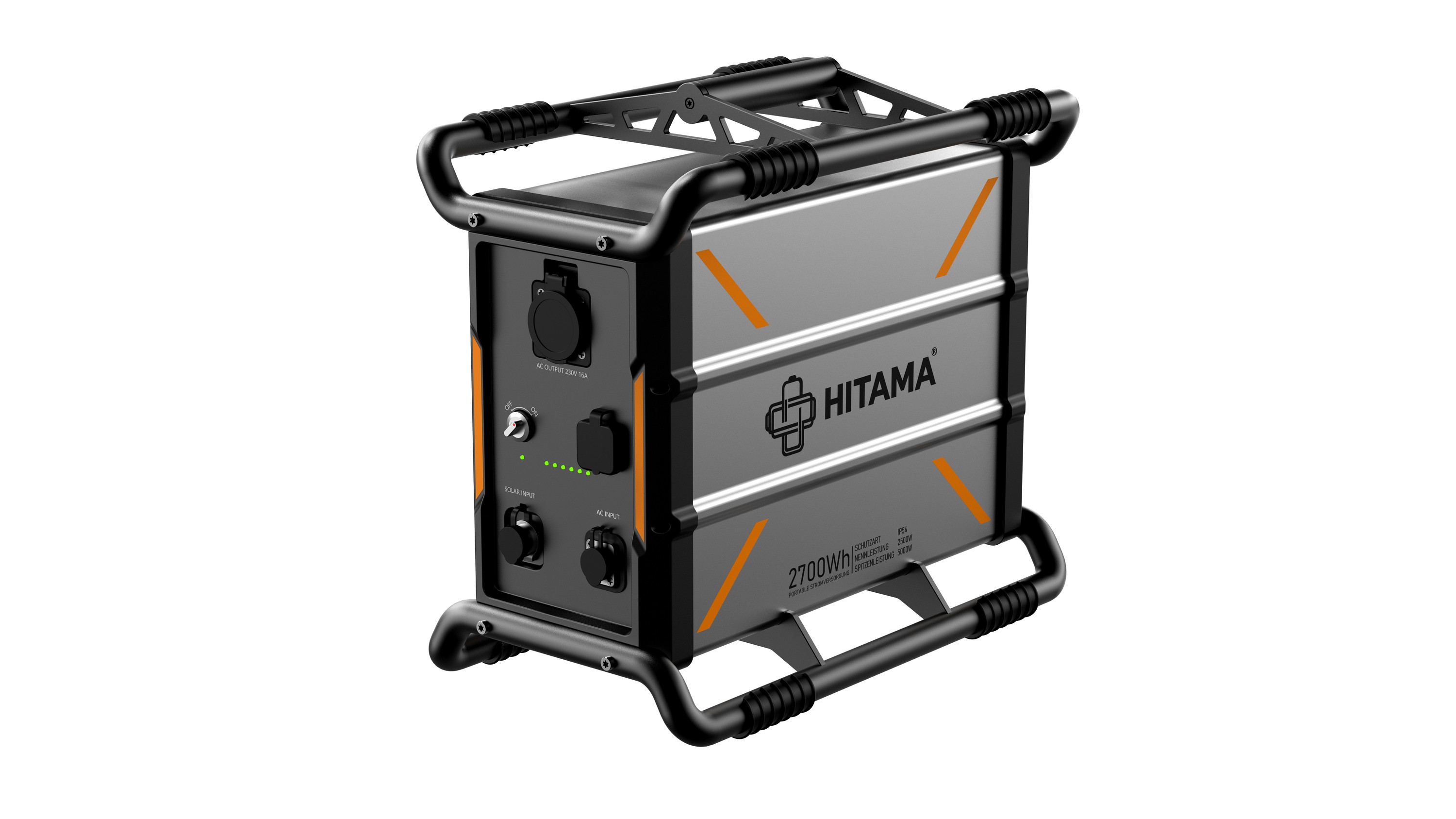
A depot does not get slower by one machine, it gets slower by one machine type. Adding a tenth unit of the model you already run changes almost nothing in the morning routine. Adding a fourth type changes the adapter shelf, the charger, the firmware branch and the person allowed to hand it out, and none of it appears in the capacity figure that justified the order.
The width of a fleet is decided behind the counter
Purchasing counts units; the counter counts variants. A fleet grows one job at a time, and each order looks reasonable on its own. The cost lands on every other job: an extra CEE adapter only one unit needs, a second firmware branch nobody wants to test, a charge inlet pulling a different window at night. Each item is small; all of them are permanent.
What every extra type adds before it adds a kilowatt
A type is an adapter set and a firmware version, not just a machine. A P25 running 230 V at 16 A and a P25-D running 230 V at 20 A through a parallel box share no plug discipline, and the 400 V three-phase P25-T shares nothing with either. Parallel operation is a control question before a copper question, so units meant to run together must sit on a version tested together. With three types that is a schedule; with five the morning turns into a negotiation.
Charging is where a wide fleet actually fails. Every unit accepts between 500 W and 1,500 W on charge; the P25 needs about two hours to 80 percent and two and a half hours to full. A narrow fleet is planned as a fixed overnight sequence. A wide fleet produces several charge durations competing for the same wall, and the last to finish is the one somebody needed at six.
Where the ladder actually stops
Three tiers already cover the load classes a site can produce. 2,500 W continuous and 5,000 W peak for ten seconds from 2.7 kWh carries lighting, hand tools and small compressors. Two or three of those in parallel reach 5,000 W at 5.4 kWh and drive heavier single-phase loads, including a 160 to 200 A inverter welder. The 400 V three-phase tier at 7,500 W reaches what a single-phase unit cannot.
The fourth and fifth type usually add a variant, not a load class. A slightly larger single-phase machine, another socket set, another colour: the site does not notice, the depot does, every morning. Weight belongs to the same ladder — 29 kg is a one-person carry, roughly 60 kg and 90 kg are a two-person or mechanical move — and that boundary is the only strong argument for more width; it settles at three tiers, not five.
What a depot can count without opening a case
A narrow fleet can be audited from one document. Ten units of one type, one firmware branch, one adapter set, one test record format: the condition of the fleet becomes a number on a page instead of a series of site visits. Every unit leaves the line with the same ten-point protocol and the same CE documentation under EMC directive 2014/30/EU, report A2409245-C01-R01-V1, but comparison is what turns records into a decision, and comparison needs a common baseline.
What this is not
This is not an argument for one model everywhere. A single type cannot serve a 400 V three-phase load, and pretending otherwise sends people back to a generator for exactly the jobs the fleet was bought for. The claim is narrower: a fleet should be as wide as the load classes it must serve, and not one type wider.
This is not a claim about reliability, and not a statement about IP54. Nothing here says a wide fleet breaks more often; the point is administrative, and its failures are boring: an adapter left in the wrong van, a unit charging on the wrong inlet, a parallel pair never tested together. IP54 is a housing rating against dust and splashing water through a closed case and an intact gasket, no substitute for the −10 to 65 °C range a winter morning tests.
The number worth writing into the fleet policy
Write the number of types into the policy, not the number of units. A policy phrased in units grows sideways every time a job is unusual; a policy phrased as "these three load classes, one type each" gives the counter a reason to say no and the next order a shape. Send us your load list, the distances and the tools that really run on your sites, and we will map them onto the tiers with you. Start at https://www.hitama.net/en/contact.